
 Worksheets
Year 8 Chemistry
Total questions: 80
Worksheet time: 48mins

Chromatography separates substances in __________.
It works if all the substances in the mixture are soluble in __________.
The picture made by chromatography is called_________.
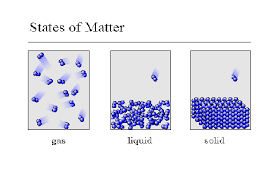
Which of the following is a correct description for solids?
closely arranged and in fixed positions
closely arranged and vibrate in fixed positions
closely arranged and can move around
Which statement about the molecules in the gas carbon dioxide is correct?
The molecules are close together.
The molecules are diatomic.
The molecules move randomly.
The molecules all move with the same speed.
Diffusion is the free movement of particles from an area of __________ concentration to an area of ________ concentration.
High to high
High to low
Low to low
Low to high
An increase in temperature does what to diffusion?
Speeds it up
Slows it down
Stops it
No effect

What will happen to the red particles in this picture? (pretend the membrane is fully permeable)
The red particles will stay where they are
The red particles will move to the left
The red particles will move to the right
The red particles cannot move
Pollen grains suspended in water exhibit Brownian motion. How does a particle undergoing Brownian motion move?
In smooth curves
Randomly
Orderly with a pattern
In straight lines with no change of direction

The above image of KMnO4 (Potassium Permanganate) dissolving in water is an example of which evidence (s) of the particulate theory of Matter?
Diffusion
Osmosis
Surface Tension
Brownian's Motion
which of the following are NOT an example of physical change?
Change in shape
Change in size
Change in temperature
Change in state
how many electrons can fit in the first electron shell?
2
8
6
12
if the atomic number of oxygen is 8 and the mass number is 16, then the number of electrons is
24
8
16
you can't tell
the atomic mass of an atom is the number of
Electrons and Neutrons
Electrons and Protons
Protons and Neutrons
Electrons, Protons and Neutrons
How many different elements make up this compound?
NaCl
1
2
3
4
All matter is made up of
very large particles
solids that cannot be crushed
very small particles
energised atoms

What change of state occurs at point 4?
solid to liquid
liquid to gas
gas to liquid
liquid to solid

The state of matter at point 5 is a ____________
solid
liquid
gas
all of the above

Is the image a heating curve or cooling curve?
heating
cooling
Which is the least dense?
hot water
cold water
Why should you not fill up your water bottle to the top when freezing it?
The water volume will shrink
The water volume will expand
The water volume will stay the same

When mixing the same amount of water and alcohol together, the final volume will ______________
increase
decrease
stay the same
When you push down the handle of a bike pump, and block the end, the air volume__________ and the air pressure __________:
increases, increases
increases, decreases
decreases, increases
decreases, decreases

A hot air balloon works because
hot air rises, some air escapes, and the density decreases
hot air sinks, no air escapes, and the density increases
hot air rises, no air escapes, and the density decreases
hot air sinks, some air escapes, and the density increases

Water is a ________
atom
element
compound
Which of the following is NOT an atom of CuSO4?
sulfur
sodium
copper
oxygen
On the periodic table, Fe is
copper
sulfur
iron
potassium
At room temperature, metals are usually
solid
liquid or gas

All atoms contain an equal amount of _______
protons and neutrons
protons and electrons
electrons and neutrons
The X axis is labeled with
the control variable
the independent variable
the sample variable
dependent variable
How do you separate excess insoluble reactant from a solution?
Filtration
Crystalisation
Evaporation
Precipitation
How would you remove water to leave solid salt crystals?
Filter
Distil
Evaporate
Precipitate
What is the test for carbon dioxide gas?
Turning limewater milky
Squeaky pop test
Add litmus paper
Makes a glowing splint relight

When an equal strength acid and base are mixed, what kind of chemical reaction occurs?
Neutralization
Combustion
Oxdation
Decomposition
Copper oxide and sulphuric acid react to form which new products?
Copper sulphate + water
Copper chloride + hydrogen
Copper chloride + water
Copper sulphate + water + hydrogen
Which of the following is formed when a carbonate reacts with an acid?
An oxide
Salt + hydrogen
Carbon dioxide + water
Salt + water + carbon dioxide
Metals are sonorous in nature. What is sonorous?
Making into powder
Drawn into wires
Make sound on beating
None of these
More reactive metal displaces less reactive metal from its salt solution is known as
Combination reaction
Displacement reaction
Neutral reaction
None of the above
Non-metal used in purple colour solutions which is applied on wounds as an antiseptic
Iodine
Oxygen
Sulphur
Phosphorus
Non-metal used in water purification process
Oxygen
Nitrogen
Chlorine
Iodine
Metals react with water to produce
Metal hydroxide
Hydrogen gas
Metal hydroxide and hydrogen gas both
None of the above
Colour of copper sulphate solution is
Green
Blue
Black
White
Zinc is more reactive than
Copper
Iron
Copper and Iron both
Only iron
Sodium is very reactive metal because it reacts vigorously with oxygen and water and
Generate heat
Catches fire
Stored in kerosene
All of the above
Metals create _________ ions, because they give away (lose) electrons.
positive
negative
neutral
Choose which one is a physical property
Flammability
Solubility
Water Reaction
Magic
Choose the one that is a chemical property
Magnetism
Size
Color
Reactivity with water
Flammability is the ability of a substance to _________
Burn
Transfer heat
Transfer electricity
Cook
If you describe a substance as being corrosive, you have given a __________ property of that substance
Chemical
Large
Physical
Thermal
Electrical conductivity is an example of what kind of property?
Chemical
Large
Physical
Boiling
Choose the 3 that are physical properties of aluminum foil
Malleable
Luster
Oxidation
High melting point
If you had two different substances that looked exactly the same, which properties would you use to tell them apart?
Sound
Size
Color
Density

