wayground logo

Free Printable Worksheets

Font size

S
M
L
XL
Worksheets

Forms of Energy Quiz Review 1

Total questions: 80

Worksheet time: 2hrs 27mins

Name
Class
Date
1.
A measure of the average kinetic energy of the individual particles in an object is called:
a)

heat

b)
conduction
c)
convection
d)
temperature
2.
The energy transferred between objects that are at different temperatures.
a)
Radiation
b)
Convection
c)
Thermal Conduction
d)
Heat
3.
If you place some Gatorade in a cooler with ice...
a)
It's particles will speed up.
b)
It's particles will slow down.
4.
what is the meaning of conduction
a)
when heat transfers from objects that are not touching
b)

when heat comes from electromagnetic source

c)

when heat travels in currents

d)
when heat transfers from objects that are touching
5.
A group of friends gather around a fire to stay warm.
a)
conduction
b)
convection
c)
radiation
6.
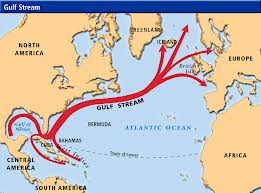
The Gulf Stream is a current that brings warm ocean water from the south to the north.
a)
conduction
b)
convection
c)
radiation
7.
The energy that is transferred as electromagnetic waves, such as visible light and infrared waves.
a)
Potential Energy
b)
Kinetic Energy
c)
Insulator
d)
Radiation
8.
The man goes to take the hot pot off the stove with his bare hands.
a)
conduction
b)
convection
c)
radiation
9.
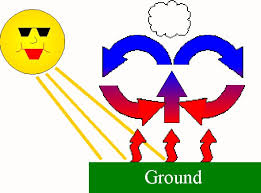
Warm air rises and the cool air sinks.
a)
conduction
b)
convection
c)
radiation
10.
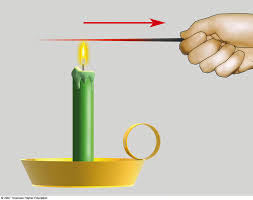
The candle will slowly heat the metal and transfer the heat directly to the mans hand.
a)
conduction
b)
convection
c)
radiation
11.
The vertical movement of air currents due to temperature variations.
a)
Conduction
b)
Convection Current
c)
Radiation
d)
Heat
12.
Heat transfers from an area of ____temperature to an area of ___ temperature.
a)
high to low
b)
low to high
c)
high to high
13.

Observe the diagram. Which statement is true about the kinetic energy of the molecules in the containers?

a)

The molecules are moving faster in Diagram A

b)

The molecules are moving slower in Diagram A

c)

The molecules are moving at the same rate in both diagrams

14.
Water freezes at ______ on the Celsius scale?
a)
30
b)
35
c)
5
d)
0
15.
What is Specific Heat?
a)
The  amount of thermal energy required to increase the temperature of 1kg of a material by 1°C.
b)
The  amount of radiant energy required to increase the temperature of 1kgof a material by 1°C
c)
The  amount of energy required to increase the temperature of 1kgof a material by 1°C.
d)
The  amount of friction  required to increase the temperature of 1kgof a material by 1°C.
16.
A high specific heat means...
a)
It heats up quickly with energy added
b)
It requires more energy to change temperature
17.
What  is the formula to calculate heat energy required to raise the temperature of any substance?
a)
Q=mc∆t
b)
Q=mc
c)
Q= ½mv
d)
m=QC
18.
What unit do you use to measure Thermal Energy?
a)
J/Kg ºC
b)
Kg
c)
ºC
d)
J
19.
The symbol for specific heat is .......
a)
c
b)
Q
c)
m
d)
t
20.
Water has a specific heat of 4184 J/KgºC.  Wood has a specific heat of 1760 J/KgºC.  What material needs more energy to raise the temperature 1ºC
a)
Wood
b)
Water
c)
Both are the same
21.
A pot of 2400g of water at a temperature of 25˚C is heated on a stove until the water boils (100˚C).  The specific heat of water is 4.18 J/(g˚C).
Determine the heat energy needed to heat the water in the pot to boiling.
a)
133.76J
b)
43,062.2J
c)
752,400J
d)
1,003,200J
22.
Copper, Stainless Steel, Carbon Steel, and Zinc were all heated using the same thermal energy.  What material would be the coolest after being heated?
a)
Copper
b)
Carbon Steel
c)
Zinc
d)
Stainless Steel
23.

Are waves a form of energy?

a)

Yes

b)

No

24.
Sound travels as a ___________ wave. 
a)
longitudinal
b)
transverse
c)
water
d)
slinky
25.
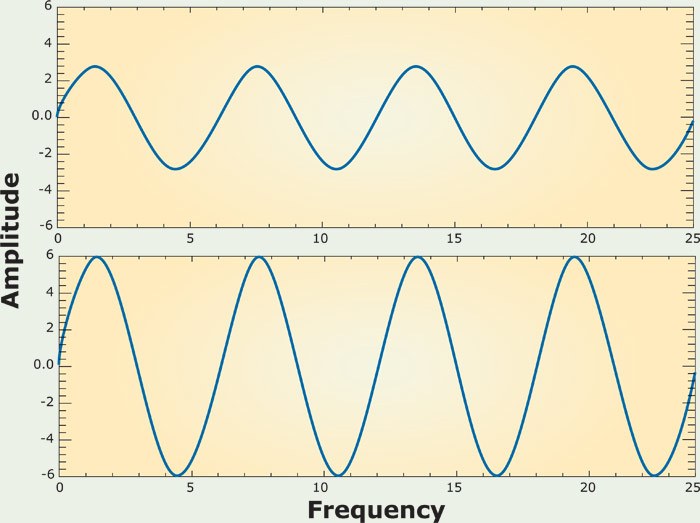
Which property of these waves differs?
a)
Frequency
b)
Wavelength
c)
Amplitude
d)
Pitch
26.
A sound wave can travel through a vacuum or empty space.
a)
True
b)
False
27.
Sound waves have the fastest speed when traveling through a ___.
a)
solid
b)
liquid
c)
gas
d)
tornado
28.

What property of this wave is represented by the letter "A"?

a)

amplitude

b)

trough

c)

crest

d)

wavelength

29.

Which wave in the diagram has the shortest wavelength?

a)

1

b)

2

c)

3

d)

4

30.

Which wave in the diagram has the lowest frequency?

a)

1

b)

2

c)

3

d)

4

31.
The distance from one point on a wave to that same point on the next wave is known as
a)
amplitude.
b)
frequency.
c)
wavelength.
d)
reflection.
32.
Which statement best defines a wave medium?
a)
the material through which a wave travels
b)
a point halfway between the crest and trough
c)
the distance from one wave crest to the next
d)
the speed at which waves travel in water
33.

The loudness of a sound depends on _______________.

a)

wavelength

b)

frequency

c)

amplitude

d)

resting point

34.

The pitch of a sound depends on ______________.

a)

wavelength

b)

frequency

c)

amplitude

d)

resting point

35.
Visible light is which type of wave?
a)
seismic
b)
mechanical
c)
longitudinal
d)
electromagnetic
36.
If you cannot see through an object, in other words, light does not pass through it,  it is 
a)
transparent.
b)
translucent.
c)
opaque.
d)
solid.
37.
This type of material allows most light to pass through but forms a blurry image, like looking through a fogged up window.
a)
opaque
b)
translucent
c)
transparent
d)
echo
38.
Which color of light is produced when all of the colors of visible light in the electromagnetic spectrum are combined?
a)
gray
b)
white
c)
black
d)

red

39.
If you see an object as orange,
a)
it is absorbing orange light and reflecting all other colors. 
b)
it is reflecting all colors. 
c)
it is absorbing all colors. 
d)
it is reflecting orange light and absorbing all other colors. 
40.
Which of these colors of visible light has the shortest wavelength?
a)
red
b)
green
c)
violet
d)
yellow
41.
A particle that carries a negative electric charge is called a(n) ______.
a)
neutron
b)
atom
c)
proton
d)
electron
42.
A neutral object becomes negatively charged when it loses electrons.
a)
true
b)
false
43.
The flow of electricity in a circuit-
a)

current electricity

b)

static electricity

c)

circuit electricity

44.
Electricity that flows in a closed path is called a
a)
path
b)
current
c)
circuit
45.
Two types of circuits are
a)
parallel and magnetic
b)
electromagnetic and series
c)
series and parallel
46.
When socks get stuck to towels in your dryer, this is an example of________________
a)
current electricity
b)
static electricity
47.
Which statement best explains why the lamp does not glow? 
a)
Circuit 1 is an open circuit.
b)
 Circuit 1 is a closed circuit.
c)
 The negative terminal of Circuit 1 is connected to the cell.
d)
The positive terminal of Circuit 1 is connected to the cell.
48.
This is an example of a _______ circuit
a)
open
b)
series
c)
parallel
d)
square
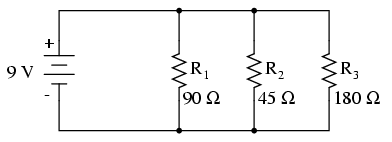
49.
This is an example of a ______ circuit
a)
Series
b)
Parallel
c)
Open
d)
Dihexihedral
50.

In this cicuit, when one light goes out, the others stay on. 

a)
series circuit
b)
parallel circuit
51.
Lightning is an example of _________.
a)
static electricity
b)
current electricity
c)
watts
d)
voltage
52.
A material in which electrons are able to move easily
a)
Circuit
b)
Insulator 
c)
Resistance 
d)
Conductor 
53.
A material in which electrons are not able to move easily 
a)
Circuit 
b)
Insulator 
c)
Resistance 
d)
Conductor
54.
Electric current that flows in only one direction. 
a)
Voltage 
b)
Direct Current 
c)
Alternating Current
d)
Series Circuit 
55.
Electric current that reverses its direction of flow in a regular pattern  
a)
Voltage 
b)
Direct Current 
c)
Alternating Current 
d)
Parallel Circuit 
56.
Which type of current comes from a battery?
a)
alternating current (AC)
b)
direct current (DC)
57.
In a _________ circuit, if one bulb goes out then the entire circuit doesn't work.
a)
Series
b)
Parallel
58.
According to this law, the current in a circuit equals the voltage difference divided by the resistance. 
a)
Law of Conservation of Energy 
b)
Ohm's Law 
c)
Law of Conservation of Charges
d)
Newton's First Law 
59.
The unit for current is the 
a)
Volt
b)
Ohm
c)
Electron
d)
Amp
60.
As the resistance in a circuit increases, the electric current __________.
a)
increases
b)
decreases
c)
stays the same
61.
What is the unit for resistance?
a)
Volts
b)
Amperes
c)
Ohms
62.
What voltage is needed to cause a 2A current flow through a 10Ω resistor?
a)
5V
b)
0.2V
c)
20V
d)
200V
63.
What resistance is needed to cause a 20A current flow because of a 100V battery?
a)
0.2Ώ
b)
2000Ώ
c)
120Ώ
d)
64.
True or False: All metals are attracted to magnet.
a)
True
b)
False
65.

The magnetic ____________ around a bar magnet is shown above.

a)

legs

b)

flowers

c)

field

d)

direction

66.
What do the lines around this magnet represent?
a)
North Pole
b)
South Pole
c)
Magnetic Declination
d)
Magnetic Field
67.
The magnet's shown will
a)
not move
b)
attract
c)
repel
d)
all of the above
68.
If you cut a magnet in half, what happens to the poles?
a)
One half gets the North Pole, the other half gets the South Pole
b)
Both halves get only a North Pole
c)
Both halves get only a South Pole
d)
Both halves get a North pole and a South Pole
69.
Where is the force of attraction the strongest on a magnet?
a)
at the poles
b)
in the middle
c)
above the magnet
d)
below the magnet
70.

A compass points toward the geographic north pole, it is attracted to Earth's magnetic ________ pole.

a)

north

b)

south

c)

east

d)

west

71.

Magnets are attracted to (Check all that apply)

a)

Cobalt

b)

Iron

c)

Copper

d)

Nickel

72.
What will happen when these magnets are brought close together?
a)
They will attract each other.
b)
They will repel each other.
c)
Both magnets will turn to the left
d)
Both magnets will turn to the right
73.
Earth acts like a giant magnet because its center is made up MOSTLY of
a)
granite
b)
limestone
c)
iron
d)
nickel
74.
How is a permanent magnet DIFFERENT from a temporary magnet?
a)
A permanent magnet attracts materials made of iron.
b)
A permanent magnet has poles.
c)
A permanent magnet has a magnetic field.
d)
A permanent magnet keeps its magnetism for a long time.
75.
What is responsible for the Magnetic Field around Earth?
a)
The Earth's crust
b)
The Earth's molton iron core
c)
The Earth's mantel
d)
The Sun
76.

Why is magnetism a force?

a)

It occurs naturally on earth

b)

It can push or pull objects

c)

It is a physical property

d)

It is more powerful than gravity

77.

What does this image show?

a)

compass

b)

electromagnetism

c)

electromagentic induction

d)

magnetic current

78.
Electricity can be used to create a magnet
a)
True
b)
False
79.
You can make an electromagnet stronger by...
a)
increasing the current through the wire
b)
make the iron core bigger
c)
increase the number of loops around the core
d)
All of these
80.

Magnetism can be used to create electricity

a)
True
b)
False