wayground logo

Free Printable Worksheets

NEW

Font size

S
M
L
XL
Worksheets

Big Idea 2: Biological Systems

Total questions: 80

Worksheet time: 1hrs 14mins

Name
Class
Date
1.
Which process is the largest contributor to the release of CO
a)
Citric Acid Cycle or Krebs Cycle
b)
Pyruvate Oxidation
c)
Glycolysis
d)
Oxidative Phosphorylation 
2.
Which of the following molecules is NOT a byproduct of cellular respiration? 
a)
CO2
b)
Heat
c)
H2O
d)
ATP
3.
If ADP is phosphorylated then what is this indicating in the reaction? 
a)
ADP is forming into ATP
b)
ADP is becoming AMP
c)
ADP is being used to power other reactions
d)
ADP is being created by the reaction
4.
Which process least amount of ATP in cells? 
a)
Glycolysis
b)
Kreb cycle
c)
Lactic acid Fermentation
d)
ATP Synthase
5.
Which molecule is not an important molecule regarding Cellular Respiration? 
a)
H2O
b)
NADH
c)
O2
d)
CO2
6.
Which process does not occur in aerobic conditions? 
a)
Fermentation
b)
Pyruvate Oxidation to CoA
c)
Krebs cycle 
d)
Oxidative Phosphorylation 
7.
What is the main job of the electron carriers in cellular respiration? 
a)
Transport electrons and hydrogen atoms to the electron transport chain 
b)
Capture energy throughout the process of cellular respiration
c)
Provide the reactants for the process of cellular respiration
d)
Pump positive hydrogen ions and shuttle electrons across the electron transport chain and contribute to chemiosmosis
8.

A weightlifter is using heavy weights in short bursts for a competition. Because his muscle cells are not able to take in enough oxygen to make very much ATP the weightlifter begins to get fatigue in his muscles. Which of the following processes is most likely going on in the muscles of the weightlifter as he competes in his event?

a)

As the cells run out of oxygen they switch to anaerobic respiration (fermentation), which allows the cell to make small amounts of ATP in the absence of oxygen.

b)

As the cells run out of oxygen, they die off gradually and the weightlifter's muscles have fewer contracting muscle cells.

c)

The cells will never run out of oxygen if the weightlifter is breathing.

d)

As the cells run out of oxygen, they will continue to make the same amount of ATP, since oxygen is not required to make ATP.

9.
Which process takes place in the presence of oxygen and produces nearly 20 times as much as ATP as glycolysis alone?
a)
photosynthesis
b)
lactic acid fermentation
c)
aerobic respiration
d)
alcoholic fermentation
10.
Two different species of bacteria are examined. Scientists find that species X always produces CO2 and H2O during cellular respiration. Species Y always produces ethyl alcohol and CO2. Which conclusion can be made from these observations?
a)
Only species Y is aerobic.
b)
Only species Y is anaerobic
c)
Both species X and Y are aerobic.
d)
Both species X and Y are anaerobic.
11.
What function does ATP carry out in living things?
a)
aids in protein folding and coiling
b)
used to capture and transfer energy
c)
identifies DNA start sequences for transcription
d)
helps maintain the fluidity of cell membranes
12.
What are the reactants in the equation for cellular respiration?
a)
oxygen and lactic acid
b)
carbon dioxide and water
c)
glucose and oxygen
d)
water and glucose
13.
Where does glycolysis occur?
a)
Inner mitochondrial membrane
b)
Mitochondrial Matrix
c)
Cytosol
d)
At a ribosome
14.
Glycolysis is a __________ process.
a)
aerobic
b)
anaerobic
c)
aerobic and anaerobic
d)
neither aerobic nor anaerobic
15.
How many ATP are gained through glycolysis?
a)
0
b)
2
c)
4
d)
30-38
16.
In this photo, what do the explosions represent?
a)
Glucose
b)
ATP
c)
Pyruvate
d)
Cleavage
17.
Which molecule enters Kreb's Cycle?
a)
Pyruvate
b)
Glucose
c)
Acetyl CoA
d)
reducing powers
18.
What enzyme in the ETC is responsible for generating the ATP molecules?
a)
ATPase
b)
ATP synthase
c)
Hexokinase
d)
none of the above
19.
Where does ETC occur?
a)
Mitochondrial matrix
b)
Outer mitochondrial membrane
c)
Inner mitochondrial membrane
d)
Cytosol
20.
after strenuous exercise, a muscle cell would contain decreased amounts of ______ and increased amounts of ______ ____
a)
glucose ATP
b)
ATP glucose
c)
oxygen lactic acid
d)
lactic acid ATP
21.
site of ATP synthase
a)
1
b)
2
c)
3
d)
4
22.
site of the krebs cycle
a)
1
b)
2
c)
3
d)
4
23.
Which gas is a product released during photosynthesis that humans need for survival?
a)
Carbon dioxide
b)
neon
c)
nitrogen
d)
oxygen
24.
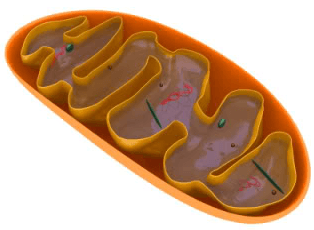
This is the "powerhouse" of the cell. Most of an eukaryotic cell's energy is made here.
a)
mitochondria
b)
ribosomes
c)
chloroplasts
d)
nucleus
25.
When complex carbohydrates are digested, what do they become
a)
simple sugars
b)
amino acids
c)
proteins
d)
fatty acids
26.
Which is not a waste product of cellular respiration?
a)
Water
b)
Heat
c)
Carbon Dioxide
d)
Oxygen
27.
Which of the following statements are false?
a)
Glycolysis can occur with or without oxygen
b)
Glycolysis is the first step in both anaerobic and aerobic respiration
c)
Glycolysis occurs in the mitochondria
d)
Glycolysis produces 2 ATP, 2 Pyruvates, and 2 NADH
28.
What is the correct equation for cellular respiration?
a)
6O2 + C6H12O6 -> 6CO2 + 6H2O + Energy
b)
6O2 + C6H12O6 + Energy -> 6CO2 + 6H2O
c)
6CO2 + 6H2O -> 6O2 + C6H12O6 + Energy
d)
6CO2 + 6H2O + Energy -> 6O2 + C6H12O6
29.
Oxygen is required for ___ to take place
a)
light-dependent
b)
light-independent
c)
ETS
d)
glycolysis
30.
Which of the following are products of the light reactions of photosynthesis that are utilized in the Calvin cycle?
a)
CO2 and glucose
b)
H2O and O2
c)
electrons and H+
d)
ATP and NADPH
31.
Where does the Calvin cycle take place?
a)
stroma of the chloroplast
b)
thylakoid membrane
c)
outer membrane of the chloroplast
d)
interior of the thylakoid membrane
32.
When oxygen is released as a result of photosynthesis, it is a direct by-product of
a)
reducing NADP+
b)
splitting water molecules
c)
chemiosmosis
d)
electron transfer in photosystem II and I
33.
Which of the following events occurs in the light reactions of photosynthesis?
a)
NADP+ is produced
b)
ATP is consumed to yield ADP
c)
carbon dioxide is fixed in organic molecules
d)
light is absorbed and funneled to reaction-center chlorophyll a
34.
What is the primary function of the Calvin cycle?
a)
regenerate ATP for use in the light reactions of photosynthesis
b)
produce carbon dioxide for use in the light reactions of photosynthesis
c)
produce oxygen by oxidizing water
d)
produce simple sugars from carbon dioxide
35.
Reactions that consume CO2 take place in
a)
the light reactions of photosynthesis only
b)
the calvin cycle only
c)
the light reactions and the calvin cycle
d)
the calvin cycle and the citric acid cycle
36.
CAM plants keep stomata closed in daytime, thus reducing loss of water. They can do this because they
a)
fix CO2 into organic acids during the night when temperatures are cooler.
b)
fix CO2 into by combining it with RuBP in the Calvin cycle.
c)
obtain CO2 through their roots during the day.
d)
fix CO2 into organic acids in the mesophyll cells, which do not rely on stomata.
37.
In mitochondria, the electron transport chain pumps protons from the matrix into the intermembrane space, whereas in chloroplasts, the electron transport chain pumps protons from
a)
matrix to stroma
b)
stroma to thylakoid space
c)
intermembrane space to stroma
d)
thylakoid space to stroma
38.
If an aquatic plant is placed into a test tube with water near a light source, what will it produce?
a)
Glucose and Oxygen
b)
Carbon dioxide and ATP
c)
Water and Oxygen
d)
Glucose and ATP
39.
Most plants appear green because chlorophyll
a)
absorbs green light.
b)
absorbs violet light.
c)
does not absorb green light.
d)
does not absorb violet light.
40.
Which of the following molecules is not needed for the Calvin Cycle?
a)
CO2
b)
ATP
c)
NADPH
d)
H2O
41.
Where do the light-dependent reactions occur? 
a)
thylakoid membrane
b)
stroma
c)
mesophyll
d)
mitochondria
42.
It is important to create a concentration of H+  in the thylakoid space so that the H+ can diffuse through_________ to create ______.
a)
ATP synthase, ATP
b)
NADH, NADPH
c)
proton pump, protons
43.
Which plant structure is extremely necessary for photosynthesis to take place?
a)
leaves
b)
flower petals
c)
anthers
d)
pistils
44.
The process by which the nuclear material is divided equally between two new cells
a)
mitosis
b)
cancer
c)
spindle
d)
centromere
45.
Structure (b) is a ____.
a)
chromosome
b)
chromatid
c)
centromere
46.
Structure (a) is a ____.
a)
chromosome
b)
chromatid
c)
centromere
47.
Structure (c) is a ____.
a)
chromosome
b)
chromatid
c)
centromere
48.
Name the phase:
a)
Anaphase
b)
Telophase
c)
Metaphase
d)
Prophase
49.
What is the next phase of mitosis?
a)
Prophase
b)
Metaphase
c)
Anaphase
d)
Telophase
50.
What is the next phase of mitosis?
a)
Prophase
b)
Metaphase
c)
Anaphase
d)
Telophase
51.
Name the previous phase.
a)
Prophase
b)
Metaphase
c)
Anaphase
d)
Telophase
52.
Name the previous phase.
a)
Prophase
b)
Metaphase
c)
Anaphase
d)
Telophase
53.
Name the phase:
a)
Prophase
b)
Metaphase
c)
Anaphase
d)
Telophase
54.
The organelle that helps in cell division and produces spindle fibers.
a)
Chromosome
b)
Centriole
c)
Cytoplasm
d)
Chloroplast
55.
When a cell divides, what do we call the 2 new cells?
a)
mother cells
b)
father cells
c)
daughter cells
d)
son cells
56.
Before a cell can divide, what must happen?
a)
Nothing, it is always ready to divide
b)
The number of chromosomes must be cut in half
c)
The number of chromosomes must double
d)
The number of chromosomes must triple.
57.
If the message never gets through for a cell to stop dividing and it just keeps dividing over and over again, what can form?
a)
tumor
b)
freckle
c)
goosebump
d)
scab
58.
Why don't cells just stretch when you grow, instead of making copies of themselves?
a)
The muscles in the cells can't stretch that far.
b)
The cell won't be able to bring in food fast enough or get waste out fast enough.
c)
The cell membrane doesn't like the feeling of stretching.
d)
The lysosomes don't want to work so hard.
59.
Identify the stage of mitosis. 
a)
interphase
b)
prophase
c)
anaphase
d)
cytokinesis
60.
90% or more of the cell cycle is spent here.
a)
Interphase
b)
Mitosis
c)
Cytokinesis
d)
Anaphase
61.
According to cell theory, where did this cell come from?
a)
another living cell
b)
energy from sun
c)
a multicellular organism
d)
the nonliving environment
62.
Robert Hooke, Anton van Leeuwenhoek, Theodor Schwann, Rudolf Virchow, and Matthias Schliden were all responsible for what theory?
a)
The Theory of Gravity
b)
The Theory of Relativity
c)
The Cell Theory
d)
The Theory of Continental Drift
63.
the photosynthesis equation is
a)
6CO2+6H2O+sunlight~C6H12O6+6O2
b)
nothing
c)
H2O
d)
CO2
64.
What organelle PRODUCES proteins?
a)
ribosomes
b)
centrioles
c)
lysosomes
d)
nucleus
65.
The diffusion of WATER across a semi-permeable membrane is
a)
osmosis
b)
diffusion
c)
endocytosis
d)
exocytosis
66.
What is diffusion
a)
active transport
b)
passive transport
c)
cell division
d)
cell mutation
67.
The movement of molecules from higher concentration to lower concentration is
a)
diffusion
b)
cell division
active transport
c)
active transport
d)
tonicity
68.
Active transport requires
a)
energy
b)
the nucleus
c)
chloroplasts
d)
lysosomes
69.
What organelles are only found in PLANT cells
a)
lysosomes & centrioles
b)
cell wall & chloroplasts
c)
nucleus & nucleolus
d)
mitochondria & ribosomes
70.
What organelles is NOT found in a PROkaryote
a)
nucleus
b)
cell membrane
c)
Chromosomes (DNA)
DNA
d)
ribosomes
71.
water moves from
a)
higher conc. H20 => lower conc H20
b)
lower conc. H20 => higher conc. H20
72.
If there is too much salt in your cells...
a)
you need more water
b)

you need to lose water

73.
how are chloroplasts and mitochondria similar? They both...
a)
produce energy products
b)
are found in animal cells
c)
are found in prokaryotes
d)
destroy cell products
74.
The cell membrane
a)
regulates what enters/leaves cell
b)
helps maintain homeostasis
c)
keeps contents of cell in place
d)
all of the above
75.
Which of the following scientists was the first to observe bacteria under a microscope?
a)
Anton van Leuwenhoek
b)
Matthais Schleiden
c)
Robert Hooke
d)
Theodor Schwann
76.
Which of the following is directly involved in the transportation of materials inside/within the cell?
a)
Endoplasmic Reticulum
b)
Vacuole
c)
Lysosome
d)
Mitochondria
77.
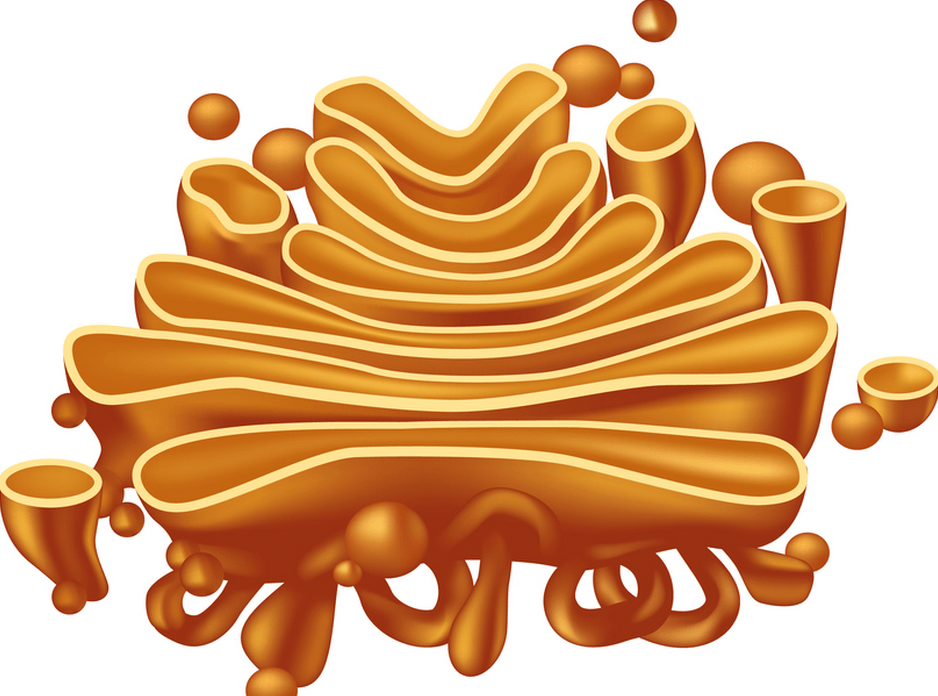
I am a protein packaging and shipping machine! Who am I?
a)
vacuole
b)
ribosome
c)
mitochondrion
d)
golgi apparatus
78.
You might think of me as the trash collector, but recycler is maybe more accurate. What am I?
a)
mitochondria
b)
lysosome
c)
vacuole
d)
ribosome
79.
What is found in both plant and animal cells but is much larger in plant cells?
a)
Nucleus
b)
Mitochondria
c)
Chloroplast
d)
Vacuole
80.
What are tiny organelles that convert glucose into ATP?
a)
Ribosomes
b)
Vesicles
c)
Cytoskeleton
d)
Mitochondria