
 Worksheets
Meterology Pt. 1 Review
Total questions: 100
Worksheet time: 1hrs 26mins
Name
Class
Date
1.
Two gases that make up 99% of Earth's atmosphere
a)
carbon dioxide & oxygen
b)
nitrogen & carbon dioxide
c)
nitrogen & oxygen
d)
nitrogen & water vapor
2.
Number of times more nitrogen in the air than oxygen
a)
2 times
b)
4 times
c)
10 times
d)
50 times
3.
Form in which nitrogen is found in the Earth's atmosphere
a)
solid
b)
liquid
c)
gas
d)
crystal
4.
Gas that is given off as a waste product from respiration of living organisms
a)
oxygen
b)
carbon dioxide
c)
nitrogen
d)
hydrogen
5.
Water in the form of gas is called
a)
ice
b)
graupel
c)
sleet
d)
water vapor
6.
Percentage of Earth's atmosphere that carbon dioxide makes up
a)
less than 1%
b)
5%
c)
20%
d)
80%
7.
Layer of Earth's atmosphere where most of the water vapor and carbon dioxide is found
a)
thermosphere
b)
mesosphere
c)
stratosphere
d)
troposphere
8.
Layer of Earth's atmosphere in which we live
a)
thermosphere
b)
mesosphere
c)
stratosphere
d)
troposphere
9.
Earth's ozone layer is important because it absorbs
a)
visible light
b)
ultraviolet radiation
c)
x-rays
d)
radio waves
10.
Layer of Earth's atmosphere that contains most of the ozone
a)
thermosphere
b)
mesosphere
c)
stratosphere
d)
troposphere
11.
Condition of Earth's atmosphere at a particular time & place
a)
climate
b)
biogeography
c)
precipitation
d)
weather
12.
Place energy comes from for weather on Earth
a)
the Earth's core
b)
volcanoes
c)
geothermal vents
d)
the Sun
13.
Earth's atmosphere is held down by
a)
radiation
b)
gravity
c)
magnetism
d)
conduction
14.
Warm air rises and creates
a)
low pressure
b)
medium pressure
c)
high pressure
d)
uneven pressure
15.
Cold air sinks and creates
a)
low pressure
b)
medium pressure
c)
high pressure
d)
uneven pressure
16.

Type of pressure that occurs at the North & South poles
a)
low pressure
b)
medium pressure
c)
high pressure
d)
uneven pressure
17.

Type of pressure that occurs at the Equator
a)
low pressure
b)
medium pressure
c)
high pressure
d)
uneven pressure
18.
What is the most common gas in the atmosphere?
a)
nitrogen
b)
oxygen
c)
water vapor
d)
carbon dioxide
19.
Oxygen makes up approximately ____% of the gases in the atmosphere.
a)
20
b)
40
c)
60
d)
80
20.
What decreases with altitude throughout Earth's atmosphere?
a)
density
b)
pressure
c)
density and pressure
d)
temperature and density
21.
What is the correct order of earth's atmospheric layers from bottom to top?
a)
Stratosphere, Mesosphere, Troposphere, Thermosphere, Exosphere.
b)
Stratosphere, Troposphere, Mesosphere, Thermosphere, Exosphere.
c)
Stratosphere, Troposphere, Thermosphere, Mesosphere, Exosphere.
d)
Troposphere, Stratosphere, Mesosphere, Thermosphere, Exosphere.
22.

Which layer of the atmosphere has the highest density of gas molecules and highest atmospheric pressure?
a)
troposphere
b)
mesosphere
c)
stratosphere
d)
thermosphere
23.
Directly above the troposphere is the _________.
a)
stratosphere
b)
mesosphere
c)
exosphere
d)
thermosphere
24.
Directly above the stratosphere is the _________.
a)
mesosphere
b)
troposphere
c)
thermosphere
d)
exosphere
25.
In which layer of the atmosphere can you find meteors?
a)
troposphere
b)
stratosphere
c)
exosphere
d)
mesosphere
26.
Which layer of Earth’s atmosphere is the one farthest from the surface of the Earth?
a)
troposphere
b)
stratosphere
c)
thermosphere
d)
exosphere
27.
Which gas makes up most of the troposphere?
a)
oxygen
b)
helium
c)
nitrogen
d)
hydrogen
28.
What does the Earth's atmosphere do?
a)
create meteors
b)
regulate temperatures
c)
control population
d)
provide light
29.
Through which processes does water vapor enter the atmosphere?
a)
precipitation, condensation
b)
condensation, transpiration
c)
transpiration, evaporation
d)
precipitation, evaporation
30.
The uneven heating of Earth’s surfaces result in
a)
seasons.
b)
ocean currents.
c)
variations in weather
d)
variations in living organisms.
31.
Heat trapped in the troposphere is a result of what effect?
a)
Wind effect
b)
Coriolis effect
c)
Greenhouse effect
d)
Heating effect
32.
When warm air rises and cool air moves into its place creating a vertical movement of air, what type of current is formed?
a)
ocean current
b)
electrical current
c)
convection current
d)
surface current
33.
What gas from the list below is a cause for global warming?
a)
Urethane
b)
Oxygen
c)
Carbon Dioxide
34.

This is an image demonstrating...
a)
Tornado Formation
b)
The Greenhouse Effect
c)
Hurricane Formation
35.
Which of the following activities contributes the most to carbon emissions globally?
a)
Deforestation
b)
Agriculture
c)
Burning fossil fuels
d)
Respiration
36.
What do we call gases such as carbon dioxide, methane, nitrous oxide, water vapor, and ozone in the atmosphere which are involved in the greenhouse effect?
a)
Bad Gases
b)
Ozone Gases
c)
Greenhouse Gases
d)
Atmospheric Gases
37.
Which of these sets lists the major greenhouse gases?
a)
Nitrous Oxide, Carbon Dioxide, and Methane
b)
Nitrogen, Oxygen, Argon
c)
Nitrous Oxide, Oxygen, and Methane
d)
Nitrogen, Carbon Dioxide, and Methane
38.
Without the Greenhouse Effect the Earth would be
a)
warm
b)
cold
c)
dead
39.

Which climate zone is found at the blue X?
a)
Tropical
b)
Temperate
c)
Polar
40.

Which climate zone is found at the red star?
a)
Tropical
b)
Temperate
c)
Polar
41.

Which climate zone is found at the green smiley?
a)
Tropical
b)
Temperate
c)
Polar
42.
Do we need greenhouse gases on Earth?
a)
Yes - they keep the Earth warm
b)
Yes - they keep all the gases on our planet
c)
No - they only cause terrible climate change
d)
No - they only block some of the Sun's rays
43.
What do greenhouse gases do in our atmosphere?
a)
They absorb radiation given off by the Earth
b)
They block harmful radiation from reaching the Earth
c)
They keep all the air within the Earth
d)
They make the Earth cooler
44.
What happens to MOST of the sun's energy that reaches the earth?
a)
It is absorbed by land and water
b)
It is reflected back to space
c)
It is trapped by greenhouse gases
d)
It is stopped by the ozone layer
45.
Which of these is not an observable effect of climate change?
a)
melting ice
b)
rising sea levels
c)
predictable and constant precipitation
d)
rising global temperatures
46.
True or false: Warm air moves away from the equator, to the poles. Cold air moves from the poles to the equator.
a)
true
b)
false
47.
Which option lists the zones of earth from warmest to coolest?
a)
tropical, polar, temperate
b)
temperate, tropical, polar
c)
tropical, temperate, polar
d)
polar, temperate, tropical
48.
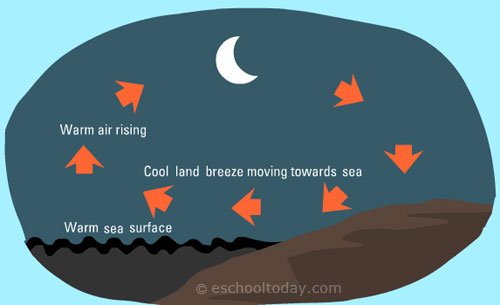
Is this a land or a sea breeze?
a)
land breeze
b)
sea breeze
49.
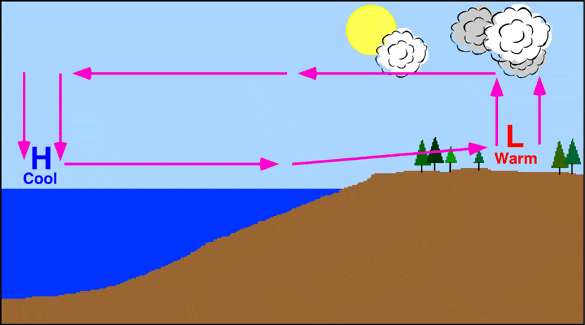
Is this a land or a sea breeze?
a)
land breeze
b)
sea breeze
50.
How does the air move in a sea breeze?
a)
wind moves from north to south
b)
wind moves from ocean to the land
c)
wind moves from the land to the ocean
d)
wind moves from south to north
51.
In a sea breeze, the air is warmer above the _____.
a)
land
b)
ocean
c)
sky
d)
beach
52.
How does the air move in a land breeze?
a)
From east to west
b)
From west to east
c)
From the land to the ocean
d)
From the ocean to the land
53.
Warm air
a)
rises
b)
sinks
54.
Do sea breezes typically happen during the day or night?
a)
Day
b)
Night
55.
Sincerely goes upstairs on a summer day and notices there's a temperature difference. Why is that?
a)
Warm air is less dense and rises
b)
Cool air is less dense and rises
56.
Which of these causes wind on Earth?
a)
Sun and it warming Earth's atmosphere
b)
Sun and Moon
c)
Moon's gravity
d)
Potential Energy
57.
What type of winds blow constantly, predictably, and over long distances?
a)
land breezes
b)
mountain breezes
c)
global winds
d)
land breezes
58.
What is the name of the steady winds that flow from west to east between latitudes 30*N and 60*N and 30*S and 60*S?
a)
trade winds
b)
land breeze
c)
westerlies
d)
jet stream
59.

What kind of breeze is this & what time of day/night would it form?
a)
Land breeze - daytime
b)
Land breeze - nighttime
c)
Sea breeze - daytime
d)
Sea breeze - nighttime
60.
Which statement correctly defines wind?
a)
Wind is the movement of air from areas of low pressure to areas of high pressure
b)
Wind is the movement of air to a colder area in the atmosphere.
c)
Wind is the movement of air from areas of high pressure to areas of low pressure.
d)
Wind is the movement of air pushed around and bouncing off Earth's surface.
61.
Where does the initial source of energy come from that creates winds?
a)
the moon
b)
the sun
c)
the Earth's surface
d)
the rotation of the Earth
62.
What causes global winds and convection in the atmosphere?
a)
continental deflection
b)
the rotation of the Earth
c)
Moon's gravity
d)
unequal heating of the Earth by the sun
63.
The Coriolis effect causes ___________.
a)
the Earth to rotate on its axis
b)
continental deflection
c)
global winds and surface currents to move in a curved path instead of a straight line
d)
global winds and deep ocean currents to move in a curved path instead of a straight line.
64.
Which statement correctly describes the properties of cold air?
a)
less dense and less pressure than warm air
b)
more dense and more pressure than warm air
c)
more dense and less pressure than warm air
d)
less dense and more pressure than warm air
65.

The curving of air to the right in the Northern hemisphere is caused by ___________ and is called the _________ effect.
a)
Earth's rotation...Coriolis
b)
Earth's revolution...Coriolis
c)
Earth's rotation...Doppler
d)
Earth's revolution...Doppler
66.
Why do land breezes occur at night?
a)
Land cools off slower than water, so the air above water is cooler.
b)
Water cools off faster than land, so the air above land is warmer.
c)
Land heats up slower than water, so the air stays cooler during the day.
d)
Water cools off slower than land, so the air above water is warmer.
67.
This type of wind comes from the POLES. It blows from east to west and brings freezing weather.
a)
Prevailing Westerlies
b)
Polar Easterlies
c)
Polar Westerlies
d)
Horse Latitudes
68.
Which absorbs heat faster?
a)
land
b)
water
c)
they heat up at the same rate
69.
Which loses heat faster?
a)
land
b)
water
c)
they lose heat at the same rate
70.
Winds are named for the direction they are blowing from?
a)
True
b)
False
71.
Which wind blows from west to east across the United States?
a)
Jet Stream
b)
Polar Easterlies
c)
Prevailing Westerlies
d)
Breezes
72.
Which best describes why winds at the beach change direction between day and night? **
a)
because the temperatures over land and over water change
b)
because warm air over land sinks and stays in place over land
c)
because cool air rises and is replaced by warm air from the ocean
d)
because cool air sinks and stays in place over land
73.

Heat transfers from an area of ____temperature to an area of ___ temperature.
a)
high to low
b)
low to high
c)
high to high
74.

The warm air from this heater creates a current when the warm air rises and the cold air sinks.
a)
conduction
b)
convection
c)
radiation
75.

Which direction will the heat flow while this person holds a hot cup of tea?
a)
from the cup to her hand
b)
from her hand to the cup
c)
no heat is transferred
76.
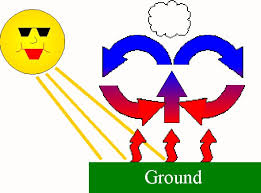
Warm air rises and the cool air sinks.
a)
conduction
b)
convection
c)
radiation
77.
What are winds that blow a short distance?
a)
Global Winds
b)
Local Winds
c)
Polar Easterlies
d)
Trade Winds
78.
Which type of wind blows at the equator?
a)
Polar Easterlies
b)
Trade Winds
c)
Prevailing Westerlies
d)
Jet Stream
79.
Which wind blows at the north and south poles?
a)
Jet Stream
b)
Polar Easterlies
c)
Prevailing Westerlies
d)
Breezes
80.
The way earths rotation makes the wind curve is called what?
a)
Trade Winds
b)
Prevailing Westerlies
c)
Equator
d)
Coriolis Effect
81.

Walking on the warm sand sand with your bare feet.
a)
conduction
b)
convection
c)
radiation
82.

A group of friends gather around a fire to stay warm.
a)
conduction
b)
convection
c)
radiation
83.
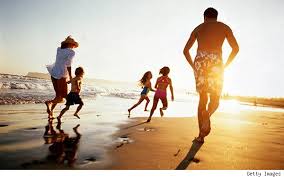
The sun shines down on this family as the play on the beach.
a)
conduction
b)
convection
c)
radiation
84.
The warm air from this heater creates a current when the warm air rises and the cold air sinks.
a)
conduction
b)
convection
c)
radiation
85.
Which of these is an example of precipitation?
a)
snow
b)
air
c)
clouds
d)
vapor
86.
Which is the opposite of condensation?
a)
runoff
b)
evaporation
c)
precipitation
d)
transpiration
87.
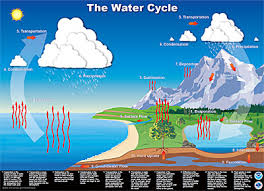
During which stage do clouds form?
a)
condensation
b)
evaporation
c)
precipitation
88.
The water cycle is also known as ..........
a)
Hypertonic Solution
b)
Hydrological Cycle
c)
Hyperlogical Cycle
d)
None of these
89.
What is a layer of rock or sediment that holds water?
a)
glacier
b)
well
c)
aquifer
d)
natural spring
90.
97% of the Earth's water is located in....
a)
ground wat
b)
the ocean
c)
lakes, rivers, and streams
d)
glaciers
91.
Which best describes the flow of heat?
a)
from a larger object to a smaller object
b)
from a warmer object to a cooler object
c)
from a cooler object to a warmer object
92.
10. Which best describes the process of convection?
a)
Convection is the primary way heat travels through rays.
b)
Convection is the primary way heat travels through metals.
c)
Convection is the primary way heat travels through appliances.
d)
Convection is the primary way heat travels through liquids and gasses.
93.
Gr is going to the park on a very hot day. She is trying to choose which color shirt to wear. She has a black shirt and a white shirt. Which color shirt will keep her the coolest and why?
a)
The black shirt, because it will reflect more heat
b)
The white shirt, because it will reflect more heat
c)
The white shirt, because it will absorb more heat
d)
the black shirt, because it will absorb more heat
94.
What is the main light and heat source?
a)
light bulb
b)
rain
c)
sun
95.
If an object has particles that are moving very quickly, the object 's temperature is probably _____.
a)
cold
b)
big
c)
slow
d)
hot
96.
The way heat travels through materials that are touching.
a)
convection
b)
radiation
c)
conduction
97.
T/F: Water vapor is a greenhouse gas
a)
True
b)
False
98.
Over the past 200 years, the level of carbon dioxide in the atmosphere has
a)
decreased slightly.
b)
increased until recently, and then decreased.
c)
increased steadily.
d)
stayed about the same.
99.
Consequences of climate change include:
a)
Stronger hurricanes
b)
Increased flooding
c)
Frequent droughts
d)
All of the above
100.
What chemical is responsible for breaking up the ozone?
a)
CFCs
b)
Carbon Dioxide
c)
Nitrogen
d)
Oxygen
100 %

