

Wayground logo

Free Printable Worksheets

Font size

S
M
L
XL
Worksheets

Thermodynamics Test Review Monache High School

Total questions: 48

Worksheet time: 1hrs 27mins

Name
Class
Date
1.
Thermal energy is referring to:
a)
Temperature
b)
Heat
c)
Movement
d)
Matter
2.
Temperature is a measure of the...
a)
total energy in a substance
b)
total kinetic energy in a substance
c)
average potential energy in a substance
d)
average kinetic energy of molecules in a substance
3.

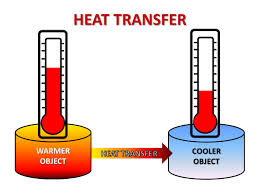
Heat is

a)

A measure of the temperature of an object

b)

The flow of energy due to a temperature difference

c)

How hot or cold something is

d)

How spicy your burrito tastes

4.

If the melting point of a substance is 123 oC and the boiling point is 300 oC, at what temperature would the substance be a liquid?

a)

50 oC

b)

100 oC

c)

150 oC

d)

400 oC

5.
As the kinetic energy of the molecules in a substance increases, the temperature of the substance __________.
a)
increases
b)
decreases
6.
The measure of average kinetic energy of all the particles within an object is called ____________. 
a)
temperature
b)
conduction
c)
radiation
d)
heat 
7.
Evaporation is what kind of change?
a)
Endothermic
b)
Exothermic
8.
When you freeze water, it turns to ice.  What process is this?
a)
 Exothermic
b)
Endothermic
9.
In an endothermic reaction the system is releasing energy.
a)
True
b)
False
10.
In an exothermic reaction, heat is ...
a)
taken in
b)
given out
11.
What type of reaction occurs in a hand warmer
a)
exothermic
b)
endothermic
12.
If a chemical reaction is EXOTHERMIC, the temperature would....
a)
Stay the same
b)
Increase
c)
Decrease
13.
During an endothermic reaction in a beaker if we are part of the surroundings and touched the beaker, it would feel _______. 
a)
Warm
b)
Cold
14.
Heat transfer [blank] occurs from hot to cold. 
a)
always
b)
never
c)
sometimes
d)
rarely
15.
Temperature is a measure of average [blank] energy of individual atoms.
a)
heat
b)
potential
c)
mechanical
d)
kinetic
16.
ΔH value in an endothermic reaction is a positive number.
a)
True
b)
False
17.
If 25 J are required to change the temperature of 5.0 g of substance A by 2.0°C, what is the specific heat of substance A? 
a)
250 J/g C
b)
10 J/g C
c)
63 J/g C
d)
2.5 J/g C
18.
 For which of these processes is the value of ΔH expected to be positive?
1.  The temperature increases when calcium chloride dissolves in water.
2.  Steam condenses to liquid water
3.  Water boils
4.  Dry ice sublimates
a)
4 only
b)
1 only
c)
3 and 4 only
d)
2 and 3 only
19.
26. What symbols indicate a change in Enthalpy?
a)
a) Triangle E
b)
b) Triangle H
c)
c) Circle E
d)
d) Circle H
20.
The specific heat of aluminum is 0.21 J/g°C.  How much heat(Q) is released when a 10 g piece of aluminum foil is taken out of the oven and cools from 100° to 50°?
a)
105 J
b)
10.5 J
c)
1.05 J
21.
For a skillet, used for cooking, do you want a high or low specific heat
a)
High, so that it will need more energy to heat up
b)
Low, so that it will change temperature quickly
22.
Specific heat of water is  4.18 J/g°C. Specific heat of wood is 1.760 J/g°C What material needs more heat energy to raise the temperature?
a)
Water
b)
Wood
c)
Both are same
23.

The specific heat(c) of copper is 0.39 J/g °C.

What is the temperature change(∆t)

when 100 Joules of heat(Q) is added to 20 grams?
a)
12.82 °C
b)
24.12°C
c)
351 °C
24.
The specific heat of aluminum is 0.21 cal/g°C.  How much heat(Q) is released when a 10 g piece of aluminum foil is taken out of the oven and cools from 100° to 50°?
a)
105 J
b)
10.5 J
c)
1.05 J
25.
20 g of water. specific heat of water is 4.18 J/x°C.  temperature changes from 25° C to 20° C, how much heat energy (Q) moves from the water to the surroundings?
a)
418 Joules
b)
209 J
c)
83 J
d)
4.18 J
26.
A material was cooled from 100ºC to 40ºC.  What is the temperature change?
a)
60ºC
b)
40ºC
c)
-60ºC
d)
-40ºC
27.
Heat transfers from an area of ____temperature to an area of ___ temperature.
a)
high to low
b)
low to high
c)
high to high
d)
It can travel high to low and low to high. 
28.
What is energy?
a)
the ability to cause change
b)
the ability to resist change
c)
the ability to lack change
d)
the ability to 
29.

Energy is

a)

Often Created

b)

Never Created Nor Distroyed

c)

The ability to do work of cause change

d)

measured in kPa.

e)

Two of these

30.

1 calorie is

a)

Equal to 1000 Calories

b)

4.184 kJ

c)

the amount of heat needed to raise 1 g of water 1 oC

d)

a unit to measure temperature

31.

The amount of heat gained or lost depends on

a)

the mass of the object

b)

the specific heat of the object

c)

the temperature change of the object

d)

all of these

32.

What state is liquid only

a)

A

b)

B

c)

C

d)

D

e)

E

33.

What states can liquid water exist

a)

2 only

b)

2 and 3

c)

3 only

d)

3 and 4

e)

2, 3, and 4

34.

What state shows the material condensing

a)

Moving left at 4

b)

Moving right at 4

c)

moving down 3

d)

Moving left at 2

e)

Moving right at 2

35.

Gas only

a)

P-Q

b)

Q-R

c)

R-S

d)

S-T

e)

T-U

36.

Liquid only

a)

P-Q

b)

Q-R

c)

R-S

d)

S-T

e)

T-U

37.

Solid only

a)

P-Q

b)

Q-R

c)

R-S

d)

S-T

e)

T-U

38.

Freezing

a)

P-Q

b)

Q-R

c)

R-S

d)

S-T

e)

T-U

39.

Melting Point

a)

P-Q

b)

T1

c)

R-S

d)

T2

e)

T-U

40.
If the enthalpy ter (ΔH) is negative the reaction is ____.
a)
Endothermic
b)
Exothermic
c)
Neutral
41.
When the change in enthalpy is positive the reaction is ___. When the change in enthalpy is negative the reaction is ___.
a)
 delayed ; spontaneous
b)
spontaneous ; delayed
c)
endothermic ; exothermic
d)
exothermic ; endothermic
42.

Enthalpy is the heat content of a system at constant pressure.

a)

False

b)

True

43.

Negative enthalpy indicates

a)

an exothermic reation

b)

an endothermic reation

c)

a slow reaction

d)

a fast reation

44.

Positive enthalpy indicates

a)

an exothermic reation

b)

an endothermic reation

c)

a slow reaction

d)

a fast reation

45.

In the calorimetry lab, when the 100 oC metal was placed in the room temperature water, what happened to the heat from the metal?

a)

It was transferred from the water to the metal.

b)

It made the water evaporate.

c)

it was transferred to the water.

d)

It was all lost to the environment.

46.

In the calorimetry lab, what equation explains the transfer of heat between the metal and the water?

a)

Q=mcΔT

b)

Qmetal = Qwater

c)

-Qmetal = Qwater

d)

Q= mΔHfus

47.

How much energy is required to completely melt 50g of ice at 0 oC?

a)

700 J

b)

16700 cal

c)

113 kcal

d)

16.7 kJ

48.

34.3 g of an unknown metal is heated to 100 oC. It is then placed in 51.0 g of water at 25 oC, the temperature of the water rises to 30 oC. Based on the chart, what is the most likely material the metal is made out of?

a)

Zn

b)

Cu

c)

Ni

d)

Mn
