
 Worksheets
Oceans and Weather
Total questions: 62
Worksheet time: 1hrs 28mins
Name
Class
Date
1.

A cold front is approaching Minneapolis. What will happen to the air temperature?
a)
stay the same
b)
increase
c)
decrease
2.
A __________ is the lines between air masses.
a)
low pressure system
b)
high pressure system
c)
front
3.
Evaporation is caused by
a)
the sun cooling
b)
the sun's heat energy
c)
the moons heat energy
d)
the moon cooling
4.
A warm front means the air temperature will
a)
stay the same
b)
increase
c)
decrease
5.
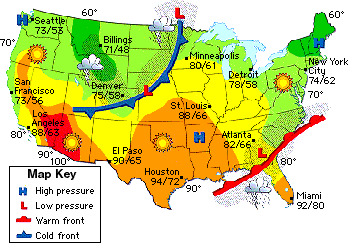
A low pressure system is located over Georgia. What type of weather will they have?
a)
clear, sunny skies
b)
cloudy and rainy
6.
A high pressure system is located north of New York City. What type of weather will be experienced there?
a)
clear, sunny skies
b)
cloudy and rainy
7.
High Pressure is associated with this type of weather...
a)
Cloudy/Overcast Weather
b)
Cold Weather
c)
Warm Weather
d)
Fair Weather
8.
Low Pressure is associated with this type of weather...
a)
Cloudy/Overcast Weather
b)
Cold Weather
c)
Warm Weather
d)
Fair Weather
9.
A cold front moving into an area can bring this type of weather...
a)
Warmer Temperatures, Clear Skies
b)
Colder Temperatures, Clear Skies
c)
Warmer Temperatures, Clouds
d)
Colder Temperatures, Clouds, and Precipitation
10.
A warm front moving into an area can bring this type of weather...
a)
Warmer Temperatures, Clear Skies
b)
Colder Temperatures, Clear Skies
c)
Warmer Temperatures, Clouds, and steady precipitation
d)
Colder Temperatures, Clouds, and Precipitation
11.
Warm air mass that does not carry water:
a)
continental tropical
b)
continental polar
c)
maritime tropical
d)
maritime polar
12.
Warm air moving upwards from the Gulf of Mexico is:
a)
continental tropical
b)
continental polar
c)
maritime tropical
d)
maritime polar
13.
____________ air sinks/falls because it is ____________dense.
a)
Cold, More
b)
Warm, Less
c)
Cold, Less
d)
Warm, More
14.

This Symbol is associated with a _____________________Front.
a)
Warm
b)
Occluded
c)
Cold
d)
Stationary
15.

This picture represents the symbol for a __________________________Front.
a)
Warm
b)
Occluded
c)
Cold
d)
Stationary
16.

Is this a land or a sea breeze?
a)
land breeze
b)
sea breeze
17.
What causes warm air to rise?
a)
the fact that it's less dense than cold air
b)
The fact that it weighs more than cold air
c)
The fact that it has higher pressure than cold
d)
the fact that its more dense than cold air
18.
This is when the rotation of the Earth deflects the direction of the wind.
a)
convergent effect
b)
marginal effect
c)
Coriolis effect
d)
Mariolis effect
19.
The main reason land and sea breezes exist is because:
a)
the earth revolves around the sun
b)
the earth is tilted on an axis
c)
of the temperature difference between land and water
d)
of global warming
20.

What direction is the cold front moving?
a)
Northwest
b)
Southeast
c)
Northeast
d)
Southwest
21.

Look in the top right corner for the X. What could cause this location (Stavanger, Norway) to have a warmer climate than the rest of Norway?
a)
Stavanger is the southernmost city
b)
the Gulf Stream current carries warm water to the Stavanger area
c)
the Arctic current carries cold water toward Norway
d)
there is no sea ice in the region to create the cold, deep ocean currents
22.

Hurricanes
a)
begin as a group of thunderstorms moving over tropical ocean water
b)
die in colder water or over land because they lose their source of energy
c)
have a center called the eye
d)
all of these
23.

Both Iceland and Greenland are countries just below the Arctic Circle. Why does Iceland have a warmer climate than Greenland?
a)
elevation
b)
surface currents
c)
latitude
d)
precipitation
24.

What is one of the effects of the uneven heating of Earth?
a)
Global warming
b)
solar flares
c)
wind
d)
latitudes and longitudes
25.

Earth's weather is primarily caused by ...
a)
drifting of Earth's crustal plates
b)
gravitational attraction of the Moon
c)
uneven heating of Earth's surface
d)
changing distance between Earth and the Sun
26.

Thunderstorms are more common in some places than others. Why are there more thunderstorms in Florida than California?
a)
Florida is smaller than California
b)
air in Florida is more stable that the air in California
c)
the air above Florida hold less moisture than the air above California
d)
ocean currents near Florida are warmer than the ocean currents near California
27.

The weather map show the weather conditions for one day across the United States. Which city will most likely have decreasing temperatures during the next 24 hours?
a)
Denver, because it's raining there
b)
Minneapolis, because a cold front is approaching
c)
Atlanta, because a warm front is approaching
d)
Houston, because it is a high-pressure area
28.

If you have a low pressure system over open ocean water that is warm, these conditions might cause a....
a)
hurricane
b)
tornado
c)
earthquake
29.

Which weather front are severe storms most likely to develop?
a)
warm front
b)
stationary front
c)
cold front
d)
occluded front
30.

What source causes the water to evaporate?
a)
The Moon
b)
The Stars
c)
The Sun
31.

High pressure means GOOD weather because....
a)
the air masses rise
b)
the air masses sink, making it difficult for clouds to form
c)
clouds are blown away by wind
d)
none of these
32.

Look at the map of sea surface temperatures. The patterns in thermal differences that generate ocean currents are explained by the fact that...
a)
Earth is widest at the Equator, so this part spins faster than the poles
b)
the denser, cold water near the poles rises, and warm water sinks near the Equator
c)
the Equator receives more of the Sun's radiation than other parts of the Earth
d)
the amount of salinity is much less at the Equator that the rest of the Earth
33.

What effect does the unequal heating of the Earth cause?
a)
it changes the density of air masses and helps wind move
b)
it changes the direction of air masses
c)
it changes the temperature of air masses and stops the wind
d)
it changes the seasons
34.

What is the weather like in Denver, Colorado?
a)
cold front & rain
b)
warm and raining by the front line with a low pressure
c)
sunny, no clouds in the sky
d)
cold, cloudy and snowing
35.
What is the weather like in Florida?
a)
cold front & rain
b)
warm and raining by the front line with a low pressure
c)
sunny, no clouds in the sky
d)
cold, cloudy and snowing
36.
What is the weather like in New York?
a)
cold front & rain
b)
warm and raining by the front line with a low pressure
c)
sunny, no clouds in the sky
d)
cold, cloudy and snowing
37.
___________________ currents happen because hot materials rise, cool off, then fall, replacing the risen air.
a)
Wind
b)
Sun
c)
Convection
d)
Earth
38.

a)
High Air Pressure
b)
High Temperatures
c)
Heavy Rain
d)
Hail
39.

a)
Low Clouds
b)
Low Temperatures
c)
Light Wind
d)
Low Air Pressure
40.
In order for a hurricane to form, the water must be ________.
a)
Cool
b)
Warm
c)
Cold
d)
Hot
41.
Hurricanes develop in ________ regions.
a)
Arctic
b)
Tropical
c)
Arid
d)
None of the above
42.
Hurricane season goes from ______ 1st to _______ 30th
a)
June, October
b)
April, September
c)
June, November
d)
May, October
43.
Where do most hurricanes develop?
a)
Middle of the United States
b)
Near the Equator
c)
Near Canada and Alaska
d)
Antarctica
44.
Warm ocean currents generally come from
a)
The North Pole
b)
The South Pole
c)
The Equator
d)
Both A and B
45.
Cold ocean currents generally come from
a)
The North Pole
b)
The South Pole
c)
The Equator
d)
Both A and B
46.
What process brings the deep cold ocean currents up to the surface?
a)
Conduction
b)
Global Wind Patterns
c)
Convection Currents
d)
Temperature and salinity
47.
The Coriolis Effect is a force caused by:
a)
Earth's rotation
b)
Earth's spinning core
c)
Earth's tides
d)
Earth's seasons
48.

Which type of pressure system is pictured?
a)
High
b)
Low
c)
Medium
d)
None
49.

What type of pressure system is pictured?
a)
High
b)
Low
c)
Medium
d)
None
50.
Which of the following is correct?
a)
warmer ocean currents = warmer climate
b)
cooler ocean currents = warmer climate
c)
warmer ocean currents = cooler climate
51.
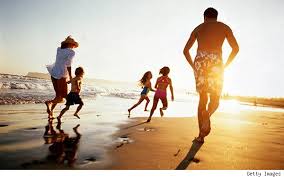
The sun shines down on this family as the play on the beach.
a)
conduction
b)
convection
c)
radiation
52.

A group of friends gather around a fire to stay warm.
a)
conduction
b)
convection
c)
radiation
53.
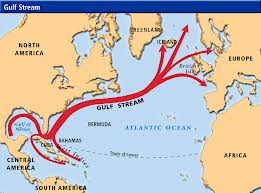
The Gulf Stream is a current that brings warm ocean water from the south to the north.
a)
conduction
b)
convection
c)
radiation
54.

Walking on the warm sand sand with your bare feet.
a)
conduction
b)
convection
c)
radiation
55.

Which direction will the heat flow while this person holds a hot cup of tea?
a)
from the cup to her hand
b)
from her hand to the cup
c)
no heat is transferred
56.

Which direction will the heat flow while this ice cap melts?
a)
there is no heat transfer
b)
from the icecap to the water
c)
from the water to the icecap
57.

The man goes to take the hot pot off the stove with his bare hands.
a)
conduction
b)
convection
c)
radiation
58.
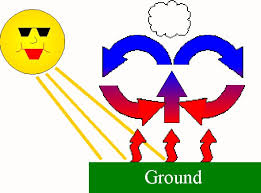
Warm air rises and the cool air sinks.
a)
conduction
b)
convection
c)
radiation
59.
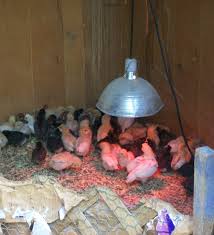
The baby chickens are kept warm from the heat lamps.
a)
conduction
b)
convection
c)
radiation
60.
What is the definition of CONDUCTION?
a)
When heat is transferred from objects like rays of light or electromagnetically.
b)
a hot liquid or air that expands, becomes less dense, and rises or becomes more dense, and sinks.
c)
When heat transfers from objects that are touching.
d)
When heat transfers through the heater or AC in your house.
61.
The kind of heat transfer that travels through space in electromagnetic waves is ______________________.
a)
insulation.
b)
Radiation
c)
Conduction
d)
Convection
62.
___________________ is the type of heat transfer that occurs in fluids, such as warm air rising and cold air sinking; creating wind.
a)
Convection
b)
Conduction
c)
Radiation
d)
insulation.
100 %

