wayground logo

Free Printable Worksheets

Font size

S
M
L
XL
Worksheets

Classification Quiz

Total questions: 95

Worksheet time: 2hrs 30mins

Name
Class
Date
1.
 You would find mushrooms in which kingdom?
a)
Plantae
b)
Protists
c)
Fungi
d)
Animalia
2.
Which kingdom do humans belong to?
a)
Plantae
b)
Fungi
c)
Animalia
d)
Protista
3.
The scientific name for an organism is made from the:
a)
class and family name
b)
genus and species name
c)
domain and kingdom name
d)
kingdom and phylum name
4.
Term given to describe the 2 name naming system is:
a)
dichotmous key
b)
binomial nomenclature
c)
2 scientific names
d)
binomial key
5.
The 8 levels of classification, most broad to most specific.
a)
Domain, Genus, Family, Order, Class, Phylum, Kingdom, Species
b)
Domain, Species, Kingdom, Genus, Phylum, Family, Class, Order
c)
Domain, Kingdom, Phylum, Class, Order, Family, Genus, Species
d)
Order, Kingdom, Species, Domain, Phylum, Family, Class, Genus
6.
A dichotomous key for trees is provided. Hikers found a tree that has large brown cones and single sharp needles. What species of tree have the hikers found?
a)
Juniper
b)
Pine
c)
Spruce
d)
Fir
7.
An illustration and a dichotomous key are given. What is the correct classification for this organism?
a)
Class Insecta
b)
Order Amblygygi
c)
Order Araneae
d)
Order Scorpiones
8.
Which of the following organisms are MOST closely related?
a)
organisms that share a domain
b)
organisms that share a family 
c)
organisms that share a genus 
d)
organisms that share an order  
9.
What is the name of bird Z?
a)
Certhidea
b)
Geospiza
c)
Camarhynchus
d)
Platyspiza
10.
Which of the following characteristics will most likely be helpful in identifying a butterfly using a dichotomous key?
a)
Migrates north every spring
b)
hangs on branches
c)
flutters wings fast on hot days
d)
Wings have long extensions
11.
A labeled diagram of a fiddler crab is provided. Which of the following is an accurate observation of the structures of a fiddler crab? Fiddler crabs have -
a)
five pairs of walking legs on each side.
b)
an enlarged propodus on both front legs.
c)
a pair of eyes on stalks at the top of the body.
d)
two pairs or chelipeds for a total of four.
12.
What step do we always start with when using dichotomous keys?
a)
1
b)
2
c)
3
d)
4
13.
Cladograms are constructed by grouping organisms together based on their____________ characteristics.
a)
shared
b)
different
c)
similar
d)
opposite
14.
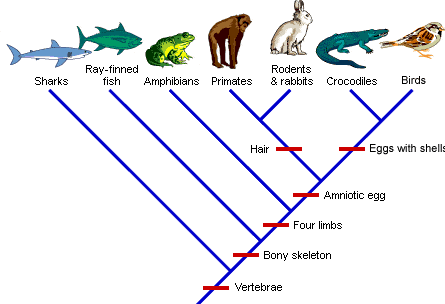
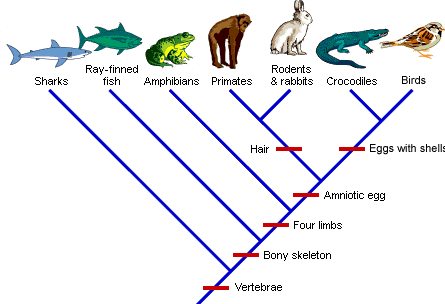
According to this cladogram, sharks are MOST closely related to which organism? 
a)
Amphibians
b)
Ray finned fish
c)
Crocodiles
d)
Birds
15.
Which two orgainsms have hair? 
a)
Sharks & Ray Finned Fish
b)
Primates & Rodents
c)
Birds & Crocodiles
d)
Rabbits & Birds
16.
According to this cladogram, birds are LEAST related to: 
a)
Amphibians
b)
Sharks
c)
Ray Finned Fish
d)
Crocodiles
17.
Who first proposed binomial nomenclature as a way of classifying organisms?
a)
Carolus Linnaeus
b)
Carl's Jr.
c)
Charles Darwin
d)
Henry Groseclose
18.
On the cladogram, which organism is the closest relative of the human?
a)
Frog
b)
Hare
c)
Caiman
d)
Parrot
19.
Which trait do only humans have, according to the cladogram?
a)
jaws
b)
mammary glands & hair
c)
terrestrial during all life stages
d)
bipedal & opposable thumbs
20.
What is the most specific level of classification?
a)
Family
b)
Domain
c)
Species
d)
Carolus Linnaeus
21.
Which domain includes all animals and plants?
a)
Archaea
b)
Eukarya
c)
Bacteria
22.
Almost all bacteria are...
a)
Unicellular
b)
Multicellular
23.
Which two kingdoms are entirely multicellular?
a)
Animalia and Plantae
b)
Animalia and Protista
c)
Protista and Plantae
24.
To which phylum do birds and cats belong?
a)
Arthropoda
b)
Chordata
c)
Echinodermata
d)
Cnidaria
25.
To say that an organism is heterotrophic means...
a)
it cannot reproduce asexually
b)
it cannot make its own food
c)
it cannot breathe oxygen gas
26.
Which kingdoms have some organisms that can make their own food (autotrophic)?
a)
Plantae and Animalia
b)
Fungi and Plantae
c)
Protista and Plantae
27.
Organisms whose cells have NO nucleus are classified as...
a)
Eukaryotic
b)
Prokaryotic
c)
Dead
28.
True or False: All cells have DNA.
a)
True
b)
False
29.
True or False: All living things are made of one or more cells.
a)
True
b)
False
30.
Choose the correct way to write the scientific name for humans:
a)
homo sapiens
b)
Homosapiens
c)
Homo sapiens
d)
Homo Sapiens
31.
Mold, yeast, and mushrooms all belong to the Kingdom _______.
a)
Archaebacteria
b)
Fungi
c)
Eubacteria
d)
Protista
32.
Most animals in this phylum have a backbone.
a)
Arthropoda
b)
Chordata
c)
Annelida
d)
Mollusca
33.

In the name of the white oak, Quercus alba, Quercus is the species name.

a)

True

b)

False

34.

A system for naming species in which two words are used to name organisms is _____.

a)

cladistics

b)

fan diagramming

c)

binomial nomenclature

d)

dichotomous naming

35.

The science of grouping and naming organisms is ____.

a)

classification

b)

taxonomy

c)

nomenclature

d)

phylogeny

36.

The placing of information or objects into groups based on certain similarities is ____.

a)

biochemical analysis

b)

classification

c)

phylogeny

d)

speciation

37.
Which of these animals would be considered a vertebrate?
a)
Catfish
b)
Clam
c)
Sponge
d)
Octopus
38.

Which is the correct order?

a)

Kingdom Phylum Order Class

b)

Class Order Family Genus

c)

Domain Phylum Kingdom Species

d)

Order Family Species Genus

39.

You find a species that seems to be unicellular and is eating smaller cells around it. It has organelles and a nucleus. Which kingdom is it MOST likely a part of?

a)

Fungi

b)

Bacteria

c)

Protists

d)

Plants

40.
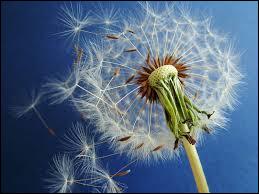
Dandelion, What kingdom does it belongs to?
a)
Plant Kingdom
b)
Animal Kingdom
c)
Fungi Kingdom
d)
Protista Kingdom
41.
Which organisms are most closely related?
a)
Equus caballas (Horse) & Equus burchellii (Zebra)
b)
Cyanea artica (Jellyfish) &
Ctenodiscus crispatus (Mud Starfish)
c)
Naja naja (cobra) & Glycine max (soya bean)
d)
Ophiocomina nigra (black brittle star) & Brassica nigra (black mustard)
42.
An organism made up of more than one cell would be called:
a)
multicellular
b)
unicellular
c)
heterotroph
d)
autotroph
43.
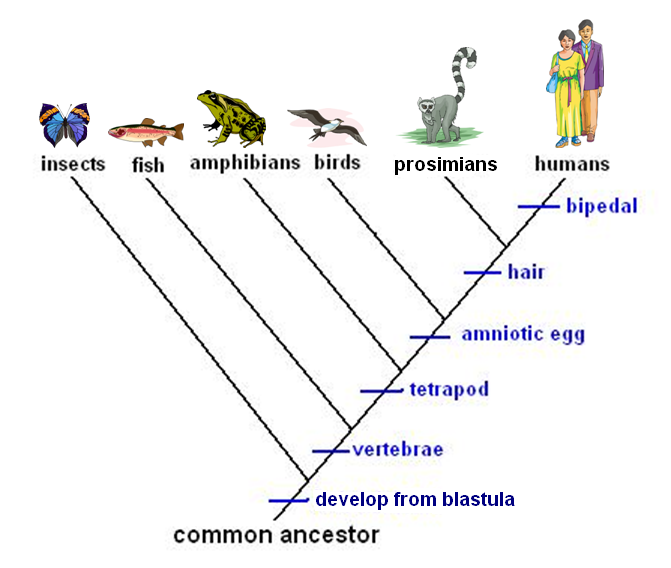
Which organisms pictured on the cladogram have hair?
a)
prosimians only
b)
prosimians and humans
c)
humans only
d)
prosimians and birds
44.
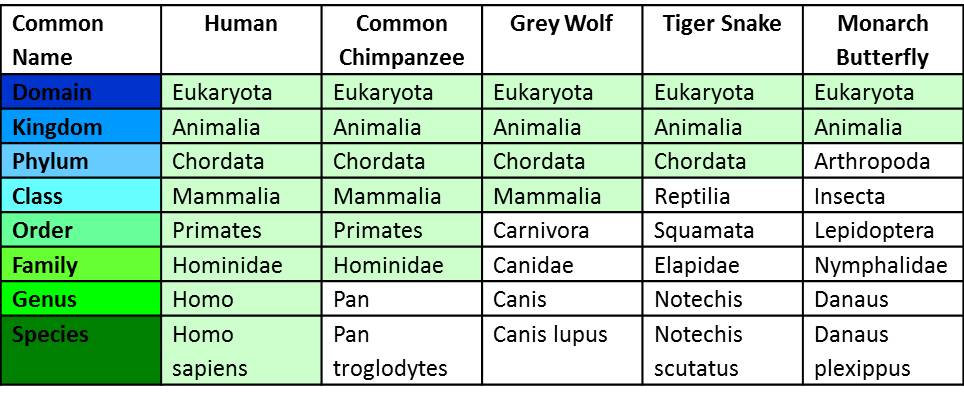
Which organism in the table is least closely related to the chimpanzee?
a)
human
b)
grey wolf
c)
tiger snake
d)
monarch butterfly
45.

Which 2 organisms would be able to reproduce and produce fertile offspring?

a)

2 organisms in the same class

b)

2 organisms in the same family

c)

2 organisms in the same genus

d)

2 organisms in the same species

46.
Animals must eat other organisms for food, so they are classified as--
a)
heterotrophs
b)
autotrophs
c)
eukaryotic
d)
prokaryotic
47.
When DNA is contained in a nucleus, the cell is
a)
eukaryotic
b)
prokaryotic
c)
unicellular
d)
multicellular
48.
All organisms that do not fit into plant, fungi, and animal kingdoms but have a nucleus are:
a)
archaebacteria
b)
eubacteria
c)
protists
d)
fungus
49.
This kingdom is unicellular and prokaryotic.
a)
Bacteria
b)
Protista
c)
Fungi
d)
Animalia
50.
Tigers, Jellyfish, Gorillas and Sponges are all part of kingdom _______.
a)
Animalia
b)
Plantae
c)
Fungi
d)
Bacteria
51.
What kingdom is always multicellular, heterotrophic and has NO cell wall?
a)
Protista
b)
Fungi
c)
Plantae
d)
Animalia
52.
All of the following have a nucleus except...
a)
Bacteria
b)
Animalia
c)
Plantae
d)
Protista
53.
In which kingdom do I belong if I am unicellular, autotrophic, and eukaryotic?
a)
Archaebacteria
b)
Protista
c)
Animalia
d)
Plantae
54.
 You would find mushrooms in which kingdom?
a)
Plantae
b)
Protists
c)
Fungi
d)
Animalia
55.
This domain is characterized by ancient bacteria that can live in extreme environments, such as hot springs.
a)
Archaea
b)
Bacteria
c)
Eukarya
d)
Prokarya
56.
This kingdom contains heterotrophic organisms that can be unicellular or multicellular. Organisms from this kingdom can sometimes cause athlete's foot or ringworm.
a)
Fungi
b)
Animalia
c)
Protista
d)
Archaebacteria
57.
Which kingdom would this organism belong to?
a)
Plantae
b)
Archaebacteria
c)
Protista
d)
Animalia
58.
Which kingdom do humans belong to?
a)
Plantae
b)
Fungi
c)
Animalia
d)
Protista
59.
Which kingdoms are prokaryotic?
a)
Archaebacteria and Animalia
b)
Eubacteria and Archaebacteria
c)
Fungi and Protista
d)
Plantae and Eubacteria
60.
This organism is found in a normal environment.  What kingdom does it belong to?  
a)
Eubacteria
b)
Protista
c)
Archaebacteria
d)
Fungi
61.
What are the three domains?
a)
Archaea, Bacteria, and Eubacteria
b)
Archaea, Protista, and Eubacteria
c)
Archaea, Bacteria, and Eukarya
d)
Archaea, Fungi, Animalia
62.
Organisms that are classified as unicellular are --
a)
seen with the naked eye
b)
many celled organisms
c)
single celled organisms
d)
able to make their own food
63.
This kingdom contains organisms such as trees, plants and shrubs.
a)
Fungi
b)
Plantae
c)
Animalia
d)
Protista
64.
What kingdom would this organism be classified as? (Click text to reveal picture)
a)
Protista
b)
Eubacteria
c)
Archaebacteria
d)
Fungi
65.
The scientific name for water bear is Hypsibius dujardini.  What is its genus?
a)
Hypsibius 
b)
dujardini
c)
water 
d)
tardigrade
66.
Who organized living things by creating binomial nomenclature?
a)
Carolus Linnaeus
b)
Robert Hooke
c)
Anton van Leeuwenhoek
d)
James Watson
67.
What are the 8 levels of classification of living things from most general to most specific?
a)
domain, kingdom, phylum, class, order, family, genus, species
b)
domain, kingdom, phylum, class, order, family, genius, species
c)
domain, kingdom, phamily, class, order, family, genus, species
d)
domain, king, phillip, class, order, family, genus, species
68.
The scientific name for water bear is Hypsibius dujardini.  What is its species?
a)
Hypsibius 
b)
dujardini
c)
water 
d)
tardigrade
69.
How do scientists organize living things?
a)
by looks
b)
by shared characteristics
c)
by size
d)
by differences
70.
What is the science of organizing, classifying and naming living things.
a)
taxonomy
b)
taxadermy
c)
taxicab
d)
toxicology
71.
If two species share the same class, they also share the same______.
a)
phylum
b)
order
c)
genus
d)
species
72.
In a properly written scientific name, which part is lowercase?
a)
species
b)
genus
73.
In a properly written scientific name, which part is capitalized?
a)
species
b)
genus
74.
Who is the closest relative to the birds?
a)
crocodiles
b)
sharks
c)
fish
d)
amphibians
75.
Who is the closest relative to the sharks?
a)
crocodiles
b)
sharks
c)
ray-finned fish
d)
amphibians
76.

In Aristotle's system of classification, animals were classified on the basis of their size and structure.

a)

True

b)

False

77.

In the name of the white oak, Quercus alba, Quercus is the species name.

a)

True

b)

False

78.

Group of related species

a)

phylum

b)

order

c)

genera (genus)

d)

kingdom

79.

Which of the following is in order from broadest to most specific?

a)

species → genus → family → order

b)

phylum → class → order → family

c)

domain → kingdom → class → phylum

d)

genus → phylum → class → order

80.

A new organism was discovered with the characteristics in the table below:

Prokaryotic

Unicellular

Cell walls do not contain peptidoglycan

Autotrophic and Heterotrophic

Can live in extreme environments


In which kingdom should this new organism be placed?

a)

Fungi

b)

Eubacteria

c)

Protist

d)

Archaebacteria

81.

Which of the following puts the levels of classification in order from smallest to largest?

a)

species → genus → family → order → class → phylum → kingdom → domain

b)

species → phylum → family → order → kingdom → genus → class → domain

c)

domain → genus → family → species → phylum → class → kingdom → order

d)

class → phylum → kingdom → domain → species → genus → family → order

82.

A new organism was discovered with the characteristics in the table below:


Eukaryotic

Multicellular

Cell walls made of cellulose

Autotrophic

Does not move


In which kingdom should this new organism be placed?

a)

Fungi

b)

Plant

c)

Protist

d)

Eubacteria

83.

Use the cladogram to answer the following question:


According to the cladogram, which organisms are thought to be the MOST CLOSELY related?

a)

A and C

b)

B and C

c)

B and D

d)

A and B

84.

Which kingdom contains yeast, molds, and mushrooms, which have chitin in their cell walls?

a)

Fungi

b)

Eubacteria

c)

Protista

d)

Plant

85.
Which chart correctly identifies an example of an organism classified in each domain?
a)
1
b)
2
c)
3
d)
4
86.
Scientists classify living organisms by _ 
a)
giving each one several different kingdom names
b)
the type of brain the organism has
c)
placing them in groups with organisms that share similar characteristics.
d)
determining if the organism is harmful or helpful
87.
What type of cells do the domain classification of Bacteria contain?
a)
Eukaryotic
b)
Exkaryotic
c)
Prokaryotic
d)
Semikaryotic
88.
What kingdom is classified under the Archaea domain?
a)
Eubacteria
b)
Somabacteria
c)
Archaebacteria
d)
Probacteria
89.
What process do most bacteria use to reproduce?
a)
Meiosis
b)
Cytokinesis
c)
Binary Fission
d)
Sexual reproduction
90.
The three major groups of archaebacteria are -
a)
salt lover, decomposers, and cyanobacteria
b)
producers, consumers, and autotrophs
c)
heat lovers, salt lovers, and methane makers
d)
methane makers, photosynthesizers, and salt lovers
91.
Which scientist developed the system of classification known as binomial nomenclature?
a)
Carolus Linnaeus
b)
Francesco Redi
c)
John Ray
d)
Anton van Leeuwenhoek
92.
A male strawberry poison-dart frog is looking for a mate.  In order for him to mate successfully and produce fertile offspring - 
a)
he must mate with another strawberry poison-dart frog
b)
he can mate with any frog that lives in the same location
c)
he must mate with a frog of the same color
d)
he can mate with any type of poisonous frog
93.
The last level of classification in the figure should be labeled - 
a)
Order
b)
Class
c)
Family
d)
Species
94.
A horse and a donkey can mate and produce an offspring of a mule.  What is one reason why a horse and donkey are NOT considered the same species?
a)
The mule offspring is unable to reproduce.
b)
The horse and donkey are not classified as Kingdom Animalia.
c)
The horse and donkey naturally created the mule offspring.
d)
The horse has a larger body size than the donkey.
95.
The scientific name given to the white oak in Quercus alba.  What genus does this tree belong to?
a)
Quercus
b)
Canis
c)
Alba
d)
Plantae