wayground logo

Free Printable Worksheets

NEW

Font size

S
M
L
XL
Worksheets

Animal Unit Review

Total questions: 35

Worksheet time: 24mins
Name
Class
Date
1.
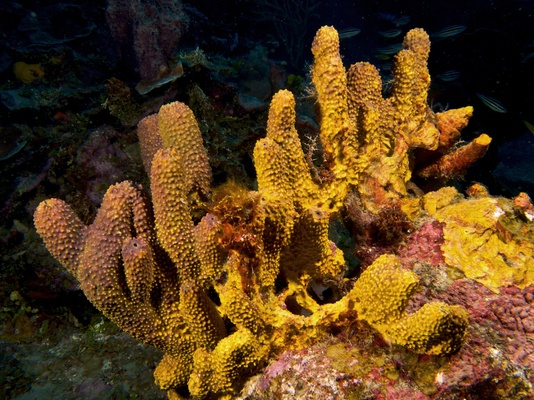
What type of symmetry does a sponge have?
a)
Asymmetry
b)
Radial
c)
Bilateral
2.
Which group of animals has bones, fur or hair, and feeds milk to its babies?
a)
birds
b)
fish
c)
insects
d)
mammals
3.
How are rabbits adapted to live in their environment?
a)
They have patterns that look like eyes on their backs.
b)
They are invisible.
c)
Their fur changes color to keep camouflage.
d)
They look like a tree branch.
4.
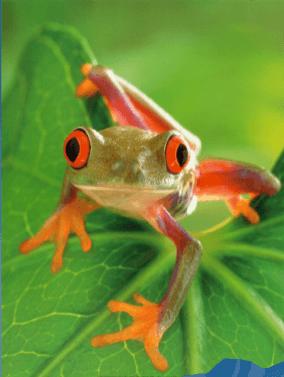
What adaptation helps a frog live in a wet environment?
a)
smooth, wet skin
b)
good eyesight
c)
light color
d)
dry, rough skin
5.
Choose the characteristics that animals must possess in the Animal Kingdom.
a)
multicellular
b)
eukaryotic and multicellular
c)
eukaryotic, multicellular, heterotroph
d)
eukaryotic, multicellular, autotroph
6.
The scientific study of how organisms are classified is ____________
a)
Diversity
b)
Classification
c)
Biology
d)
Taxonomy
7.
An autotroph is _________.
a)
An organism that must rely on external resources for food
b)
An organism that produces their own food
c)
An organism that just eats meat
d)
An organism that just eats plants
8.
The broadest level of classification of organisms is the _______ level.
a)
Kingdom
b)
Domain
c)
Genus
d)
Species
9.
Organisms that cannot make their own food are called
a)
heterotrophs
b)
autotrophs
c)
producers
d)
sessile
10.
There are
a)
a lot more vertebrates than invertebrates
b)
a lot more invertebrates than vertebrates
c)
equal numbers of vertebrates and invertebrates
d)
no vertebrates or invertebrates
11.

I lay eggs without shells, and live in the water when I am young, then live on land. What am I?

a)

Amphibian

b)

Reptile

c)

Bird

d)

Fish

12.

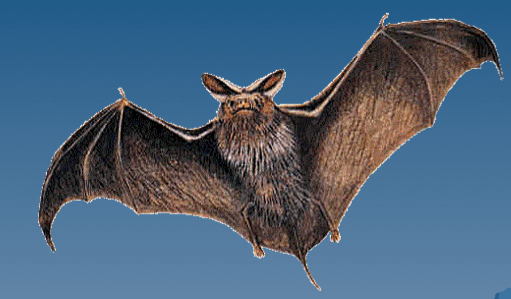
My body is warm, I have fur, feed my young on milk, and have live births. What am I?

a)

Reptile

b)

Bird

c)

Mammal

d)

Fish

13.

What type of symmetry do circular or star-shaped organisms exhibit?

a)

Asymmetry

b)

Bilateral Symmetry

c)

Radial Symmetry

14.
Which animal does NOT have an endoskeleton?
a)
sea star
b)
shark
c)
snake
d)
snail
15.
Worms are ____ because they produce eggs and sperm in the same body.
a)
sexual
b)
asexual
c)
hermaphrodites
16.
This hydra is reproducing asexually by which method?
a)
budding
b)
fragmentation
c)
regeneration
d)
parthenogenesis
17.
Animals are
a)
all unicellular
b)
all multicellular
c)
mostly unicellular
d)
mostly multicellular
18.
All animals are capable of 
a)
flight
b)
sight
c)
movement
d)
speech
19.

An arctic fox's coat changes color to blend into its surroundings. This is called________

a)

hibernation

b)

camouflage

20.

Which of the following is an adaptation that helps a seal survive in a cold habitat?

a)

blubber

b)

body shape

c)

skin color

d)

sharp teeth

21.
A(n)_________________________ animal is warm-blooded and maintains a nearly  constant internal body temperature.
a)
Cold-Blooded
b)
Ectothermic
c)
Mixed Blooded
d)
Endothermic
22.
Which is NOT a major group of reptiles?
a)
Turtles and tortoises
b)
Lizards and snakes
c)
Frogs and toads
d)
Alligators and Crocodiles
23.
Ectothermic, lay eggs, and breathe with lungs their entire life are characteristics of what type of animal?
a)
Amphibians
b)
Birds
c)
Reptiles 
d)
Mammals
24.
Which is true of mammals?
a)
Most mammals breathe with gills
b)
Most have babies that are born live
c)
ALL mammals are ectothermic
d)
Most mammals live underwater
25.
List the levels of taxonomy in order from largest to smallest?
a)
Kingdom, class, order, family, genus, species
b)
Kingdom, Phylum, Class, Order, Family, Genus, Species
c)
Species, Genus, Family, Order, Class, Phylum, Kingdom
d)
Kingdom, Phylum, Class, Family, Order, Genus, Species
26.
Two word naming system to classify organisms?
a)
Dichotomous key
b)
Binomial Flomenclature
c)
Binomial Nomenclature
d)
Dichotomous bee
27.
If two organisms belong to the same class then they also belong to the same what?
a)
Kingdom, species
b)
Kingdom, order
c)
Kingdom, phylum
d)
Kingdom, family
28.
If two organisms belong to the same family as another organism then they share the same what?
a)
kingdom, phylum, class, order, family, genus, species
b)
kingdom, phylum, class, order
c)
kingdom, phylum
d)
they would not share any other levels 
29.
Which one is not a rule when writing scientific names?
a)
species is capitalized 
b)
written in italics
c)
written in latin and greek
d)
genus is the first word and species is the second word
30.

Why do scientists organise living things into groups?

a)

So that the organisms are easier to study.

b)

So they can make sense of the variety of rocks on Earth.

c)

So products from living things can be easily found in shops.

d)

To make things more complicated.

31.

Which kingdom includes only multi-cellular heterotrophs?

a)

Plants

b)

Animals

c)

Monera

d)

Fungi

32.

The domestic cat's scientific name is Felis catus. Which genus does it belong to ?

a)

catus

b)

Felis

c)

Carnivora

d)

Mammalia

33.

The greatest number of similarities between organisms in a group will be seen in:

a)

A kingdom

b)

A family

c)

An order

d)

A phylum

34.
Which of the following organisms are MOST closely related?
a)
organisms that share a domain
b)
organisms that share a family 
c)
organisms that share a genus 
d)
organisms that share an order  
35.
What are the three domains?
a)
Archaea, Bacteria, and Eubacteria
b)
Archaea, Protists, and Eubacteria
c)
Archaea, Bacteria, and Eukarya
d)
Archaea, Fungi, Animalia