

wayground logo

Free Printable Worksheets

NEW

Font size

S
M
L
XL
Worksheets

Properties, Changes, Endo/Exo, RxN Types, Chemical Formulas

Total questions: 78

Worksheet time: 1hrs 8mins

Name
Class
Date
1.
Evidence of Chemical Change.
a)
New Substance 
b)
Size change
c)
State change
d)
Mixture 
2.
Evidence of a physical change.
a)
New substance
b)
Shape Change
c)
Light produced
d)
Gas released.
3.
Water boiling is a _______ change. 
a)
Physical Change 
b)
Chemical Change 
4.
A chemical reaction accompanied by the absorption of heat. 
a)
Chemical Change
b)
Physical Change
c)
Endothermic Reaction
d)
Exothermic Reaction 
5.
A cold pack made with Ammonium Chloride is and example of a __________ reaction. 
a)
Endothermic Reaction
b)
Exothermic Reaction
c)
Mesothermic Reaction
d)
Misothermic Reaction
6.
A chemical reaction accompanied by the releasing of heat. 
a)
Endothermic
b)
Exothermic
c)
Mesothermic
d)
Misothermic
7.
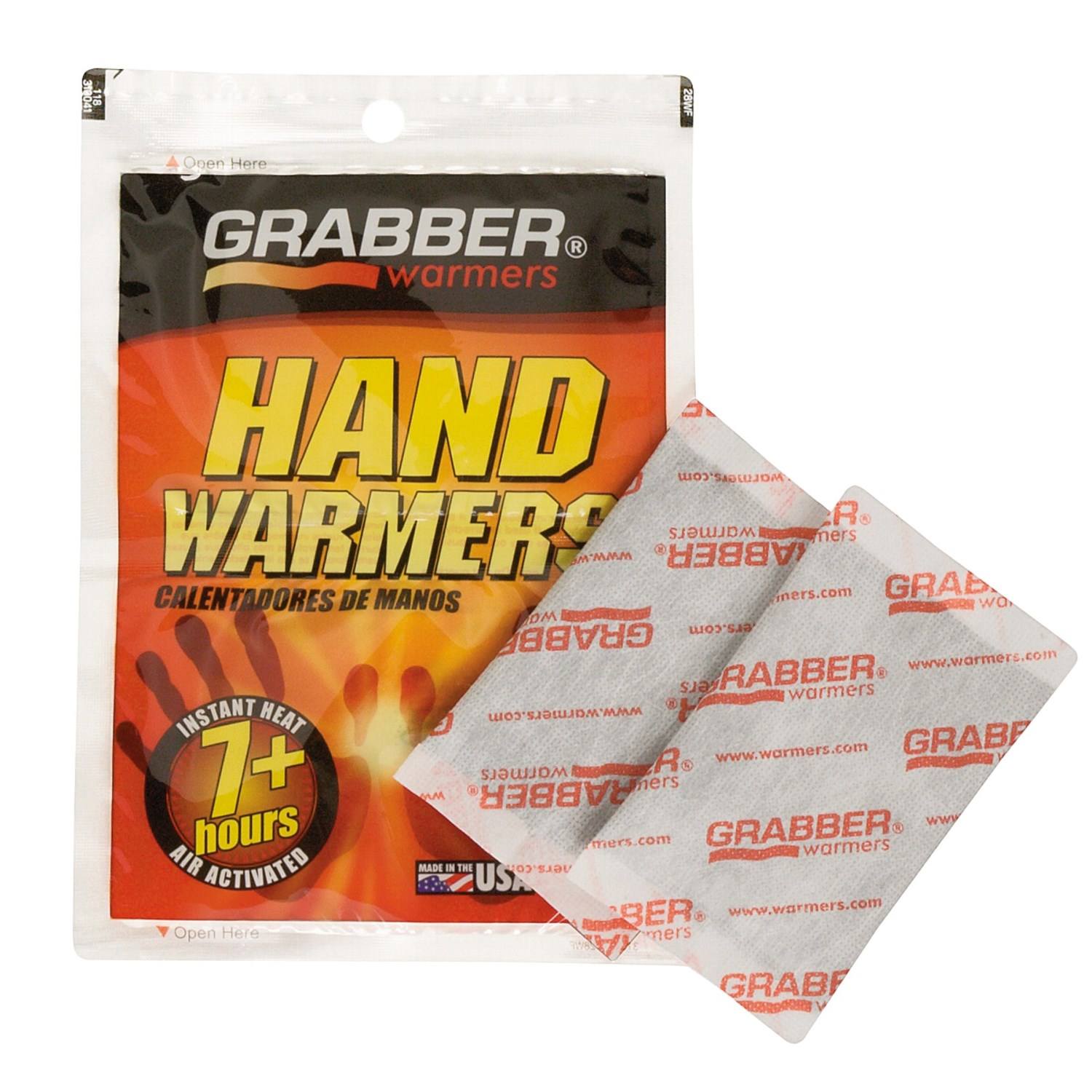
A hot hand pack is an example of a _______________ reaction. 
a)
Endothermic
b)
Exothermic
c)
Mesothermic
d)
Misothermic
8.
Which is a chemical property 
a)
Reactivity 
b)
Solid
c)
Color
d)
Shape
9.
A characteristic that can be observed or measured without changing the composition of the substance. 
a)
Physical change
b)
Chemical change
c)
Chemical Property
d)
Physical Property
10.
A characteristic that can only be determined by changing the identity of an object. 
a)
Physical Change
b)
Chemical Change
c)
Chemical Property 
d)
Physical Property 
11.

Which of the following phase change graphs depicts a gas becoming a liquid and then starting to become a solid?

a)
b)
c)
d)
12.

What is chemical change?

a)

How two chemicals react with one another when combined

b)

A property that we can measure or observe with our 5 senses or other tools

c)

When two chemicals react with one another to form a new substance

d)

When a change occurs but it does not result in the formation of a new substance
13.

What is physical change?

a)

How two chemicals react with one another when combined

b)

A property that we can measure or observe with our 5 senses or other tools

c)

When two chemicals react with one another to form a new substance

d)

When a change occurs but it does not result in the formation of a new substance

14.

What is a chemical property?

a)

How two chemicals react with one another when combined

b)

A property that we can measure or observe with our 5 senses or other tools

c)

When two chemicals react with one another to form a new substance

d)

When a change occurs but it does not result in the formation of a new substance

15.

What is a physical property?

a)

How two chemicals react with one another when combined

b)

A property that we can measure or observe with our 5 senses or other tools

c)

When two chemicals react with one another to form a new substance

d)

When a change occurs but it does not result in the formation of a new substance
16.
Physical properties are
a)
properties that can be observed without changing the identity of the substance
b)
properties that describe how a substance changes into a completely different substance
17.
In an exothermic reaction, heat is ...
a)
taken in
b)
given out
18.
In an endothermic reaction, heat is ,,,
a)
taken in
b)
given out
19.
Is photosynthesis an exothermic or endothermic reaction?
a)
Endothermic
b)
Exothermic
20.
Is frying an egg a physical or chemical change?
a)
chemical
b)
physical
21.
What type of reaction occurs in a hand warmer
a)
exothermic
b)
endothermic
22.
Baking bread and cooking an egg are examples of....?
a)
Endothermic processes
b)
Exothermic processess
c)
None of these 
23.
If a chemical reaction is EXOTHERMIC, the temperature would....
a)
Stay the same
b)
Increase
c)
Decrease
24.
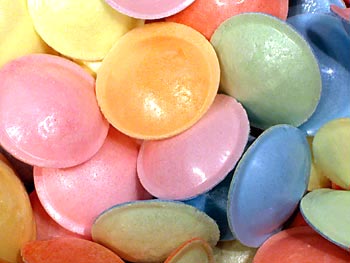
Have you ever eaten sherbet sweets candy? They fizz in your mouth and your tongue feels cold. Why do you think that is?
a)
It is an exothermic reaction
b)
It is an endothermic reaction
c)
It is made of ice
d)
It is dissolving your mouth
25.
Alka-seltzer in water is an example of a 
a)
Endothermic reaction
b)
Exothermic reaction
c)
Dissolving a salt
d)
physical change 
26.
If they energy required to break the bonds is greater than the energy given out by making new bonds the reaction is
a)
Exothermic
b)
Endothermic
c)
Neutralisation
27.
If they energy required to break the bonds is less than the energy given out by making new bonds the reaction is
a)
Exothermic
b)
Endothermic
c)
Neutralisation
28.
Which of the following is a sign that a chemical reaction has occurred?
a)
change in shape
b)
melting
c)
bubbles of gas appear
d)
dissolving
29.
Evaporation is what kind of change?
a)
Endothermic
b)
Exothermic
30.
Condensation and raining are examples of what?
a)
Exothermic
b)
Endothermic
31.
When you freeze water, it turns to ice.  What process is this?
a)
 Exothermic
b)
Endothermic
32.
What is true of this reaction?
a)
Equal amounts of energy were released and absorbed
b)
The reaction released more energy than it absorbed
c)
The reaction absorbed more energy than it released
33.
What is true of the reaction described below?
Br+ Cl2 + 30.0 J of energy  → 2BrCl
a)
It is exothermic because energy was released.
b)
It is endothermic because energy is absorbed.
c)
It is exothermic because energy is absorbed.
d)
It is endothermic because energy is released.
34.
How do you know that energy is being absorbed during a chemical reaction?
a)
Temperature increases
b)
Temperature decreases
35.
Classify
HI → H
2 + I2
a)
synthesis
b)
decomposition
c)
single replacement
d)
double replacement
36.
Classify reaction:
Na + H
2S → 
a)
synthesis
b)
combustion
c)
single replacement
d)
double replacement
37.
Classify
FeS + HCl → H
2S + FeCl2
a)
synthesis
b)
combustion
c)
single replacement
d)
double replacement
38.
Which of the following is the general formula for a Single replacement reaction?
a)
A + B  → AB
b)
AB → A + B
c)
AB + C → AC + B
d)
AB + CD → AC + BD
39.
Which reaction type is the following:
AgF + CaCl2 --> 
a)
Decomposition
b)
Single Replacement
c)
Synthesis
d)
Double Replacement
40.
How many products are made for a synthesis reaction?
a)
more than one
b)
one or more
c)
only one
d)
none of these
41.
The following is what type of reaction:
PbCl2 + AgNO3 → Pb(NO3)2 + AgCl
a)
Synthesis
b)
Decomposition
c)
Single Replacement
d)
Double Replacement
42.
The following is what type of reaction:
NH3 + HCl  → NH4Cl
a)
Synthesis
b)
Decomposition
c)
Single Replacement Replacement
d)
Double Replacement Replacement
43.
Which type of reaction has the following general pattern?
ABC → A + B + C
a)
synthesis
b)
combustion
c)
decomposition
d)
double displacement
44.
Mg3(PO4)2 + H2 --> Mg + H3PO4
a)
Decomposition
b)
Single Replacement
c)
Synthesis
d)
Double Replacement
45.
Two Reactants and One Product
a)
Decomposition
b)
Synthesis
c)
Combustion
d)
Single Replacement
46.
C5H10O4 + O2 --> CO2 + H2
a)
Synthesis
b)
Combustion
c)
Single Replacement
d)
Double Replacement
47.
MgO --> Mg + O2
a)
Decomposition
b)
Single Replacement
c)
Synthesis
d)
Double Replacement
48.
Classify the reaction:
HBr + KOH → KBr + H2O
a)
Single Replacement
b)
Double Replacement
c)
Decomposition
d)
Synthesis
49.
Classify the reaction:
CaO + H2O → Ca(OH)2
a)
Single Replacement
b)
Double Replacement
c)
Decomposition
d)
Synthesis
50.
Classify the reaction:
NaHCO3 → Na2O + CO2 + H2O
a)
Single Replacement
b)
Double Replacement
c)
Decomposition
d)
Synthesis
51.
Classify the reaction:
AgNO3 + NaCl → NaNO3 + AgCl 
a)
Single Replacement
b)
Double Replacement
c)
Decomposition
d)
Synthesis
52.
Classify the reaction:
Li + Cl2 → LiCl
a)
Single Replacement
b)
Double Replacement
c)
Decomposition
d)
Synthesis
53.
Name the process in which a liquid changes to a solid.
a)
Melting
b)
Freezing
c)
Condensing
d)
Evaporating
54.
Name the process in which a solid changes to a liquid.
a)
Freezing 
b)
Melting
c)
Condensing
d)
Evaporating
55.
Name the process in which a gas changes to a liquid.
a)
Freezing
b)
Melting
c)
Condensing
d)
Evaporating
56.
Name the process in which a liquid changes into gas.
a)
Freezing
b)
Melting
c)
Condensing
d)
Evaporating
57.
What causes a solid to melt?
a)
An increase of kinetic energy.
b)
A decrease of kinetic energy.
c)
Pieces break off the substance.
d)
Pieces are added to the substance.
58.
How can you tell when a system has reached equilibrium?
a)
All substances are the same temperature.
b)
All substances are liquids.
c)
All substances are at 0 degrees C.
d)
All substances have evaporated.
59.
At what point(s) is a phase change occuring?
a)
A
b)
B and D
c)
D
d)
C and A
60.
What are the molecules responsible for during a phase change?
a)
to rearrange the matter into a new state.
b)
to change
c)
to move faster and faster
d)
to stop moving
61.
What is the dependent variable in the graph?
a)
Time
b)
Temperature
62.
Point "B" is known as the:
a)
melting point
b)
freezing point
c)
boiling point
d)
both freezing and melting point.
63.
At which point is this substance a liquid?
a)
A
b)
C
c)
E
64.
At which point is the substance a solid?
a)
b)
C
c)
E
65.
Phase change from a solid to a gas.
a)
sublimation
b)
deposition
c)
condensation
d)
evaporation
66.
How many different elements are in this chemical formula: C2H2ClK3
a)
6
b)
8
c)
2
d)
4
67.
A new compound has been discovered. Here is the chemical formula:
CHOFeNaNPb 

How many elements are in this compound?
a)
5
b)
6
c)
7
d)
10
68.

How many elements are in H2SO4?

a)

2

b)

3

c)

4

d)

6

69.
How many atoms of carbon (C) are in C6H12O6?
a)
3
b)
6
c)
12
d)
24
70.
Which is the correct formula for:
 three hydrogen (H)
one sulfur (S)
four oxygen (O)
a)
H3SO4
b)
HSO4
c)
H4S3O
d)
H2O
71.
How many atoms are there TOTAL in:
H2SO4
a)
6
b)
5
c)
7
d)
3
72.
How many Oxygen atoms are in Al₂(SO₄)₃
a)
4
b)
12
c)
7
d)
24
73.
Number of O in 3(NH₄)₂CrO₄
a)
4
b)
12
c)
8
d)
24
74.
Number of N in (NH₄)₂CrO₄
a)
1
b)
2
c)
8
d)
16
75.
Which of the following statements is true about the molecule below?
(NH4)3PO4
a)
There is 1 Nitrogen atom
b)
There are 7 Hydrogen atoms
c)
There are 20 total atoms
d)
There are 4 Phosphorous atoms
76.
Which of the following statements is true about the molecule below?
2NaC2H3O2
a)
There are 16 total atoms
b)
There are 5 total elements
c)
There are 3 Hydrogen atoms
d)
There are 4 subscript numbers in this molecule
77.
What is the subscript for the following molecule?
4Fe2(CO3)3
a)
2
b)
3
c)
Both 2 & 3
d)
4
78.
What is the coefficient for the following molecule?
4Fe2(CO3)3
a)
2
b)
3
c)
Both 2 & 3
d)
4
