wayground logo

Free Printable Worksheets

NEW

Font size

S
M
L
XL
Worksheets

Biology Mock Semester Final

Total questions: 80

Worksheet time: 49mins
Name
Class
Date
1.
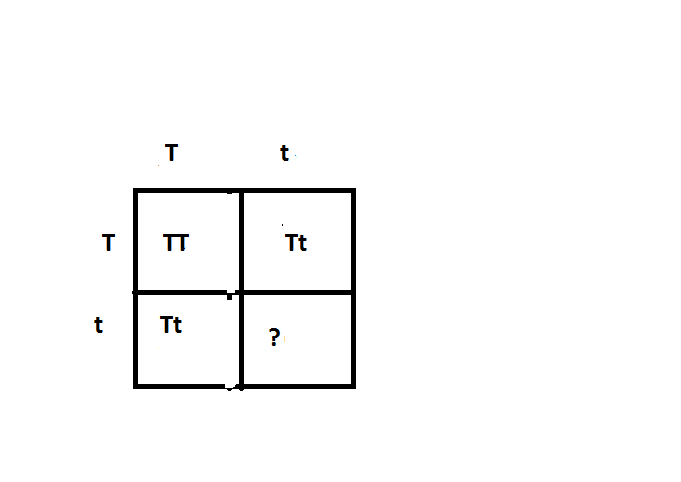
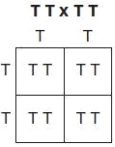
What ratio of the offspring from the cross shown will be homozygous recessive for the trait of tallness? 
a)
0 in 4
b)
1 in 4
c)
2 in 4
d)
4 in 4
2.
In a heterozygous genotype, the ___________ allele takes over in the phenotype.
a)
recessive
b)
dominant
c)
lower case letter
d)
both 
3.
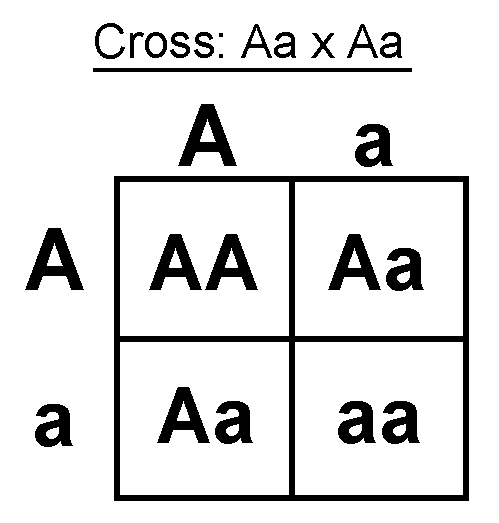
T - tall and t = short
In the punnett square below, what belongs in the missing square
a)
tt
b)
Tt
c)
Bb
d)
TT
4.
What is the phenotype of the offspring? (A-Brown hair; a-blond hair) 
a)
50 % Brown Hair and 50% Blond Hair 
b)
25 % Brown Hair and 75% Blond Hair 
c)
75 % Brown Hair and 25% Blond Hair 
d)
0% Brown Hair and 100% Blond Hair 
5.
A tall plant (TT) is crossed with a tall plant (Tt).  What is the genotype?
a)
2 TT: 2 Tt: 0 tt
b)
1 TT: 2 Tt: 1 tt
c)
2 TT: 1 Tt: 1 tt
d)
0 TT: 0 Tt: 4 tt
6.
A red flower (Rr) is crossed with a white flower (rr). What is the genotype?
a)
0 RR; 0 Rr: 4 rr
b)
2 RR; 0 Rr: 2 rr
c)
4 RR; 0 Rr: 0 rr
d)
0 RR; 2 Rr: 2 rr
7.
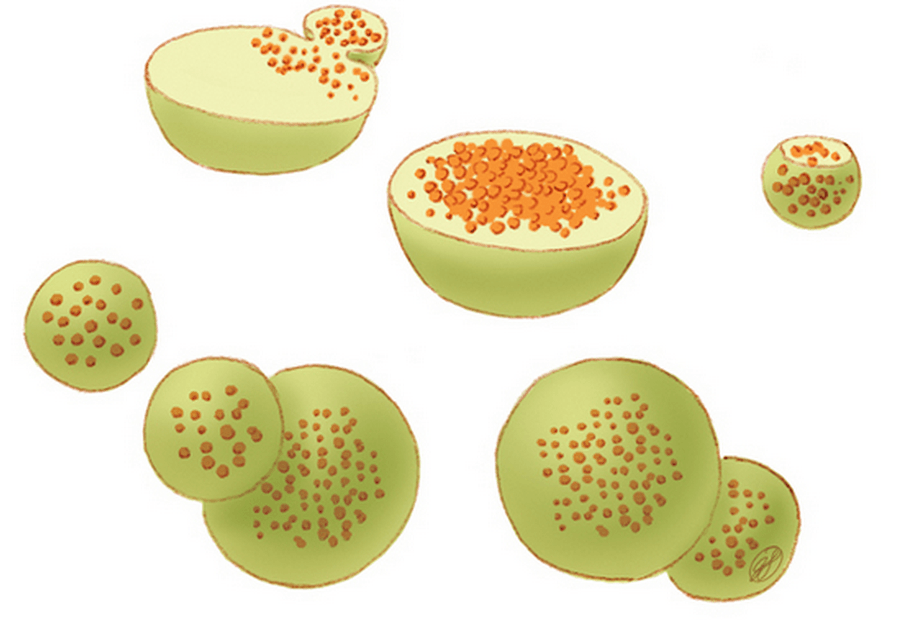
What is the function of the vacuole?
a)
Sac that stores water, nutrients, and waste products
b)
Sac filled with digestive chemicals
c)
Jelly-like substance within the plasma membrane
d)
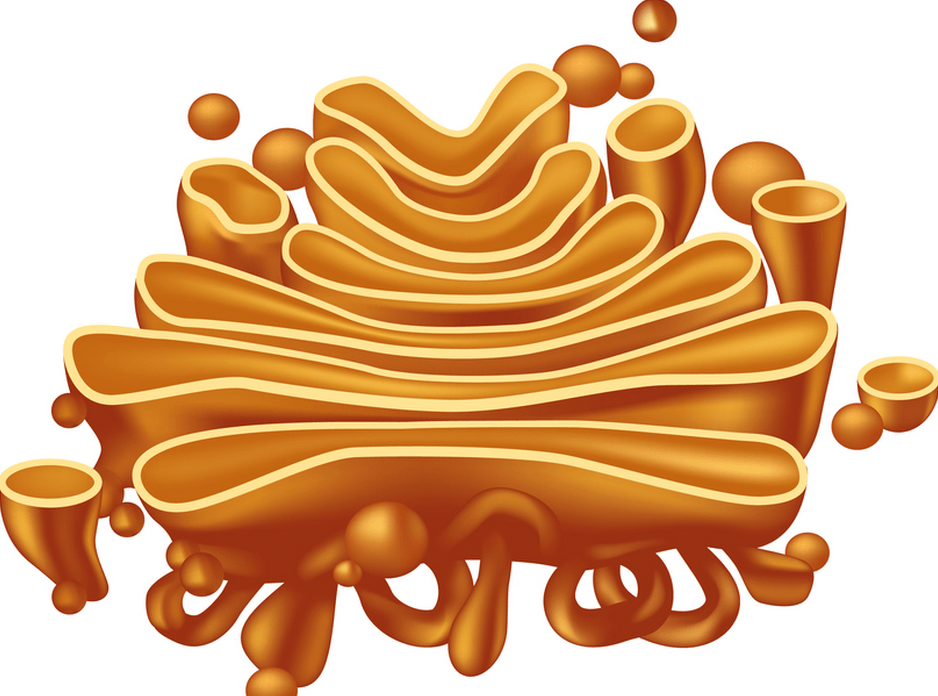
stack of membranes that packages chemicals
8.
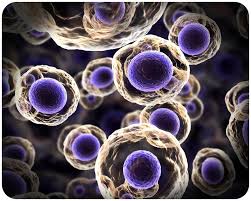
What is the function of nucleus?
a)
Structure that organizes motion of chromosomes. 
b)
Structure that contains DNA and directs the cell 
c)
Membrane that surrounds and protects the cell 
d)
Stack of membranes that packages chemicals
9.
Where does photosynthesis occur?
a)
mitochondria
b)
stomata
c)
xylem
d)
chloroplast
10.
I make proteins for the cell. What am I?
a)
ribosome
b)
mitochondria
c)
chloroplast
d)
lysosome
11.
The two kinds of cells are Prokaryotes and Eukaryotes. How are they different?
a)
Prokaryotes have a nucleus.
b)
Eukaryotes have a nucleus.
c)
Prokaryotes are plant cells.
d)
There is no difference.
12.
This organelle takes food and turns it into ENERGY for plant and animal cells.
a)
Chloroplast
b)
Mitochondria
c)
Lysosome
d)
Ribosome
13.
I am a protein packaging and shipping machine! Who am I?
a)
vacuole
b)
ribosome
c)
mitochondrion
d)
golgi apparatus
14.
You might think of me as the trash collector, but recycler is maybe more accurate. What am I?
a)
mitochondria
b)
lysosome
c)
vacuole
d)
ribosome
15.
What is the gel-like substance inside of cells called?

a)
photoplasm
b)
photosynthesis
c)
cytoskeleton
d)
cytoplasm
16.
The ___________ is the basic unit of life
a)
organ
b)
cell
c)
atom
d)
tissue
17.
Which of the following cell types is formed by meiosis?
a)
muscle cells
b)
skin cells
c)
sperm cells
d)
blood cells
18.
The sex of an offspring is determined by ______________________.
a)
the mother
b)
the father
c)
the mother and the father
d)
by the environment
19.
What is a phenotype?
a)
The expression of a trait; what you see.
b)
refers to the genetic makeup of an individual
c)
An organism that has the same genes for a trait (ex. TT or tt)
d)
the passing of traits from parent to offspring
20.
An organism's appearance is known as its
a)
heredity
b)
phenotype
c)
genotype
d)
pedigree
21.
The inherited combination of alleles is known as the offspring's
a)
heredity
b)
phenotype
c)
genotype
d)
redigree
22.
What is heredity?
a)
A kind of genetic disorder
b)
The way DNA divides
c)
A trait you inherit from your parents
d)
The passing down of traits from parents to children
23.
How many pairs of chromosomes exist in each of your cells?
a)
10
b)
12
c)
23
d)
46
24.
Where are proteins made?
a)
Golgi body
b)
Mitoichondria
c)
Chromosomes
d)
Ribosomes
25.
What is the ultimate ORIGINAL source of energy for living things
a)
Sugar
b)
Sun
c)
Moon
d)
Carbon Dioxide
26.
What is the pigment in chloroplasts that performs photosynthesis?
a)
Chlorosynthesis
b)
Chlorophyll
c)
ADP
d)
Electron Transport
27.
Which gas is removed from the atmosphere during photosynthesis?
a)
hydrogen
b)
oxygen
c)
nitrogen
d)
carbon dioxide
28.
What are the products of photosynthesis?
a)
water and carbon dioxide
b)
oxygen and glucose
c)
oxygen and carbon dioxide
d)
oxygen and water
29.
What is the name of the 1st step of cellular respiration?
a)
Glycolysis
b)
Kreb's Cycle
c)
ETC
d)
Anaerobic respiration
30.
What does anaerobic mean?
a)
extra effort
b)
surplus of mitochondria
c)
without oxygen
d)
with oxygen
31.
Anaerobic respiration in humans can cause a build up of ...
a)
glucose
b)
salt
c)
glutamic acid
d)
lactic acid
32.
Which statement reflects one of the major components of the cell theory?
a)
All living things are multi-cellular.
b)
Organs are the basic unit of structure and function for all living things.
c)
All cells come from previously existing cells.
d)
Every organism has a reproductive system to ensure survival of the species.
33.
What is diffusion?
a)
when molecules move 
b)
when molecules move from a high concentration to a low.
c)
no movement 
d)
molecules move everywhere
34.
Osmosis is the movement of _____ across a membrane.
a)
food
b)
energy
c)
oxygen
d)
water
35.
An organism that needs to eat other organisms to obtain energy is known as a:
a)
Autotroph
b)
Producer
c)
Consumer
d)
Mutualist
36.
An organism that uses sunlight to create its own food is known as a:
a)
Producer
b)
Heterotroph
c)
Consumer
d)
Decomposer
37.
How much energy is available to be passed on to the next trophic level in an ecosystem?
a)
100%
b)
10%
c)
50%
d)
75%
38.
The largest group of organisms found in a food web would be:
a)
Primary Consumers
b)
Producers
c)
Decomposers
d)
Tertiary Consumers
39.
The rabbit in this food web would be considered a:
a)
Decomposer
b)
Producer
c)
Secondary Consumer
d)
Primary Consumer
40.
The fox in this food web would be considered a:
a)
Tertiary Consumer
b)
Producer
c)
Secondary Consumer
d)
Primary Consumer
41.
The image provided is an example of a(n):
a)
Carnivore
b)
Herbivore
c)
Producer
d)
Autotroph
42.
In the energy pyramid here, which organisms have the most energy available?
a)
Producers
b)
Carnivores
c)
Herbivores
d)
Top Predator
43.
In an energy pyramid, energy_______ as you move up the pyramid.
a)
Increases
b)
Decreases
c)
Stays the same
d)
Changes up and down
44.
Which process is used to make mRNA from the DNA in the nucleus?
a)
transcription
b)
translation
c)
replication 
45.
Which is a difference between DNA and RNA
a)
RNA is double stranded
b)
RNA is not made of nucleotides
c)
RNA contains Uracil instead of Thymine
d)
RNA does not contain a sugar
46.

What does mRNA do?

a)

carry info from genes to ribosomes

b)

carry amino acids to ribosomes

c)

help with RNA splicing

d)

make up ribosomes

47.

What is the difference between phenotype and genotype?

a)

Phenotype is the physical expression of a trait and genotype is all of the alleles in the organism

b)

Genotype is the physical expression of a trait and phenotype is all of the alleles in the organism.

c)

Phenotype are the alleles that are masked and genotype are the alleles that are expressed.

d)

Phenotype is when both alleles are the same and genotype is when the alleles are different

48.

Artificial selection is the process by which humans

a)

select traits for breeding.

b)

breed animals just cause.

c)

allow nature to maintain survival of the fittest.

d)

do nothing to nature.

49.
What is another name for natural selection?
a)
survival of the smartest
b)
survival of the fastest
c)
survival of the biggest
d)
survival of the fittest
50.
What is a change in an organism that allows for it to survive in its environment?
a)
homologous
b)
vestigial
c)
variation
d)
adaptation
51.
What is this an example of?
a)
diversity of species
b)
variation
c)
vestigial structures
d)
DNA studies
52.
When the DNA of an organism is altered it is referred to as…
a)
Mutation
b)
Gene Flow
c)
Genetic Drift
d)
Sexual Selection
53.
When individuals choose traits possessed by the opposite sex it is called…
a)
Mutation
b)
Gene Flow
c)
Genetic Drift
d)
Sexual Selection
54.
Which term refers to the process by which individuals that are better suited to the environment survive and reproduce therefore passing down their genes to their offspring? 
a)
Evolution 
b)
Variation 
c)
Adaptation
d)
Natural Selection 
55.
What characteristic did Darwin observe about the finches on the Galapagos Islands?
a)
Their feathers 
b)
Genotypes 
c)
Their beaks
d)
Their body sizes
56.
Genetic differences between organisms of the same species
a)
Variation
b)
Adaptation
c)
Behavior
d)
Environment
57.
The struggle for existence against other members of an organisms species is
a)
Competition
b)
Natural Selection
c)
gene flow
d)
genetic drift
58.
Darwin referred to this as survival of the fittest. Over time, it results in changes in the inherited characteristics of a population because organisms with adaptations that make them fit for their environment will survive and reproduce better than those without favorable traits.
a)
Natural Selection
b)
Genetic Variation
c)
Survival of the Fittest
59.
What is it called when body cells grow uncontrollably
a)
Spinal Stenosis
b)
Anemia
c)
Cancer
60.
What is the central dogma of biology?
a)
Proteins are made from RNA that assembles amino acids through DNA ribosomes.
b)
RNA copies all information for an organism onto DNA which assembles ribosomes, and creates amino acids from proteins
c)
DNA is the blueprint for an organism. RNA copies specific sections that need to be built and transfers that information to a ribosome which assembles proteins out of amino acids.
d)
RNA is the blueprint for an organism. It copies its information onto DNA, which takes amino acids (like lego building blocks) and assembles those acids into proteins.
61.
Would a mutation in the DNA of a skin cell be passed on to an organism's offspring?
a)
Yes, because any change to the DNA is passed on to the offspring
b)
Maybe. Sex cells only use half of the body's genetic code. It might get the copy of a gene that wasn't mutated.
c)
No. Only mutations that occur in the gametes (sex cells) are passed on to the offspring
d)
Without knowing the animal, it would be hard to tell whether or not the mutation would be passed on.
62.

Which of the following mutations results in the loss or addition of a single nucleotide, changing the DNA triplets

a)

missense

b)

nonsense

c)

frameshift

d)

silent

63.
Lactic acid fermentation occurs in your muscles after a workout because your cells are struggling to get...
a)
Glucose
b)
Sunlight
c)
Oxygen
d)
Water
64.
When respiration occurs with oxygen, it is called _______
a)
anaerobic
b)
aerobic
c)
light-dependent
d)
fermentation
65.
If your body runs out of oxygen, it will begin to perform ______.
a)
alcohol fermentation
b)
photosynthesis
c)
cellular respiration
d)
lactic acid fermentation
66.
Fermentation is:
a)
Cellular Respiration 
b)
Photosynthesis
c)
Aerobic
d)
Anaerobic
67.

All matter is made of what

a)

energy

b)

atoms

c)

electrons

d)

compounds

68.
The positive particles of an atom are 
a)
electrons 
b)
positrons 
c)
neutrons 
d)
protons 
69.

The central region of an atom where its neutrons and protons are is its

a)

nucleus

b)

electron cloud

c)

core

d)

center

70.
Temperature, light, air, water, and soil are all  _____  parts of the environment
a)
alive
b)
biotic 
c)
abiotic
d)
living
71.
Is a deer an abiotic or biotic factor? 
a)
abiotic
b)
biotic
72.
Is a fern an abiotic or biotic factor? 
a)
abiotic
b)
biotic
73.
Is a weather an abiotic or biotic factor? 
a)
abiotic
b)
biotic
74.
Which of the following is not an abiotic factor?
a)
sun
b)
temperature
c)
soil
d)
grass
75.
Which of the following is the correct equation for PHOTOSYNTHESIS?
a)
CO+ light + H2O --> O+ Sugar
b)
CO+ sugar + H2O --> O+ light
c)
O2 + light + H2O --> CO+ Sugar
d)
CO+ O2 + H2O --> Light+ Sugar
76.
Plants need ________ for photosynthesis
a)
oxygen
b)
soil
c)
carbon dioxide
d)
sugar
77.
Where does glycolysis occur?
a)
Inner mitochondrial membrane
b)
Mitochondrial Matrix
c)
Cytoplasm
d)
At a ribosome
78.
The glycolysis phase of cellular respiration  happens under what conditions
a)
aerobic conditions
b)
anaerobic conditions
c)
 both aerobic and anaerobic conditions
d)
neither aerobic nor anaerobic conditions
79.
This is referred to as the energy currency of the cell
a)
ADP
b)
ATP
c)
Mitochondria
d)
Nucleus
80.
This molecule contains three phosphate groups
a)
ADP
b)
ATP
c)
Mitochondria
d)
Nucleus