wayground logo

Free Printable Worksheets

NEW

Font size

S
M
L
XL
Worksheets

Let's Get Together!

Total questions: 65

Worksheet time: 1hrs 21mins
Name
Class
Date
1.
How many valence electrons are elements trying to reach in their outer shells?
a)
1
b)
2
c)
5
d)
8
2.
What determines the reactivity of an element?
a)
Size of its nucleus
b)
Number of total electrons
c)
Number of valence electrons
d)
Number of shells
3.
How do you determine the number of valence electrons an element has?
a)
Look at its period
b)
Look at its group
c)
Look at its atomic number
d)
Look at its atomic mass
4.
When two atoms share electrons, a chemical bond is formed.  This type of bond is called:
a)
covalent bond
b)
ionic bond
c)
crystal bond
d)
polyatomic bond
5.
What two types of atoms make a covalent bond?
a)
2 Nonmetals
b)
1 Nonmetal and 1 Metal
c)
2 Metals
d)
2 Noble Gases
6.
What type of elements will form an ionic bond?
a)
Metals + Metals
b)
Nonmetals + Nonmetals
c)
Metals + Nonmetals
d)
None of the above
7.
Which is an example a covalent compound?
a)
CO2
b)
NaCl
c)
AlF3
d)
MgO
8.
Ionic Bonding involves...
a)
The transfer of protons
b)
The transfer of nuetrons 
c)
The transfer of electrons
d)
None Of the above
9.
Covalent compounds
a)
Share electrons
b)
transfer electrons
c)
contain a sea of electrons
d)
conduct electricity
10.
Predict the bond that will form between Se and Cl.
a)
Ionic
b)
Covalent
11.

Which of the following is the correct Lewis dot structure for the molecule fluorine (F2)?

a)

A

b)

B

c)

C

d)

D

12.
If electrons are shared unequally then the bond is....
a)
Non-polar covalent
b)
Ionic
c)
Non-polar ionic
d)
Polar covalent
13.

Which of the following is the correct shape for the compound PBr3?

a)

linear

b)

planar

c)

tetrahedral

d)

pyramidal

14.

Which of the following is the correct shape for CH2O?

a)

linear

b)

pyramidal

c)

tetrahedral

d)

planar

15.
What is the name of the molecular geometry for this Lewis Structure?
a)
trigonal planar
b)
trigonal pyramidal
c)
tetrahedral
d)
bent
16.
What is the shape of this molecule?
a)
Linear
b)
Bent
c)
Tetrahedral
d)
Trigonal Planar
17.
What is the shape of this molecule?
a)
Linear
b)
Bent
c)
Tetrahedral
d)
Trigonal Pyramidal
18.
What is the shape of this molecule?
a)
Linear
b)
Bent
c)
Tetrahedral
d)
Trigonal Planar
19.
What is the shape of this molecule?
a)
bent
b)
linear
c)
trigonal pyramidal
d)
tetrahedral
20.
In this Lewis structure, the symbol above F means...
a)
electrons are being transferred to Fluorine
b)
electrons are less attracted to F than H
c)
electrons are more attracted to F than H
d)
Fluorine has formed a cation
21.
This is an example of a __________ bond.
a)
non-polar covalent
b)
polar covalent
c)
ionic
d)
metallic
22.
A diatomic molecule like O2 is always_______ because electrons are shared ________.
a)
nonpolar; equally
b)
polar; equally
c)
nonpolar; unequally
d)
nonpolar; unequally
23.
The molecule shown in the diagram can best be classified as a
a)
polar covalent molecule
b)
nonpolar covalent molecule
c)
ionic compound
d)
nonpolar ionic compound
24.
The polarity of a bond between two elements can be best determined by
a)
The difference in electronegativity between the elements
b)
The difference in first ionization energy between the elements
c)
The number of electrons shared in the bond
d)
The difference in atomic radius between the elements
25.

Which of the molecules contains polar covalent bonds but is NOT itself a polar molecule?

a)

I

b)

II

c)

III

d)

none are correct

26.
what causes  a partial charge on the ends of the bond (dipoles)
a)
unequal sharing of electrons
b)
an electronegativity difference between 0.3 and <1.7
c)
electron spends more time around one of the atom
d)
all of the above 
27.
Why did the bear dissolve in water?
a)
He was a polar bear!
b)
No idea!
28.
Which formula represents a polar molecule?
a)
H2
b)
H2O
c)
CO2
d)
CCl4
29.
Which has the greater EN: 
N or C?
a)
C
b)
N
30.
Which has the greater EN: 
H or F?
a)
H
b)
F
31.
polar, nonpolar, or both:
"trigonal pyramidal shape"
a)
always polar
b)
nonpolar
c)
both
32.
According to VSEPR, molecules adjust their shapes to keep which of the following as far away as possible?
a)
Pairs of valence electrons
b)
Inner shell electrons
c)
Mobile Electrons
d)
Electrons closest to the nucleus
33.
Which of the following shapes has unshared pairs of electrons on the central atom? 
a)
Bipyramidal
b)
Bent
c)
Trigonal Planar
d)
Tetrahedral
34.
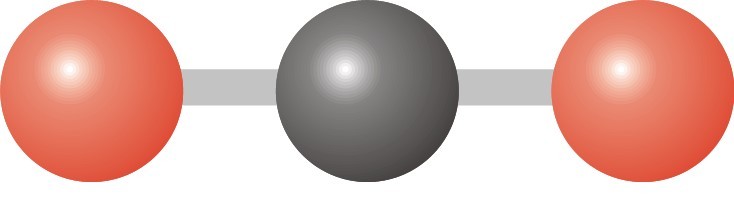
Which molecule would have this shape?
a)
BF3
b)
CH4
c)
PCl5
d)
CO2
35.
How many unshared pairs of electrons will a bent molecule have? 
a)
1
b)
2
c)
3
d)
4
36.
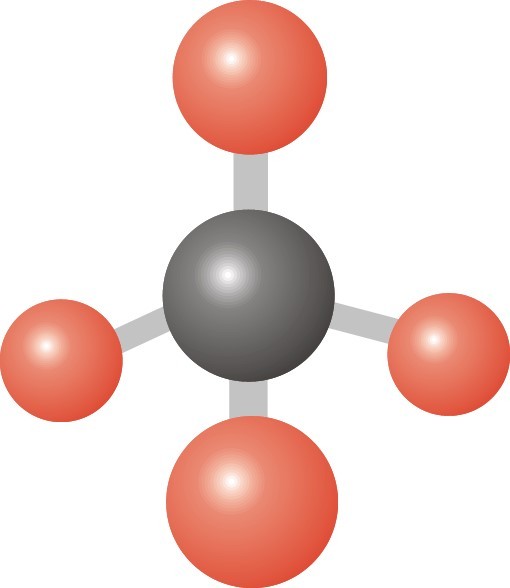
Who could this molecule be?
a)
CH4
b)
CO2
c)
PCl5
d)
BF3
37.
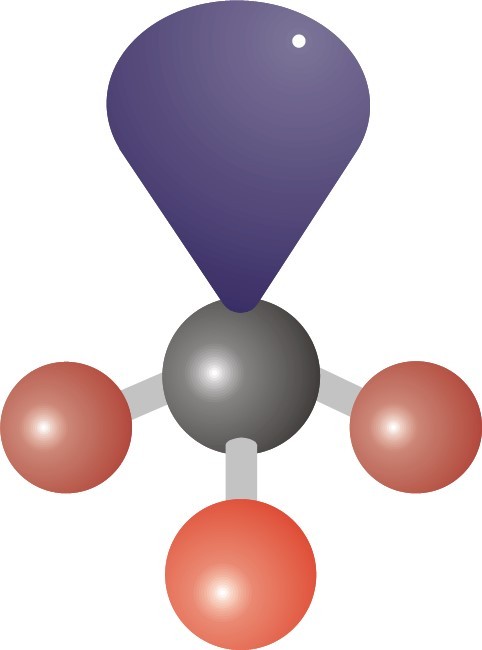
Who could this be? 
a)
CO2
b)
NH3
c)
H2S
d)
CH4
38.
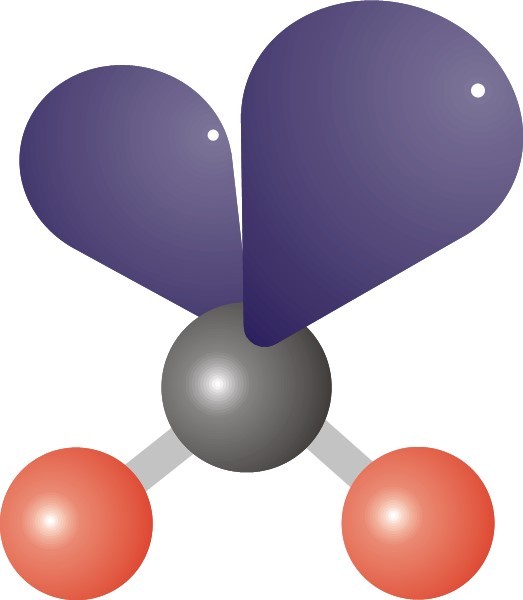
Who could this be?
a)
H2O
b)
NH3
c)
CO2
d)
CH4
39.
A bond where electrons are NOT shared equally? 
a)
polar covalent
b)
nonpolar covalent
40.
VSEPR stands for ________ theory.
a)
Valence Structure of Electron Pyramids and Regression
b)
Varied Structures of Electrons Paired and Replaced
c)
Varied Shell Energy of Protons and Radiation
d)
Valence Shell Electron Pair Repulsion
41.
How many electrons are shared in a triple bond?
a)
6
b)
3
c)
6 pairs
d)
5
42.
Choose the correct shape for this molecule:
a)
linear
b)
Trigonal pyramidal
c)
Bent
d)
Tetrahedral
43.
Choose the correct shape for this molecule:
a)
Tetrahedral
b)
Trigonal pyramidal
c)
Bent
d)
Trigonal planar
44.

Longer bonds require ____________ energy to break than short bonds

a)

more

b)

less

45.

Multiple bond require _______________________ energy to break compared to single bonds

a)

more

b)

less

c)

the same

46.

What type of bond forms when very unequal sharing results in one atom "gaining" and electron and one atom "losing" an electron?

a)

polar covalent

b)

nonpolar covalent

c)

ionic

d)

metallic

47.

Calculating the difference in EN can help determine_________?

a)

valence electrons

b)

polarity

c)

type of bond

d)

geometry

48.

In polar bonds electrons are

a)

shared equally

b)

shared unequally

c)

transferred

d)

lost

49.

Which molecular shape has bond angles of 120 degrees

a)

trigonal pyramid

b)

linear

c)

bent

d)

angular

50.

Which molecular shape has bond angles of 109 degrees

a)

Bent

b)

Linear

c)

Tetrahedral

d)

Trigonal pyramidal

51.
A molecule consists of four bonds and no lone pairs. What is its structure? 
a)
square planar
b)
tetrahedral
c)
linear
d)
square pyramidal 
52.
The electronegativity difference in the bonds of CH4 (methane) is:
a)
0.4
b)
5.9
c)
-0.4
d)
1.7
53.
Which of the following elements has the weakest attraction for electrons in a chemical bond?
a)
S
b)
Cl
c)
O
d)
F
54.
What kind of compound is CO2?
a)
Non-polar molecule with polar bonds
b)
Polar molecule with polar bonds
c)
ionic
d)
polar molecule with non-polar bonds
55.

Will this molecule be polar or nonpolar? PH3

a)

polar

b)

nonpolar

56.
Which of the following molecules is non-polar?
a)
NH3
b)
BCl3
c)
SO2
d)
ICl
57.
Pick the set that ranks the polarity of bonds from least polar to most polar.
a)
H2, O2, CH, HF, HCl
b)
O2, H2, CH, HCl, HF
c)
CH, O2, H2, HCl, HF
d)
HF, HCl, CH, O2, H2
58.
Which set contains all polar covalent bonds?
a)
CH, HCl, HF
b)
OH, HCl, HF
c)
HBr, HF, CH
d)
H2, O2, F2
59.
Hydrocarbons will have which type of intermolecular forces?
a)
Dispersion
b)
dipole
c)
hydrogen bonds
60.
Type of intermolecular force present in I2, Br2, and Cl2.
a)
dipole dipole
b)
H-bond
c)
dispersion
d)
metallic
61.
H2S has what kind of intermolecular force?
a)
dipole dipole
b)
dispersion
c)
H-bond
d)
ionic
62.
Intermolecular forces are the forces
a)
within molecules
b)
between molecules
63.
Which of the following has the highest boiling point?
a)
H2
b)
NH3
c)
N2
d)
O2
64.
Which of the following has the lowest boiling point?
a)
CaCl2
b)
PH3
c)
Cl2
d)
N2
65.
Intermolecular force present in Cl2?
a)
dipole dipole
b)
H-bond
c)
dispersion
d)
metallic