
 Worksheets
Body Systems and Cells
Total questions: 81
Worksheet time: 1hrs 4mins
Name
Class
Date
1.
Which organism performs all life processes in one cell?
a)
grass
b)
bacteria
c)
mushroom
d)
butterfly
2.
Which organisms are capable of surviving as a single cell?
a)
bacteria
b)
humans
c)
plants
d)
fish
3.
Which best explains why humans are multicellular organisms?
a)
Human cells are too small to function alone.
b)
Human cells join together to form one large cell.
c)
Humans need many cells to carry out life processes.
d)
Humans have many systems that perform the same function.
4.
Molly is reading a book in science class. She reads one sentence that says, “This organism is capable of surviving as a single cell.” Which organism is she most likely reading about?
a)
amoeba
b)
flower
c)
mushroom
d)
insect
5.
How are algae able to survive?
a)
The algae get energy from other algae.
b)
The algae do not require energy to survive.
c)
The single cell controls all the algae’s life processes.
d)
Other multi-celled organisms provide food for the algae.
6.
Why do humans require many different types of cells to survive?
a)
Human cells are identical and work together to perform the same function.
b)
Human cells are specialized and work together to perform the same function.
c)
Human cells are identical and work independently to perform different functions.
d)
Human cells are specialized and work independently to perform different functions.
7.
Which is the best way to classify grasshoppers?
a)
Grasshoppers are multi-celled organisms because they are made up of one cell that carries out all of their life processes.
b)
Grasshoppers are single-celled organisms because they are made up of one cell that carries out all of their life processes.
c)
Grasshoppers are single-celled organisms because they are made up of many cells that carry out all of their life processes.
d)
Grasshoppers are multi-celled organisms because they are made up of many cells that carry out all of their life processes.
8.
Which statement best describes a bacterial cell?
a)
It contains more than one cell.
b)
It is a complete organism.
c)
It is part of a larger organism.
d)
It contains different kinds of cells.
9.
A class is modeling the differences between a unicellular organism and a multicellular organism. Which example is a model of a unicellular organism?
a)
a student passing out water to a group
b)
a student getting cereal from the cabinet
c)
two students collecting trash from a group
d)
four students working together to move a desk
10.
A single-cell organism can do everything a cell from a multicellular organism can do except
a)
specialize.
b)
reproduce.
c)
use energy.
d)
make protein.
11.
Which is an example of a single-celled organism?
a)
fish
b)
tree
c)
fungi
d)
human
12.
Which best describes a multi-celled organism?
a)
basic
b)
simple
c)
uniform
d)
complex
13.
Which statement would most likely be found in an article about multi-celled organisms like plants?
a)
Plants have a simple structure.
b)
Plants contain only one cell that performs all functions.
c)
Plants do not need to eat, remove waste, or reproduce.
d)
Plants contain many specialized cells that perform different functions.
14.
How are single-celled organisms and multi-celled organisms similar?
a)
Both need food for energy and growth.
b)
Both have a skeletal system for support.
c)
Both require the interaction of many cells to survive.
d)
Both are able to carry out all life functions in only one cell.
15.
How are multi-celled and single-celled organisms different?
a)
Multi-celled organisms need energy to survive, while single-celled organisms need no energy to survive.
b)
Single-celled organisms can be seen without using a microscope, while multi-celled organisms are microscopic.
c)
Multi-celled organisms have large numbers of specialized cells to perform a variety of life functions, while single-celled organisms complete life functions with one cell.
d)
Single-celled organisms have large numbers of identical cells that all perform the same function, while multi-celled organisms have cells that are all different and perform different life functions.
16.
Fungi and bacteria are both single-celled organisms. What do they most likely have in common?
a)
Both fungi and bacteria are large organisms.
b)
Both fungi and bacteria can carry out all life functions in their one cell.
c)
Both fungi and bacteria need sunlight and nutrients from the soil to be able to grow.
d)
Both fungi and bacteria are highly specialized to do only one job so they must work with other cells to obtain food.
17.
Which best explains why both cats and humans are multicellular organisms?
a)
They get energy from many food sources.
b)
They get energy from a single food source.
c)
They need only one cell to meet their basic needs.
d)
They need many cells working together to meet their basic needs.
18.
Which is a difference between frogs and bacteria?
a)
Frogs are able to control all life processes in one cell, while bacteria cannot.
b)
Frogs are single-celled organisms, while bacteria are multi-celled organisms.
c)
Frogs are multi-celled organisms, while bacteria are single-celled organisms.
d)
Frogs must rely on other single-celled organisms for survival, while bacteria are dependent only on themselves.
19.
A scientist is trying to decide whether an organism is unicellular or multicellular. Which information would help the scientist most to make her decision?
a)
size of the cells of the organism
b)
what the organism eats
c)
how many types of cells are in the organism
d)
how fast the organism grows
20.
The main purpose of the ____________ system is to break food particles into pieces that can be used.
a)
circulatory
b)
respiratory
c)
digestive
d)
skeletal
21.
What is responsible for delivering oxygen and removing carbon dioxide from the body?
a)
cell nucleus
b)
excretory system
c)
nervous tissue
d)
respiratory system
22.
The __________ system directs the body to inner and outer changes.
a)
digestive
b)
circulatory
c)
nervous
d)
skeletal
23.
The __________ is the main organ of the nervous system.
a)
heart
b)
lungs
c)
brain
d)
skin
24.
___________ are the building blocks of life.
a)
cells
b)
legos
c)
blocks
d)
blood
25.
The circulatory system uses _________ to deliver oxygen to the rest of the body.
a)
blood cells
b)
lungs and nose
c)
blood vessels
d)
brain and spinal cord
26.
In multicellular organisms, tissues are comprised of _______.
a)
organs
b)
systems
c)
cells
d)
blood
27.
When tissues come together, they form ___________.
a)
cells
b)
atoms
c)
organs
d)
systems
28.
A(n) _________ is made of small parts connected together to make a whole.
a)
system
b)
problem
c)
evidence
d)
illustration
29.
Which of the following body systems work together for support, protection, and movement?
a)
respiratory and cardiovascular
b)
skeletal and muscular
c)
skeletal and integumentary
d)
digestive and respiratory
30.
Which of the following shows the levels of organization of an organism from LEAST to MOST complex.
a)
cells-tissues-systems-organs
b)
organs-cells-systems-tissues
c)
systems-organs-tissues-cells
d)
cells-tissues-organs-systems
31.
This system includes the spinal cord, brain and nerves
a)
Nervous System
b)
Digestive System
c)
Circulatory System
32.

What body system makes your body move?
a)
Circulatory
b)
Respiratory
c)
Skeletal
d)
Muscular
33.

My spinal cord helps _________ travel between my brain and the nerves in my body.
a)
Memories
b)
Blood
c)
Waste
d)
Messages
34.
What is the body system that sends and recieves electrical signals from the brain?
a)
Skeletal System
b)
Nervous System
c)
Muscular System
d)
Digestive System
35.
Which system is the heart in?
a)
Circulatory
b)
Digestive
c)
Cardiovascular
36.
Which system are the lungs in?
a)
respiratory
b)
digestive
c)
excretory
37.
Which system is the stomach in?
a)
respiratory
b)
digestive
c)
nervous
38.
What blood vessels take blood away from the heart after oxygen is addels
a)
veins
b)
arteries
c)
capillaries
39.
Where does digestion start?
a)
stomach
b)
mouth
c)
esophagus
40.
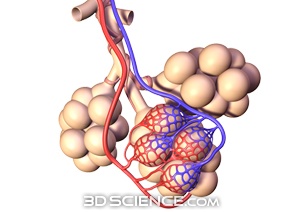
When you breathe, your lungs take in ___ and remove ___.
a)
air/oxygen
b)
oxygen/carbon dioxide
c)
carbon dioxide/waste
d)
waste/air
41.

What is function of the dome-shaped diaphragm?
a)
This is where gas exchange happens.
b)
Air passes through the diaphragm on the way to the lungs.
c)
It attaches to the lungs to help in breathing.
d)
It is under the lungs and keeps them from falling down to your stomach.
42.
What is the main bone structure that protects the lungs
a)
Vertebrae
b)
Rib cage
c)
Skull
d)
Pelvis
43.
Carbon dioxide is considered a _________________
a)
food
b)
waste
c)
energy
d)
fun party favor
44.
Digested food is absorbed in the_______.
a)
colon
b)
large intestine
c)
small intestine
d)
stomach
45.
The muscular organ that pumps blood through out your body is your _________
a)
diaphragm
b)
heart
c)
larynx
d)
pharynx
46.
The body system you use for movement is the ____________
a)
muscular system
b)
nervous system
c)
respiratory system
d)
urinary system
47.
Every organ is made up of one or more:
a)
Organ Systems
b)
Tissues
c)
Muscles
d)
Bones
48.
Every organ system is made up of one or more:
a)
Organisms
b)
Bones
c)
Organs
d)
Muscles
49.
Tissues are made of one or more _________________ working together.
a)
Cells
b)
Tissues
c)
Organs
d)
Organ Systems
50.
Transmits signals between parts of the body.
a)
Nervous System
b)
Skeletal System
c)
Digestive System
d)
Circulatory System
51.
Breaks down food and aids in the absorption of nutrients.
a)
Nervous System
b)
Skeletal System
c)
Digestive System
d)
Circulatory System
52.
How do the Nervous and Digestive System work together?
a)
The Nervous System tells the Digestive System what to do.
b)
The Digestive System tells the Nervous System when you are hungry.
c)
The brain controls how fast/slow you digest your food and tells you when you are hungry/full.
d)
The Nervous System is part of the Digestive System.
53.
What is one part of the body that helps the Digestive System and Respiratory System work together?
a)
Lungs
b)
Trachea
c)
Nose
d)
Pharynx
54.
The following is an example of which two systems working together:
"The small intestine absorbs nutrients from our food and they are carried through the blood to the cells."
"The small intestine absorbs nutrients from our food and they are carried through the blood to the cells."
a)
Digestive and Circulatory
b)
Digestive and Respiratory
c)
Digestive and Skeletal
d)
Digestive and Nervous
55.
Which system works with the Skeletal system to give nutrients to the bones?
a)
Nervous System
b)
Digestive System
c)
Muscular System
d)
None of the above
56.
Fill in the blanks:
"The ________ system allows us to move around, but the _________ system controls our movement."
"The ________ system allows us to move around, but the _________ system controls our movement."
a)
Skeletal, Nervous
b)
Nervous, Skeletal
c)
Muscular, Skeletal
d)
Nervous, Muscular
57.
Choose the best example of how the Muscular System and Digestive System work together:
a)
Our muscles need our digestive system to work correctly.
b)
These systems don't work together.
c)
The muscles in the esophagus push the food down and the stomach muscles churn up the food.
d)
The muscles in the stomach send food to our muscles.
58.
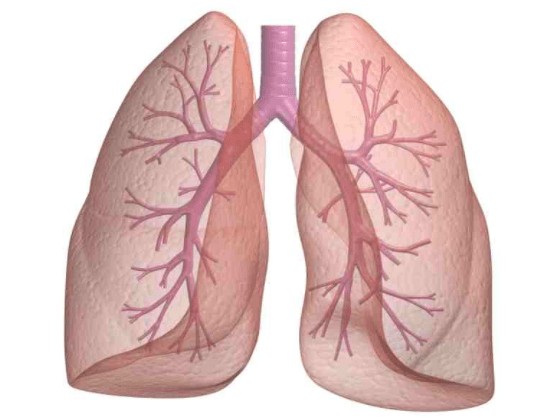
1. Which system are the lungs in?
a)
respiratory
b)
digestive
c)
excretory
d)
muscular
59.

Which system is the stomach in?
a)
respiratory
b)
digestive
c)
nervous
d)
excretory
60.

Which system is the esophagus in?
a)
digestive
b)
urinary
c)
integumentary
d)
skeletal
61.

What is the main function of the respiratory system?
a)
take in oxygen and exhale waste like carbon dioxide
b)
move nutrients throughout the body
c)
take in carbon dioxide and exhale oxygen
62.

What is the main job of the digestive system?
a)
break down foods into nutrients that can be used by the body
b)
take in oxygen and exhale waste like carbon dioxide
c)
pump blood throughout the body
d)
makes the body hungry
63.
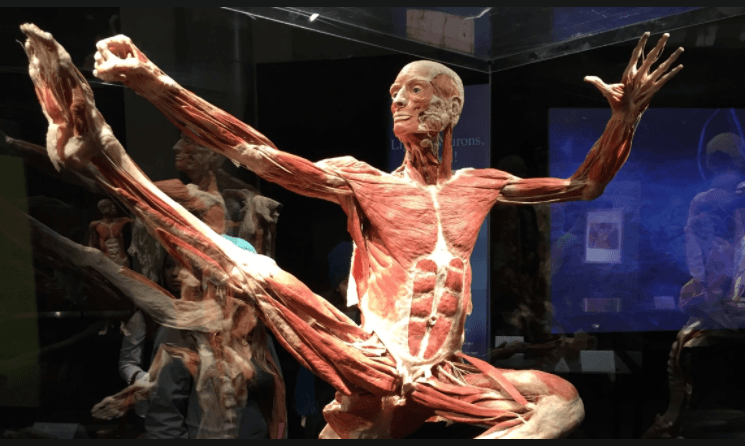
Which systems main function is to allow movement of the body?
a)
muscular
b)
digestive
c)
skeletal
d)
excretory
64.
The smallest units or parts of living things; the body's building blocks.
a)
cells
b)
organs
c)
tissues
d)
system
65.

Your large and small intestines are part of this body system.
a)
nervous
b)
digestive
c)
muscular
d)
skeletal
66.

A collection of the same kinds of cells working together to do the same job.
a)
cells
b)
tissues
c)
organs
d)
systems
67.

Organs are body parts that have specific jobs. Your body systems are made up of organs.
a)
True
b)
False
68.
Which best explains how a single-celled organism can survive without other cells?
a)
They do not need to perform more than one function to survive.
b)
They are able to perform all necessary functions within one cell.
c)
They do not need any substance from outside of the cell.
69.
Which best describes a single-celled organism?
a)
a small group of organisms
b)
an organism that is able to carry out all its life processes
c)
a small organism with a variety of parts
d)
an organism that relies on other organisms to survive
70.
Logan is comparing the characteristics of different types of organisms. Which best describes a difference between insects and bacteria?
a)
Insects are made of one cell, while bacteria are made of many cells.
b)
Insects require energy to perform life functions while bacteria do not.
c)
Bacteria are made of one cell, while insects are made of many cells.
d)
Bacteria require energy to perform life functions while insects do not.
71.
Which is a characteristic of bacteria?
a)
large in size
b)
found only in one particular environment
c)
made up of many different cells working together
d)
able to survive as a single cell
72.
How are multicellular and unicellular organisms different?
a)
Multicellular organisms have more than one cell and are smaller than unicellular organisms.
b)
Unicellular organisms have more than one cell and are larger than multicellular organisms.
c)
Unicellular organisms have one cell and are smaller than multicellular organisms.
d)
Multicellular organisms have one cell and are larger than unicellular organisms.
73.
Multicellular Organisms
a)
Made of 1 cell
b)
Made of more than 1 cell
74.
Fungi, Plants, and Animals
a)
Unicellular organisms
b)
Multicellular organisms
75.
Absorb nutrients from dead or decaying material
a)
Fungi
b)
Plants
c)
Animals
76.
Make their own food through photosynthesis
a)
Fungi
b)
Plants
c)
Animals
77.
Multicellular organization from most complex to most basic
a)
Organ system --> Organ --> Tissue --> Cell
b)
Cell --> Tissue --> Organ --> Organ system
78.

a)
Cell
b)
Tissue
c)
Organ
d)
Organ System
79.

a)
Cell
b)
Tissue
c)
Organ
d)
Organ System
80.

a)
Cell
b)
Tissue
c)
Organ
d)
Organ System
81.

a)
Cell
b)
Tissue
c)
Organ
d)
Organ System
100 %

