wayground logo

Free Printable Worksheets

Font size

S
M
L
XL
Worksheets

Unit D Mid Unit

Total questions: 91

Worksheet time: 4hrs 43mins

Name
Class
Date
1.
The pivot point in a lever system is called a(n)
a)
lever arm
b)
load
c)
fulcrum
d)
effort
2.
The unit used to measure force is called
a)
Newton
b)
Meter
c)
Liter
d)
Gram
3.
Using a lever, how much effort is needed to lift a 1-kg mass?
a)
0.1 N
b)
1.0 N
c)
10.0 N
d)
It depends how the lever is used.
4.
3. Which type of lever is this?
a)
First Class Lever
b)
Second Class Lever
c)
Third Class Lever
5.

Which class of lever is this?

a)

Class 1

b)

Class 2

c)

Class 3

6.

Which class of lever is this?

a)

Class 1

b)

Class 2

c)

Class 3

7.

Which class of lever is this?

a)

Class 1

b)

Class 2

c)

Class 3

d)

Class 4

8.

Which class of lever is this?

a)

Class 1

b)

Class 2

c)

Class 3

d)

Class 4

9.

Which class of lever is this?

a)

Class 1

b)

Class 2

c)

Class 3

d)

Class 4

10.

Pay attention to what happens as you use this winch. Before the rope is wound up, the axle has a radius of 10 cm. When one layer of rope winds up, the axle thickens to a 15cm radius. Which of the following statements is true?

a)

The Mechanical Advantage changes from 3 to 2 and the work becomes easier.

b)

The Mechanical Advantage changes from 3 to 2 and the work becomes harder.

c)

The Mechanical Advantage changes from 2 to 3 and the work becomes easier.

d)

The Mechanical Advantage changes from 2 to 3 and the work becomes harder.

11.

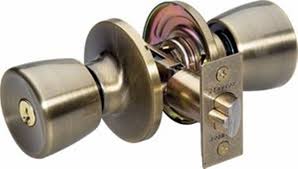
This image shows how a door knob is designed. If the radius of the large wheel is 25cm and the radius of the small wheel is only 5cm, what is the mechanical advantage of this setup?

a)

MA = 5

b)

MA= 1/5

c)

MA= 25

d)

MA = 5

12.

What is the mechanical advantage of this winch?

a)

MA = 3

b)

MA = 1/3

c)

MA = 30

d)

MA = 10

13.

How much rope will you have to pull in order to lift this load 1 meter off the ground. Hint: Think about the mechanical advantage of this pulley.

a)

1 meter

b)

2 meters

c)

3 meters

d)

1/4 meter

e)

4 meters

14.

If the load has a mass of 100 pounds, how much effort will you need to exert on the rope in order to lift this load off the ground?

a)

100 pounds

b)

50 pounds

c)

25 pounds

d)

20 pounds

e)

400 pounds

15.

What is the mechanical advantage of this pulley?

a)

1

b)

2

c)

3

d)

4

e)

8

16.

As you work with a pulley, you seem to be working much harder than you had previously. You decide to investigate. You know that a force of 2000 N is needed to lift the object

1 meter off the ground. You measure that you are exerting 400 N as you pull the rope down 6 m to lift the weight 1m. What is the efficiency of the pulley?

a)

33%

b)

50%

c)

83%

d)

95%

17.

What is the speed ratio of a bicycle chain system with a driver gear of 42 teeth and follower gear of 28?

a)

2

b)

0.7

c)

1.75

d)

1.5

18.

A man lifts a 20N box up off the ground and puts it onto a table 2 meters off the ground. He then repeats the task using a 5 meter ramp. The ramp reduced the force to only 10N. What is the efficiency of the ramp?

a)

80%

b)

70%

c)

60%

d)

75%

19.

If the finger pushes down with 10 pounds of force to lift the object, then how heavy is the object?

a)

20 pounds

b)

10 pounds

c)

5 pounds

d)

30 pounds

20.

This rock has a mass of 200 pounds. The effort arm is 5 meters long, whereas the load arm is only 1 meter long. How hard does the man have to push the plank to lift the rock?

a)

40 pounds

b)

1000 pounds

c)

100 pounds

d)

20 pounds

21.

What is the mechanical advantage of this lever system?

a)

10

b)

5

c)

20

d)

2

22.

If Skinny Jimmy requires 50 pounds of push to lift Big Bob, then what is the mass of Big Bob?

a)

500 pounds

b)

5 pounds

c)

100 pounds

d)

200 pounds

23.

Are you a lever genius?

a)

Yes, of course

b)

Not so much

c)

I guess

24.
When using a lever, your work is made easier.  However, what does the simple machine make you do in order to make this work easier? 
a)
Move the resistance arm a greater distance 
b)
Move the effort arm a greater distance 
c)
Move the fulcrum to the middle 
25.
This is the amount of times a machine multiplies the effort force used. 
a)
Density
b)
Resistance Force
c)
Mechanical Advantage
d)
Centripetal Force 
26.
If you want to decrease the effort force when using a lever, where will you move the fulcrum? 
a)
Closer to the object you want to move
b)
Farther away from the object you want to move
c)
You don't move the fulcrum, you move the effort force
d)
None of these answers 
27.
A wheelbarrow is an example of a:
a)
1st class lever
b)
2nd class lever
c)
3rd class lever
28.
A see saw is an example of a:
a)
1st class lever
b)
2nd class lever
c)
3rd class lever
29.
The resistance force and the effort force are on the opposite sides of the fulcrum in this.
a)
First class 
b)
Second Class
c)
Third Class
d)
Fourth Class
30.
How many types of levers are there?
a)
1
b)
2
c)
3
d)
4
31.
We use levers to make work easier.?
a)
True
b)
False
32.
6. What kind of lever is this?
a)
First Class Lever
b)
Second Class Lever
c)
Third Class Lever
33.

What is the mechanical advantage of this pulley?

a)

1

b)

2

c)

3

d)

4

34.

How much force will you need to pull with in order to lift the object?

a)

33N

b)

50N

c)

25N

d)

75N

35.
The longer the inclined plane, the ___________________ to move the object
a)
the less input force you need
b)
the more input force you need
c)
the more output force you need
d)
the less output force you need
36.
Using a system of movable pulleys, you can lift very heavy objects.  What is the "trade off" for this ability?
a)
The object must be metal.
b)
The amount of rope or chain pulled is greater.
c)
There is no "trade off"
d)
You need more than one person to pull.
37.
What do we call the point on which a lever pivots?
a)
end
b)
load
c)
fulcrum
d)
middle
38.
 Work done = Force x _________
a)
a. distance
b)
b. acceleration
c)
c. velocity
d)
d. speed
39.
No machine in existence has 100% efficiency due to ____________________.
a)
magic
b)
friction
c)
smoke
d)
input
40.
A single fixed pulley changes
a)
the amount of force.
b)
the direction of force.
c)
the amount of work.
d)
both the amount and direction of force.
41.
Chain drive gears turn in the __________ direction.
a)
Opposite
b)
Same
c)
Oscilating
d)
Linear
42.

This gear setup is good for converting your input force into lots of _____________.

a)

speed

b)

force

c)

Equal speed and force.

43.

What is the speed ratio on this system and what is it good for?

a)

speed ratio = 0.333 creates more speed but less force.

b)

speed ratio = 0.333 creates less speed but more force.

c)

speed ratio = 3 creates more speed but less force.

d)

speed ratio = 3 creates less speed but more force.

44.

Assume that we changed the labels on this diagram and made the "LARGER GEAR" the driver. Which of the following would then hold true?

a)

speed ratio = 3 creates more output speed, but less output force.

b)

speed ratio = 3 creates more output force, but less output speed.

c)

speed ratio = 0.333 creates more output force, but less output speed.

d)

speed ratio = 0.333 creates more output speed, but less output force.

45.

These chain and sprocket setup will turn in the same direction.

a)

False

b)

True

46.

To INCREASE speed of rotation, you can ____________________.

a)

increase the size of the driving gear and reduce the size of the driven gear.

b)

decrease the size of the driving gear and increase the size of the driven gear.

c)

make the driving gear and the driven gear the same size.

47.

When a driving gear is smaller than the driven gear the result is....

a)

More Speed

b)

More Force.

c)

Less Force.

d)

No effect on force or speed.

48.

When a driving gear is larger than a driven gear the output is.....

a)

More Speed

b)

More Force

c)

Less Speed

d)

No change

49.
A 5000N block is lifted 10 m. How much work was done?
a)
50000 J
b)
5000 J
c)
500 J
d)
50 J
50.
The efficiency of a machine can be increased by reducing __________________________. 
a)
effort
b)
resistance friction
c)
fulcrum
d)
friction
51.
If you push a coffee mug 1.4 m using a force of 5 N, the work done on the mug is?
a)
7 J
b)
6 J
c)
8 J
d)
9 J
52.
800 Newtons of force moving a distance of 20 meters will be how much work done?
a)
40 J
b)
1,600 J
c)
400 J
d)
16,000 J
53.
True or False: No machine is 100 % efficient.
a)
True
b)
False
54.
What is the efficiency of the machine if the input is 263 J and the output is 142 J? 
a)
6.26%
b)
54%
c)
100%
d)
260%
55.

A box of weight W is lifted by a force F using a lever as shown below.

What is the mechanical advantage of the lever (MA=Input Distance/Output Distance)?

a)

0.5

b)

2

c)

3

d)

6

56.

What is mechanical advantage?

a)

The advantage a machine has over a bicycle

b)

A measure of how a machine's inefficiency.

c)

A measure of when is the best time to use a simple machine

d)

the ability of a machine to multiply your input force.

57.

How much force will you have to pull with to lift the 60N object?

a)

15 N

b)

60 N

c)

30 N

d)

20 N

58.

What is the mechanical advantage of this pulley system?

a)

2

b)

3

c)

4

d)

5

59.
What is the mechanical advantage of the block and tackle used to lift the bale of cotton?
a)
1
b)
2
c)
3
d)
4
60.
What type of simple machine is this?
a)
wheel and axle
b)
gear
c)
lever
d)
inclined plane
61.
A ______ is a grooved wheel with a rope running along the groove.
a)
lever
b)
pulley
c)
screw
62.

When gears are the same size, they turn the same number of times.

a)

True

b)

False

63.
True or False: Gears next to each other turn in the same direction.
a)
True
b)
False
64.
Gears are wheels with teeth. 
a)
True 
b)
False
65.
_______ is an inclined plane wrapped around a pole.
a)
Work
b)
A pulley
c)
A screw
d)
A fulcrum
66.
Gears are wheels with teeth. 
a)
True 
b)
False
67.
________ are wheels with teeth that fit together.
a)
Tires
b)
Gears
c)
Pulleys
d)
Wedges
68.
________ is a wheel with an axle around its center to move loads.
a)
A wheel and axle
b)
A plane
c)
Friction
d)
A lever
69.
_______________ results when a force moves an object.
a)
Work
b)
Gears
c)
Friction
d)
A screw
70.

______________ is something that makes work better, easier, or faster.

a)

Gears

b)

Force

c)

An inclined plane

d)

A machine

71.
____________ is a force that slows objects down when they rub against each other.
a)
Plane
b)
Friction
c)
A wedge
d)
A lever
72.
How much force would be needed to lift the 150 N weight? Remember, you need to divide the original force by the number of pulleys.
a)
300 N
b)
150 N
c)
75 N
d)
25 N
73.
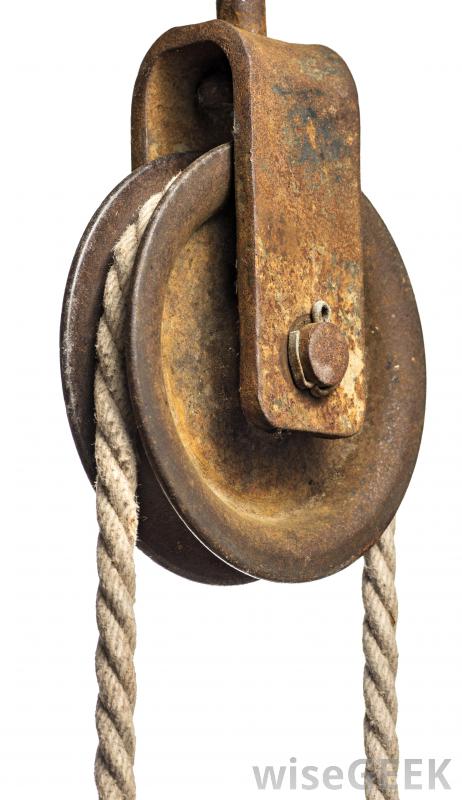
How does a single fixed puled, like the one seen here, help you do work?
a)
changes the direction of the force
b)
increases the amount of applied force
c)
decreases the amount of applied force
d)
allows you to pull the rope a shorter distance
74.
What is the mechanical advantage of this pulley system?
a)
2
b)
3
c)
4
d)
5
75.
At which point will the skater have the least potential energy?
a)
Point A
b)
Point B
c)
Point C
d)
Point A and C
76.
Which of the following decreases when an object is moved using an inclined plane?
a)
The distance the object moves.
b)
The pull of gravity on the object.
c)
The force needed to move the object.
d)
The amount of space the object occupies.
77.
The longer the inclined plane, the ___________________ to move the object
a)
the less input force you need
b)
the more input force you need
c)
the more output force you need
d)
the less output force you need
78.
Students pulled the same mass up an inclined plane that was 20 cm, 30 cm, and 40 cm long. Each time, they used a spring scale to measure the force needed to pull the mass up the inclined plane. What did they conclude?
a)
Less force was needed on the 20 cm plane
b)
More force was needed on the 40 cm inclined plane.
c)
The least amount of force was needed on the 40 cm inclined plane.
d)
The least amount of force was needed on the 30 cm inclined plane.
79.
Let's say you had a pulley system with a mechanical advantage of 3. If you want to lift a boulder 10 meters off the ground, how far would you have to pull the rope? 
a)
3 meters
b)
10 meyers
c)
30 meters
d)
300 meters
80.
Let's say you had a pulley system with a mechanical advantage of 3. If you want to lift a boulder 10 meters off the ground, how far would you have to pull the rope? 
a)
3 meters
b)
10 meyers
c)
30 meters
d)
300 meters
81.
When you carry a heavy box up a ramp, instead of lifting it directly onto a platform: 
a)
The amount of work you have to do increases slightly
b)
The amount of work you have to do decreases slightly 
c)
The amount of work you have to do decreases significantly
d)
The amount of work you have to do stays the same 
82.
A push or a pull
a)
Force
b)
Gravity
c)
Pulley
d)
Inclined Plane
83.
The diagram shows a 225 N load attached to a movable pulley. What amount of force is required to lift the load? Record your answer on the grid below.
a)
0.1125N
b)
112.5N
c)
11.25N
d)
1.125N
84.
The diagram shows a movable pulley system. When moving a load, this pulley system changes the —
a)
direction of the force.
b)
amount of force needed.
c)
pull of gravity on the load.
d)
overall mass of the rope.
85.
Which of the following decreases when an object is moved using an inclined plane?
a)
The distance the object moves
b)
The pull of gravity on the object
c)
The force needed to move the object
d)

The amount of space the object occupies
86.
What is a disadvantage of using an inclined plane to lift a heavy object?
a)
The object must be moved a greater distance.
b)
It takes less effort to move the object.
c)
Many objects are difficult to lift straight up.
d)
Heavy objects usually take up more space.
87.
The diagram provided shows a 50 N load attached to a movable pulley.What amount of force must act on the left rope of the pulley in order to lift the load?
a)
Less than 25 N
b)
25 N
c)
50 N
d)
More than 50 N
89.
The diagram provided shows a fixed pulley system.A fixed pulley does not change the amount of effort needed to lift the load, but it does change the 
a)
direction of the force.
b)
weight of the load.
c)
volume of the force.
d)
shape of the load.
89.
The diagram provided shows a fixed pulley system.A fixed pulley does not change the amount of effort needed to lift the load, but it does change the 
a)
direction of the force.
b)
weight of the load.
c)
volume of the force.
d)
shape of the load.
90.
Force X Distance = __________
a)
Energy
b)
Power
c)
Newtons
d)
Work
91.
work is...
a)
energy from the sun
b)
a type of machine
c)
a force that moves an object
d)
a force that pulls you toward the earh