
 Worksheets
Atoms & Bonding
Total questions: 67
Worksheet time: 2hrs 57mins
Name
Class
Date
1.
Which is the correct formula for:
three hydrogen (H)
one sulfur (S)
four oxygen (O)
three hydrogen (H)
one sulfur (S)
four oxygen (O)
a)
H3SO4
b)
HSO4
c)
H4S3O
d)
H2O
2.
Number of C's in 2Na₂CO₃
a)
1
b)
2
c)
3
d)
5
3.
The number of Na's in Na₂CO₃
a)
1
b)
2
c)
3
d)
6
4.
How many Elements are in the compound C2H8O ?
a)
2
b)
1
c)
3
d)
0
5.
How many total atoms are in the compound C2H8O ?
a)
11
b)
2
c)
8
d)
1
6.
How many Aluminum are in Al2O3?
a)
3
b)
2
c)
5
7.
How many Sodium (Na) are in 6NaCl?
a)
1
b)
12
c)
6
8.
How many Chlorine are in MgCl2?
a)
2
b)
1
c)
3
9.
How many Magnesium are in 10MgCl2?
a)
10
b)
5
c)
20
10.
How many Nitrogen are in 2AlN?
a)
4
b)
5
c)
1
d)
2
11.
How many atoms are there TOTAL in:
H2SO4
H2SO4
a)
6
b)
5
c)
7
d)
3
12.
How many elements are in C6H12O6?
a)
1
b)
2
c)
3
d)
4
13.
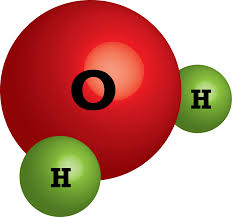
How many atoms of Hydrogen are in this compound
a)
1
b)
2
c)
3
d)
4
14.

How many atoms of Oxygen are in this compound?
a)
1
b)
2
c)
3
d)
4
15.
How many atoms are in the element Carbon in this compound?
H2C3O4N5
H2C3O4N5
a)
2
b)
3
c)
4
d)
5
16.
How many TOTAL atoms are in this compound?
H2C3O4N5
H2C3O4N5
a)
5
b)
14
c)
15
d)
19
17.

In this compound structure of alcohol, how many Hydrogen atoms are there?
a)
2
b)
4
c)
6
d)
8
18.
a capital letter or combination of a capital letter and a small letter that is used to represent an element is called a(n) ________
a)
chemical symbol
b)
element sign
19.

What is the number of protons that the element in this image contain?
a)
14
b)
7
c)
15
d)
18
20.
2H2 + O2 ----> 2H2O What is the product?
a)
------>
b)
2H2O
c)
2H2+ O2
21.
2H2 + O2 --------> 2H2O What are the reactants?
a)
----->
b)
2H2O
c)
2H2 +O2
22.
Number of N in (NH₄)₂CrO₄
a)
1
b)
2
c)
8
d)
16
23.

What is an ion?
a)
A Charged Atom
b)
A Large Atom
c)
A Small Atom
d)
A Cute Atom
24.

Barium atoms want to form...
a)
an anion
b)
a cation
c)
an onion
d)
a cuddly kitten friend
25.

An Arsenic atom wants to form...
a)
An anion
b)
A cation
c)
An onion
d)
A cuddly kitten friend
26.

Why are ions formed?
a)
To make our lives difficult
b)
Because atoms want 8 valence electrons
c)
Because atoms have the same number of protons and electrons
d)
Because atoms gained neutrons
27.

Cations are...
a)
Positive
b)
Negative
c)
Neutral
d)
Purring
28.

Anions are...
a)
Positive
b)
Negative
c)
Neutral
d)
Crying
29.

An atom becomes _________ when it gains electrons.
a)
Positive
b)
Negative
c)
Neutral
d)
Invinsible
30.

An atom becomes _______ when it loses electrons.
a)
Positive
b)
Negative
c)
Neutral
d)
Invinsible
31.

A Silicon atom wants...
a)
3 more electrons
b)
3 less electrons
c)
4 more or less electrons
d)
2 more electrons
32.

A Radium atom wants...
a)
One more electron
b)
One less electron
c)
Two more electrons
d)
Two less electrons
33.

Which particles change the charge in atoms when ions are formed?
a)
Protons
b)
Electrons
c)
Neutrons
d)
Kittens
34.

What is a Rubidium ion's symbol?
a)
Rb-
b)
Rb+
c)
Rb-2
d)
Rb+2
35.

What is the ionic symbol for a phosphorus atom?
a)
P-3
b)
P+3
c)
P-2
d)
P+2
36.

What is the ionic symbol for Krypton?
a)
Kr
b)
Kr+
c)
Kr-
d)
Kr-2
37.
What is the ionic symbol for a Caesium atom?
a)
Cs+
b)
Cs-
c)
Cs+2
d)
Cs-2
38.

Make sure you get enough Potassium in your diet!
a)
Huh?
b)
K
c)
I <3 bananas
d)
Sure
39.
What is the charge on a Hydrogen ion?
a)
+1
b)
1
c)
2
40.
Magnesium bromide is an ionic compound with the chemical formula MgBr₂. What does the "2" tell you?
a)
There are 2 bromide ions for every magnesium ion
b)
Bromide has a 2- charge
c)
Bromide has a 2+ charge
d)
There are 2 magnesium ions to every bromide ion
41.
In the chemical formula for an ionic compound, which item is written first?
a)
positive ion
b)
negative ion
c)
subscript
d)
the female
42.
Nitrogen will ____ electrons when forming an ionic bond.
a)
gain 1
b)
lose 1
c)
gain 3
d)
lose 3
43.
What will be the compound name of the following chemical formula?
NaCl
NaCl
a)
Potassium Chloride
b)
Sodium Chloride
c)
Calcium Chloride
d)
Sodium Chlorine
44.
Ionic bonds form between metals and ____.
a)
metalloids
b)
metals
c)
nonmetals
45.
What is the formula of Sodium oxide?
a)
Na2O
b)
NaO2
c)
Na2O2
d)
Na2O
46.
What is the formula of calcium oxide?
a)
CaO2
b)
CaO
c)
Ca2O
d)
CO
47.
Is Hydrogen considered a metal or a non-metal?
a)
Metal
b)
Non-metal
48.
What two types of atoms make a covalent bond?
a)
2 Nonmetals
b)
1 Nonmetal and 1 Metal
c)
2 Metals
d)
2 Noble Gases
49.
How are covalent bonds explained?
a)
When one atom takes the other atom's electron
b)
When the atom shares an electron with an another atom
c)
When the two nucleus merge
d)
When the neutrons leave the nucleus
50.
In chemical compounds, covalent bonds form when
a)
the electronegativity difference between two atoms is very large.
b)
electrons are completely transferred between two metals.
c)
pairs of electrons are shared between two nonmetal atoms.
d)
two nonmetal atoms are attracted to each other by opposite charges.
51.
What region of the periodic table contains atoms that form covalent bonds?
a)
the left side
b)
the middle
c)
the right side
d)
top left
52.
Is carbon considered a metal or a non-metal?
a)
metal
b)
nonmetal
c)
other
53.
How are ionic bonds formed?
a)
When atoms share an electron
b)
When opposite charged atoms attract
c)
When one atom takes a proton
d)
When one atom takes a neutron
54.
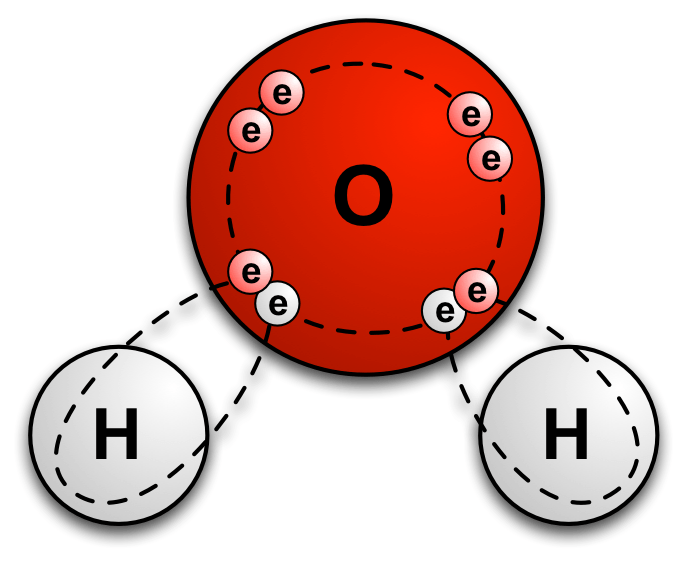
What would you name this molecule?
a)
SNa3
b)
H3O
c)
NaCl
d)
H2O
55.

What molecule is this?
a)
CO
b)
CO2
c)
C2O
d)
C2O2
56.
Which of the following is NOT formed by a covalent bond?
a)
K2S
b)
H2O
c)
I2
d)
CO2
57.
The substances listed on the right side of a chemical equation are the
a)
Yields
b)
Reactants
c)
Products
d)
Precipitates
58.
CaCO3 represents a chemical
a)
Symbol
b)
Formula
c)
Subscript
d)
Reaction
59.
The substances listed on the left side of a chemical equation are the
a)
Products
b)
Coefficients
c)
Precipitates
d)
Reactants
60.
In chemical reactions, what does the principle of conservation of mass mean?
a)
Matter is not created or destroyed.
b)
The total mass of the reactants is greater than the total mass of the products.
c)
The total mass of the reactants is less than the total mass of the products.
d)
Matter is not changed.
61.
In the following equation, what are the reactants?
CaO + 3 C → CaC2 + CO
CaO + 3 C → CaC2 + CO
a)
CaO + 3 C
b)
CaC2 + CO
c)
3 C → CaC2
d)
the stuff on the outside
62.
In the following equation, what are the products?
HCl + Zn → H2 + ZnCl2
HCl + Zn → H2 + ZnCl2
a)
HCl + Zn
b)
H2 + ZnCl2
c)
Zn → H2
d)
the stuff on the outside
63.
Which one is a compound?
a)
Co
b)
Br
c)
Fe
d)
CO
64.
Which number should go in the blank?
_ H2 + O2 -> 2 H2O
_ H2 + O2 -> 2 H2O
a)
1
b)
2
c)
3
d)
0
65.
Which number should go in the blank?
2 Na+ _ Cl2 -> 2 NaCl
2 Na+ _ Cl2 -> 2 NaCl
a)
1
b)
2
c)
3
d)
0
66.
Which number should go in the blank?
Mn + _ HNO3 → Mn(NO3)2 + H2
Mn + _ HNO3 → Mn(NO3)2 + H2
a)
1
b)
2
c)
3
d)
0
67.
Which number should go in the blank?
Al(NO3)3 + _ NaOH -> Al(OH)3 + 3 NaNO3
Al(NO3)3 + _ NaOH -> Al(OH)3 + 3 NaNO3
a)
1
b)
2
c)
3
d)
0
100 %

