wayground logo

Free Printable Worksheets

Font size

S
M
L
XL
Worksheets

Electricity and circuits test review

Total questions: 51

Worksheet time: 2hrs 34mins

Name
Class
Date
1.

What type of circuit is shown in the image?

a)

Parallel Circuit

b)

Series Circuit

c)

Magnetic Circuit

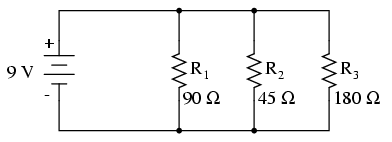
2.

The path that electricity travels through is called

a)

a circuit

b)

voltage

c)

current

d)

resistance

3.

What happens to the brightness of the light bulbs when you add more bulbs to a series circuit?

a)

The brightness stays the same.

b)

The bulbs get brighter

c)

The bulbs get dimmer

4.

Where do the leads (black and red wires) need to be placed to correctly read the current of the circuit?

a)

Place the leads on each side of the open switch.

b)

Place the leads on each side of the closed switch.

c)

Place the leads on each side of the battery

d)

Place the leads on each side of the light bulb

e)

Place the leads at any two corners of the circuit.

5.

Where do the leads (black and red wires) need to be placed to correctly read the voltage of the circuit?

a)

Place the leads on each side of the open switch.

b)

Place the leads on each side of the closed switch.

c)

Place the leads on each side of the battery

d)

Place the leads on each side of the light bulb

e)

Place the leads at any two corners of the circuit.

6.

A 6 ohm resistor is powered by a 10 volt battery. How much current is running through the resistor?

a)

0.67 amps

b)

10 volts

c)

1.67 amps

d)

6 ohms

7.

What type of circuit is shown in the image?

a)

Parallel Circuit

b)

Series Circuit

c)

Magnetic Circuit

8.

What happens to the brightness of the light bulbs when you add more bulbs to a parallel circuit?

a)

The brightness stays the same.

b)

The bulbs get brighter

c)

The bulbs get dimmer

9.

What happens to the current when you add more bulbs into a parallel circuit?

a)

The current stays the same.

b)

The current slows down (flows more slowly).

c)

The current speeds up (flows faster).

10.

What happens to the voltage when you add 3 batteries to a circuit?

a)

The voltage increases by adding together

b)

The voltage decreases by 1/3

c)

The voltage stays the same.

11.
Metals are good ______________.
a)
Conductors
b)
Insulators
12.
Rubber is a good ______________.
a)
Conductor
b)
Insulator
13.
Electrical energy can make heat energy. 
a)
True
b)
False
14.
A _____________ limits the flow of electricity 
a)
resistor
b)
conductor
c)
circuit
15.

In a series circuit, how many amps of current flow through FOUR 3Ω resistors when using TWO 9 volt batteries?

a)

12 amps

b)

18 amps

c)

1.5 amps

d)

0.67 amps

16.

How many ohms of resistance must be in a circuit that has voltage of 220V and current of 20A?

a)

0.09 ohms

b)

11 ohms

c)

200 ohms

d)

240 ohms

17.

As voltage (push) increases, the current (flow of charges) ____________________

a)

Increases

b)

Decreases

c)

Stays the same

18.

As resistance (restricts flow) increases, the current (flow of charges) ____________

a)

Increases

b)

Decreases

c)

Stays the same

19.

What should the voltmeter in the picture read?

a)

1.5 volts

b)

3 volts

c)

4.5 volts

d)

6 volts

20.

What would happen if bulb B were unscrewed?

a)

Both bulbs A and C would remain on.

b)

Bulb A would go out but C would remain on.

c)

Both bulbs A and C would go out.

d)

Bulbs A and B would remain on, C would go out.

21.

Put the circuits in order of total current traveling through the

multimeter from GREATEST to LEAST.

a)

Circuit A, Circuit B, Circuit C

b)

Circuit C, Circuit B, Circuit A

c)

Circuit B, Circuit C, Circuit A

d)

Total current is the same for all

22.

What is the total resistance of the circuit ?

a)

0.109 ohms

b)

9.17 ohms

c)

120 ohms

d)

220 ohms

23.

What is the total resistance of the circuit to below?

Battery = 18V R1 = 9Ω R2 = 2Ω R3 = 5Ω R4 = 6Ω

a)

18 V

b)

0.37 ohms

c)

0.98 ohms

d)

11 ohms

e)

22 ohms

24.

If there is an open circuit path,

a)

electricity will flow.

b)

electricity will not flow.

c)

electricity will flow on and off.

25.

Materials that do not allow electricity to flow

a)

are called blockers.

b)

are called conductors.

c)

are known as insulators.

26.

Choose the conductors

a)

Copper

b)

Aluminum

c)

Glass

d)

Metal

e)

Salt water

27.

Choose the insulators

a)

Plastic

b)

Concrete

c)

Copper

d)

Rubber

e)

Glass

28.
If a substance has a higher number of electrons than protons on its surface, what type of charge does it have?
a)
A positive charge.
b)
A negative charge.
c)
A neutral charge
d)
No charge at all
29.
Which of the following is caused by static electricity?
a)
a stove getting hot when it is turned on
b)
a magnet being attracted to a refrigerator
c)
a lightning strike during a storm
d)
a light bulb coming on when a switch is turned on
30.
In order for a circuit to work you need to have
a)
A voltage source
b)
A complete pathway with no breaks in the circuit
c)
A resistor
d)
A voltage source and a complete pathway with no breaks in the circuit
31.
10.28 Power is measured in
a)
Joules
b)
Newtons
c)
Watts
d)
Metres
32.
10.28 The definition for Watt is
a)
a transfer of 1 joule per second
b)
a transfer of 1 newton per second
c)
a transfer of 1 metre per second
33.
10.29 The equation linking power, energy and time is:
a)
Power = Energy / Time
b)
Power = Energy x Time
c)
Power = Energy x Distance
d)
Power = Energy / Distance
34.
10.29 Calculate the energy transferred by a 800W microwave in 1 minute 
a)
13.33J
b)
48,000J
c)
0.075J
35.
10.30 The equation linking power, potential difference and current is
a)
P = I x V
b)
P = I/V
c)
I = PxV
36.
10.34 Batteries can transfer alternating current
a)
True
b)
False
37.
10.39 A fuse needs to be connected to the live wire because
a)
If the current is too high the fuse will blow
b)
To keep the circuit complete
c)
So that it receives 230V
38.
Which configuration will properly measure the voltage of the resistor? 
a)
A
b)
B
c)
C
d)
D
39.
Which configuration will properly measure the current of the resistor? 
a)
A
b)
B
c)
C
d)
D
40.
A Charging system producing 14.5 Volts with a current flow of 43.5 Amps, what is the circuit resistance
a)
58 Amps
b)
0.33 Amps
c)
13 Amps
d)
1 Amp
41.
A HID lighting circuit operates at 75 Volts what is the circuit current flow if the resistance is 5 Ohms
a)
375 Amps
b)
30 Amps
c)
15 Amps
d)
1.33 Amps
42.
If the battery produced 12.6 Volts and what would be the current flow be for a 6 Ohm resistor
a)
2.1 Amps
b)
2.4 Amps
c)
1.71 Amps
d)
15 Amps
43.
What size resistor would produce a 3 Amp current flow with a 12 Volt battery
a)
1 Ohm
b)
3 Ohms
c)
4 Ohms
d)
12 Ohms
44.
V=4 V
R= 100 Ω
I-?
Put the answer in SI notation
a)
0.04 ohms
b)
0.04 A
c)
0.4 A
d)
4 ohms
45.
I= .01 A
V=6 V
R-?
a)
0.6x10⁻³ Ω
b)
60 Ω
c)
600 mΩ
d)
600 Ω
46.
What is current measured in?
a)
Ω (Ohms)
b)
V (Volts)
c)
A (Amps)
d)
W (Watts)
47.
What is resistance measured in?
a)
Ω (Ohms)
b)
V (Volts)
c)
A (Amps)
d)
W (Watts)
48.
A circuit with 3 resistors, 10 Ohms, 30 Ohms and 20 Ohms are in series. What is the total resistance
a)
30 Ohms
b)
50 Ohms
c)
60 Ohms
d)
100 Ohms
49.
The total resistance of this circuit is 
a)
25.7 ohms
b)
315 ohms
c)
324 ohms
d)
90 ohms
50.
The mathematical relationship among Voltage, Current, and Resistance
a)
Faraday's Law
b)
Tesla's Law
c)
Edison's Law
d)
Ohm's Law
51.
If the Voltage is increased and the resistance stays the same, Current will
a)
Increase
b)
Decrease
c)
Stay the same
d)
X