
 Worksheets
Waves Test Review
Total questions: 46
Worksheet time: 57mins
What is the number of wave cycles per second?

A wave that can only travel through a medium is called:
solid waves
longitudinal waves
transverse waves
mechanical waves
True or false: In Longitudinal (or Compression) waves particles move back and forth in a wave.
true
false
True or false: In Transverse waves, particles travel side to side in a wave.
true
false
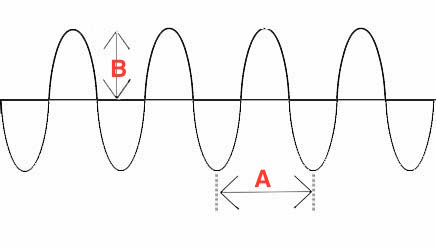
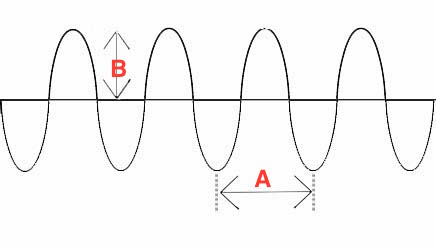
What is the frequency (f) of a wave that has a period (T) of 20 seconds?
0.05 Hz
20 Hz
5 Hz
0 Hz
What is the definition reflection?
The bending of waves as they enter a new medium
Bouncing back of waves from a surface that it can’t pass through
The bending of waves as they pass through openings or around corners
When two interfering waves have a displacement in the same direction, two crests and two troughs overlap. Increased amplitude.
What is the definition of Refraction?
The bending of waves as they enter a new medium
When two interfering waves have a displacement in the opposite direction, crest and trough overlap. Zero amplitude.
When two interfering waves have a displacement in the same direction, two crests and two troughs overlap. Increased amplitude.
What happens to a mechanical wave when the temperature of its medium increases?
Speed Decreases
Speed Increases
Frequency Increases
Nothing


When light waves bounce off of a smooth surface at the same angle of incidence in which they hit the surface we call this:
Diffuse Reflection
Specular Reflection
Diffuse Refraction
Specular Refraction
When light waves bounce off of a rough object and are scattered in all directions we call this:
Specular Reflection
Specular Refraction
Diffuse Reflection
Diffuse Refraction
Two waves, with amplitudes of 150 units and 90 units respectively, interfere while out of phase with each other. What is the amplitude of the resulting wave?
240 units
13,500 units
60 units
1.67 units
Which of these is an example of the Doppler Effect?
The amplitude of a wave on a string increases as frequency decreases
The amplitude of a sound from a tuning fork decreases due to damping
The change in pitch of a car horn as it approaches and drives past you
The intensity of an electromagnetic wave increases with field strength
If the frequency of a sound wave decreases, what happens?
Volume increases
Pitch increases
Pitch decreases
Volume decreases
If amplitude of a sound wave increases, what happens?
Volume Increases
Pitch Increases
Pitch Decreases
Volume Decreases
The frequency of a wave is 10 Hz. What is the period of the wave?
10 sec
0.1 sec
0.5 Hz
5 sec

What sound wave behavior explains the Tacoma Narrows Bridge incident?
Resonance
Beats
Sonic Boom
Doppler Effect

which type of lens
opaque
convex
concave
plano

which type of lens
concave
convex
opaque
plano
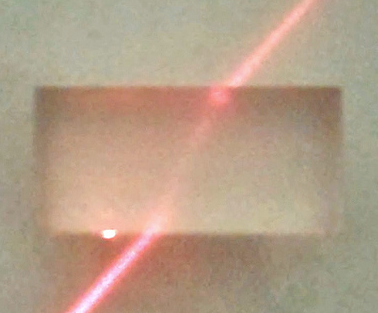
this is an example of
refraction
diffraction
infraction
reflection

what type of mirror is this
concave
convex
translucent
plano

what type of mirror is this
concave
convex
translucent
plano
a convex lens does what to rays
diverges
converges
implodes
merges
a convex mirror does what to rays
diverges
converges
implodes
merges
All electromagnetic waves are made up of perpendicular waves of which two types of energy?
Light and sound
Electric energy and magnetic energy
Electric energy and mechanical energy
Gamma rays and infrared rays
Which of the following best explains how prisms produce a rainbow?
As Visible Light bends through a prism, the lower frequency light bends less, and the higher frequency bends most
As UV rays pass through the prism, the high amplitude rays turn more red and the lower amplitude waves turn more blue
As Infrared Radiation strikes a prism, the faster rays reflect back toward the source while the slower rays pass through the prism
Prisms do not produce rainbows
Which of the following is true about virtual images formed by lenses and mirrors?
They can only be formed by convex lenses and mirrors
They appear at the exact point where light converges
They are always inverted
They are always upright

