
Font size
S
M
L
XL
 Worksheets
Mixed Review for Georgia Milestones
Total questions: 91
Worksheet time: 1hrs 28mins
Name
Class
Date
1.

Italian Salad Dressing
a)
heterogeneous mixture
b)
homogeneous mixture
2.

Milk
a)
Heterogeneous mixture
b)
Homogeneous mixture
3.

Pepsi
a)
Heterogeneous mixture
b)
homogeneous mixture
4.

Chicken noodle soup
a)
heterogeneous mixture
b)
homogeneous mixture
5.

Type of mixture that has the SAME COMPOSITION in every part.
a)
Homogenous
b)
Heterogeneous
6.

Type of mixture that DOESN'T HAVE the same composition in every part.
a)
Homogeneous
b)
Heterogeneous
7.

M&M's is an examples of a
a)
homogeneous mixture
b)
heterogeneous mixture
8.
These can only be separated by chemical means.
a)
element
b)
compound
c)
mixture
d)
stuff
9.
These contain only one kind of atom.
a)
element
b)
compound
c)
mixture
d)
water
10.
The air is a _________.
a)
element
b)
mixture
c)
compound
d)
energy
11.
Water is a ___________.
a)
element
b)
mixture
c)
compound
12.
A compound is made of ________ atoms.
a)
big
b)
similar
c)
different
13.
How many different elements are in this chemical formula: C2H2ClK3
a)
6
b)
8
c)
2
d)
4
14.
Which of the following atomic symbols is written correctly?
a)
ee
b)
hE
c)
C
d)
CL
15.
Which of the following is a pure substance?
a)
CO
b)
C02
c)
Co
d)
H2O
16.
Can be found on the periodic table
a)
Element
b)
Compound
c)
MIxture
17.

What is gold?
a)
element
b)
compound
c)
mixture
18.

What is sugar?
a)
element
b)
compound
c)
mixture
19.
Al2(SO4)3
a)
Pure Substance & Element
b)
Pure Substance & Compound
c)
Mixture & Homogenous
d)
Mixture & Heterogenous
20.

A magnet was placed near a pile that contained both iron and sulfur. The magnet was moved gradually closer to the pile. As it neared the pile, the magnet started attracting small pieces of iron from the pile.
Which of these statements best describes the contents of the pile?
Which of these statements best describes the contents of the pile?
a)
It is a heterogeneous mixture of iron and sulfur that can be separated by magnetism.
b)
It is a solution of iron and sulfur that can be separated by magnetism.
c)
It is a compound of iron and sulfur that can be separated by magnetism.
d)
It is a suspension of sulfur in iron that can be separated by magnetism.
21.
What is a homogeneous mixture?
a)
a mixture that is the same throughout.
b)
a mixture that is made up of one type of atom.
c)
a mixture that is made up of one type of compound
d)
a mixture that cannot be separated through physical changes
22.
What are three common phases of matter?
a)
solid, liquid and gas
b)
atom, element and molecule
c)
mixture, solution and compound
d)
mass, volume and temperature
23.
__________ is the amount of space matter takes up.
a)
Mass
b)
Liquid
c)
Volume
d)
Gas
24.
The amount of matter in a substance, or object, is its __________.
a)
volume
b)
length
c)
temperature
d)
mass
25.
Particles in a __________ have very little movement and the object keeps its shape and volume.
a)
solid
b)
liquid
c)
gas
26.
__________ have a definite volume and tend to take the shape of their container.
a)
solids
b)
liquids
c)
gases
27.
Gases __________.
a)
have a fixed shape
b)
are easily compressed
c)
have particles that do not flow easily
d)
have a definite volume
28.
How are the molecules arranged in a solid?
a)
Tightly close together
b)
Loosely
All over the place
All over the place
c)
All over
There are none
There are none
29.
Which of these statements about solids is true?
a)
They can be compressed easily
b)
They do not flow
c)
They have no definite volume
d)
They take the shape of their container
30.
A balloon is filled with gas. Inside the balloon the gas particles .......
a)
Are avoiding each other
b)
Are moving slowly
c)
Are moving very quickly
d)
Are not moving
31.
The state of matter which has very low density is .......
a)
Gas
b)
Liquid
c)
Solid
d)
Solution
32.
What is the reverse of vaporization?
a)
evaporization
b)
condensation
c)
sublimation
d)
boiling
33.
Which of the following causes a solid to change to a liquid?
a)
the freezing point
b)
evaporation
c)
cold
d)
heat
34.
What point has water reached when it turns from a liquid to a solid?
a)
the boiling point
b)
the melting point
c)
the freezing point
d)
the heating point
35.
What effect does the speed of molecules have on matter?
a)
it helps figure out the matter's density
b)
it controls the matter's weight
c)
it determines the mass of the matter
d)
it determines what state the matter is in
36.
What occurs when a liquid turns to a gas?
a)
condensation
b)
evaporation
c)
the molecules move slower
d)
the molecules hit their freezing point
37.

Melting butter to pour over popcorn is a
a)
Chemical change
b)
Physical change
38.

Water that is heated and changed to steam is a
a)
Physical change
b)
Chemical change
39.

Burning wood is an example of
a)
Chemical change
b)
Physical change
40.

Frying an egg is an example of a
a)
Chemical change
b)
Physical change
41.

Glass breaking s an example of a
a)
Chemical change
b)
Physical change
42.

A rusty bike shows a
a)
Chemical change
b)
Physical change
43.

Pancakes frying on a griddle is an example of a
a)
Physical change
b)
Chemical change
44.

A ___________ change leads to the formation of a different substance.
a)
Physical change
b)
Chemical change
45.
Is hammering wood together to build a house a chemical or physical change?
a)
chemical
b)
physical
46.
Is spoiled meat a chemical or physical change?
a)
chemical
b)
physical
47.
Is rancid butter a chemical or physical change?
a)
physical
b)
chemical
48.
Evidence of a chemical reactions is anything that shows -
a)
a new substance has formed
b)
a solid dissolved in a liquid
c)
interaction between 2 gases
d)
a change in the state of matter
49.
One of the signs of a chemical reaction taking place is:
a)
Bubbles are produced
b)
Reactants are not combining
c)
Products are not forming
d)
Color is not changing
50.
Which of the following describes a precipitate?
a)
a liquid forms when a block of metal is heated
b)
a solid forms when one liquid is poured into another
c)
a gas forms when a solid is placed in a liquid
d)
bubbles form when an acid is poured on a rock
51.
Which is NOT an indication of a chemical change?
a)
temperature change
b)
formation of a precipitate
c)
shape change
d)
production of light
52.
A clear liquid from a flask is poured into another clear liquid in a beaker. Which of the following results of this procedure would indicate a new substance was formed?
a)
The level of the substance in the beaker is higher after the other liquid is added.
b)
A yellow solid forms and then settles to the bottom of the beaker.
c)
Small white crystals are left behind in the flask that held the first liquid.
d)
The mass of the combined liquids is greater than either original liquid.
53.
Which of the following is an example that includes evidence of a chemical reaction?
a)
A sample of zinc is placed in water and it settles to the bottom
b)
A solid block of ice is heated and it completely melts into a liquid.
c)
Sugar that is burned gives off an odor and turns brown and then black.
d)
A tomato is placed into a blender and chopped up into smaller pieces.
54.

Dissolving salt in water is an example of a _____.
a)
physical change
b)
chemical change
55.
A pot of water is boiled to make noodles, this is an example of
a)
Physical change
b)
Chemical change
c)
Niether
56.
Balanced or unbalanced
Na2O + H2O --> NaO2 +NaH
Na2O + H2O --> NaO2 +NaH
a)
Balanced
b)
unbalanced
57.
What is wrong with this chemical formula?
Na3O2 +OH --> OH +ONa3
Na3O2 +OH --> OH +ONa3
a)
There is an extra Na in the product
b)
Not enough O in the product
c)
Too many H in the product
d)
Not enough H in the product
58.
Balanced or unbalanced
2H2O + NaC --> NaH2 +CO2 + H2
2H2O + NaC --> NaH2 +CO2 + H2
a)
Balanced
b)
Unbalanced
59.
Is this balanced?
Al + O2 → 2Al2O3
Al + O2 → 2Al2O3
a)
Yes
b)
No
60.
Law of conservation of mass states that
a)
matter is created
b)
matter is destroyed
c)
matter is neither created nor destroyed
d)
matter does not change
61.
Energy due to motion is ____________ energy.
a)
Potential
b)
Energy
c)
Kinetic
d)
Friction
62.
The faster an object moves, the ________ kinetic energy it has.
a)
more
b)
less
c)
none of the above
d)
all of the above
63.
If there are two forces going in the same direction how would you find the net force?
a)
Subtract
b)
Add
c)
Neither
d)
Multiply
64.
Find the net force: 15 N to the right, and another 15 newtons to the right.
a)
0 N Right
b)
0 N Left
c)
30 N Left
d)
30 N Right
65.

What is the person doing from 5 seconds to 10 seconds?
a)
Walking
b)
Running
c)
Standing Still
d)
Walking Fast
66.

At which point will the object have the greatest potential energy?
a)
A
b)
B
c)
C
d)
D
67.
If a bowling ball is rolling down the alley, what kind of energy is it said to have?
a)
Potential
b)
Mechanical
c)
Kinetic
d)
Chemical
68.
When a rock on a cliff starts to fall, how does the energy change?
a)
Potential increases and kinetic decreases
b)
Kinetic increases and potential decreases
c)
They both stay the same
d)
They both increase
69.
__________ is stored energy.
a)
Potential
b)
Kinetic
c)
None of the above
d)
All of the above
70.
When you rub your hands together on a cold day, you use friction to convert
a)
mechanical energy into thermal energy
b)
thermal energy into nuclear energy.
c)
nuclear energy into electrical energy.
d)
electrical energy into electromagnetic energy.
71.
Potential energy that depends on height is called
a)
kinetic energy.
b)
gravitational potential energy.
c)
elastic potential energy.
d)
mechanical energy.
72.

what type of energy is stored in a battery?
a)
electrical
b)
chemical
c)
thermal
d)
mechanical
73.
Which items would have this energy transformation: chemical energy -> mechanical energy?
a)
person running
b)
candle burning
c)
windmill turning
d)
playing a violin
74.
Which of the following is an example of a change of kinetic energy into gravitational potential energy?
a)
a person parachuting out of a plane
b)
a car racing around an oval track
c)
a person skiing down a hill
d)
a person walking up a hill
75.

Name the Energy conversion from the Sun to a growing apple tree.
a)
Nuclear → Electrical
b)
Gravitational → Thermal
c)
Chemical → Motion
d)
Radiant → Chemical
76.
Electrical -> Mechanical -> Sound
a)
A triple beam balance measuring an object’s mass
b)
A pencil sharpener plugged into a wall outlet
c)
A projector displaying a diagram on the screen
d)
A working flashlight used to light up a dark corner
77.

Marcy uses a hair dryer to dry her hair.
To what kinds of energy does electrical energy change when she uses the hair dryer?
To what kinds of energy does electrical energy change when she uses the hair dryer?
a)
heat and light
b)
heat and motion
c)
motion and sound
d)
heat, motion, and sound
78.
What is the definition of CONDUCTION?
a)
When heat is transferred from objects like rays of light or electromagnetically.
b)
a hot liquid or air that expands, becomes less dense, and rises or becomes more dense, and sinks.
c)
When heat transfers from objects that are touching.
d)
When heat transfers through the heater or AC in your house.
79.
What kind of heat transfer happens when the sun is heating your body?
a)
Conduction
b)
Radiation
c)
Convection
d)
Density
80.
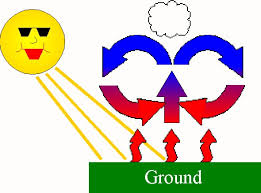
Warm air rises and the cool air sinks demonstrates this type of heat transfer.
a)
conduction
b)
convection
c)
radiation
d)
Insolation
81.
Ironing a shirt is an example of...
a)
condensation
b)
conduction
c)
convection
d)
radiation
82.
Warm air is __________ dense than cold air and rises creating convection currents.
a)
more
b)
less
83.
Conduction occurs in...
a)
solids
b)
liquids
c)
gases
84.
Heat would best be transferred by conduction between
a)
a candle and the air.
b)
an oven and a glass dish.
c)
a stove and a copper pot.
d)
water and a wooden spoon
85.
Why does food wrapped in aluminum foil keep warm for a long time?
a)
Aluminum foil is an insulator and prevents heat loss by conduction.
b)
Aluminum foil forms an air-tight seal and prevents heat loss by convection.
c)
The silver surface of the foil reflects heat in and prevents heat loss by radiation.
d)
The silver surface of the foil absorbs heat from the surroundings and keeps the food warm.
86.
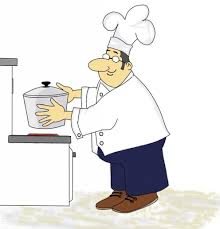
The man goes to take the hot pot off the stove with his bare hands.
a)
conduction
b)
convection
c)
radiation
87.

What happens when ice cubes melt in a glass?
a)
Heat travels from the ice to the warmer water.
b)
No energy is transferred.
c)
Heat is transferred from the warmer water to the ice cubes.
d)
The water warms up due to the humidity
88.
"Lava lamps" contain colored liquids. These liquids form globs that rise to the top due to
a)
conduction
b)
convection
c)
radiation
89.
Warm air over the beach rises while cooler, dense air from the ocean rushes in due to
a)
conduction
b)
convection
c)
radiation
90.
A huge rock at the state park gets hot during the day. The rock was warmed from the Sun by
a)
conduction
b)
convection
c)
radiation
91.
Weather systems in the Earth's atmosphere are due to
a)
conduction
b)
convection
c)
radiation
Reset

