Wayground logo

Free Printable Worksheets

Font size

S
M
L
XL
Worksheets

Bio 12 Circ'n Fetal Lymph

Total questions: 75

Worksheet time: 42mins

Name
Class
Date
1.
In a fetus, the lungs are nonfunctional and can be
a)
bypassed.
b)
utilized.
c)
inflated.
2.
This is the opening in the fetal heart that allows blood to move directly from the right to the left atrium.
a)
foramen ovale
b)
umbilical artery
c)
umbilical vein
d)
pulmonary bypass
3.
The fetus receives all of its oxygen and nutrients from the mother through the 
a)
umbilical vein.
b)
umbilical artery.
c)
foramen ovale.
d)
pulmonary vein.
4.
Carbon dioxide and other wastes are passed from the fetus to the mother through the 
a)
umbilical artery
b)
umbilical vein
c)
foramen ovale
d)
pulmonary artery
5.

This is the bypass in the fetal heart that allows blood to move directly from the pulmonary artery to the aorta.

a)

foramen ovale

b)

umbilical artery

c)

umbilical vein

d)

ductus arteriosus

6.

This is the structure that allow blood to bypass the liver in the fetus

a)

foramen ovale

b)

ductus arteriosus

c)

ductus venosus

d)

fossa ovale

7.
Which of the following is true about the lymphatic system?
a)
Lymph flows towards the heart
b)
Lymph flows away from the heart
c)
Lymph is mostly made of plasma
d)
Lymph is only found in lymph nodes
8.
What "happens" in the lymph nodes?
a)
Excess glucose in the lymph is stored in the liver
b)
Carbon dioxide is removed from the lymph and passed to the lungs for exhalation
c)
Lymph is oxgenated and pumped through the body
d)
Lymph is cleaned of foreign antigens and debris
9.
Which of the following does NOT help lymph flow through the lymphatics?
a)
skeletal muscles
b)
thoracic pressure
c)
one-way valves
d)
lymphocytes
10.
Which cells engulf & destroy bacteria in the lymph nodes?
a)
lymphocytes
b)
macrophages
c)
Peyers patches
d)
Spleen cells
11.
True or false: a lymphatic capillary carries blood and lymph.
a)
True
b)
False
12.
filters lymph, trapping bacteria and other disease-causing microorganisms in the fluid
a)
lymph nodes
b)
platelets
c)
fibrin
d)
collander
13.
What are the bottom chambers of the heart called?
a)
Atria
b)
Ventricles
c)
Tenticles
14.
There are four components of blood. Which one of the following stick together to form blood clots / scabs so you don't get an infection?
a)
Red blood cells
b)
White blood cells
c)
Platelets
d)
Plasma
15.
Which type of blood vessels have a one cell thick lining so the diffusion distance is short?
a)
Veins
b)
Capillaries
c)
Arteries
16.
Why does the heart (and veins) contain valves?
a)
To allow the blood to flow fast
b)
To allow the blood to get oxygenated
c)
To stop blood flowing backwards
17.
Molecules transfer from high to low concentration. What is the word for this?
a)
Osmosis
b)
Diffusion
c)
Active transport
18.
Where aerobic respiration takes place in a cell to release energy?
a)
Mitochondria
b)
Cell wall
c)
Nucleus
19.
Deoxygenated blood is brought back to the heart through which vein?
a)
Aorta
b)
Vena cava
c)
Pulmonary vein
20.
What does the septum do in the heart?
a)
Stop blood flowing backwards
b)
Has a thick wall to pump blood to the body
c)
Separate the blood in the left and right side to stop them mixing
21.
What colour do red blood cells go when they are fully oxygenated?
a)
Dark red
b)
Bright red
c)
Orangey red
22.
What are the other names for white blood cells?
a)
Lymphocytes and phagolymphs
b)
Lymphocytes and phagocytes
c)
Lymphophag and phagolymph
23.
This divides the heart into left and right halves.
a)
septum
b)
valve
c)
cardium
d)
radius
24.
The heart's lower chambers are known as 
a)
ventricles
b)
atria
c)
cavities
d)
cysts
25.
Valves prevent the blood from
a)
flowing backward
b)
clotting
c)
removing waste
d)
entering the cells
26.
Large blood vessels that carry blood away from the heart.
a)
arteries
b)
veins
c)
arterioles
d)
venuoles
27.
Blood vessels that connect arteries to veins.
a)
capillaries
b)
lymph nodes
c)
papilla
d)
ducts
28.
The major component of plasma is 
a)
water
b)
sugar
c)
oxygen
d)
dissolved minerals
29.
Blood cells that carry oxygen.
a)
RBCs
b)
WBCs
c)
platelets
d)
organelles
30.
Blood cells that fight disease.
a)
WBCs
b)
RBCs
c)
platelets
d)
organelles
31.
Occurs when the blood flow to a part of the heart muscle is blocked.
a)
heart attack
b)
stroke
c)
anemia
d)
paralysis
32.

Both open and closed circulatory systems include blood, the heart, and

a)

a second heart

b)

vessels

c)

sulphuric acid

d)

spaghetti sauce

33.

Blood carries ____________________ and other wastes from lungs to the organs that eliminate them from the body.

a)

sulphur

b)

methane

c)

nitrogen

d)

carbon dioxide

34.

What is the main organ of the circulatory system?

a)

small intestine

b)

bone

c)

lungs

d)

heart

35.

Arteries carry oxygen rich blood away from the heart.

a)

True

b)

False

36.

Veins carry oxygen poor blood back to the heart.

a)

False

b)

True

37.

The job of the heart is to . . .

a)

pump blood around the body.

b)

send food to the small intestines.

c)

break down food.

d)

give energy to the body.

38.
What do scientists call bacteria and viruses that can make people sick?  
a)
diseases
b)
vaccines
c)
antibodies
d)
pathogens
39.
___________ filter out debris from cellular warfare.
a)
Kidneys
b)
Lymph nodes
c)
Small intestines
d)
Antigens
40.
Anything that triggers an immune response is a/n
a)
lymph cell
b)
antigen
c)
antibody
d)
neutrop
41.
Y shaped proteins that may mark pathogens for destruction are
a)
antigens
b)
T cells
c)
antibodies
d)
neutrophils
42.
B cells mature in the
a)
thymus
b)
intestine
c)
bone marrow
d)
heart
43.
Pathogens are recognized by their...
a)
antigens
b)
antibodies
c)
killer t-cells
d)
B-cells
44.
What is the fluid inside lymph capillaries called?
a)
Interstitial fluid
b)
Lymph node fluid
c)
Lymph
d)
Water
45.
What is the difference between lymph and blood?
a)
Blood contains erythrocytes
b)
Lymph contains platelets
c)
Blood contains monocytes
d)
Lymph contains wastes
46.
what color is a lymph? 
a)
colorless 
b)
blue 
c)
red 
d)
pink
47.
what function is not a lymph function? 
a)
absorbs lipids in the intestines 
b)
drains to transport proteins 
c)
 creates infection 
d)
originates in blood 
48.
what is blood not made up of ?
a)
platelets 
b)
red blood cells 
c)
white blood cells 
d)
lipids 
49.
what are lymphs made up of ?
a)
lipids
b)
platelets 
c)
red blood cells
d)
white blood cells 
50.
what is a lymph
a)
blue watery fluid
b)
clear watery fluid
c)
red watery fluid
d)
white water fluid
51.

What is the lymphatic system also known as?

a)

Digestive System

b)

Immune System

c)

Cardiovascular System

d)

Imune System

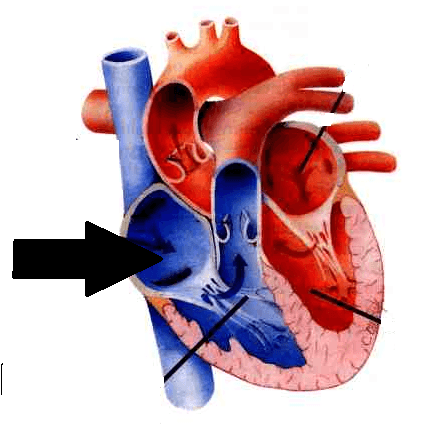
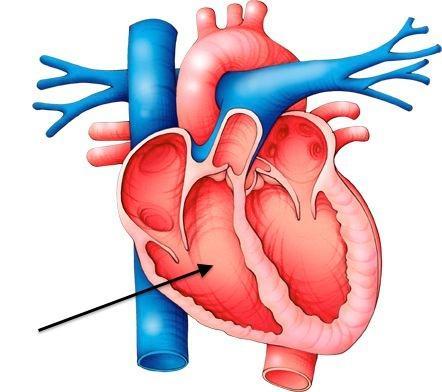
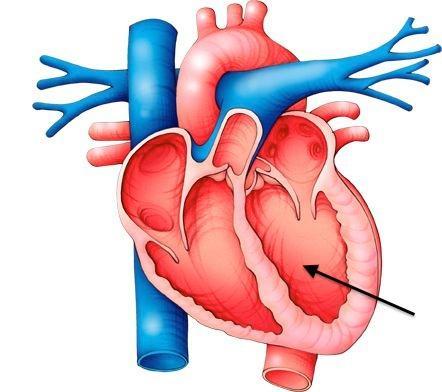
52.
Identify
a)
Left atrium
b)
Right atrium
c)
Left ventricle
d)
Right ventricle
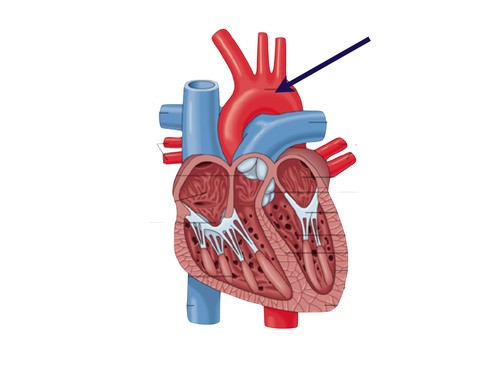
53.
Identify
a)
Pulmonary veins
b)
Pulmonary artery
c)
Aorta
d)
Vena cava
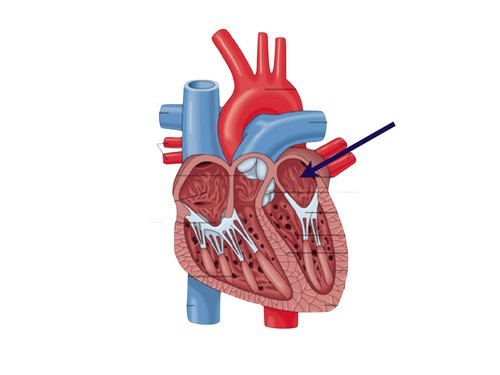
54.
Identify
a)
Left atrium
b)
Right atrium
c)
Left ventricle
d)
Right ventricle
55.
Identify
a)
Left atrium
b)
Right atrium
c)
Left ventricle
d)
Right ventricle
56.
Identify
a)
Left atrium
b)
Right atrium
c)
Left ventricle
d)
Right ventricle
57.
The heart has ___ chambers.
a)
1
b)
2
c)
3
d)
4
58.
This chamber of the heart RECEIVES blood returning from the body
a)
Right Atrium
b)
Right Ventricle
c)
Left Atrium
d)
Left Ventricle
59.
Which chambers of the heart are the thickest and strongest?
a)
Atria
b)
Ventricles
c)
Valves
d)
Aorta
60.
True or False: There are four chambers in the heart.
a)
True
b)
False
61.
The aorta is the largest artery in the body. The blood leaving the aorta is full of?
a)
Oxygen 
b)
Carbon Dioxide 
c)
White blood Cells 
d)
Potassium 
62.
Thin-walled vessels that allow for the exchange of O2 , CO2, nutrients and wastes between blood cells or air sacs in the lungs
a)
Arteries
b)
Veins
c)
Capillaries
63.
What does Deoxygenated mean?
a)
Oxygen-rich
b)
Blood flow
c)
Oxygen-poor
d)
Water Flow
64.
A flap of tissue that prevents blood from flowing backward
a)
Aorta
b)
Atrium
c)
Septum
d)
Valve
65.
  Compared to arteries, veins 
a)
have a pleated endothelium.
b)
have thinner walls.
c)
have more smooth muscle in their tunica media. 
d)
hold their shape better when cut. 
66.
Carry blood away from heart; mostly oxygen-rich
a)
Arteries
b)
Veins
c)
Capillaries
67.
Which type of blood vessel has the thickest layer of smooth muscle in its walls?
a)
Arteries
b)
Veins
c)
Capillaries
d)
Ventricles
68.
What is pulmonary circulation?
a)
Blood travelling to and from the lungs
b)
Blood travelling to and from the body
c)
A blood clot in the lungs
d)
The vessel that brings blood to the lungs
69.
Blood circulation from the heart to the rest of the body is called
a)
Full body
b)
Systemic
c)
pulmonary
d)
heart to lung
70.
Which is the correct definition of the Circulatory system?
a)
The system fights disease so the body stays healthy.
b)
The system that circulates blood and oxygen through the body, consisting of the heart,blood vessels,and blood.
c)
Breaks down food into smaller pieces and absorbs those nutrients into the body.
d)
Provides shape and structure for the body.
71.
What function does the heart do?
a)
Protects organs and produces red blood cells.
b)
Generates heat.
c)
Breaks down food into nutrients.
d)
The heart is a pump, which moves the blood. The arteries and veins are the pipes where the blood flows.
72.
What is the main function of the artery?
a)
It controls your brain and your thought process.
b)
They carry oxygen- poor blood BACK to the heart.
c)
Arteries carry oxygen- rich blood AWAY from the heart.
d)
It receives information (senses) and sends messages to the body about how to react to things.
73.
What is an upper, thin-walled chamber through which blood is pumped to the ventricles?
a)
Valves 
b)
Veins 
c)
Ventricles
d)
Atrium
74.
1.  A membranous vascular organ that develops in female mammals during pregnancy, lining the uterine wall and partially enveloping the fetus, to which it is attached by the umbilical cord.   
a)
Fetus Amniotic Sac
b)
Umbilical Cord 
c)
Placenta
d)
Yolk
75.
1.  The flexible cordlike structure connecting a fetus at the abdomen with the placenta.   
a)
Umbilical Cord
b)
Puberty
c)
Amniotic Sac
d)
Embryo