wayground logo

Free Printable Worksheets

Font size

S
M
L
XL
Worksheets

Bio 102 Exam 4 practice

Total questions: 103

Worksheet time: 2hrs 8mins

Name
Class
Date
1.

Around 10% of the energy available at one level of a food chain is transferred to the next level. If 1000 kJ of energy is available at the level of the producer and there are total of 4 levels in the food chain, how much energy would be transferred to the top predator? (Producer is the first level)

a)

1000

b)

100

c)

10

d)

1

2.

Why most food chains have at the most 4 or 5 levels?

a)

If there are more levels, too little energy will be transferred to the top level

b)

There are not enough organisms to make up so many levels

c)

The variety of organisms are not great enough to make so many levels

3.

What level often has the most number of organisms in a pyramid of numbers?

a)

the bottom level (producers)

b)

the second level (herbivores)

c)

the third level (primary carnivores)

d)

the top level (secondary carnivores)

4.

Why are energy pyramids never inverted?

a)

because energy is always lost from one trophic level to the next

b)

because energy is always gained from one trophic level to the next

c)

because energy cannot be measured as it transfers from one trophic level to the next

d)

because it just never is

5.

An organism that gets energy from breaking down dead organisms, non-living material or waste

a)

producer

b)

consumer

c)

decomposer

d)

detritivore

6.

Use scientific terms, describe the feeding relationships between the organisms in the following food chain: grass --> grasshopper --> field mouse --> owl

a)

producer -> herbivore -> carnivore -> predator

b)

producer -> carnivore -> herbivore -> predator

c)

herbivore -> producer -> predator -> carnivore

d)

predator -> carnivore -> herbivore -> producer

7.

As energy moves from one trophic level to the next, a significant amount of energy will be lost in the form of

a)

herbivores consumed by carnivores

b)

heat dissipating into the environment

c)

plants consumed by herbivores

8.

A feeding level, such as primary consumer or secondary consumer, is also known as a(n)

a)

trophic level

b)

ecological level

c)

habitat

d)

community

9.
Which animal is the apex predator?
a)
hawk
b)
lizard
c)
snake
d)
grass
10.
Which of the following is a herbivore?
a)
cricket
b)
frog
c)
hawk
d)
shrew
11.
All of the living and nonliving things in an area that interact with each other are called a/an ______.
a)
community
b)
habitat
c)
population
d)
ecosystem
12.
Organisms that look similar, interbreed and can produce fertile offspring
a)
Species
b)
Fish
c)
Community
d)
Trees
13.
Different populations living and interacting with each other in the same area
a)
Biome
b)
Ecosystem
c)
Community
d)
Niche
14.
Water temperature would be an example of ...
a)
 biotic factor
b)
 abiotic factor
15.
What is resource partitioning?
a)
When species compete and drive one of them to extinction
b)
When species subdivide a niche to reduce competition
c)
When species compete indefinitely for a resource
d)
When species eat different food sources
16.
A growth model that has a "J-shaped" curved" is 
a)
Logistic Growth
b)
Exponential Growth
c)
Linear Growth
d)
Instrinsic Growth
17.
A population experiences rapid growth at first but then slow. What is likely to have happened?
a)
The carrying capacity has been reached
b)
The sex ratio has changed
c)
Immigration has diminished
d)
The intrinsic growth rate has changed 
18.
A symbiotic relationship in which both species benefit is called
a)
Parasitism 
b)
Commensalism
c)
Mutualism
d)
Predation
19.
A species that has a significant impact on its ecosystem is 
a)
a Keystone Species
b)
An Endangered Species
c)
An Ecosystem Engineer
d)
An Extinct Species
20.
A tick on a human is an example of 
a)
Predation
b)
Parasitism
c)
Commensalism
d)
Mutualism
21.
A type of species that has a low growth rate, has few off-spring, and provides parental care. (Example: Elephant) 
a)
S- strategist
b)
J- strategist
c)
K-strategist
d)
r-strategist 
22.
If a population has unlimited resources, it is likely to experience 
a)
Exponential Growth
b)
Logistic Growth
c)
Linear Growth
d)
Intrinsic Growth
23.
A hurricane would a _______ factor
a)
Density Dependent
b)
Density-Independent
24.
Tree kangaroos live in the upper branches of trees in the rainforests of Queensland, as well as on the island of New Guinea. This is an example of the tree kangaroos ___.
a)
niche
b)
habitat
c)
community
d)
population
25.
___ states that two species cannot exist together if they compete for the same resources. One will either die out or migrate, or they will adapt to separate resources.
a)
Hardy-Weinberg Principle
b)
Limiting Nutrient Principle
c)
Competitive Exclusion Principle
d)
Tolerance Principle
26.
Competition between members of different species.
a)
Intraspecific competition
b)
Interspecific competition
c)
resource partitioning
d)
competitive exclusion
27.
Two individuals of the same species fighting for the same resource
a)
Interspecific competition
b)
Intraspecific competition
c)
competitive exclusion
d)
predation
28.
What is the relationship between a pig, who has lots of digested food in the intestine (all nutrients have not been absorbed) and a tapeworm who needs to eat food that is digested already? 
a)
Parasitism
b)
Mutualism
c)
Commensalism
d)
Predator/Prey
29.
An organism's particular role in a habitat, or when and how it survives, is called its __________
a)
carrying capacity
b)
ecosystem
c)
competition
d)
niche
30.
Put these levels in order from the smallest to the largest.
a)
organism, ecosystem, population, community
b)
organism, community, ecosystem, population
c)
ecosystem, community, population, organism
d)
organism, population, community, ecosystem
31.
Areas defined by their geographical location and ecological similarity are called?
a)
ecozones
b)
biotopes
c)
biomes
d)
biodomes
32.
What process occurs when light energy is captured in autotrophs and converted into sugar?
a)
Photosynthesis
b)
Cellular Respiration
33.
Which of the following is the correct equation for PHOTOSYNTHESIS?
a)
CO+ light + H2O --> O+ Sugar
b)
CO+ sugar + H2O --> O+ light
c)
O2 + light + H2O --> CO+ Sugar
d)
CO+ O2 + H2O --> Light+ Sugar
34.
What is the ultimate ORIGINAL source of energy for living things
a)
Sugar
b)
Sun
c)
Moon
d)
Carbon Dioxide
35.
Which gas is removed from the atmosphere during photosynthesis?
a)
hydrogen
b)
oxygen
c)
nitrogen
d)
carbon dioxide
36.
What are the products of photosynthesis?
a)
water and carbon dioxide
b)
oxygen and glucose
c)
oxygen and carbon dioxide
d)
oxygen and water
37.
The nitrogen found in the atmosphere is not in a form that plants or animals can use.  What converts it into a usable form?
a)
Bacteria
b)
Photosynthesis
c)
Decomposition of organisms
d)
Fungi
38.
Identify the cycle pictured.
a)
The Water cycle
b)
The Carbon cycle
c)
The Nitrogen cycle
d)
This is not a correct diagram of any cycle.
39.
Identify the cycle pictured.
a)
The Water cycle
b)
The Carbon cycle
c)
The Nitrogen cycle
d)
This is not a correct diagram of any cycle.
40.
What is one way that carbon dioxide can be put back into the atmosphere?
a)
Sunlight
b)
Burning of Fossil Fuels
c)
Ocean uptake
d)
Rain
41.
Identify the cycle pictured.
a)
The Water cycle
b)
The Carbon cycle
c)
The Nitrogen cycle
d)
The Phosphorus cycle
42.
Nitrogen in the atmosphere is not available.  Free nitrogen has to be changed into a usable form in a process called __
a)
nitrogen fixation
b)
transpiration
c)
precipitation
d)
respiration
43.
Which nutrient is not cycled through the atmosphere?
a)
carbon
b)
nitrogen
c)
phosphorous
d)
water
44.
What is the role of decomposers in an Ecosystem? 
a)
They recycle matter and nutrients to form fossil fuels
b)
They are burn and release as carbon dioxide
c)
Decomposers are responsible to turn oxygen into carbon dioxide
d)
They recycle energy back to the sun
45.
Plants and animals need nitrogen to make __________.
a)
Protein
b)
Carbohydrates
c)
Lipids
d)
Nucleic Acids
46.
Identify the cycle pictured.
a)
The Water cycle
b)
The Carbon cycle
c)
The Nitrogen cycle
d)
The Phosphorus cycle.
47.
The  number of individuals a habitat can sustain with the resources it has available
a)
Carrying capacity
b)
Limiting factors
c)
Resources
d)
Population
48.
Which of the following is an EXAMPLE of a limiting factor?
a)
Water
b)
the color of the sky
c)
Migration
d)
Thick fur
49.
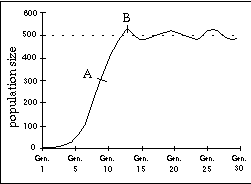
What is the carrying capacity of the graph?
a)
around 500
b)
more than 500
c)
less than 500
d)
around 600
50.
If the carrying capacity of a predator decreases, what will happen to the carrying capacity of the prey?
a)
Will Increase
b)
Will Decrease
c)
Will stay the same
d)
Will fluctuate
51.
What type of growth is represented in this graph?
a)
exponential
b)
logistics
c)
a good kind
d)
representative
52.
A connection of food chains with many food energy paths in an ecosystem is a ____________
a)
ecosystem
b)
food web
c)
environment
d)
population
53.

Which graph shows a situation in which the number of predators in a population depends on the number of prey?

a)

Graph F

b)

Graph G

c)

Graph H

d)

Graph J

54.
This is an example of a:
a)
Nitrogen Cycle
b)
Water Cycle
c)
Biosphere
d)
Predator Prey Relationship
55.

Predator population lags behind prey population because:

a)

Increase in predators leads to decrease in prey

b)

Increase in predators leads to increase in prey

c)

Increase in predators leads to decrease in producers

56.
A primary consumer's energy is 54,000 joules. How much energy was provided to secondary consumers?
a)
53,460 J
b)
540 J
c)
5,400 J
d)
54 J
57.
The following is an example of biomass:
a)
tomato plant
b)
manure
c)
pine tree
d)
all three are biomass
58.
At position A, which hemisphere would have summer?
a)
Northern hemisphere
b)
Southern hemisphere
59.
What happens when the area in which you live tilts away from the sun?
a)
It is summer.
b)
It is spring.
c)
It is winter.
d)
It is fall.
60.
Why do we experience the changing of the season on the earth?
a)
distance from the sun
b)
rotation of the earth
c)
change in solar output
d)
tilt of the earth's axix
61.
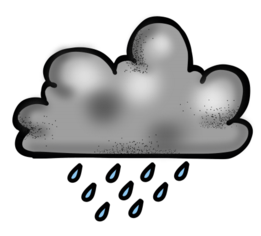
What part of the water cycle does this picture show?
a)
condensation
b)
precipitation
c)
evaporation
62.
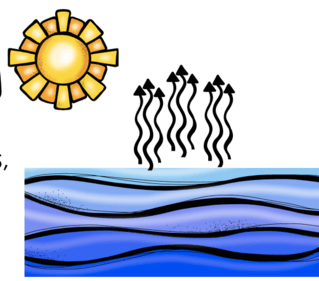
What part of the water cycle does this picture show?
a)
condensation
b)
precipitation
c)
evaporation
63.
Cattle egrets forage (feed) in fields among cattle. The egret gets easy access to flying insects stirred up by the cattle, and the cattle don't care if they are there or not.
a)
mutualism
b)
commensalism
c)
competition
d)
parasitism
64.
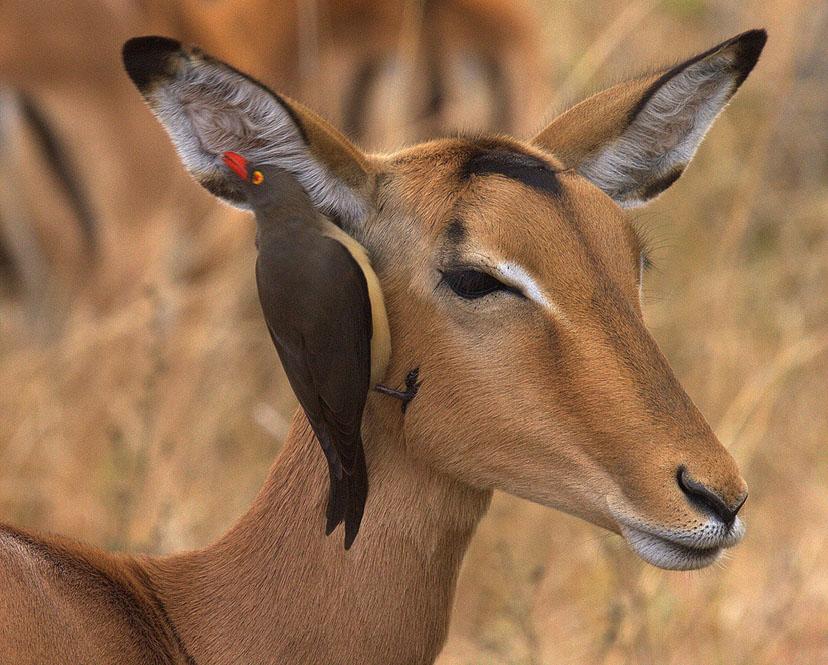
Red-billed oxpeckers are birds that often feed on parasites that infest impala.  This is an example of _______.
a)
commensalism
b)
mutualism
c)
neutralism
d)
competition
65.
What aquatic biome is characterized by flowing fresh water?
a)
Lakes/Ponds
b)
Mangroves Swamps
c)
Rivers/Streams
d)
Coral Reefs
66.
Which of the following is considered a wetland?
a)
Swamps
b)
Marshes
c)
Bogs
d)
All of the above.
67.
Which biome is pictured below?
a)
ocean
b)
freshwater
c)
coral reef 
d)
wetland
68.
Which brackish watery biome has some areas that are salty, and some areas that are freshwater?
a)
freshwater
b)
coral reef
c)
estuary
d)
ocean
69.
Most of the adjoining United States of America is located in which three biomes?
a)
tundra, savanna, desert
b)
tropical rainforest, taiga, temperate forest
c)
grassland, deciduous forest, desert
d)
prairie, tropical rain forest, desert
70.
Which biome holds the greatest biodiversity?
a)
grassland
b)
tundra
c)
rainforest
d)
desert
71.
The trees in this biome shed their leaves and grow new ones each year:
a)
temperate deciduous forest
b)
grasslands
c)
deserts
d)
tundra
72.
The _________ biome is a cold, dry, treeless region.
a)
rainforest
b)
tundra
c)
grassland
d)
desert
73.
Which biome has an average rainfall of less than 10 inches and has hot days and cool nights?
a)
savanna
b)
desert
c)
chaparral
d)
tundra
74.
Which biome has the largest annual precipitation?
a)
tundra
b)
desert
c)
rainforest
d)
taiga
75.
TRUE or FALSE?
All of the carbon in existence is continually recycled in the carbon cycle.
a)
True
b)
False
76.

A reference between relative abundance and species richness is:

a)

Biodiversity

b)

Diversity Indices

c)

There is no reference

d)

I'm just here cause my mom made me

77.
Increasing concentration of a harmful substance in organisms at higher trophic levels in a food chain or food web
a)
carrying capacity
b)
endangered species
c)
biological magnification
d)
global warming
78.
a)
nonrenewable resources
b)
renewable resources
c)
global warming
d)
soil erosion
79.
Plants and animals that migrated to places where they are not native and cause harm to the native species
a)
introduced
b)
invasive
c)
extinct
d)
endangered
80.
Identify the process shown in this diagram.
a)
Extinction
b)
Toxin Accumulation
c)
Pollution
d)
Biomagnification
81.

When two species evolve in response to the pressure each puts on the other we call this:

a)

microevolution

b)

macroevolution

c)

speciation

d)

coevolution

82.
Glucose and oxygen becomes carbon dioxide and water and ATP
a)
Photosynthesis
b)
Chemosynthesis
c)
Cellular Respiration
83.
What would be the result of deforestation on an ecosystem?
a)
loss of habitat
b)
increase in biomass
c)
more genetic diversity
d)
increase in population
84.
Which biome is characterized by low temperatures and low amounts of rainfall?
a)
tundra
b)
desert
c)
temperate deciduous forest
d)
tropical rain forest
85.
The most important abiotic factors when studying biomes are...
a)
Food and Water
b)
Water and Sunlight
c)
Temperature and Oxygen
d)
Water and Temperature 
86.
What is the difference between biotic and abiotic?
a)
Biotic are non-living things
b)
Abiotic are living organisms
c)
Biotic is life,
Abiotic is non-living
d)
Biotic is non-living, Abiotic is living
87.
Which of the following is true in a climax community?
a)
the community will constantly evolve and change
b)
if one species dies, a new species will fulfill the same role
c)
They are stable for a long time, with the same species maintaining their population
d)
it goes through a major change called "climax" every few hundred years
88.
What provides the raw material for adaptation to local conditions?
a)
ecosystem diversity 
b)
species diversity
c)
extirpation
d)
genetic diversity 
89.
What is the most impactful cause of biodiversity loss world wide?
a)
habitat loss
b)
pollution
c)
invasive species
d)
overharvesting
90.
What does biodiversity mean?
a)
Only one species in an area.
b)
The different amount of species in an area
c)
All abiotic life
d)
Nitrogen fixation
91.
Which term means variety of life?
a)
Diversity
b)
Biodiversity
c)
Heterodiversity
d)
Homodiversity
92.
Why is biodiversity so important?
a)
Because all species depend on each other to survive, so if one becomes extinct another species that relies on it could go extinct as well
b)
Because it’s better to have only one variation of each species.
c)
Because it better to only have a few species on Earth.
d)
Honestly, I have no idea what biodiversity is!
93.
What is an organism's niche?
a)
an organisms role in an environment
b)
where an organism lives
c)
something that itches
d)
a predator that is mean
94.
what is the leading cause of deforestation?
a)
Diseases 
b)
Housing market
c)
Agriculture and Farming
d)
Paper mill
95.
deforestation leads to climate change such as drought 
a)
true 
b)
fasle 
96.
What does deforestation effect?
a)
Plants and animals
b)
Our biosphere
c)
Humans
d)
All of the above
97.

Which of the following is the most common population distribution pattern?

a)

Clumped

b)

Uniform

c)

Random

d)

Standard

98.

How many females at reproductive age in cohort?

a)

Sex Ratio

b)

Generation Time

c)

Age Structure

99.

Which of these countries has a population that is increasing rapidly?

a)

Kenya

b)

United States

c)

Italy

100.

Humans have which type of survivorship curve?

a)

Type I

b)

Type II

c)

Type III

101.

Oysters and Rabbits have which type of survivorship curve?

a)

Type I

b)

Type II

c)

Type III

102.

Large bodied animals have which reproductive strategy?

a)

K - selected

b)

r - selected

103.

Smaller bodied animals have which type of reproductive strategy?

a)

K - selected

b)

r - selected