
 Worksheets
Earth-Moon-Sun Test Review
Total questions: 80
Worksheet time: 48mins
Name
Class
Date
1.
The layer of the sun where currents of hot rising gas and cool sinking gas work to carry energy toward the surface is called
a)
Convection Zone
b)
Radiative zone
c)
Photosphere
d)
Corona
2.
The point in Earth's orbit when it is closest to the sun
a)
Aphelion
b)
1 AU
c)
Perihelion
d)
Vernal Equinox
3.
The Earth is closest to the sun in
a)
June
b)
March
c)
September
d)
January
4.
The shortest day of the year in the northern hemisphere is on or near
a)
March 21
b)
June 21
c)
September 21
d)
December 21
5.
During an equinox, sunlight strikes the Earth most directly at the equator
a)
True
b)
False
6.
Molecules that trap infrared heat in the lower atmosphere are called
a)
Longwave radiation
b)
Greenhouse gases
c)
shortwave radiation
d)
Terrestrial gases
7.
The dense layer around the sun's core is called the
a)
Photosphere
b)
Corona
c)
Radiative Zone
d)
Convection Zone
8.
Where nuclear fusion occurs
a)
Photosphere
b)
Core
c)
Convection Zone
d)
Chromosphere
9.
Dark regions on the sun's surface that contain magnetic field lines
a)
Prominences
b)
Solar Flares
c)
Sunspots
d)
Solar Wind
10.
The distance from Earth to the Sun
a)
1 AU
b)
300,000 km/s
c)
15 million km
d)
50 million miles
11.
The visible surface of the sun
a)
Photosphere
b)
Chromosphere
c)
Corona
d)
Convection Zone
12.
Bright ejections of gas from the surface of the sun that occur as the magnetic field readjusts
a)
Sunspots
b)
Solar Flares
c)
Auroras
d)
Convection currents
13.
What term describes the appearance of bright areas surrounded by dark zones on the sun's surface?
a)
Eutrophication
b)
Granulation
c)
Photosynthesis
d)
Fusion
14.
The layer of the sun where currents of hot rising gas and cool sinking gas work to carry energy toward the surface is called
a)
Convection Zone
b)
Radiative zone
c)
Photosphere
d)
Corona
15.
Seasons are caused by
a)
The distance between the Earth and the Sun
b)
the tilt of Earth on its axis
c)
Variations in the sun's energy output
d)
Solar flares
16.
The point in Earth's orbit when the Earth is farthest from the sun
a)
Perihelion
b)
summer solsitce
c)
Aphelion
d)
winter solstice
17.
Sunspot activity peaks every
a)
25 years
b)
365 days
c)
11 years
d)
50 years
18.
Erupting gas from the sun that travels outward across the solar system
a)
Prominence
b)
Solar flare
c)
sunspot
d)
Coronal Mass ejection
19.
The sun rotates faster at the poles than the equator
a)
True
b)
False
20.
A stream, of charged particles that flow outward from the sun constantly
a)
Corona
b)
magnetic field
c)
Solar wind
d)
photosphere
21.
When charged particles from the sun enter into Earth's atmosphere, this happens
a)
an aurora
b)
a super nova
c)
fusion
d)
a solar flar
22.
What blocks most of the solar particles from the sun on Earth?
a)
the Photosphere
b)
Earths magnetic field
c)
the Earth's crust
d)
the corona
23.
What causes day and night on Earth?
a)
the tilt of Earth's axis
b)
Earth's revolution around the sun
c)
the moon
d)
Earth's rotation
24.

When the northern hemisphere (where we live) is tilted toward the sun, what season are we in?
a)
winter
b)
spring
c)
summer
d)
fall
25.

When the southern hemisphere is tilted toward the sun, what will they experience?
a)
More direct sun rays
b)
More indirect sun rays
c)
An equal amount of direct and indirect rays
26.
What has the greatest influence on tides?
a)
gravitational pull of the sun
b)
gravitational pull of the moon
c)
gravitational pull of the Earth
d)
gravitational pull of other planets
27.
Why does the same side of the moon always face the Earth?
a)
the moon doesn't rotate
b)
the moon doesn't revolve
c)
the Earth's gravity keeps the moon facing it
d)
the moon's rotation and revolution takes the same amount of time
28.
What determines which phase of the moon you see?
a)
where you are on Earth
b)
how much of the sunlit side faces Earth
c)
how much of the moon is lit by the sun
d)
how much of the moon is in the sky
29.
How does the amount of the lit side of the moon that we see change as the moon goes from new to full?
a)
it stays the same
b)
it increases
c)
it decreases
d)
it depends
30.
During what moon phases do spring tides occur?
a)
full and new
b)
first and third quarters
c)
full only
d)
all phases
31.

What moon phase would you see a full moon?
a)
1
b)
3
c)
5
d)
7
32.

What moon phases would you see at number 8?
a)
waning crescent
b)
full
c)
new
d)
first quarter
33.

Where would you see a gibbous moon?
a)
1
b)
2
c)
3
d)
4
34.
About how many days does it take to moon to go through a complete cycle?
a)
7 days
b)
365 days
c)
29 days
d)
20 days
35.

When the Earth is between the moon and sun, it is most likely a:
a)
new moon
b)
full moon
c)
waxing crescent
d)
waxing gibbous
36.
Changes in the moon's appearance are
a)
phases
b)
eclipses
c)
stages
d)
cycle
37.
Mrs. Smith says "the moon looks larger than the stars!" What explains this?
a)
The moons soaks up the star's light
b)
The moon is larger than Earth
c)
The moon is larger than stars
d)
the moon is closer to Earth than stars
38.

The Moon orbits Earth in a ________________ direction
a)
clockwise
b)
counterclockwise
c)
upwards
d)
downwards
39.
Define Waxing
a)
Moon is increasing and light part appears to be growing
b)
Completely illuminated
c)
dark side is facing earth
d)
Moon is decreasing and light part appears to be shrinking
40.
Define Gibbous
a)
Less than half of moon visible
b)
More than half of moon visible
c)
All of moon visible
d)
None of moon visible
41.
Define Full Moon
a)
None of moon is visible
b)
Half moon phase is visible
c)
Complete moon face is visible
d)
Less Than half of moon is visible
42.
Define New Moon
a)
None of moon is visible from Earth
b)
All of moon visible from Earth
c)
Moon is 1/2 visible from Earth
d)
Moon is more than Half Visible from Earth
43.
Define Quarter Moon
a)
None of moon visible
b)
Less than Half the moon is visible
c)
More than half of moon is visible
d)
Half of the moon is visible
44.

Name the moon phase
a)
Waxing Gibbous
b)
Waxing Crescent
c)
Waning Crescent
d)
Waning Gibbous
45.

Name the moon phase
a)
Waning Crescent
b)
Waxing Crescent
c)
Waning Gibbous
d)
Waxing Gibbous
46.
The 1st Quarter moon is lit on the:
a)
Left Side
b)
Right Side
47.
Define Waning
a)
Moon appears to be gradually increasing in size
b)
Moon is completely illuminated
c)
Moon appears to be gradually decreasing in size
d)
More than half illuminated
48.
A year is measured by
a)
Earth's revolution around the sun
b)
Earth's rotation on its axis
c)
the tilt of the earth
d)
Earth's involvement in eclipses
49.
How long does it take for the earth to complete one rotation?
a)
365 1/4 days
b)
24 hours
c)
30 days
d)
one decade
50.
How long does it take for the earth to complete one revolution?
a)
365 1/4 days
b)
24 hours
c)
30 days
d)
one decade
51.
What is the measurement of the tilt of earth's axis?
a)
23.5
b)
22.5
c)
21.5
d)
20.5
52.
When the north pole is tilted away from the sun it is
a)
Spring in the Northern Hemisphere
b)
Summer in the Northern Hemisphere
c)
Fall in the Northern Hemisphere
d)
Winter in the Northern Hemisphere
53.

Which phase of the moon is diplayed
a)
Waxing crescent
b)
Waning crescent
c)
Waxing gibbous
d)
Waning gibbous
54.

Which phase of the moon is diplayed
a)
Waxing crescent
b)
Waning crescent
c)
Waxing gibbous
d)
Waning gibbous
55.

Which phase of the moon is diplayed
a)
Waxing crescent
b)
Waning crescent
c)
Waxing gibbous
d)
Waning gibbous
56.

Which phase of the moon is diplayed
a)
Waxing crescent
b)
Waning crescent
c)
Waxing gibbous
d)
Waning gibbous
57.

Which phase of the moon is diplayed
a)
First Quarter
b)
Third Quarter
c)
New Moon
d)
Full Moon
58.

Which phase of the moon is diplayed
a)
First Quarter
b)
Third Quarter
c)
New Moon
d)
Full Moon
59.

Which phase of the moon is diplayed
a)
First Quarter
b)
Third Quarter
c)
New Moon
d)
Full Moon
60.

Which phase of the moon is diplayed
a)
First Quarter
b)
Third Quarter
c)
New Moon
d)
Full Moon
61.
Why do moon phases occur?
a)
The tilt of the earth's axis
b)
Sunlight reflecting from the earth
c)
The earth's revolving around the sun
d)
The relative positions of the earth, sun, and moon
62.
When do spring tides occur?
a)
New moon and Full moon
b)
First and third quarter moons
c)
Waxing moons
d)
Waning moons
63.
When do neap tides occur?
a)
New moon and Full moon
b)
First and third quarter moons
c)
Waxing moons
d)
Waning moons
64.

The image pictures which type of eclipse?
a)
Solar Eclipse
b)
Lunar Eclipse
65.

The image pictures which type of eclipse?
a)
Solar Eclipse
b)
Lunar Eclipse
66.
During which moon phase can a solar eclipse occur?
a)
New moon
b)
Full moon
c)
First quarter
d)
Third quarter
67.
During which moon phase can a lunar eclipse occur?
a)
New moon
b)
Full moon
c)
First quarter
d)
Third quarter
68.
For a solar eclipse to happen, which alignment of Earth, moon, and sun must take place?
a)
Earth - Moon - Sun
b)
Earth - Sun - Moon
c)
Sun - Earth - Moon
69.
For a lunar eclipse to happen, which alignment of Earth, moon, and sun must take place?
a)
Earth - Moon - Sun
b)
Earth - Sun - Moon
c)
Sun - Earth - Moon
70.

Which is NOT a reason why lunar eclipses are more commonly seen than solar eclipses.
a)
The Earth's shadow is larger on the moon that the moon is on Earth.
Lunar eclipses last for a longer period of time.
Lunar eclipses last for a longer period of time.
b)
The Earth's shadow is larger on the moon that the moon is on Earth.
c)
Solar eclipses are only visible in a small strip of degrees latitude.
d)
The Earth's orbit and the moon's orbit is the same.
71.

Why does a lunar eclipse have to occur in this moon phase?
a)
This phase shows how the Earth can block the sunlight to the moon.
b)
This phase allows Earth to block the moon from the sun.
c)
This phase allows for the moon to block the sun’s light to the Earth.
d)
This phase shows how the sun can block the moon from Earth.
72.
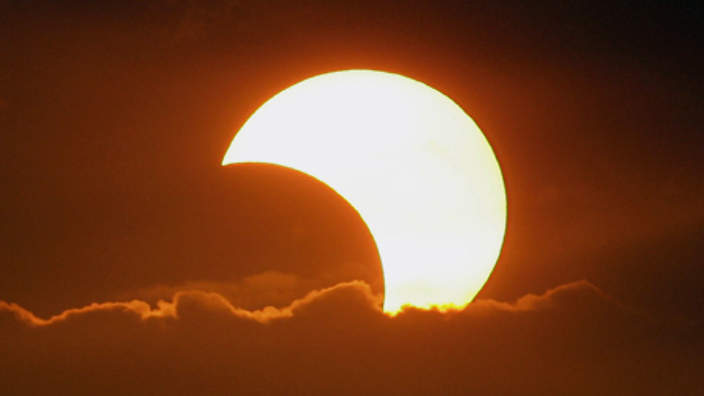
This image is an example of
a)
Lunar Eclipse
b)
Full Moon
c)
New Moon
d)
Solar Eclipse
73.
A lunar eclipse only occurs during which moon phase?
a)
New Moon
b)
3rd Quarter
c)
Full Moon
d)
1st Quarter
74.
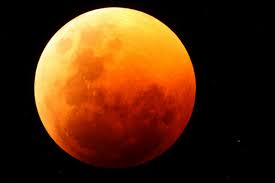
This image is an example of
a)
Lunar Eclipse
b)
New Moon
c)
Solar Eclipse
d)
Full Moon
75.
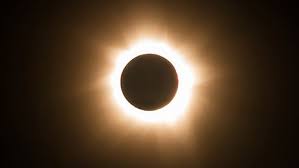
During a solar eclipse...
a)
The sun is blocked by the moon
b)
The Earth is blocked moon
c)
The moon is blocked by the sun
d)
You are blocked
76.
There are two sections of a shadow. Which one is the lighter, outer shadow?
a)
umbra
b)
lumbar
c)
penumbra
d)
annular
77.

The moon is a natural ______ of Earth.
a)
comet
b)
axis
c)
satellite
d)
space probe
78.

Earth's ________ on its axis causes day and night.
a)
rotation
b)
revolution
c)
phase
d)
comet
79.

One full orbit of an object around another object is called a ________.
a)
axis
b)
rotation
c)
revolution
d)
satellite
80.

Gravitational attraction between objects depends on two things. What are they? Choose TWO answers!
a)
distance
b)
mass
c)
speed
d)
volume
100 %

