wayground logo

Free Printable Worksheets

NEW

Font size

S
M
L
XL
Worksheets

Science Galileo Review Q4

Total questions: 75

Worksheet time: 49mins

Name
Class
Date
1.
The picture shows a well. Of what simple machine is this an example? 
a)
wedge
b)
pulley
c)
wheel & axle
d)
screw
2.
Which planet is larger than Earth?
a)
Mars
b)
Neptune
c)
Mercury
d)
Venus
3.

What is the best tool for measuring the incline angle of a ramp?

a)

protractor

b)

balance

c)

ruler

d)

compass

4.

What is the largest bone in the human body?

a)

humerus

b)

tibia

c)

ulna

d)

femur

5.

Which of these bones has a job of protecting internal organs?

a)

femur

b)

ulna

c)

sternum

d)

carpals

6.
Which of these bones supports movement?
a)
radius
b)
rib cage
c)
clavicle
d)
patella
7.

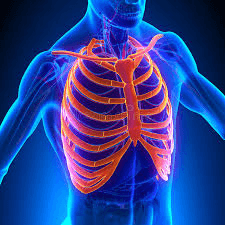
What job does the rib cage perform?

a)

connects sternum to vertebrae

b)

supports the weight of the head

c)

protects the heart and lungs

d)

allows us to move our legs

8.
What part of the skeletal system protects an internal organ?
a)
cranium
b)
ulna
c)
femur
d)
carpals
9.

Which planet is 5th from the Sun?

a)

Earth

b)

Mars

c)

Jupiter

d)

Saturn

10.

The sun is setting. How far will Earth have to rotate so that the Sun will rise?

a)

a quarter rotation

b)

a half rotation

c)

three quarters rotation

d)

a full rotation

11.

Which planet has the largest canyons and volcanoes in our solar system? (the RED planet!)

a)

Earth

b)

Mars

c)

Jupiter

d)

Venus

12.
A ball rolls across the lawn. How does friction affect the ball?
a)
Friction causes the ball to roll faster.
b)
Friction causes the ball to bounce.
c)
Friction causes the ball to remain still.
d)
Friction causes the ball to slow down.
13.

Which planet has the most moons?

a)

Jupiter

b)

Mercury

c)

Uranus

d)

Saturn

14.

Which 2 planets have NO moons?

a)

Mercury & Earth

b)

Mercury & Venus

c)

Mercury & Neptune

d)

Mercury & Uranus

15.

A camper wants to chop up some firewood. What would be the best simple machine?

a)

wheel & axle

b)

pulley & screw

c)

gear & plane

d)

wedge & lever

16.
Which body system allows you to feel pain?
a)
digestive
b)
skeletal
c)
nervous
d)
muscular
17.
A scientist invites another scientist to his group even though they disagree. What quality does this show?
a)
creativity
b)
tolerance
c)
skepticism
d)
honesty
18.
This type of muscle movement happens without any effort or thought.
a)
voluntary
b)
involuntary
19.
This type of muscle pumps blood throughout the body.
a)
smooth
b)
cardiac
c)
striated
d)
voluntary
20.

This type of muscle is found in the eyes and is involuntary.

a)

striated

b)

skeletal

c)

cardiac

d)

smooth

21.

When the moon is more than half full but not all the way full, it is a …

a)

gibbous moon

b)

crescent moon

c)

new moon

d)

full moon

22.
What is this moon called?
a)
waxing crescent
b)
waning crescent
c)
waxing gibbous
d)
waning gibbous
23.

What moon phase makes the moon appear half full?

a)

half moon

b)

new moon

c)

quarter moon

d)

full moon

24.
What is the powerhouse organ in charge of the nervous system?
a)
heart
b)
lungs
c)
brain
d)
liver
25.
What is the only organ that is also a muscle?
a)
brain
b)
heart
c)
liver
d)
stomach
26.
Doing the right thing even when no one is watching is what quality?
a)
tolerance
b)
integrity
c)
openness
d)
skepticism
27.

Which of the following best describes atoms?

a)

atoms do not have mass

b)

atoms are larger than elements

c)

atoms make up matter

d)

atoms always bond together

28.
Which involves a chemical change?
a)
ice cracking
b)
iron rusting
c)
ice cream melting
d)
paper tearing
29.
Which of these is a place where humans live and study space?
a)
Moon probe
b)
Mars Rover
c)
Space Shuttle
d)
International Space Station
30.
Earth and the rest of the solar system are located in the galaxy ___________________.
a)
Milky Way
b)
star
c)
Andromeda
31.
Which space equipment transports humans into space from Earth?
a)
space shuttle
b)
space prove
c)
satellite
32.
What object is launched into orbit and designed to send and receive information?
a)
rover
b)
satellite
c)
space shuttle
33.
A tool for viewing and observing
a)
telescope
b)
space shuttle
34.
The largest planet in our solar system is 
a)
Uranus
b)
Neptune
c)
Pluto
d)
Jupiter
35.

The Hubble telescope was put in space to:

a)

take images past the atmosphere

b)

it is closer to the sun

c)

too big for Earth

d)

its not really in space

36.

What is the artifical satellite that orbits Earth

a)

Hubble Telescope

b)

Spirit

c)

Opportunity

d)

Challenger

37.
Final stage of USA’s goal to get to the Moon. This program landed a spacecraft on the Moon.
a)
Project Moon
b)
Project Apollo
c)
Project Mercury
d)
Project Gemini
38.
The order of the planets is:
a)
Mars,Venus,Earth,
Mercury,Saturn
Jupiter, Uranus, Neptune
b)
Earth,Venus,Mars
Jupiter, Neptune,
Mercury,Saturn,
Uranus
c)
Mercury,Venus,Earth
Mars,Jupiter,
Saturn,Uranus
Neptune
39.
True or False
The Earth is the center of the solar system.
a)
True
b)
False
40.
Which planet has had rovers sent to it to study its soil?
a)
Mercury
b)
Venus
c)
Earth
d)
Mars
41.
Something that takes up space and has mass.
a)
volume
b)
matter
c)
mass
d)
density
42.
Iron + oxygen = rust is an example of a ___________.
a)
physical property/change
b)
chemical property/change
c)
mass
d)
volume
43.
Cutting an orange is a physical change.
a)
True
b)
False
44.
Changing the way matter looks without changing it into NEW matter is a:
a)
Chemical change
b)
Physical change
c)
Energy change
d)
BOTH a chemical and a physical change
45.
Water freezing to ice is an example of a:
a)
Physical change
b)
Chemical change
46.
Smashing a piece of candy into smaller pieces is an example of a:
a)
Physical change
b)
Chemical change
47.
Burning wood to ash is an example of a:
a)
Physical change
b)
Chemical change
48.
Glucose (C6H12O6) contains atoms of carbon, hydrogen, and oxygen that are chemically bonded together.  What type of matter is glucose?
a)
Glucose is an element
b)
Glucose is a compound 
c)
Glucose is a mixture
d)
Glucose is a metal
49.
The smallest particle of any element that still has the properties of that element is called
a)
an atom
b)
a compound
c)
a solution
d)
a mixture
50.
Classify Sulfuric Acid (H2SO4) as an element or compound.
a)
Element
b)
Compound
51.
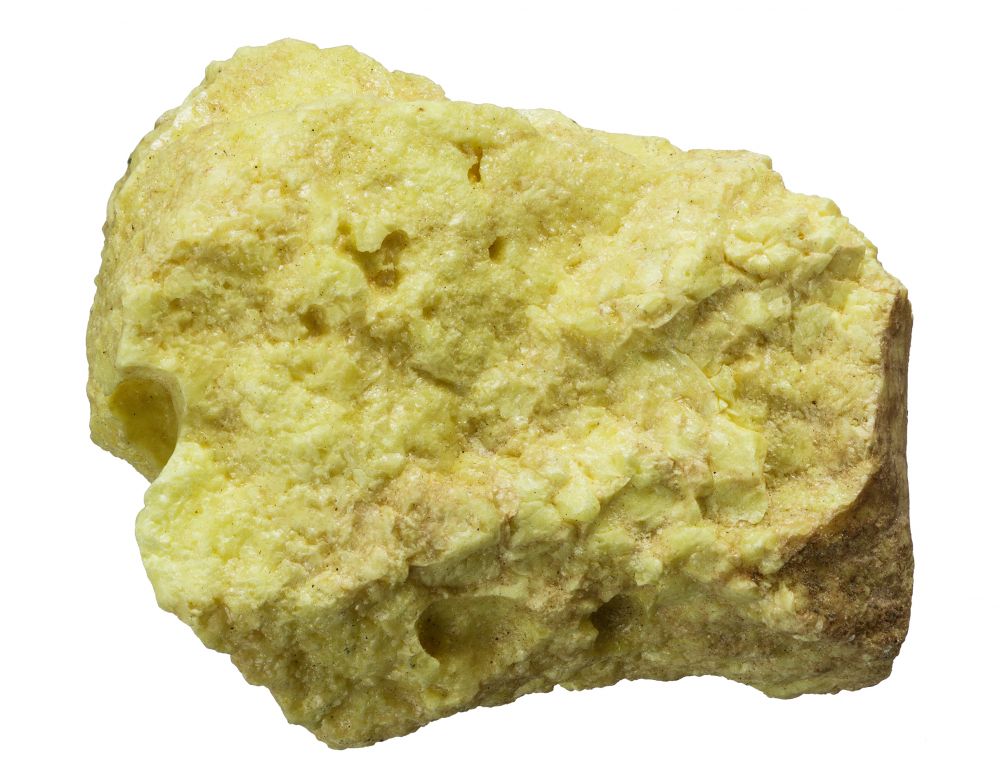
Classify Sulfur (S) as an element or compound.
a)
Element
b)
Compound
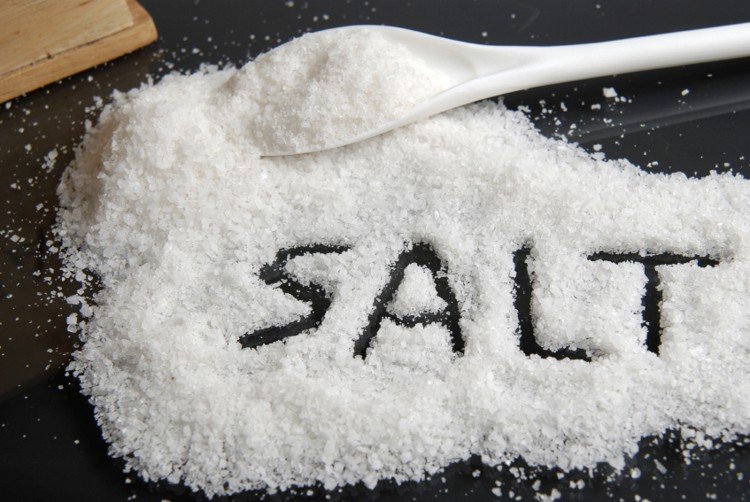
52.
Classify Sodium Chloride (NaCl) as an element or compound.
a)
Element
b)
Compound
53.
TRUE OR FALSE:
There are about 118 elements.
a)
True
b)
False
54.
TRUE OR FALSE:
Water is an element.
a)
True
b)
False
55.
TRUE OR FALSE:
Water is a compound.
a)
True
b)
False
56.

Which of the following best describes the job of the skeletal system?

a)

Gives shape and support to the body.

b)

Sends messages from the stomach to the brain.

c)

Brings in and breaks down all nutrients for the body

57.

This attaches bone to muscle.

a)

cartilage

b)

tendon

c)

ligament

58.

What bone is highlighted?

a)

Skull (Cranium)

b)

Mandible

c)

Clavicle

d)

Scapula

59.

What bone is highlighted?

a)

Skull (Mandible)

b)

Clavicle

c)

Mandible

d)

Scapula

60.

What bone is highlighted?

a)

Ribs

b)

Vertebrae

c)

Clavicle

d)

Femur

61.

What bone is highlighted?

a)

Patella

b)

Pelvis

c)

Clavicle

d)

Femur

62.

What bone is highlighted?

a)

Tibia

b)

Fibula

c)

Femur

d)

Humerus

63.

From wrist to fingertip, what is the order of bones?

a)

Carpals, metacarpals, phalanges

b)

Phalanges, metacarpals, carpals

c)

Carpals, phalanges, metacarpals

d)

Metacarpals, carpals, phalanges

64.

From ankle to toe, what is the order of bones?

a)

Tarsals, metatarsals, phalanges

b)

Phalanges, metatarsals, tarsals

c)

Metatarsals, phalanges, tarsals

d)

Tarsals, phalanges, metatarsals

65.
What are the 3 types of muscle tissue?
a)
Thigh, Calf, & Shoulder
b)
Traps, Forearm, & Abs
c)
Hamstring, Biceps, & Triceps
d)
Smooth Muscle, Cardiac Muscle, & Skeletal Muscle
66.
Which muscle type is found in your stomach, bladder, and intestines?
a)
Skeletal
b)
Smooth
c)
Cardiac
d)
Straight
67.
Which type of muscle is found in your heart?
a)
Skeletal
b)
Smooth
c)
Cardiac
d)
Straight
68.
Which muscles are involuntary?
a)
skeletal
b)
cardiac
c)
smooth
d)
smooth and cardiac
69.
Which types of muscle tissue are voluntary?
a)
Cardiac
b)
Skeletal
c)
Smooth
d)
Cardiac and Smooth
70.
Skeletal muscles are attached to the _________.
a)
Stomach
b)
Lungs
c)
Bones
d)
Involuntary Muscles
71.
Cardiac muscles are ONLY located in the heart
a)
TRUE
b)
FALSE
72.
What is an example of an involuntary muscle? 
a)
Heart
b)
Arms 
c)
Legs
d)
Shoulders
73.
Voluntary muscle is
a)
muscle that has to be told when to move
b)
muscle that moves automatically
c)
muscle that needs to be stretched regularly
d)
muscle that makes up the heart and stomach
74.
What type of muscle are the biceps and triceps that are located in your upper arm?
a)
skeletal
b)
cardiac
c)
smooth
d)
involuntary
75.
What are the 3 types of muscles?
a)
Cardiac, smooth and skeletal
b)
Cardiac, skeletal, prime
c)
Flexion, extension, smooth
d)
Skeletal, smooth, stringy