
 Worksheets
AP BIOLOGY REVIEW SPRING 2018
Total questions: 201
Worksheet time: 3hrs 35mins
Name
Class
Date
1.
Which of the following explains how natural selection causes a trait to become predominant in a population?
a)
Individuals with traits that are favorable to the environment reproduce more.
b)
Traits of an individual change in order to adapt to changes in enviornment.
c)
organisms select which traits they wish to inherit
d)
all of these answers
2.
A horse and a donkey can successfully mate to produce offspring known as a mule. Mules are sterile . Would mules be classified as a species?
a)
Yes, mules have enough of their own traits to be considered a species.
b)
Yes, the fact that have different number of chromosomes makes them a different species
c)
No, mules are too similar to the parent species
d)
No, due to their inability to reproduce successfully.
3.
Which of the following is not in Hardy-Weinberg equation?
a)
a population with non-random mating
b)
a population in which the allele frequencies do not change over time
c)
p2+2pq+q2=1
d)
a population undergoing natural selection
4.
Which of the following evolutionary forces can introduce new genetic variation into a population?
a)
natural selection and non-random mating
b)
natural selection and genetic drift
c)
mutation and genetic drift
d)
mutation and gene flow
5.
A mutation occurs in a particular animal and quickly begins to increase in frequency throughout the population. Which of the following are you most likely to conclude?
a)
The mutation makes the animal grow larger
b)
The mutation does not confer any benefit or harm to the animal
c)
The mutation makes the animal more susceptible to predators
d)
The mutation increase the probability that the animal will reproduce.
6.
Which of the following is an example of gene flow?
a)
A subordinate wolf successfully challenges the alpha male and mates with pack females
b)
A deer picks up spores from a plant as it grazes and deposits them next to that plant.
c)
A young stallion is driven out of its herd by the alpha stallion and begins its own herd in another location
d)
All of these answers
7.
When closely related individuals mate with each other, or inbreed, the offspring are often not as fit as the offspring of two unrelated individuals. Why?
a)
Inbreeding causes normally silent alleles to be expressed
b)
The DNA of close relatives reacts negatively in the offspring
c)
Close relatives are genetically incompatible
d)
Inbreeding can bring together rare, deleterious mutation that lead to harmful phenotypes.
8.
Why would a population with a large amount of genetic variation be more likely to survive a severe climate change in its environment?
a)
Individuals will only create offspring well-suited to the climate change
b)
The individuals would produce more offspring
c)
Individuals better suited to the new climate will help less-suited individuals survive
d)
Some individuals will posses traits better suited to the new climate and be more likely to pass them on
9.
All of the following should be used to construct evolutionary trees EXCEPT
a)
DNA sequencing comparison
b)
morphological similarities and differences
c)
physical relationsips
d)
fossil records
10.
Which of the following is a major domain used for classification?
a)
Domain Plantae
b)
Domain Animalia
c)
Domain Archaea
d)
Domain Protista
11.
A reducing chemical reaction --
a)
adds an electron to the substrate
b)
removes a hydrogen atom from the substrate
c)
is a catabolic reaction
d)
reduces the compound to a simpler form
12.
The body's thermostat is located in the --
a)
homeostatic receptor
b)
vasodilation center
c)
hypothalmus
d)
medulla
13.
When faced with a sudden drop in temperature, an endothermic animal will --
a)
add fur or fat to increase insulation
b)
experience a drop in its body temperature
c)
increase muscle activity to generate heat
d)
wait to see if it goes lower
14.
Most of the ATP produced in cellular respiration comes from which of the following processes?
a)
substrate-level phosphorylation
b)
oxidative phosphorylation
c)
Kreb's Cycle
d)
Glycolysis
15.
Fermentation produces organic molecules, and occurs --
a)
in the absence of oxygen
b)
in the presences of oxygen
c)
during glycolysis
d)
in the mitochondria
16.
Glycolysis occurs in the _____ of the _______.
a)
stroma, mitochondria
b)
cytoplasm, mitochondria
c)
cytoplasm, cell
d)
matrix, mitochondria
17.
Photosynthesis can be divided the light-harvesting reactions and the reduction of ______ to carbohydrates.
a)
oxygen
b)
carbon dioxide
c)
water
d)
NADPH
18.
The fixation of carbon dioxide takes place in ___ and results in the synthesis of ______.
a)
glycolysis, pyruvate
b)
thylakoid space, ATP
c)
matrix, carbohydrates
d)
stroma, carbohydrates
19.
Antigens that enter the body through which of the following ways?
a)
shellfish proteins that trigger anaphylactic shock of some people
b)
splinter or injected vaccine
c)
include cat hairs that trigger an asthmatic attack
d)
all of these are possible
20.
Animals heavily rely on this mechanism to reduce, or dampen, a stimulus which then returns the body to set point.
a)
Homeostasis
b)
Negative Feedback
c)
Positive Feedback
d)
Circadian Rythm
21.
synthesizes a short fragment of RNA that allows DNA polymerase III to bind
a)
ligase
b)
DNA polymerase I
c)
primase
d)
helicase
22.
repetitive sequences of DNA on the ends of chromosomes (TTAGGG)
a)
telomeres
b)
telomerase
c)
Okazaki fragments
d)
primer
23.
Which of the following is part of the adaptive immunity?
a)
Inflammation
b)
Skin
c)
Macrophages
d)
T cells
24.
Which of the following is part of innate immunity?
a)
Neutrophils
b)
Cell-Mediated Response
c)
Inflammation
d)
Humoral Response
25.
Which of the following is part of innate immunity?
a)
Neutrophils
b)
Cell-Mediated Response
c)
Inflammation
d)
Humoral Response
26.
Which of the following is part of innate immunity?
a)
Neutrophils
b)
Cell-Mediated Response
c)
Inflammation
d)
Humoral Response
27.
The protein that sits on pathogenic surfaces and elicits an immune response is known as
a)
antigen
b)
histamine
c)
antibody
d)
anticytosis
28.
What is the antigen presenting receptor on the surface of T cells called?
a)
MHC
b)
TLR
c)
GPCR
d)
None of the above
29.
Which type of cell will remember what the antigen looks like and produce a rapid secondary response?
a)
Plasma B cells
b)
Memory B cells
c)
Plasma T cells
d)
Memory T cells
30.
Which of the following is a chemical message that usually travels through the bloodstream to target cells?
a)
hormone
b)
local regulator
c)
endocrine cell
31.
What determines whether a signal molecule binds on the surface or enters the cell?
a)
size
b)
polarity
c)
ability to cross the membrane
d)
all of these are correct
32.
What determines whether a cell is a target cell for a particular signal molecule?
a)
phosphorylation cascade
b)
cAMP
c)
signal receptors
d)
phosphatase
33.
Signal amplification is most often achieved by
a)
an enzyme cascade
b)
binding of multiple signals
c)
branching pathways
d)
action of adenylyl cyclase
34.
Which of the following organisms are LEAST closely related?
a)
organisms that share a domain
b)
organisms that share a family
c)
organisms that share a genus
d)
organisms that share a species
35.
The scientific name for an organism is made from the:
a)
class and family name
b)
genus and species name
c)
domain and kingdom name
d)
kingdom and phylum name
36.
Term given to describe the 2 name naming system is:
a)
dichotmous key
b)
binomial nomenclature
c)
2 scientific names
d)
binomial key
37.
Who first proposed binomial nomenclature as a way of classifying organisms?
a)
Carl Linnaeus
b)
Carl's Jr.
c)
Charles Darwin
d)
Henry Groseclose
38.
Cells that do not have a true nucleus are called....
a)
eukaryote
b)
prokaryote
c)
unicellular
d)
multicellular
39.
Cells that have a true nucleus are called....
a)
eukaryotes
b)
prokaryotes
c)
unicellular
d)
multicellular
40.
The ___ control what enters and leaves the cell.
a)
cell membrane
b)
cell wall
c)
nucleus
d)
cytoplasm
41.
An organisms scientific name is made of (in order) ...
a)
species, class
b)
genus, kingdom
c)
genus, species
d)
species
42.
The eight levels of classification, from general to specific, are
a)
domain, kingdom, class, order, phylum, family, genus, species
b)
somain, kingdom, phylum, class, family, order, genus, species
c)
domain, kingdom, phylum, class, order, family, genus, species
d)
domain, kingdom, class, phylum, order, family, genus, species
43.
Which 2 organisms have the fewest characteristics in common?
a)
2 organisms in the same kingdom
b)
2 organisms in the same genus
c)
2 organisms in the same species
d)
2 organisms in the same family
44.
Organisms are the same ___________ when they can have offspring, then those have more offspring.
a)
Class
b)
Family
c)
Species
d)
Phylum
45.
Fill-in-the-blank:
Domain--Kingdom--Phylum--____________
Domain--Kingdom--Phylum--____________
a)
Order
b)
Family
c)
Class
d)
Species
46.
A rigid supporting layer that provides support in plant cells:
a)
cell membrane
b)
cell wall
c)
chloroplasts
d)
cytoplasm
47.
A thin flexible barrier that controls substances moving into and out of the cell:
a)
cytoplasm
b)
mitochondria
c)
cell membrane
d)
cell wall
48.
Passageways for proteins and other materials to be carried to other parts of the cell:
a)
golgi apparatus
b)
ribosomes
c)
endoplasmic reticulum
d)
cytoplasm
49.
Protein builders of the cell:
a)
nucleus
b)
ribosomes
c)
cell wall
d)
chloroplasts
50.
Controls what enters and leaves the cell
a)
Mitochondria
b)
Cell Membrane
c)
Cell Wall
d)
Nucleus
51.

According to cell theory, where did this cell come from?
a)
another living cell
b)
energy from sun
c)
a multicellular organism
d)
the nonliving environment
52.

Robert Hooke, Anton van Leeuwenhoek, Theodor Schwann, Rudolf Virchow, and Matthias Schliden were all responsible for what theory?
a)
The Theory of Gravity
b)
The Theory of Relativity
c)
The Cell Theory
d)
The Theory of Continental Drift
53.
Who was the first person to see cells under the microscope and give them their name?
a)
Mattias Schleiden
b)
Robert Hooke
c)
Theordor Schwann
d)
Anton van Leeuwenhoek
54.

Number 3
a)
Ocular Lens
b)
Objective Lens
c)
Diaphragm
d)
Base
55.
The main difference between prokaryotic and eukaryotic cells?
a)
Prokaryotic cells have a cell membrane but eukaryotic cells do not.
b)
Eukaryotic cells contain DNA in a nucleus while prokaryotic cells do not.
c)
Eukaryotic cells have flagella but prokaryotic cells do not.
d)
Prokaryotic cells contain membrane-bound ribosomes while eukaryotic cells do not.
56.

What type of cell is pictured?
a)
Prokaryotic
b)
Eukaryotic
c)
Plant
d)
Animal
57.
What type of cell is pictured?
a)
Prokaryotic
b)
Eukaryotic
c)
Plant
d)
Animal
58.

Type of cell shown?
a)
Bacterial
b)
Prokaryotic
c)
Eukaryotic
d)
Red blood
59.

Structures with the same parts have different functions; suggests that organisms share a common ancestry
a)
vestigial structures
b)
homologous structures
c)
adaptive radiation
d)
fossil
60.

If an organism has a vestigial structure, that structure likely once had a function in a(n)
a)
close relative
b)
early ancestor
c)
unrelated organism
d)
embryological stage
61.
The process by which populations slowly change over time is called__________
a)
selective breeding
b)
adaptation
c)
sepeciation
d)
evolution
62.

Study of embryos of various organisms to show a common ancestor because of similarities in development
a)
natural selection
b)
embryology
c)
speciation
d)
evolution
63.
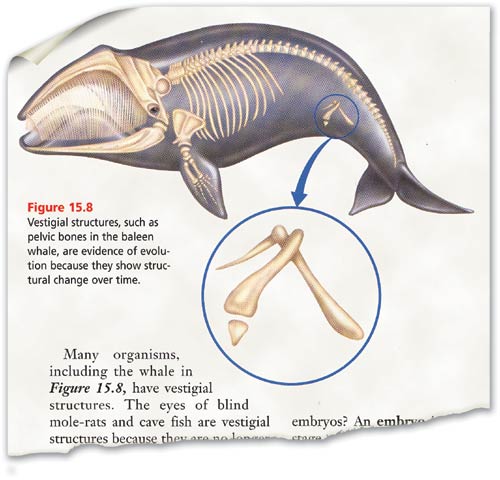
Which of the following is an example of a vestigial structure?
a)
the wings of a red-tailed hawk
b)
the hind limbs of a house cat
c)
the fins of sharks
d)
the tailbone of a human
64.
What does Darwin's theory of evolution suggest?
a)
species change over time
b)
extinct species are not related to living species
c)
different species can interbreed
d)
animals that look alike are most closely related
65.

Individuals that are well adapted to their environment will survive and produce:
a)
Fewer mutations
b)
Stronger genes
c)
More offspring
d)
Better traits
66.
Which of the following pieces of evolution evidence contain both homologous and vestigial structures?
a)
fossil record
b)
comparing embryology
c)
comparing biochemistry
d)
comparing anatomy
67.

Who was the naturalist that traveled the world to study plants and animals?
a)
Albert Einstein
b)
Charles Darwin
c)
Charles Barkley
d)
Isaac Newton
68.
What is the name of an organism that cannot produce its own food and must get it from another source?
a)
prokaryotic
b)
eukaryotic
c)
autotroph
d)
heterotroph
69.
How are protists different than bacteria?
a)
Protists are eukaryotic and bacteria are prokaryotic
b)
Protists are prokaryotic and bacteria are eukaryotic
c)
There is no difference; protists and bacteria are the same thing
d)
Protists are always unicellular and bacteria are always multicellular
70.

What is the name of the structure shown in the model?
a)
cilia
b)
flagella
c)
amoeba
d)
pseudopod
71.

Which of the following is the best model for cilia?
a)
A
b)
B
c)
C
d)
D
72.

Which type of protist is shown in the picture?
a)
euglena
b)
paramecium
c)
amoeba
d)
autotroph
73.

How does this protist move?
a)
Flagellum
b)
Cilia
c)
Pseudopods
74.

How does this protist move?
a)
Cilia
b)
Pseudopods
c)
Flagellum
75.
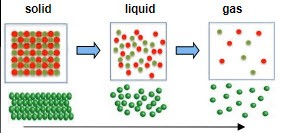
Entropy increases from solid, liquid to gas. Why?
a)
Molecular disorder increases
b)
Molecular randomness decreases
c)
Molecules are more energetic
d)
Molecules are more reactive
76.
Enthalpy is energy absorbed or relased during a chemical reaction as
a)
light.
b)
heat.
c)
sound.
d)
pressure.
77.
Entropy always increases when
a)
enthalpy decreases.
b)
temperature decreases.
c)
temperature increases.
d)
volume increases.
78.
What is the purpose of an enzyme?
a)
give permission for the reaction
b)
raise activation energy
c)
speed up reactions
d)
control how many reactions occur
79.
Enzymes are capable of increasing the rate of a chemical reaction within a living cell. Enzymes accomplish this through which of the following means?
a)
reducing the number of products
b)
reducing the activation energy
c)
increasing the temperature of the cell
d)
increasing the concentration of reactants
80.
What 3 letters do enzymes typically end in?
a)
-ose
b)
-ase
c)
-ese
d)
-tic
81.

Which of the following conclusions can be drawn from this graph?
a)
The optimum pH of the enzyme is 6.6.
b)
The optimum pH of the enzyme is 5.8
c)
The enzyme’s activity increases as pH increases 5.0 to 9.0
d)
The enzyme’s activity is greater around pH of 8.0 .
82.

What is the optimum pH of pepsin?
a)
0
b)
2
c)
3
d)
7
83.
How many substrates can one enzyme work with?
a)
1
b)
2
c)
there is no limit
84.
Which word means speeding up reactions without being used up?
a)
Catalyst
b)
Bolt
c)
Renewable energy
d)
Carrying Capacity
85.
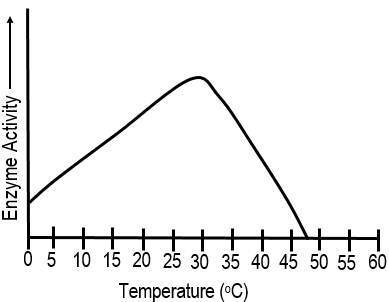
Based on the graph, what temperature does this enzyme work best?
a)
15 C
b)
40 C
c)
30 C
86.
What is the function of an enzyme?
a)
enzymes break themselves into small pieces
b)
they slow down chemical reactions
c)
they speed up chemical reactions
d)
enzymes combine products to form reactants
87.

The effect of temperature on the relative rate of action of an enzyme is represented in the graph below.
The optimum temperature for the action of this enzyme is approximately
The optimum temperature for the action of this enzyme is approximately
a)
15 C
b)
22 C
c)
37 C
d)
50 C
88.
What is the name of the signaling molecule that triggers a transduction pathway?
a)
ligand
b)
GTP
c)
kinase
d)
phosphatase
89.
What is the name of the pathway that occurs when a signal is received and then converted into a cellular response?
a)
signal transduction
b)
biochemical
c)
catabolic
d)
anabolic
90.
What is the name of the molecule that is used in long distance signaling; travels from one gland to another location to trigger the signal?
a)
hormone
b)
neurotransmitter
c)
ion
91.
The 3 steps of signal transduction, in order, are
a)
reception, transduction, response
b)
response, transduction, reception
c)
reception, response, transduction
d)
transduction, reception, response
92.
What is the monomer of proteins?
a)
amino acids
b)
polypeptides
c)
nucleotides
d)
monosaccharides
93.
How many different amino acids are there?
a)
15
b)
20
c)
25
d)
30
94.

The structure of proteins can be changed by environmental factors such as temperature or pH.
a)
True
b)
False
95.
Bond formed between two amino acids that results in a water molecule being released
a)
peptide bond
b)
complete protein
c)
dipeptide
d)
casein
96.

The diagram shows a bond forming between two amino acids. What is the name of this reaction?
a)
Dehydration Synthesis
b)
Hydrolysis
c)
Pepysis
d)
Oxidation
97.
Each amino acid is different from the other due to....
a)
The R group
b)
The amino group
c)
The carboxyl group
d)
The central carbon
98.
When a protein unfolds, it is
a)
Denatured
b)
Building
c)
Adding amino acids
d)
Making food
99.
The polymer which folds into proteins
a)
Polypeptide
b)
Amino Acids
c)
Nucleic Acids
d)
Polynucleotides
100.
Vasopressin is an important signaling molecule made of 164 amino acids. This molecule is responsible for signaling nephron tubules in the kidney to reabsorb water, and thus controls blood pressure. What type of biomolecule is Vasopressin?
a)
Lipid
b)
Nucleic Acid
c)
Protein
d)
Carbohydrate
101.

The diagram shows the structure of an amino acid. Which type of molecule is formed from amino acids?
a)
lipids
b)
proteins
c)
carbohydrates
d)
nucleic acids
102.
What elements make up carbohydrates?
a)
Carbon, hydrogen, nitrogen, oxygen
b)
sulfur, carbon, hydrogen
c)
glucose and fructose
d)
carbon, hydrogen, oxygen
103.
The 3 categories of carbohydrates are:
a)
Monosaccharide, disaccharide, polysaccharide
b)
glucose, fructose, galatose
c)
starch, cellulose, chitin
d)
There are no categories of carbohydrates
104.

What molecule is this
a)
sucrose
b)
protein
c)
glucose
d)
cellulose
105.

What type of carbohydrate is this?
a)
polysaccharide
b)
disaccharide
c)
monosaccharide
d)
it isn't a carbohydrate
106.
What does hydrolysis mean?
a)
breaking of water molecules
b)
Formation by water
c)
Splitting by water
d)
Getting rid of water molecules
107.
Which elements are present in carbohydrates?
a)
C,N,O
b)
C,H,O
c)
H2O
d)
CO2
108.

Identify this structure.
a)
cell wall
b)
cell membrane
c)
sap vacuole
d)
cytoplasm
109.
The diffusion of water through a semi-permeable membrane is called?
a)
Osmosis
b)
Cell wall
c)
Diffusion
d)
Respiration
110.

Osmosis
a)
diffusion of water molecules through a semi-permeable mebrane from an area of low concentration to an area of high concentration
b)
the diffusion of particles from an area of high concentration to an area of low concentration
c)
diffusion of water molecules through a semi-permeable membrane from an area of high concentration to an area of low concentration
d)
the diffusion of particles from an area of low concentration to an area of high concentration
111.

_______ regulates what enters and leaves a cell.
a)
Cell Membrane
b)
Nucleus
c)
Mitochondria
d)
Cytoplasm
112.
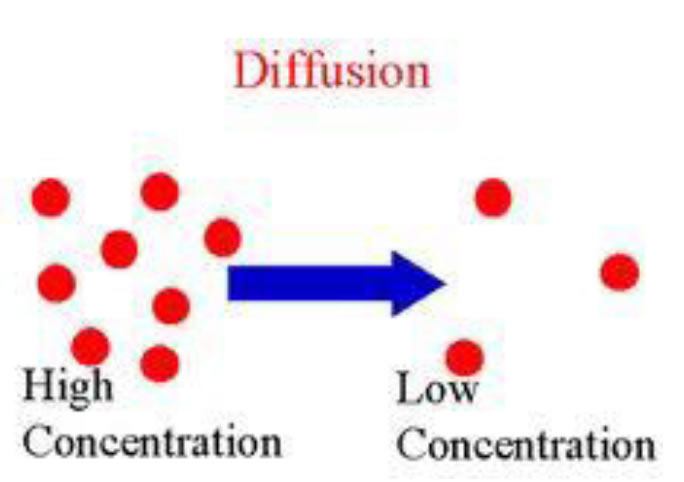
a)
Passive Transport
b)
Active Transport
113.
The movement of molecules against a concentration gradient
a)
simple diffusion
b)
facilitated diffusion
c)
active transport
d)
osmosis
114.
An animal cell placed in a hypertonic (salty) solution will
a)
Shrink
b)
Swell
c)
Stay the same
115.

The picture is an example of...
a)
active tranport
b)
passive transport
c)
diffusion
d)
osmosis
116.
For the transformation experiment we did, how did the bacteria get the new gene?
a)
by viral infection - transduction
b)
by exposure to bacteria that have the genes - conjugation
c)
by exposure to plasmids - transformation
117.
This protein is produced by a regulatory gene:
a)
operator
b)
repressor
c)
corepressor
d)
inducer
118.
All of the following are explinations for why prokaryotes can express eukaryotic genes EXCEPT..
a)
All organisms have DNA made of A, T, C and G bases
b)
All organisms came from a common ancestor
c)
All organisms use same codons to translate mRNA to protein
d)
the process of transcription is the same between both
119.
How does active CAP induce expression of the genes of the lactose operon?
a)
It degrades the substrate allolactose.
b)
It stimulates splicing of the encoded genes.
c)
It stimulates the binding of RNA polymerase to the promoter.
d)
It terminates production of repressor molecules.
120.
Which of the following results would indicate that transformation of the bacteria occurred?
a)
Growth in LB agar
b)
Growth in LB/ Amp agar by bacteria with the plasmid
c)
Growth in Amp agar by bacteria without plasmid
d)
None of these answers are correct
121.
An undifferentiated cell (UC) is injected into muscle tissue. What do you expect to happen?
a)
signals from muscle cells cause UC to become muscle cells
b)
signals from the UC cause muscle to become stem cells
c)
muscle cells will give the UC new genes to be a muscle cell
d)
UC will fuse with muscle cells to become a new cell type
122.

All of the following are true about stem cells (SC) EXCEPT..
a)
only SCs have the ability to undergo mitosis
b)
SC become more and more differentiated each round of mitosis
c)
mature somatic cells revert back into SC when needed
d)
adult stem cells are multipotent - tissue specific
123.
A mutation that inactivates the regulatory gene of a repressible operon would result in
a)
complete inhibition of transcription of the associated gene
b)
continuous transcription of gene controlled by regulator.
c)
irreversible binding of the repressor to the operator.
d)
inactivation of RNA polymerase by alteration of active site.
124.
Which of the following is true of homeotic (HOX) genes? homeotic genes..
a)
regulate the transcription of other genes for morphology
b)
code for proteins that make body parts
c)
are unique in each species of oranism
d)
play a role in the formation of cancer
125.
The tryptophan operon is a repressible operon that is...
a)
permanently turned on.
b)
turned on only when tryptophan is present in growth medium.
c)
turned off whenever tryptophan is added to growth medium.
d)
permanently turned off
126.
A mutation in this section of DNA could influence the binding of RNA polymerase to the DNA
a)
operator
b)
repressor
c)
promotor
d)
inducer
127.

The lactose operon is likely to be transcribed when
a)
there is more glucose in the cell than lactose.
b)
there is glucose but no lactose in the cell.
c)
the cAMP level is high and the lactose level is low.
d)
the cyclic AMP and lactose levels are both high in the cell.
128.
The lactose operon is likely to be transcribed when
a)
there is more glucose in the cell than lactose.
b)
there is glucose but no lactose in the cell.
c)
the cAMP level is high and the lactose level is low.
d)
the cyclic AMP and lactose levels are both high in the cell.
129.
Which of the following is an example of a positive feedback loop?
a)
during labor, the position of the baby's head stimulates uterine contractons until the baby is born. then contractions cease
b)
during labor, exact levels of oxytocin are maintained by the hypothalamus and posterior pituitary
c)
the anterior putuitary maintains homeostasis by stimulating the thyroid gland when thyroxin levels become to low
d)
insulin reduces glucose levels
130.
Which of the following is correct about cyclic-AMP?
a)
it binds with cell surface receptors and sets up a signal transduction pathways
b)
it is a common cell surface receptor for lipid ligands
c)
it is a common second messenger in intracellular signaling
d)
it is a high energy molecule that can substitute for ATP
131.
Which of the following is not part of the fist line of defense in humans
a)
mucus membranes
b)
cilia in the respiratory system
c)
stomach acid
d)
lymphocytes
132.
Which of the following is an APC (antigen presenting cell)?
a)
regulator T cell
b)
macrophage
c)
helper T cell
d)
cytotoxin T cell
133.
Which of the following is NOT involved in cell to cell communication
a)
acetylcholine
b)
pyruvic acid
c)
interferon
d)
retinal cells
134.
Which of the following is NOT involved in the transmission of an impulse from a neuron to a skeletal muscle?
a)
calcium ions
b)
rhodopsin
c)
acetylcholine
d)
sacrolemma
135.
The process in which organisms use the sun's energy to convert water and carbon dioxide into sugars
a)
Respiration
b)
Evaporation
c)
Photosynthesis
d)
Digestion
136.
When a vine wraps around a fence post, the plant is exhibiting
a)
phototropism
b)
gravitropism
c)
nastic movement
d)
thigmotropism
137.
The process of engulfing a bacterium or virus particle by a macrophage is known as
a)
Phagocytosis
b)
Pinocytosis
c)
T cell
d)
Dendritic cell
138.
Which of the following is part of innate immunity?
a)
Neutrophils
b)
Cell-Mediated Response
c)
Inflammation
d)
Humoral Response
139.
Which of the following is part of the adaptive immunity?
a)
Inflammation
b)
Skin
c)
Macrophages
d)
T cells
140.
T cells mature in the
a)
Bone marrow
b)
Thymus
c)
Blood
d)
Thyroid
141.
The inflammation response is triggered by
a)
Histamines
b)
Anti-histamines
c)
Cytokines
d)
Interferon
142.
The protein that sits on pathogenic surfaces and elicits an immune response is known as
a)
antigen
b)
histamine
c)
antibody
d)
anticytosis
143.
Which cell primes B AND T cells?
a)
Macrophages
b)
Helper T cells
c)
Cytotoxic T cells
d)
Humoral cells
144.
What is the antigen presenting receptor on the surface of T cells called?
a)
MHC
b)
TLR
c)
GPCR
d)
None of the above
145.
Which type of cell will remember what the antigen looks like and produce a rapid secondary response?
a)
Plasma B cells
b)
Memory B cells
c)
Plasma T cells
d)
Memory T cells
146.
A secondary immune response will be faster when...
a)
The individual has encountered the pathogen already
b)
The individual's macrophages are on high alert
c)
The individual has encountered the pathogen and has memory B cells circulating
d)
All of the above
147.
Which of the following is an example of an autoimmune disease?
a)
Lupus
b)
Rheumatoid Arthritis
c)
MS
d)
All of the above
148.
When a virus is latent and inserts its DNA into the host cells genome, we call this what phase?
a)
Lysogenic
b)
Lytic
c)
Both lysogenic and lytic
d)
None of the above
149.
HIV attacks and kills which of the following?
a)
Plasma B cells
b)
Memory B cells
c)
Helper T cells
d)
Cytotoxic T cells
150.
Where are antibodies produced?
a)
lymph nodes
b)
capillaries
c)
lacteals
d)
thoracic duct
151.
Which tissue produces lymphocytes and filters out impurities and harmful substances?
a)
spleen
b)
tonsils
c)
thymus
d)
lymph nodes
152.
What is the purpose of antibodies?
a)
To pump lymph through the vessels
b)
To create lymph
c)
To fight infection
d)
To remove old red blood cells
153.
Which of the following would be an example of paracrine signaling in animals?
a)
neurotransmitter acetylcholine
b)
hormone epinephrine
c)
neurotransmitter norepinephrine
d)
growth factor
154.
A signal molecule that binds to a plasma-membrane protein is a
a)
ligand
b)
second messenger
c)
protein kinase
d)
receptor protein
155.
Which of the following can activate a protein by transferring a phosphate group to it?
a)
cAMP
b)
G Protein
c)
protein kinase
d)
protein phosphatase
156.
What do second messengers do?
a)
transport a signal through the lipid bilayer
b)
relay a signal from the outside to the inside of the cell
c)
relay message from the inside of the mebrane throughout the cytoplasm
d)
dampen the message
157.
What is a function of the second messenger IP3?
a)
bind to and activate protein kinase A
b)
activate transcription factors
c)
convert ATP to cAMP
d)
bind to and open ligand-gated channels
158.
Signal amplification is most often achieved by
a)
an enzyme cascade
b)
binding of multiple signals
c)
branching pathways
d)
action of adenylyl cyclase
159.
Which of the following converts cAMP to AMP?
a)
phosphodiesterase
b)
protein phosphatase
c)
GTPase
160.
Which of the following is a chemical message that usually travels through the bloodstream to target cells?
a)
hormone
b)
local regulator
c)
endocrine cell
161.
Where do the neurotransmitters bind?
a)
synapse
b)
vesicles
c)
ligand-gated Na+ channels
d)
Ca+ channel
162.
When sodium moves in the cell, will the cell be polarized or depolarized?
a)
polarized
b)
depolarized
163.
What channel is opened by stimuli if the local membrane potential reaches a certain threshold?
a)
leak ion channel
b)
voltage-gated channel
c)
ligand-gated channel
164.
What channel is open by stimuli if a ligand (neurotransmitter) binds to the receptor portion?
a)
leak ion channel
b)
ligand-gated channel
c)
voltage-gated channel
165.
What will happen when the action potential reaches the axon terminal?
a)
vesicles will travel away from axon terminal
b)
vesicles will stop
c)
vesicles will endocytose neurotransmitters from synapse
d)
vesicles will exocytose neurotransmitters into synapse
166.
The stereocilium opens K + ion channels which allows the cell to depolarize or hyperpolarize?
a)
hyperpolarize
b)
depolarize
167.
What is the peripheral nervous system (PNS) made of?
a)
brain and spinal nerves
b)
brain and cranial nerves
c)
spinal cord and spinal nerves
d)
cranial and spinal nerves
168.
What is the cuticle's main purpose?
a)
To make the leaf taste good
b)
To protect the leaf
c)
To make it shiny
d)
To help retain water
169.
What do the veins contain?
a)
Xylem and Cells
b)
Xylem and Phloem
c)
Zylem and Phloem
d)
Xylem and Ploem
170.
Transpiration is...
a)
The process which water evaporates
b)
The process which water freezes
c)
The process which water grows
d)
The process which nutrients evaporate
171.
The stomata are...
a)
Small zits in a leaf
b)
Small openings in a leaf
c)
The sticky outer surface
d)
Cell inside the xylem
172.
What affects the increase of transpiration?
a)
Wind
b)
high humidity
c)
low temperature
d)
water temperature
173.
What decreases the rate of transpiration?
a)
high temperature and wind
b)
low humidity and wind
c)
low temperatures and high humidity
d)
high humidity and high temperatures
174.
Poison Ivy growing on a tree by touch.
a)
Gravitropism
b)
Phototropism
c)
Thigmotropism
d)
Hydrotropism
175.
Pollen tubes forming in the Style of the Carpel during fertilization. The pollen grows towards glucose.
a)
Gravitropism
b)
Phototropism
c)
Thigmotropism
d)
Chemotropism
176.
Substances that act as chemical messengers within plants controlling functions
a)
Chemicals
b)
Plant Hormones
c)
Adrenaline
d)
Photosynthesis
177.
A growth response of a plant toward or away from a stimulus
a)
Nastism
b)
Tropism
c)
Photosynthesis
d)
Transpiration
178.
Imagine you are performing a cross involving seed color in garden pea plants. What F1 offspring would you expect if you cross true-breeding parents with green seeds and yellow seeds? Yellow seed color is dominant over green.
a)
100 percent yellow-green seeds
b)
100 percent yellow seeds
c)
50 percent yellow, 50 percent green seeds
d)
25 percent green, 75 percent yellow seeds
179.
If black and white true-breeding mice are mated and the result is all gray offspring, what inheritance pattern would this be indicative of?
a)
dominance
b)
codominance
c)
multiple alleles
d)
incomplete dominance
180.
A recessive trait will be observed in individuals that are ________ for that trait.
a)
heterozygous
b)
homozygous or heterozygous
c)
homozygous
d)
diploid
181.
Meiosis results in ______.
a)
4 genetically distinct haploid gametes
b)
2 genetically distinct cells
c)
2 genetically identical cells
d)
4 genetically identical cells
182.
The chromosomes that pair up during meiosis, are called __________ chromosomes.
a)
homozygous
b)
asexual
c)
homologous
d)
genes
183.

When an area of a chromatid is exchanged with the matching area on a chromatid of its homologous chromosome, _________________ occurs
a)
crossing over
b)
mutagenesis
c)
hybridization
d)
fertilization
184.
The observable outward manifestation of the genes of an individual is referred to as its
a)
blueprint
b)
genotype
c)
phenotype
d)
genetic map
185.
Unlike Mendel's experiments, when a very tall person and a very short person mate, the children are variable in height. Why is one trait (tall or short) not dominant over the other?
a)
the gene for height in humans has incomplete dominance
b)
the gene for height has multiple co-dominant alleles
c)
height in not controlled by genes in humans
d)
human height is controlled by multiple genes
186.
One of the main reasons genes assort independent of one another is that
a)
they produce unrelated traits
b)
they produce related traits
c)
they are on the same chromosome
d)
they are on different chromosomes.
187.
In humans, if a non-disjunction event leads to an individual that is XXY, they would
a)
be female because they have 2 X chromosomes
b)
be male because they have a Y chromosome
c)
not survive
d)
have both male and female characteristics
188.
Chromosomes that do NOT play a role in determining the sex of an individual are called
a)
sex chromosoems
b)
X and Y
c)
autosomes
d)
A and B are correct
189.
In a sex-linked inheritance pedigree you would expect to see
a)
more affected females
b)
all carrier males
c)
more affected males
d)
an equal number of affected males and females
190.
In humans, hemophilia is an X-linked recessive trait. If a man and a woman have a son who is affected with hemophilia, which of the following is definitely true?
a)
The mother carries an allele for hemophilia
b)
The father carries an allele for hemophilia
c)
The father is afflicted with hemophilia
d)
both parents carry an allele for hemophilia
191.

Which stages show is most responsible for the variation caused by independent assortment
a)
A
b)
D
c)
H
d)
J
192.
What chromosomal abnormality causes Down's Syndrome?
a)
Trisomy 47
b)
Trisomy 46
c)
Trisomy 21
d)
Trisomy 23
193.

Which genetic abnormality does this baby have?
a)
Partial Deletion
b)
Partial Addition
c)
Trisomy
d)
Monosomy
194.
What is the map distance between the vestigial and yellow genes on the same chromosome if the following offspring are produced: 345 wild, 8 wild/yellow, 10 vestigial/wild, 325 yellow/vestigial?
a)
97.3
b)
2.6
c)
18
d)
1.8
195.

The red and blue pair of chromosomes in the bottom row are
a)
genetically identical
b)
carrying the same genes, but different alleles
c)
carrying completely different genes
d)
carrying the same genes and the same alleles
196.
A person with Turner syndrome has only one X chromosome. This means one of their gametes was missing a chromosome.
Which of the following is why gametes sometimes lack a complete chromosome?
Which of the following is why gametes sometimes lack a complete chromosome?
a)
Incomplete dominance
b)
Nondisjunction
c)
Inversion mutation
d)
Substitution mutation
197.

Give the genotype for person III-3
a)
GG
b)
Gg
c)
gg
d)
Cannot determine
198.
Hemophilia is a recessive x-linked disorder.
Which genotype represents a male with hemophilia?
Which genotype represents a male with hemophilia?
a)
XHXh
b)
XhXh
c)
XHY
d)
XhY
199.

The range of human skin colors is caused by a variety of genes, each of which has at least 2 alleles. This is an example of:
a)
incomplete dominance
b)
codominance
c)
multiple alleles
d)
polygenic inheritance
200.
Snap dragon color is a incomplete dominant trait. A red flower (RR) is crossed with white flower (WW). What color are flowers that are heterozygous?
a)
Red
b)
Red and White
c)
White
d)
Pink
201.
What fraction of offspring from the cross AaBB x Aabb will be heterozygous for both traits?
a)
1/16
b)
4/16
c)
8/16
d)
3/16
100 %

