wayground logo

Free Printable Worksheets

Font size

S
M
L
XL
Worksheets

FISH REVIEW 2018

Total questions: 85

Worksheet time: 46mins

Name
Class
Date
1.

Which of the following are not types of fins?

a)

pelvic, pectoral, caudal

b)

anterior dorsal, anal, pelvic

c)

pectoral, posterior dorsal, caudal

d)

caudal, operulum, pelvic

2.

Countershading is a type of camouflage where

a)

the dark color is ventral; the lighter color is dorsal

b)

the dark and light colors are spread randomly

c)

the dark color is the only color

d)

the dark color is dorsal; the lighter color is ventral

3.

All fish are chordates.

a)

true

b)

false

4.

Fish belong to the phylum

a)

Vertebrata

b)

Osteichthyes

c)

Eukarya

d)

Chordata

5.

A fish has _____ heart chambers.

a)

1

b)

2

c)

3

d)

4

6.

Oxygen-rich blood in a fish flows from

a)

heart to body to gills

b)

gills to heart to body

c)

gills to body to heart

7.

Pelvic fins MAINLY help

a)

propel the fish forward

b)

turn and change position vertically

c)

protect the fish

d)

stabilize and keep fish from rolling

8.

The caudal fin of fish mainly

a)

propels the fish forward

b)

turns the fish

c)

balances the fish

d)

controls the up and down movements

9.

The anal and dorsal fin(s) of a fish mainly

a)

steer the fish left or right

b)

help the fish stay in one place

c)

help balance and stabilize the fish

d)

assist in swimming backward

10.

The function of the lateral line is to

a)

sense movements

b)

sense vibrations

c)

sense pressure differences

d)

all of these

11.

External fertilization occurs _____, while internal fertilization happens _____.

a)

outside the body, sometimes outside the body

b)

sometimes inside the body, inside the body

c)

inside the body, outside the body

d)

outside the body, inside the body

12.

A backbone or spinal column is made up of smaller bones called

a)

chordates

b)

vertebrae

c)

hyphae

d)

amebae

13.
What is the function of gills in fish?
a)
absorbing carbon dioxide
b)
assisting in food digestion
c)
protecting a fish's lungs
d)
taking in dissolved oxygen
14.
How do lampreys attach to their prey?
a)
jaws
b)
suckers
c)
tentacles
d)
teeth
15.
How many groups of jawed fishes still exist today?
a)
one
b)
two
c)
three
d)
four
16.
Chondrichthyes have skeletons made of
a)
chitin
b)
bone
c)
cartilage
d)
keratin
17.
What are the two groups of jawed fish that exist today?
a)
Acanthodians and placoderms
b)
Acanthodians and Agnatha
c)
Osteichtyes and placoderms
d)
Chondrichthyes  and Osteichthyes
18.
Cartilage makes up skeletons of fish in the class...
a)
Agnatha
b)
Osteichthyes
c)
Placodermi
d)
Chondrichthyes
19.
Two adaptations that make some fish extremely efficient predators are... 
a)
an operculum and swim bladder
b)
ray fins and bony skeletons
c)
the lateral line and electroreceptive cells
d)
suckers and horny toothlike projections
20.
?
a)
Pygmy gar
b)
Needlefish
c)
Half beak
d)
White Cloud mountain minnow
21.
These fish are most common in fresh water
a)
Agnatha
b)
Chondrichthyes
c)
Osteichthyes
22.
What type of fish are lamprey's?
a)
Agnatha
b)
Chondrichthyes
c)
Osteichthyes
23.
Where do fish take in oxygen?
a)
Lungs
b)
Gills
c)
Mouth
d)
Skin
24.
What structure do sharks use to detect electrical currents?
a)
Cuadal fins
b)
Rostral area
c)
Ampullae of Lorenzini
d)
Lateral line
25.
Which two groups of fish have paired appendages?
a)
Agnatha and Chondricthyes
b)
Agnatha and Osteichthyes
c)
Chondrichthyes and Osteichthyes
26.
Which two groups of fish have jaws?
a)
Agnatha and Chondrichthyes
b)
Agnatha and Osteichthyes
c)
Chondrichthyes and Osteichthyes
27.
Which group of fish include sharks, rays and skates?
a)
Agnatha
b)
Chondrichthyes
c)
Osteichthyes
28.
Which group of fish are the jawless fish?
a)
Agnatha
b)
Chondricthyes
c)
Osteichthyes
29.
Which group of fish includes trout, catfish and marlin?
a)
Agntatha
b)
Chondricthyes
c)
Osteichthyes
30.
Which group of fish do not have scales?
a)
Agnatha
b)
Chondricthyes
c)
Osteichthyes
31.
Which group of fish have swim bladders?
a)
Agnatha
b)
Chondricthyes
c)
Osteichthyes
32.
Which group of fish do not have paired fins?
a)
Agnatha
b)
Chondrichthyes
c)
Osteichthyes
33.
This organ allows fish to sense changes in water pressure. 
a)
Nare
b)
Lateral Line
c)
Operculum
d)
Vent
34.
This fin is responsible for propulsion. 
a)
Dorsal
b)
Anal
c)
Pelvic
d)
Caudal
35.
This fin creates lift, allowing fish to move vertically. 
a)
Caudal
b)
Dorsal
c)
Pectoral
d)
Pelvic
36.
A scientist that studies fish is called this:
a)
Ostracodist
b)
Osteopelagic
c)
Ichthologist
d)
Anthropologist
37.
The swim bladder of a fish is a sac filled with:
a)
Oil
b)
Gas
c)
Lactic acid
d)
Seminal fluid
38.
The flap of tissue covering a fish's gills:
a)
Operculum
b)
Caudal fin
c)
Dorsal fin
d)
Lateral line
39.
Which Phylum do the sharks, skates, rays and bony fish belong to?
a)
Agnatha
b)
Echinodiea
c)
Osteichthyes
d)
Chordate
40.
What species below has a laterally compressed body shape?
a)
Wrasse
b)
Tiger Shark
c)
Flounder
d)
Moray eel
41.
What is special about a shark's jaw?
a)
Their serrated teeth
b)
They can chew their prey
c)
They can move both mandibles
d)
They can sense movement
42.
What are the electroreceptors in the head of sharks, skates, and rays capable of detecting week electrical signals produced by muscular activity in other creatures?
a)
Operculum
b)
Chondrichthyes
c)
Echolocation
d)
Ampullae of Lorenzini
43.
What is one physical adaption of the fish species Tuna?
a)
Have gill slits for enhanced oxygen absorption
b)
Have Bucklers to propel body through eddies
c)
Lack pectoral fins for more streamline body composition
d)
Developed groves in tongue to channel water to gills
44.
Most fish reproduce by
a)
budding
b)
external fertilization
c)
internal fertilization
d)
regeneration
45.
External fertilization in fish is also called:
a)
spinning
b)
budding
c)
swimming
d)
spawning
46.
Since fish live underwater, they do not require oxygen.
a)
True
b)
False
47.
Lampreys and hagfish are
a)
Jawless fish
b)
Cartilaginous fish
c)
Bony fish
48.
Which is not a group of fish?
a)
Jawless
b)
Cartilaginous 
c)
Bony
d)
Shelled
49.
Fish are...
a)
Vertebrates
b)
Invertebrates
50.
Which of the jawless fish is a parasite?
a)
hagfish 
b)
lamprey
c)
shark 
d)
perch 
51.
Fins on the top of the fish that keep the fish upright are ___
a)
dorsal 
b)
caudal 
c)
pelvic 
d)
pectoral 
52.
We saw in one of our videos a Mudskipper.  It was a very strange fish that uses its fins like legs on land and it has lungs.  It is considered a transitional species.  What does that mean?
a)
They are just cool creatures, it means nothing.
b)
It is evidence of the evolution of reptiles from fish.
c)
It is evidence of the evolution of fish from reptiles
d)
It is evidence of the evolution of amphibians from fish.
53.
Ichthyology is the study of what?
a)
Oceans
b)
Water
c)
Fish
d)
Nature
54.
The fish pictured is a
a)
shark
b)
coelocanth
c)
teleost
d)
hagfish
55.
The fish pictured is a
a)
lamprey
b)
skate
c)
lungfish
d)
hagfish
56.
Chondrichthyes teeth can be expected to :
a)
Have 5 - 7 rows
b)
Can have 20,000 in a life time
c)
Lost and Replaced often
d)
All of the above
57.
Bony fish have around__________ species.
a)
4,200
b)
380,000
c)
26,000
d)
300
58.
?
a)
Guppy
b)
Molly
c)
Kribinsis
d)
Swordtail
59.
?
a)
Mako shark
b)
Spiny dogfish
c)
Thresher shark
d)
Tiger shark
60.
?
a)
Pocket shark
b)
Lemon shark
c)
Wobbegong
d)
Angel shark
61.
?
a)
Whale shark
b)
Greenland shark
c)
basking shark
d)
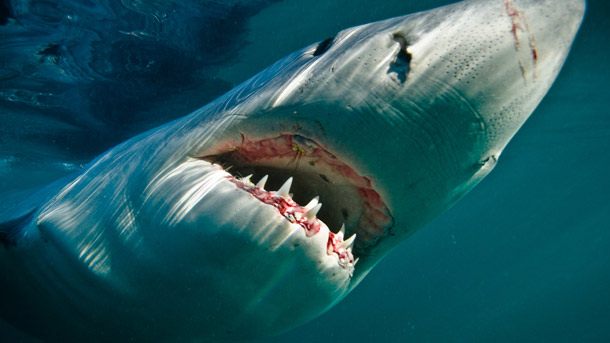
Great White shark
62.
?
a)
Arapiama
b)
large mouthed bass
c)
Alligator gar
d)
African tiger fish
63.
?
a)
Lungfish
b)
Walking catfish
c)
Mudskipper
d)
Betta
64.
?
a)
Walking catfish
b)
African lung fish
c)
Mudskipper
65.
?
a)
Hagfish
b)
lamprey
c)
Electic eel
d)
American eel
66.
?
a)
Endlers livebearers
b)
Swordtail
c)
Fire goby
d)
Electric tetra
67.
?
a)
Ghost fish
b)
Deep sea shark
c)
x-ray tetra
d)
White cloud mountain minnow
68.
?
a)
Mandarin goby
b)
Guppy
c)
Endlers Livebearer
d)
Neon spikefish
69.

?

a)

Spotted mollies

b)

spotted freshwater stingrays

c)

flying saucer guppies

70.

?

a)

Greenland shark

b)

Great White

c)

Tiger shark

71.

? This fish nurses its young.

a)

Striped flounder

b)

Discus

c)

Striped catfish

72.

?

a)

Silver dollar

b)

Red eyed shark

c)

Bleeding heart tetra

73.

?

a)

Whale shark

b)

Goblin shark

c)

Basking shark

74.

?

a)

Red trout

b)

Arwana

c)

Betta

75.

?

a)

Scat

b)

Leaf fish

c)

Hatchetfish

76.

?The shark that walks on land.

a)

Cat shark

b)

Tiger shark

c)

Epaulette shark

77.

? Lotta slime here......

a)

American eels

b)

Silver eels

c)

Hagfish

78.

?

a)

Flat head catfish

b)

Cory catfish

c)

X ray catfish

79.

?

a)

Glass catfish

b)

X ray tetra

c)

cave catfish

80.

?

a)

Fugu pufferfish

b)

flying crane sushi

c)

stork sushi

81.

?

a)

tiger shark

b)

thresher shark

c)

mako shark

82.

? The salt water fish you add to a new salt water tank first.

a)

Damselfish

b)

Blue spotted jawfish

83.

?

a)

Sunfish

b)

Bluegill

c)

Parrotfish

84.

?

a)

Jawfish

b)

Hagfish

c)

Lamprey

85.

?

a)

Molly

b)

Mosquitofish

c)

Guppy