
 Worksheets
Physical Science Review
Total questions: 72
Worksheet time: 1hrs 4mins
Name
Class
Date
1.
Something that takes up space and has mass.
a)
volume
b)
matter
c)
mass
d)
density
2.
A state of matter that has a definite volume and shape.
a)
solid
b)
liquid
c)
gas
d)
matter
3.
A measure of how much mass is contained in a given unit of volume.
a)
mass
b)
density
c)
volume
d)
matter
4.
The amount of space something takes up
a)
density
b)
volume
c)
mass
d)
matter
5.
Solids have a definite _______________.
a)
smell
b)
shape
c)
picture
d)
sound
6.
The measurement system used by scientist around the world.
a)
metric system
b)
customary systerm
c)
calorie system
d)
science system
7.
What is the measure of gravity on an object?
a)
matter
b)
mass
c)
weight
d)
volume
8.
Volume is ______________.
a)
length X width
b)
height X length
c)
length X width X height
d)
width X height
9.
Dimensions of a shape are:
length- 5cm
height- 6cm
width- 2cm
What is the volume?
length- 5cm
height- 6cm
width- 2cm
What is the volume?
a)
13cm cubed
b)
12cm cubed
c)
60cm cubed
d)
30cm cubed
10.
A physical property can be observed with your
a)
Eyes
b)
Ears
c)
Tastes
d)
All of the above
11.
Chopping wood is an example of a:
a)
Physical change
b)
Chemical change
12.
Water freezing to ice is an example of a:
a)
Physical change
b)
Chemical change
13.
What happens in ALL chemical changes?
a)
Change in state of matter
b)
A new substance is formed
c)
Bubbles are produced
d)
An explosion
14.
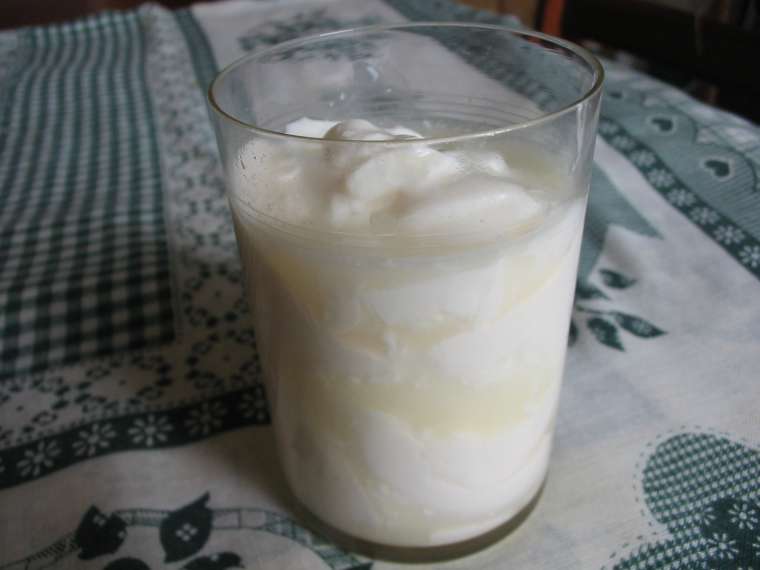
Is milk going sour a physical or chemical change?
a)
Physical
b)
Chemical
15.

Is Gatorade powder dissolving in water physical or chemical change?
a)
Physical
b)
Chemical
16.

Is the formation of the grand canyon a physical or chemical change?
a)
Physical
b)
Chemical
17.

Which of the following is a reactant
a)
CH4
b)
H2O
c)
CO2
d)
2H2O
18.
The Law of Conservation of Mass tells us matter can't ______________.
a)
change color
b)
change state of matter
c)
be created or destroyed
d)
change temperature
19.
On which celestial object would you weigh the most?
a)
Earth
b)
Jupiter
c)
Sun
d)
You would weigh the same on all celestial objects
20.
On which celestial object (outer space) would your mass be the greatest?
a)
Earth
b)
Jupiter
c)
Sun
d)
Your mass doesn't change on different celestial objects
21.
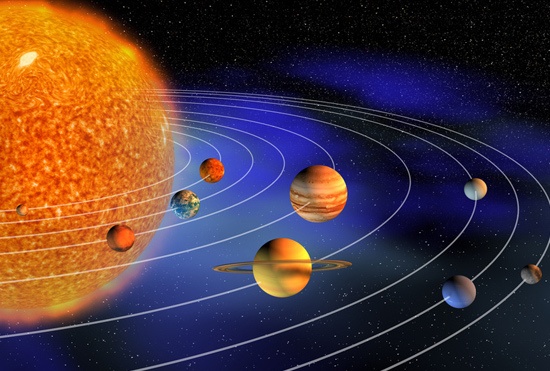
Why do all of the planets orbit the sun rather than Earth?
a)
the sun has more mass
b)
the sun is a star
c)
the Earth is heavier
d)
the sun is in the middle of the milky way
22.
As an object's mass increases, its gravitational pull will ____________.
a)
decrease
b)
increase
c)
stay the same
d)
get weaker
23.
An object with which of the following densities will float on water?
a)
0.7 g/cm3
b)
1.2 g/cm3
c)
3.5 g/cm3
d)
11.4 g/cm3
24.
The following liquids are poured together in a beaker: alcohol (density=0.79), corn syrup (density=1.38), water (density=1.0), and cooking oil (density=0.93). Which of these liquids will sink to the bottom of the beaker?
a)
alcohol
b)
corn syrup
c)
water
d)
cooking oil
25.
What is the density of a substance that has a mass of 30g and a volume of 6 liters?
a)
24 g/l
b)
5 g/l
c)
36 g/l
d)
180 g/l
26.
A piece of copper has a mass of 89g and a volume of 10 cm3. What would be the density of the copper?
a)
0.89 g/cm3
b)
89 g/cm3
c)
8.9 g/cm3
d)
890 g/cm3
27.
Which particle has a positive charge?
a)
electron
b)
orbital
c)
proton
d)
neutron
28.
Choose the particle that has no charge.
a)
nucleus
b)
neutron
c)
proton
d)
electron
29.
Which particles make up the nucleus of an atom?
a)
protons and neutrons
b)
electrons and protons
c)
electrons, protons, and neutrons
d)
electrons and neutrons
30.
The particles of the atom you can find by knowing the atomic number.
a)
neutrons
b)
protons and electrons
c)
protons and neutrons
d)
atomic mass
31.
An element with a mass number of 10 and an atomic number of 6 has how many protons?
a)
5
b)
8
c)
6
d)
10
32.
An element with a mass number of 11 and an atomic number of 5 has how many neutrons?
a)
11
b)
5
c)
6
d)
16
33.
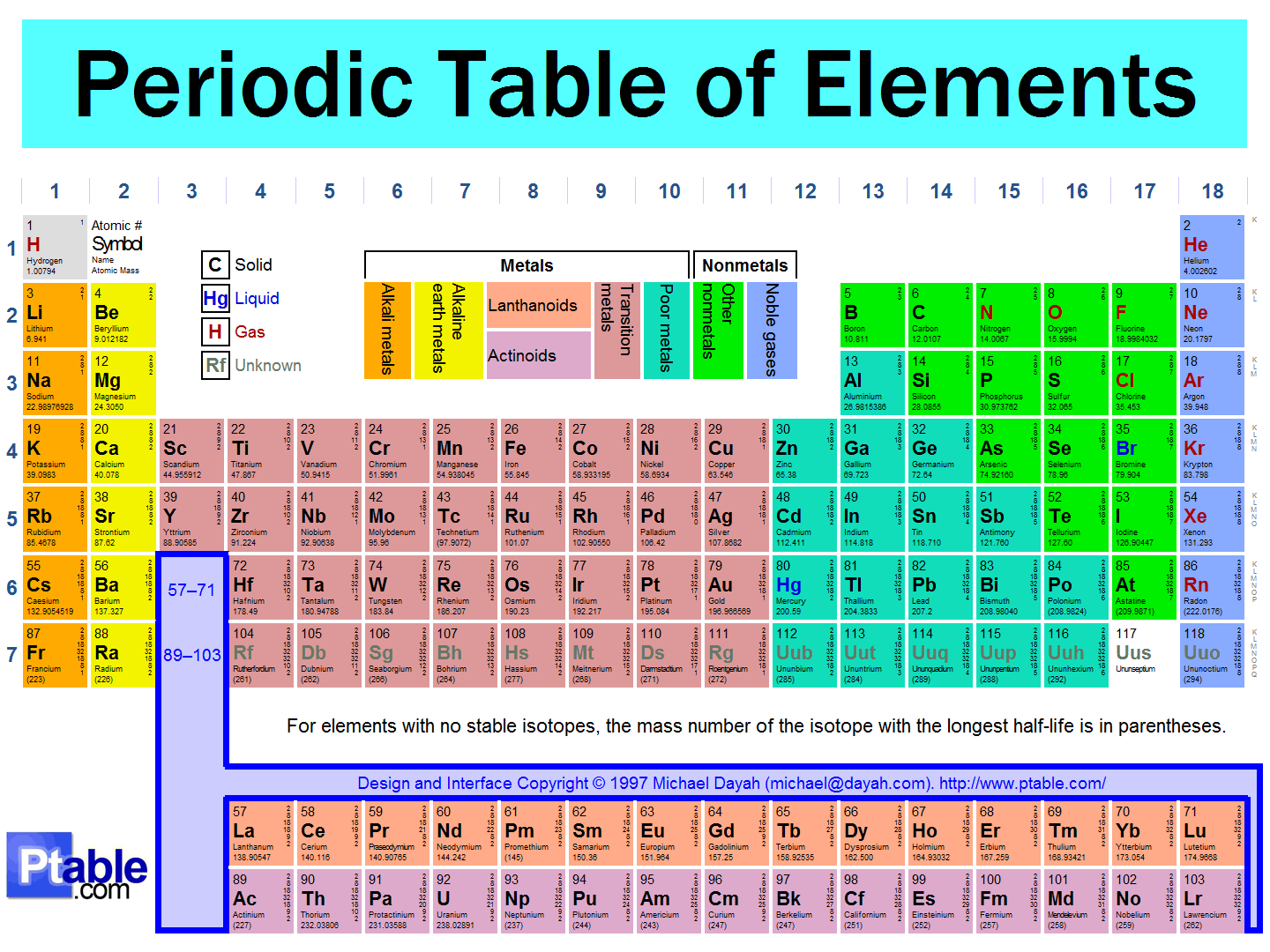
The horizontal row on the periodic table is called a
a)
group
b)
family
c)
period
d)
atomic number
34.

A vertical column is called...
a)
group
b)
tower
c)
period
d)
crew
35.
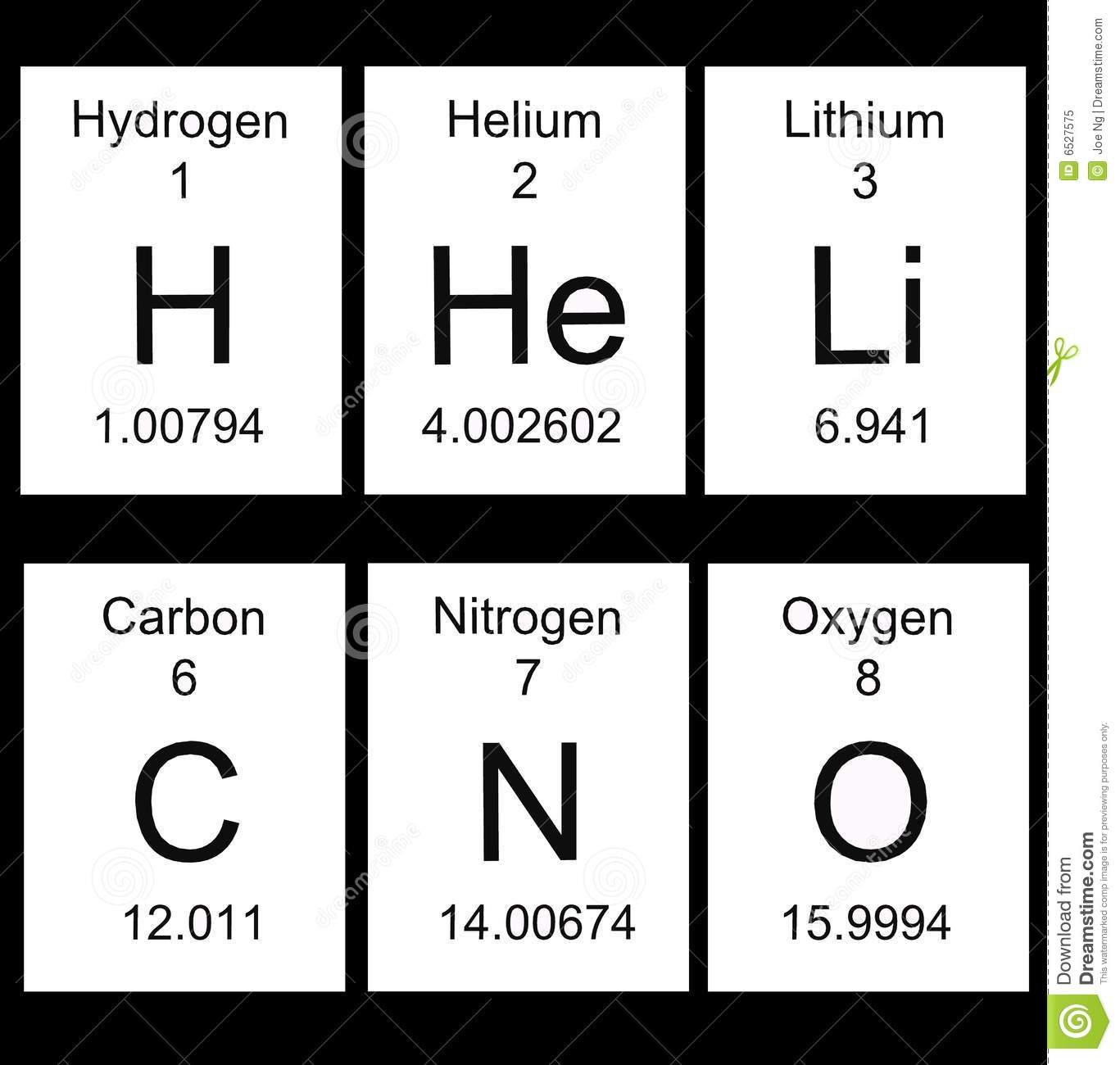
The number at the top of each square on the periodic table is the ...
a)
atomic number
b)
atomic mass
c)
Chemical Symbol
d)
Element Name
36.

Most of the elements on the periodic table are classified as _____.
a)
Metals
b)
Nonmetals
c)
Metalloids
d)
Periods
37.
Which group of the periodic table is composed of inert (not reactive) gases?
a)
alkali metals
b)
alkaline earth metals
c)
halogens
d)
noble gases
38.
Which one has more than one type of atom in it
a)
Element
b)
Compound
39.
which one only has one type of atom In it.
a)
Element
b)
compound
40.
Is salt (NaCI) a compound or a element
a)
Compound
b)
element
41.
How many elements are represented in the compound?
Na2CO3
Na2CO3
a)
1
b)
2
c)
3
d)
4
42.
What cannot be broken down into other substances?
a)
Compound
b)
Mixture
c)
Solids
d)
Element
43.
A combination of substances that are not chemically combined is called a(n)____________.
a)
mixture
b)
compound
c)
physical
44.
Mixtures are separated through ___________changes.
a)
mixture
b)
compound
c)
physical
45.
The pH scale is a range from:
a)
1-7
b)
0-14
c)
1-5
d)
1-20
46.
A(n) ______ is a substance with a pH less than 7
a)
Acid
b)
Alkaline
c)
Base
d)
Buffer
47.
A solution with a pH of 8.6 would be...
a)
Acid
b)
Base
c)
Neutral
d)
Acid and Base
48.

Is this substance acidic, basic, or neutral?
a)
Acidic
b)
Basic
c)
Neutral
49.
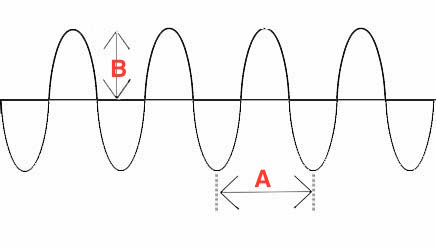
What property of this wave is represented by the letter "A"
a)
amplitude
b)
crest
c)
trough
d)
wavelength
50.
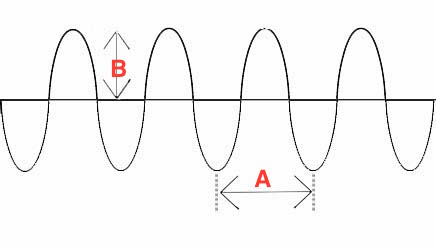
What property of the wave is represented by the letter "B"?
a)
amplitude
b)
crest
c)
trough
d)
wavelength
51.
The lowest point on a wave is the:
a)
Amplitude
b)
Crest
c)
Trough
d)
Wavelength
52.
The number of wavelengths that pass a point each per second is:
a)
frequency
b)
period
c)
longitudinal
d)
transverse wave
53.
The type of waves that require medium to pass:
a)
Mechanical Waves
b)
Electromagnetic Waves
54.
When the frequency of a wave increases, what happens to the wavelength?
a)
The wavelength is not directly affected by the frequency of a wave.
b)
The wavelength increases.
c)
The wavelength decreases.
d)
More specific information is needed to form a conclusion about the wavelength.
55.
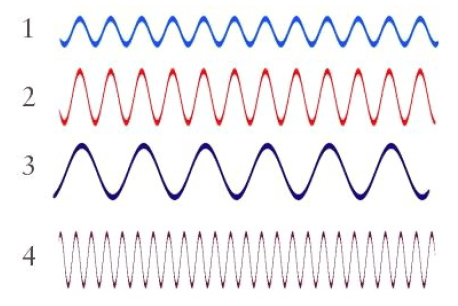
Which wave in the diagram has the greatest frequency?
a)
1
b)
2
c)
3
d)
4
56.
A wave carries...?
a)
energy only
b)
matter only
c)
the matter carries the energy
d)
neither
57.
The action of a wave bouncing off a surface is called __________________.
a)
rarefaction
b)
refraction
c)
reflection
d)
diffraction
58.

_______ carry the greatest amount of energy.
a)
x-rays
b)
gamma rays
c)
infrared rays
d)
visible light
59.

Which images are opaque?
a)
A & C
b)
A,C,E, & F
c)
D, E, & F
d)
A & E
60.

Which explains why the fork looks different under water?
a)
light can't pass through the glass
b)
the wavelength of light lengthens
c)
the amount of light increases when going through water
d)
light is refracted at an angle
61.
Why do we see objects as white?
a)
They absorb all light
b)
They reflect all light
c)
They absorb some light and reflect some light
62.

When light passes through a prism the light is bent and breaks into the visible spectrum. What color bends the most and has the shortest wavelength?
a)
Red
b)
Yellow
c)
Blue
d)
Violet
63.
The color you see is the color that is ___.
a)
reflected
b)
absorbed
64.

Blurs light as it passes through
a)
Transparent
b)
Translucent
c)
Opaque
d)
Refraction
65.
What is a PUSH or PULL of an object?
a)
Motion
b)
Force
c)
Friction
d)
Gravity
66.
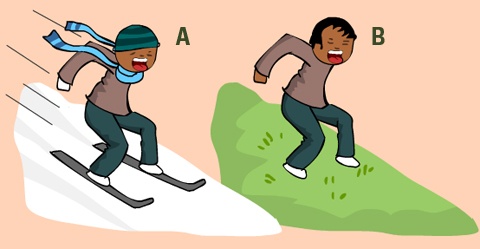
Why is it harder for the boy in Image B to get down the hill?
a)
Motion
b)
Friction
c)
Work
d)
Displacement
67.
Which force produces a change in motion?
a)
unbalanced force
b)
balanced force
c)
gravitational force
d)
frictional force
68.
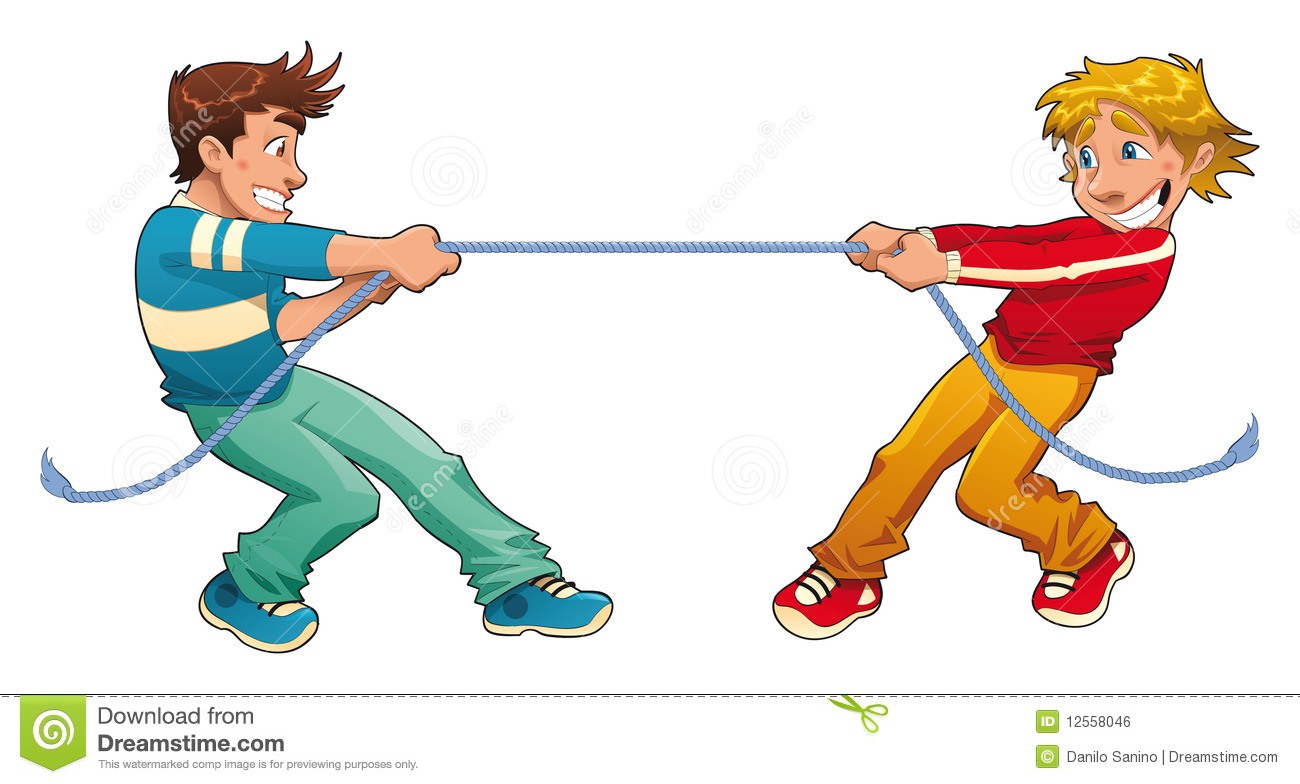
If these boys are pulling with the same amount of force. What will happen?
a)
The boy in blue will win.
b)
They will not move at all.
c)
The boy in red will win.
d)
Both will fall down.
69.
What happens when two forces act in the same direction?
a)
They cancel each other out.
b)
The stronger one prevails.
c)
Their strengths are added.
d)
Their sum divided by the two is the total force.
70.
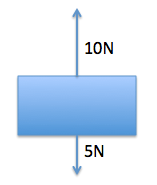
What is the net force on the block? (click on the words to view the picture)
a)
5 Newtons up
b)
5 Newtons down
c)
15 Newtons up
d)
15 Newtons down
71.
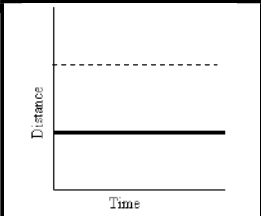
What does this graph represent?
a)
Constant speed
b)
Acceleration
c)
Not moving
72.

During which interval is the object speeding up?
a)
A to B
b)
B to C
c)
D to E
d)
E to F
100 %

