Wayground logo

Free Printable Worksheets

Font size

S
M
L
XL
Worksheets

CBA 3 review

Total questions: 60

Worksheet time: 53mins

Name
Class
Date
1.

What Domain do I belong in?

I am unicellular.

I am prokaryotic.

I reproduce asexually.

I am autotrophic.

I live everywhere!

a)

Eukarya

b)

Archaea

c)

Bacteria

2.

What Kingdom do I belong in?

I am unicellular.

I am prokaryotic.

I reproduce asexually.

I am autotrophic.

I live everywhere!

a)

Eubacteria

b)

Archaeabacteria

c)

Animalia

d)

Plantae

e)

Protista

3.

What Domain do I belong to?

I am multicellular.

I am eukaryotic.

I reproduce sexually.

I am heterotrophic.

I thrive on a dark, moist ground.

a)

Eukarya

b)

Bacteria

c)

Archaea

4.

What Kingdom do I belong to?

I am multicellular or unicellular

I am eukaryotic.

I reproduce sexually or asexually.

I am heterotrophic.

I thrive on a dark, moist ground.

a)

Animalia

b)

Protista

c)

Fungi

d)

Plantae

e)

Archaeabacteria

5.

What Domain do I belong to?

I am unicellular.

I am prokaryotic.

I reproduce asexually.

I am autotrophic.

I love the extreme environments.

a)

Bacteria

b)

Archaea

c)

Eukarya

6.

What Kingdom do I belong to?

I am unicellular.

I am prokaryotic.

I reproduce asexually.

I am autotrophic.

I love the extreme environments.

a)

Plantae

b)

Archaeabacteria

c)

Bacteria

d)

Protista

e)

Fungi

7.

What Domain do I belong to?

I am unicellular.

I am autotrophic.

I reproduce asexually.

I am eukaryotic.

You can find me swimming in water.

a)

Archaea

b)

Bacteria

c)

Eukarya

8.

What Kingdom do I belong to?

I am multicellular or unicellular.

I am heterotrophic or autotrophic.

I reproduce sexually or asexually.

I am eukaryotic.

You can find me swimming in water.

a)

Protista

b)

Eubacteria

c)

Plantae

d)

Animalia

e)

Archaeabacteria

9.

What Kingdom do I belong to?

I am multicellular.

My cells are eukaryotic.

I reproduce sexually or asexually.

I am autotrophic.

I can be found anywhere in the world.

a)

Archaeabacteria

b)

Protista

c)

Platae

d)

Fungi

e)

Animalia

10.

What Kingdom do I belong to?

I am multicellular

My cells are eukaryotic.

I reproduce sexually.

I am heterotrophic.

I can be found anywhere in the world. Mobility is key to my survival!

a)

Eubacteria

b)

Protista

c)

Animalia

d)

Archaeabacteria

11.
A balanced force on an object means that
a)
The object changes position
b)
The object moves back and forth
c)
The object's position remains the same
d)
The object bounces up and down
12.
In order to calculate speed, you will need to know an object's
a)
mass and weight
b)
distance and properties
c)
time and distance traveled
d)
size and weight
13.
Potential Energy is energy determined by an object's
a)
height and mass
b)
speed and position
c)
speed and mass
d)
distance and time
14.
Kinetic Energy is energy determined by an object's
a)
Size and Distance
b)
Mass and Speed
c)
Speed and Motion
d)
Height and Mass
15.
When you are doing work, you are using
a)
Force
b)
Energy
c)
Properties
d)
Resources
16.
A book resting on a shelf has
a)
Potential Energy
b)
Kinetic Energy
c)
No Energy
d)
Energy Transformation
17.
A book falling to the floor has
a)
Fast Energy
b)
Kinetic Energy
c)
Potential Energy
d)
Net Energy
18.
Calculate the speed of an object that travels 30 miles in 6 minutes. 
a)
5 miles/hour
b)
6 miles/min.
c)
5 miles/min.
d)
10 miles/min.
19.
Calculate the speed of an object that takes 10 min. to travel 60 miles. 
a)
5 miles/hour
b)
6 miles/min.
c)
5 miles/min.
d)
10 miles/min.
20.
What is the formula for Speed?
a)
Time divided by Distance
b)
Distance added to Time
c)
Distance multiplied by Time
d)
Distance divided by Time
21.
The force of gravity causes a ball thrown in the air to
a)
continue in the same direction
b)
slow down
c)
reverse direction
d)
speed up
22.
Kinetic energy is energy of
a)
Motion
b)
Speed
c)
Position
d)
Force
23.

Which plate is plate A?

a)

North American Plate

b)

South American Plate

c)

Eurasian Plate

d)

African Plate

e)

Pacific Plate

24.

Which plate is plate B?

a)

North American Plate

b)

South American Plate

c)

Eurasian Plate

d)

African Plate

e)

Pacific Plate

25.

Which plate is plate C?

a)

North American Plate

b)

South American Plate

c)

Eurasian Plate

d)

African Plate

e)

Pacific Plate

26.

Which plate is plate D?

a)

North American Plate

b)

South American Plate

c)

Eurasian Plate

d)

African Plate

e)

Pacific Plate

27.

Which plate is plate E?

a)

North American Plate

b)

South American Plate

c)

Eurasian Plate

d)

African Plate

e)

Pacific Plate

28.

Which plate is plate F?

a)

North American Plate

b)

Antarctic Plate

c)

Eurasian Plate

d)

Indo-Australian Plate

e)

Pacific Plate

29.

Which plate is plate G?

a)

North American Plate

b)

Antarctic Plate

c)

Eurasian Plate

d)

Indo-Australian Plate

e)

Pacific Plate

30.
I have plugged in a radio and turned it on. In this example electrical energy is being transformed into _____________ energy.
a)
Light
b)
Chemical
c)
Sound
d)
Mechanical
31.
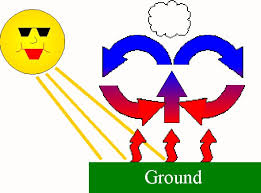
What is it called when heat is transferred through liquids and gases in a current?
a)
Conduction
b)
Convection
c)
Radiation
d)
Light
32.
I am holding a cup of hot chocolate in my hand. Which way is the heat travelling? 
a)
From my hands into the cup
b)
From the cup into my hands
c)
All heat is going into the air
d)
All the heat is staying in the cup
33.
What is it called when heat is transferred through empty space?
a)
Conduction
b)
Convection
c)
Radiation
d)
Thermal
34.
I touch a hot shopping cart that has been sitting outside. How did the shopping cart get so hot?
a)
Conduction
b)
Convection
c)
Radiation
d)
Electricity
35.
When does heat stop transferring from one object to another?
a)
It never stops
b)
When the warm object loses all of its heat completely
c)
When the cold object is no longer cold
d)
When both objects are the same temperature
36.
When boiling water the hot water rises creating a current. What type of heat transfer is this?
a)
Conduction
b)
Convection
c)
Radiation
d)
Sound
37.

A plant is using photosynthesis to grow?

a)

Electrical to Heat

b)

Chemical to Mechanical

c)

Sound to Mechanical

d)

Light to chemical

38.
I am using a toaster. What type of energy transformation is occurring?
a)
Electrical to thermal
b)
Light to thermal
c)
Electrical to sound
d)
Mechanical to electrical
39.
Frying an egg on a frying pan is what type of energy transfer?
a)
Conduction
b)
Convection
c)
Radiation
d)
Mechanical
40.
A sunbather got a nasty sunburn. What type of heat transfer occurred?
a)
Conduction
b)
Convection
c)
Radiation
d)
Chemical
41.
I turned on my heater in order to warm the air in my apartment. What type of heat transfer is occurring?
a)
Conduction
b)
Convection
c)
Radiation
d)
Electrical
42.
How does lighting a candle or match transform energy?
a)
Thermal to mechanical
b)
Electrical to thermal
c)
Light to thermal
d)
Chemical to light and thermal
43.

Watching TV creates which types of energy?

a)

Chemical and Mechanical

b)

Electrical, Chemical, and light

c)

Electrical, Light, Sound, and Thermal

d)

Light and Mechanical

44.
What is it called when heat is transferred through solids touching?
a)
Conduction
b)
Convection
c)
Radiation
d)
Electrical
45.
Which direction will the heat flow while this person holds a hot cup of tea?
a)
from the cup to her hand
b)
from her hand to the cup
c)
no heat is transferred
46.
Warm air rises and the cool air sinks.
a)
conduction
b)
convection
c)
radiation
47.
A group of friends gather around a fire to stay warm.
a)
conduction
b)
convection
c)
radiation
48.
Thermal energy ALWAYS moves from _____ to _____.
a)
solid to liquid
b)
ice to water
c)
hot to cold
d)
solid to gas
49.
How is the object traveling in section A of the graph?
a)
The object is traveling a constant speed
b)
The object stopped
c)
The object is slowing down
d)
The object is speeding up
50.
What is the average speed of the object?
a)
10 cm/s
b)
5 cm/s
c)
2 cm/s
d)
1 cm/s
51.
How is the object traveling in section d of the graph?
a)
The object is traveling at a constant speed
b)
The object stopped
c)
The object is slowing down
d)
The object is speeding up
52.
The ___________   _______________ is the process of one type of rock transforming into a different type of rock.
a)
Weathering
b)
Erosion
c)
The Rock Cycle
53.
_________________ is the breaking down of rock into smaller pieces of rock.
a)
erosion
b)
weathering 
c)
deposition
54.
What type of rock are fossils often found in?
a)
igneous
b)
metamorphic
c)
sedimentary
d)
magma
55.
Which type of rock is formed when smaller parts of older rocks become cemented together?
a)
igneous
b)
sedimentary
c)
pebbles
d)
metamorphic
56.
What type of rock is formed when magma from a volcano cools and hardens on the earth's surface?
a)
sedimentary
b)
metamorphic
c)
igneous
d)
lava
57.
What type of rock is formed due to pressure and heat within the earth?
a)
igneous
b)
sedimentary
c)
metamorphic
58.
What are the 3 main types of rocks?
a)
metamorphic, sedimentary, lava
b)
metamorphic, igneous, sedimentary
c)
metamorphic, magma, sedimentary
59.
Which type of rock results from melting and cooling of magma?
a)
Igneous
b)
Metamorphic
c)
Sedimentary
d)
Extrusive
60.
Which type of rock forms from extreme heat and pressure?
a)
Igneous
b)
Sedimentary
c)
Organic
d)
Metamorphic