
 Worksheets
Physics 2nd Semester Review
Total questions: 77
Worksheet time: 46mins
On a hot summer day, which shirt would you put on to make sure you stay cool while you are outside?
A black shirt because it reflects the sun's energy.
A white shirt because it reflects the sun's energy.
A black shirt because it absorbs the sun's energy.
A white shirt because it absorbs the sun's energy.
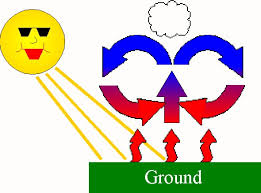
Transfer of thermal energy by moving fluids
conduction
convection
radiation
Transfer of thermal energy by electromagnetic waves
conduction
convection
radiation
What is the boiling point of water ?
212 C
100 C
32 C
0 C
The measure of the TOTAL kinetic energy in a substance is __________.
Temperature
Specific Heat
Heat
Potential Energy
The high specific heat of water means that it heats _________.
Fast
Slowly
Why does heat flow?
Because cold spreads between objects
Because heat always goes from areas of low temperature to high temperature
To reach thermal equilibrium
To make the temperature of objects uneven
Two materials in the same room will feel like they are a different temperature even though they are not because ______.
They have different potential energies
They have different kinetic energies
One is experiencing a phase change
One is a better conductor than the other
When a liquid is changing into a solid it is ________.
gaining thermal energy
maintaining thermal energy
losing thermal energy
When a liquid is changing into a gas it is ________.
gaining thermal energy
maintaining thermal energy
losing thermal energy
Why are evaporation and boiling both considered a cooling process?
The gas is cooled as it forms
The remaining liquid, or the surface it is on, gives its energy up to change the liquid to gas
The liquid that remains is warmer than it was before
Water thermal expansion and contraction is different than other materials because ________.
water doesn't contract at all
water actually expands as it cools from 4 degrees to 0 degrees C.
water actually contracts as it cools from 4 degrees to 0 degrees C
Which end of the visible light spectrum has a longer wavelength, ultraviolet or infrared?
ultraviolet
infrared
neither, they are both the same wavelength
Which of these waves is NOT part of the electromagnetic spectrum?
Ultraviolet waves
Sound
Radio waves
Microwaves
Which of the following materials does sound travel fastest through?
solid
liquid
gas
a vacuum
Which of the following materials does sound not travel through?
solid
liquid
gas
a vacuum
If the frequency of wave crests passing increases, what happens to the wavelength between those wave crests?
wavelength increases too
wavelength stays the same
wavelength decreases
If the frequency of wave crests passing increases, what happens to the period between those wave crests?
period increases too
period stays the same
period decreases
What happens to the frequency and pitch of the sound wave from a car horn as the car moves away from you?
both go down
both go up
frequency goes up and pitch goes down
frequency goes down and pitch goes up
If two wave crests have the same amplitude of 2 m, and they both arrive in step with each other, what will the resulting amplitude be?
2 m
0 m
4 m
not enough info
Destructive interference occurs when __________. (Select 2 answers)
two wave crests meet
two wave troughs meet
a wave crest and a wave trough meet
a rarefaction and compression meet
In a transverse wave the material (medium) the wave is moving through moves ___________ to the direction the wave is traveling.
parallel
perpendicular
In a longitudinal or compression wave the material (medium) the wave is moving through moves ___________ to the direction the wave is traveling.
parallel
perpendicular
Light is an example of a __________ wave.
longitudinal / compression
transverse
Sound is an example of a __________ wave.
longitudinal / compression
transverse
If two positively charged particles are brought near each other they will _______.
attract
repel
If the charge is increased on a particle, what will happen to the force it will apply to another charged object in its electrical field?
The force applied will increase.
The force applied will decrease.
If a charged object is brought closer to another charged object what will happen to the force applied to that object?
The force applied will increase.
The force applied will decrease.
Electrons in a conductor are ________.
held tightly and don't move much.
held loosely and move easily.
not moving at all
If a negatively charged rod is brought close to a metal sphere, what happens to the electrons on the sphere?
They move toward the rod
They stay where they are
They move away from the rod
If electrons have been pushed away from a charge and you touch the can, what will happen to the electrons AND what will the charge on the can be?
the electrons will leave the can, leaving the can negatively charged
the electrons will leave the can, leaving the can positively charged
the electrons will remain in the can, leaving the can without a charge

Based on the electric field lines that are shown, where would the greatest force be found on a charged particle?
Point A
Point B
The arrows on an electric field diagram indicate the direction a small ________ charged particle would move.
positively
negatively
A good thermal conductor __________.
does not allow electrons to flow easily.
allows electrons to flow easily.
does not allow thermal energy to flow easily
allows thermal energy to flow easily
An electrical insulator __________.
does not allow electrons to flow easily.
allows electrons to flow easily.
does not allow thermal energy to flow easily
allows thermal energy to flow easily
Charge ___________ occurs when an insulator is given a temporary charge by bringing a charged object near the insulator. This is caused by electrons moving to one side of the atoms, causing a slight charge in the insulator.
induction
polarization
by friction
Charge ___________ occurs when a conductor is given a charge by bringing a charged object near the conductor. This is caused by electrons moving to one side of the conductor because of the approaching object's charge.
induction
polarization
by friction
Charge ___________ occurs when an object picks up extra electrons because of contact or rubbing between two materials.
induction
polarization
by friction
Electrical potential energy is the energy a particle has ___________.
because of its movement.
because of its position above the Earth's surface.
because of it's position in an electric field.
because of its volume.
What is the boiling point of water
0 K
212 F
50 C
75 C
What is water's freezing point?
32 F
32 C
373 K
10 C
What is water's freezing point?
0 F
373 K
273 K
32 C
What is water's boiling point?
100 F
373 K
273 K
212 C
What do engineers do to take into account the expansion and contraction of substances due to heat?
Make sure there are small spaces between parts
Make sure there are no spaces between parts
Use materials that will never expand or contract
Make sure there are large enough spaces to allow for expansion and contraction
How do greenhouse gasses help heat up the earth?
They absorb more radiation than other materials
They don't allow infrared wavelengths of light to escape from the atmosphere
They stop all types of radiation
They are better at convection than other gasses
When you stand next to a fire you feel heat because of the _______ wavelengths of light that are given off.
ultraviolet
radio
infrared
x ray
Evaporation occurs _________ of a liquid.
on the surface
below the surface
at the bottom
The area of a longitudinal or compression wave where there are fewer particles of the medium is called a ____________.
crest
trough
compression
rarefaction
The area of a longitudinal or compression wave where there is a greater concentration of particles of the medium is called a ____________.
crest
trough
compression
rarefaction
The measure of sound that can be quantified and is based on the square of the amplitude of the wave is ____________.
loudness
sound intensity
frequency
period
The measure of sound that is based on personal preference is ____________.
loudness
sound intensity
frequency
period
__________ sounds are below the hearing level of a human.
ultrasonic
supersonic
ubersonic
infrasonic
__________ sounds are above the hearing level of a human.
ultrasonic
supersonic
ubersonic
infrasonic
In order for resonance to occur, like what happened to the Tacoma Narrows bridge, the frequency of vibration must __________ the natural frequency of an object.
be opposite
match
overpower
change
Anti-noise technology utilizes ____________ to cancel out sounds.
constructive interference
destructive interference
resonance
decibels
Electric shielding occurs in a charged cylinder because _________.
protons move to cancel out a nearby electric field caused by a charge.
it is an insulator.
electrons move to cancel out a nearby electric field caused by a charge.
____________ is the flow of electrons through a circuit.
voltage (electric potential)
current
resistance
ohms
The difference in this between parts of a circuit is what causes electrons to flow.
voltage (electric potential)
current
resistance
ohms
________ is what slows the flow of current through a circuit.
voltage (electric potential)
electric potential energy
resistance
amps
The unit of resistance is the ________.
volt
ampere (amp)
ohm
decibel
The unit of current is the ________.
volt
ampere (amp)
ohm
decibel

