
 Worksheets
2018 Final Review
Total questions: 129
Worksheet time: 2hrs 32mins
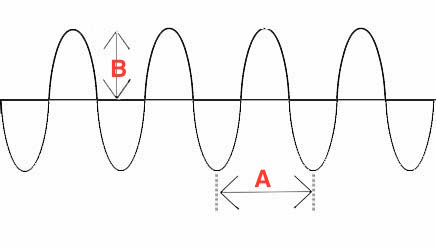

What is y?
trough
crest
wavelength
amplitude

Why does decreasing temperature change the reaction rate?
Collisions occur with greater kinetic energy
Collisions occur with greater kinetic energy and greater frequency
Collisions occur with less kinetic energy
Collisions occur with less kinetic energy and lesser frequency
Increasing surface area of chemicals...
Decreases reaction rate due to less energetic collisions
Decreases reaction rate due to fewer collisions
Increases reaction rate due to more collisions
Increases reaction rate due to greater energy collisions
What effect does a catalyst have on a reaction?
Has no effect on the activation energy
Lowers activation energy
Raises activation energy
Can raise OR lower the activation energy
N or C?

Na2CO3
Just because an atom is neutral does NOT make it stable ("happy"). It MUST complete it's energy _______ before that will happen.
levels
journey
book
make up


Which correctly uses the patterns in the periodic table to describe what is happening in the model?
Sodium is in period 3 and therefore has 3 energy levels. Chlorine is also in period 3 and has 3 energy levels. Since they have the same number of energy levels, the form a molecule.
Sodium is in group 1 and therefore has 1 valence (outer) electron. Chlorine is in group 17 and therefore has 7 valence electrons. When they combine, they form a molecule that has a full valence shell of 8 electrons.


Use the image provided to answer the question.
Where are the most reactive nonmetals located?
column A
column B
column C
column D
column E
Use the image provided to answer the question.
Where are the most reactive metals located?
column A
column B
column C
column D
column E
Use the image provided to answer the question.
Where are the most stable elements located?
column A
column B
column C
column D
column E
The tendency of atoms to prefer to have eight electrons in the valence shell is known as the
electron theory
octet rule
atom principle
valence law
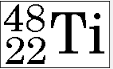


Tip: APEMAN
Calcium Bromide is an example of which type of chemical bonding?
Mass cannot be created or__________ during a chemical reaction?
Reacted
Transferred
Born
Destroyed
To balance a chemical equation, there must be the same number of atoms of each kind of element on both sides of the arrow.
True
False

How many atoms of Al are in the PRODUCTS of this balanced equation?
10
2
3
4

How many different elements are in the REACTANTS of this equation?
4
2
3
8
In a chemical reaction, products are on _________ of the arrow
the left
the right
top
a piece

How does reactivity in metals change going right?
More reactive
Less reactive
Stays the same
What's a metal?
How is the modern periodic table organized?
By atomic mass
By number of valence electrons
By atomic number
By number of energy levels


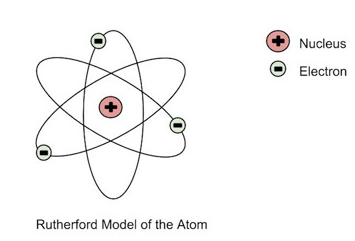
A) Ernest Rutherford
B) J.J. Thomson
C) John Dalton



C13H9N
CH4

What type of reaction is this?
decomposition
synthesis
single replacement
double replacement

What type of reaction is the fourth one?
decomposition
synthesis
single replacement
double replacement
What type of reaction is the third one?
decomposition
synthesis
single replacement
double replacement
What type of reaction is the first one?
decomposition
synthesis
single replacement
double replacement
What type of reaction is the second one?
decomposition
synthesis
single replacement
double replacement
During a reaction a metal is more likely to __ electrons than a non-metal
gain
share
lose
destroy

Which of the following is NOT a factor for affecting reaction rates.
presence of a catalyst.
Magnetism.
Particle size (surface area)
Concentration

Waves have a frequency, the units for frequency are called ____.
amps
compressions
wavelengths
hertz

compound
mixture
pure substance
element

There are many many elements more metallic than sodium
true
false
The longer the wavelength the
lower the frequency
the higher the amplitude
the higher the frequency
the lower the amplitude
. Metals are more likely to
form cations than anions.
to be the best insulators.
form anions than cations.
to become noble gases.
Elements of the same group tend to have
the same number of shells.
the same properties.
the same isotopes.
the same mass numbers

The figure above shows a portion of a blank periodic table. Identify the segments labeled A and B.
(A and B are merely “BLOWN” up so you can see them easier.
A and B are both periods.
A is a period and B is a group.
A and B are both groups.
A is a group and B is a period.
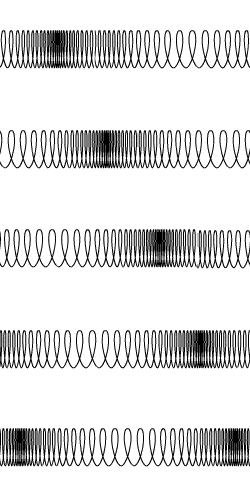
A longitudinal wave has
crest and troughs.
crests and compressions..
compressions and rarefactions.
troughs and rarefactions.
The octet rule (meaning they need 8 ) helps keep atoms ____.
“happy” and stable
in check with their inner self.
lighter than usual.
neutral.
Atoms of the most reactive elements tend to have
eight valence electrons
no valence electrons.
four or five valence electrons.
one or seven valence electrons

