wayground logo

Free Printable Worksheets

Font size

S
M
L
XL
Worksheets

Intro to Enviro, Ecology I, Ecology II, and Biomes

Total questions: 151

Worksheet time: 2hrs 11mins

Name
Class
Date
1.
A living or once-living organisms in an ecosystem is a
a)
population
b)
biotic factor
c)
abiotic factor
d)
community
2.
A nonliving element in an ecosystem is an 
a)
animal
b)
abiotic factor
c)
biotic factor
d)
organism
3.
Which of the following is not a biotic factor?
a)
mushroom
b)
air
c)
elephant
d)
coyote
4.
Temperature, light, air, water, and soil are all  _____  parts of the environment
a)
alive
b)
biotic 
c)
abiotic
d)
living
5.
Limiting factors are sometimes helpful because they can keep the population from getting too large.
a)
True
b)
False
6.
A group of the same type of organisms living in the same place at the same time.
a)
threatened species
b)
populations
c)
community
d)
limiting factor
7.
Deserts, mountains, and rivers are all examples of ________.
a)
vacation spots
b)
tundra
c)
ecosystems
d)
wetlands
8.
The experimental method includes which of the following steps?
a)
 Remaining skeptical, organizing data, and analyzing data
b)
Drawing conclusions, being open to new ideas, and communicating results
c)
Observing, hypothesizing, predicting, experimenting, and communicating results
d)
predicting, hypothesizing, experimenting, observing, and communicating
9.
What is not a description of a good hypothesis?
a)
It makes logical sense
b)
It is a testable explanation of an observation
c)
It follows from what you already know about a situation
d)
If proven correct it becomes a theory after the experiment 
10.
Which of the following is a possible short-term consequence of creating a nature preserve?
a)
Decrease in habitat destruction
b)
a.  An increase in property values near the preserve
c)
a.  A restriction of recreational activities on private land within the preserve 
d)
All of the above
11.
In an experiment, the factor of interest is called the
a)
Control group
b)
Experimental group
c)
Hypothesis
d)
Variable
12.
Air pollution is _________________________
a)
the addition of any substance that has harmful or toxic effects to air
b)
the addition of any good substance that benefits air
c)
a chemical reaction
13.
The pattern of air during thermal inversion is
a)
warm- cold- warm
b)
cold- warm- cold
c)
there is no pattern, it is only cold
14.
The Clean Air Act is federal law that regulates levels of air pollution produced from
a)
Transportation and factories
b)
Private homes only
c)
Power plants only
d)
Transportation, factories, power plants, and private homes
15.
How does air pollution move during thermal inversion?
a)
Thermal inversion makes pollution very still
b)
Pollution travels very fast in cold air
c)
There is no pollution during thermal inversion
16.
Two historical events during which smog killed many citizen and made thousands sick...
a)
Donora Fluoride Fog and London Smog
b)
London Smog and Exxon Valdez
c)
China Smog and Fluoride Fog
17.
A common air pollutant that is very dangerous because you cannot see it or smell it
a)
Sulfur Monoxide
b)
Carbon Monoxide
c)
Carbon Dioxide
d)
Nitrogen Oxide
18.
Smog is formed when nitrogen oxide mixes with...
a)
Water
b)
Sunlight
c)
Coal
d)
Other gases
19.
The relationship between a zebra and a tick
a)
Mutualism
b)
Parasitism
c)
Commensalism
20.
The relationship between a zebra and a tick bird
a)
Commensalism
b)
Parasitism
c)
mutualism
21.
The relationship between a bird building it's nest and the tree
a)
Parasitism
b)
Commensalism
c)
Mutualism
22.
Producers
a)
Organisms that get their food by eating other organism
b)
Organism the break down dead organism
c)
Organisms that make their own food
23.
Food Web
a)
System of several overlapping food chains
b)
energy moving from one level to the next
c)
living/nonliving factors in an ecisystem
24.
Omnivore
a)
plant eaters
b)
plant & meat eaters
c)
meat eaters
25.
Aquatic
a)
Land
b)
Water
c)
Air
26.
Carnivores
a)
Plant eater
b)
Meat eater
c)
Plane and meat eater
27.
Ecosystem
a)
To feed on both plants and animals
b)
System of several overlapping food chains
c)
All the living/nonliving factors in an area
28.
Herbivores
a)
Plant eater
b)
Meat eater
c)
Plant and meat eater
29.
Decomposer
a)
Organism that makes its own food
b)
Organism that need to eat other organism
c)
Organism the break down dead organism
30.
Food Chain
a)
Organisms that make their own food
b)
path of energy as it moves from one organism to another
c)
System of several overlapping food chains
31.
Terrestrial
a)
land
b)
water
c)
air
32.
Consumers
a)
Organism the break down dead organism
b)
Organisms that make their own food
c)
Organisms that get their food by eating other organism
33.
What is the beginning of all food chains or webs?
a)
the moon
b)
primary consumers
c)
the sun
d)
secondary consumers
34.
Which part of the water cycle occurs when ocean water is heated?
a)
Precipitation
b)
Evaporation
c)
Condensation
d)
Runoff
35.
“Energy Star,” “USDA Organic,” and “Fair Trade Certified” are all examples of
a)
ecosystems
b)
ecolabelling
c)
non-market values
d)
market failure
36.
In making environmental policies, government interacts with
a)
organizations
b)
businesses
c)
citizens
d)
all of the above
37.
In the U.S., laws enacted from the 1780's to the late 1800's reflected the perception that
a)
the amount of land and natural resources in the west was endless.
b)
the natural resources of the west could be used up and required legal protection.
c)
Americans were living amid dirtier air, dirtier water, and more waste and toxic chemicals.
d)
a sustainable future should be a primary goal.
38.
Most major laws in modern U.S. environmental policy were enacted in the
a)
1960's and 1970's
b)
1980's and 1990's
c)
years between 2000 and 2005
d)
years between 2005 and 2010
39.
Headquartered in New York City, the 190 member nations of the following organization work together to promote peace and to help solve economic, social, cultural, and humanitarian problems.
a)
World Trade Organization
b)
European Union
c)
United Nations
d)
Kyoto Protocol
40.
The first step of an environmental policy process is to
a)
guide the solution to law
b)
identify the problem
c)
get organized
d)
gain access to policymakers
41.
Which statement about environmental policy in the United States is true?
a)
All three branches of government are involved in environmental policy
b)
The environmental policies have always been successful.
c)
All important policies are created at the federal level.
d)
Environmental policy is based only on scientific information.
42.
What major entity of the U.S. government has the chief responsibility for overseeing environmental regulations?
a)
Environmental Impact Statement
b)
National Park Service
c)
Supreme Court
d)
Environmental Protection Agency
43.
Which branch of the U.S. government is involved in interpreting environmental laws and hearing lawsuits regarding environmental issues?
a)
state governors
b)
judicial branch
c)
legislative branch
d)
executive branch
44.
Sometimes, a company that generates pollution will pay extra taxes, based on the amount of pollution it produces. These are known as
a)
Command & control taxes
b)
Green taxes
c)
Cap & trade taxes
d)
Subsidy taxes
45.
the field of economics that recognizes the relationships between ecosystems and economic systems
a)
ecological economics
b)
economics
c)
environmental economics
d)
ecolabeling
46.
Which statement about the relationship between economics and the environment is true?
a)
Internal and external environmental costs are usually considered equally.
b)
Long-term effects often receive more weight than short-term effects.
c)
Harm to the environment can harm economies.
d)
The relationship usually receives serious consideration.
47.
Which statement about environmental policy in the United States is true?
a)
All three branches of government are involved in environmental policy.
b)
The environmental policies have always been successful.
c)
All important environmental policies are created at the federal level.
d)
Environmental policy is based only on scientific information.
48.
A cost-benefit analysis is a(n)
a)
study of the factors that influence that influence decisions of buyers and sellers.
b)
economy in which the government decides what is made.
c)
equilibrium between a product's supply and its demand.
d)
comparison between what is sacrificed and gained by a specific action.
49.
All economies depend on the environment
a)
True
b)
False
50.
What is represented by the line that slopes down toward the right?
a)
supply
b)
demand
c)
equilibrium
51.
In the United States, during the 1960s and 1970s, what was one of the events that triggered increased awareness of environment problems?
a)
A. the creation of the national park system
b)
B. the publication of Silent Spring by Rachel Carson
c)
C. the displacement of millions of Native Americans
d)
D. a rapid increase in westward expansion
52.
Which period of U.S. environmental policy created the Wilderness Act and the Soil Conservation and Domestic Allotment Act?
a)
A. the first period (1780s to late-1800s)
b)
B. the second period (late-1800s to mid-1900s)
c)
C. the third period (mid- to late-1900s)
d)
D. the fourth period
53.
In the United States, laws enacted from the late-1800s to the mid-1900s reflected the understanding that
a)
A. the West's natural resources could be used up and required legal protection.
b)
B. a sustainable future should be a primary goal.
c)
C. Americans were living amid dirtier air, dirtier water, and more waste and toxic chemicals.
d)
D. the amount of land and natural resources in the West were endless.
54.
How did U.S. environmental policy shift in the 1980s?
a)
A. A backlash led to efforts to weaken federal environmental laws.
b)
B. It was basically the same as in the 1960s and 1970s.
c)
C. Most of the important environmental laws were finally passed.
d)
D. There was a large push to achieve sustainability quickly.
55.
Which statement best describes the current era of environmental policy in the United States?
a)
A. Policy has finally solved most serious environmental problems in the U.S.
b)
B. Current policy continues the trends begun in the 1980s.
c)
C. The focus has expanded from just cleaning up pollution to achieving sustainability.
d)
D. Most policy is directed toward weakening federal and state environmental laws.
56.
Air pollutants that are emitted in one country may travel on wind currents far across the globe and affect other countries. This is an example of a(n)
a)
A. internal cost.
b)
B. command-and-control approach.
c)
C. international treaty.
d)
D. transboundary problem.
57.
Greenpeace, Population Connection, and Conservation International are examples of
a)
A. international treaties.
b)
B. European Union (EU) member states..
c)
C. World Bank members
d)
D. Non-governmental Organizations (NGOs).
58.
What is the correct sequence of steps in the environmental policy process?
a)
A. identify the problem, find the cause, propose solutions, get organized, gain access to policymakers, guide the solution to law
b)
B. identify the problem, get organized, propose solutions, find the cause, gain access to policymakers, guide the solution to law
c)
C. find the cause, identify a problem, propose solutions, gain access to policymakers, get organized, guide the solution to law
d)
D. propose solutions, find the cause, identify a problem, get organized, guide the solution to law, gain access to policymakers
59.
Degradation as related to the environment means:
a)
A decline, things get worse
b)
Things are improving
c)
Conditions remain the same
60.
What do you call heat getting trapped in the ozone layer?
a)
Coriolis Effect
b)
Temperature Inversion 
c)
Greenhouse Effect 
d)
El Nino 
61.
The Earth would freeze if we did not have which of the following
a)
Greenhouse Effect
b)
Volcanoes 
c)
Carbon Dioxide 
d)
Magnets 
62.
What happens in the morning when it's cold in areas of high carbon emissions?
a)
Extreme Warm 
b)
Freezes 
c)
Smog 
d)
Fog
63.
What is the definition of Ecological Footprint?
a)
The impact of a person on their neighbors 
b)
The impact of a person on the environment 
c)
The impact of the oceans towards erosion 
d)
How much pollution an animal produces 
64.
The atmosphere includes
a)
rocks
b)
air
c)
plants
d)
atoms
65.
The geosphere includes all but
a)
rocks
b)
mountains
c)
lava
d)
plants
66.
The hydrosphere includes
a)
water
b)
ice
c)
dogs
d)
lava
67.
The hydrosphere interacts with the biosphere by providing __________ to life.
a)
nutrients
b)
water
c)
soil
d)
lightning
68.
All of the following are examples of the biosphere except
a)
plants
b)
animals
c)
bacteria
d)
air
69.
Which two spheres both contain water?
a)
cryosphere and hydrosphere
b)
cryosphere and geosphere
c)
hydrosphere and geosphere
d)
atmosphere and geosphere
70.
Fire would most affect the
a)
geosphere
b)
atmosphere
c)
cryosphere
d)
hydroshpere
71.
An earthquake would most affect the
a)
atmosphere
b)
cryosphere
c)
atmosphere
d)
geosphere
72.
How much of the atmosphere is composed of nitrogen gas?
a)
87%
b)
38%
c)
78%
d)
21%
73.
How do plants get the nitrogen they need?
a)
from the air
b)
from the soil or water in which they live
c)
from the Sun
d)
from broken-down rocks
74.
Why do all organisms need nitrogen?
a)
To live and grow 
b)
To build phosphorus
c)
To make oxygen levels grow
d)
To help blood circulate better
75.
Nitrogen fixing bacteria, lives in nodules on the root of a plant called
a)
Broccoli
b)
Legumes
c)
Beats
d)
Carrots
76.
The swelling on the roots of a soybean are called
a)
Noodles
b)
Nitrogen
c)
Nodules
d)
Legumes
77.
What converts some atmospheric nitrogen into nitrates that organisms can use?
a)
Sun
b)
Rain
c)
Thunder
d)
Lighting
78.
Which of the following describes the role of nitrogen-fixing bacteria in the nitrogen cycle? Nitrogen-fixing bacteria convert
a)
nitrates intro nitrogen gas
b)
ammonia into proteins
c)
nitrogen gas into ammonia
d)
proteins into nitrates
79.
Animals obtain the nitrogen they need directly from the
a)
soil in their habitat
b)
air they breathe
c)
plants they eat
d)
bacteria living within them
80.
Growing legumes such as alfalfa or soy beans increases
a)
denitrification
b)
nitrogen fixation
c)
ammonification
d)
ammonium oxidation
81.
A particular golf course is using large amounts of nitrogen fertilizer. What process could move this nitrogen into a local stream?
a)
volatilization
b)
nitrogen fixation
c)
runoff
d)
ammonification
82.
Nitrogen is the most plentiful gas in the atmosphere.
a)
True
b)
False
83.
Plants and animals cannot use nitrogen directly from the air.
a)
True
b)
False
84.
What converts nitrogen into a useable form for plants and animals?
a)
bacteria
b)
fungi
c)
rain
85.
After plants and animals contain nitrogen, what puts it back into atmosphere and soil?
a)
decomposition
b)
precipitation
c)
condensation
d)
bacteria
86.

What is a keystone species?

a)

A species that helps to hold an ecosystem together

b)

A species that lives in or around rocks

c)

Keys and stones have nothing to do with ecology

d)

A keystone isn't a living thing, it's just a stone

87.

Which is an example of a keystone species?

a)

Frogs

b)

Wolves

c)

Bees

d)

All of them

88.

Why should we be talking about bees?

a)

They're really cute and fuzzy

b)

Ms Sandy really loves honey

c)

Bee population's are randomly collapsing, which has a huge impact on us

d)

We shouldn't talk about them, they sting me and it hurts

89.
A collection of organisms that belong to different populations but all live in the same area and interact with one another.
a)
Population
b)
Ecosystem
c)
Community
d)
Ecosphere
90.
A collection of organisms that make up a community as well as all of the nonliving aspects of the environment.
a)
Population
b)
Community
c)
Habitat
d)
Ecosystem
91.
Two organisms that are so similar they can interbreed in nature and produce fertile offspring
a)
biotic factor
b)
herbivore
c)
ecosystem
d)
species
92.
Identify the examples as: a organism, population, community, or ecosystem.
All speckled sting-ray that live in the Pacific Ocean
a)
Organism
b)
Population
c)
Community
d)
Ecosystem
93.
What are the ecological levels of organization from smallest to the largest?
a)
organism, population, community, ecosystem, biome, biosphere
b)
organism, community, population, ecosystem, biome, biosphere
c)
organism, population, community, biome, ecosystem, ecosphere.
d)
organism, community, population, biome, ecosystem, ecosphere
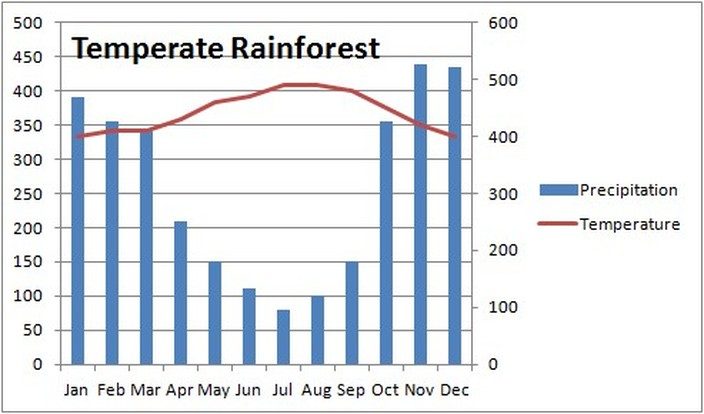
94.

Jacob is going out to his grandparents farm. On the farm is a stream that he likes to fish in. While he is fishing he sees many different species of fish as well as maple and oak trees and dragonflies. What Jacob is seeing is an example of what level of organization?

a)

organism

b)

population
c)

community

d)

ecosystem

95.
Abby is walking to school with her best friend Jaylyn. They begin talking about everything they see including the ash trees, grass, weeds, ants, and people. They also notice how cold it is, how there are several large puffy clouds out, and how the sun is just starting to come up.  What level of organization are they discussing?
a)
community
b)
ecosystem
c)
biome
d)
biosphere
96.

What is the smallest level of ecological organization

a)

community

b)

ecosystem

c)

organism

d)

population
97.
Antonio and Javier are astronauts in space looking back at Earth and discussing how all the life on Earth interacts with each other as well as the nonliving things. What level of organization are they discussing?
a)
A community
b)
A biome
c)
An ecosystem
d)
A biosphere
98.
A DECOMPOSER
a)
Makes its own energy
b)
Eats other organisms
c)
Eats DEAD organisms
99.
A PLANT is a
a)
Producer
b)
Consumer
c)
Decomposer
100.
A PLANT EATER is a
a)
Herbivore
b)
Carnivore
c)
Omnivore
d)
Producer
101.
ZOOPLANKTON is a
a)
Herbivore
b)
Carnivore
c)
Omnivore
d)
Producer
102.
A MUSHROOM is a
a)
Herbivore
b)
Carnivore
c)
Omnivore
d)
Decomposer
103.
A CRAB is a
a)
Herbivore
b)
Carnivore
c)
Omnivore
d)
Decomposer
104.
A SHRIMP is a
a)
Herbivore
b)
Carnivore
c)
Omnivore
d)
Decomposer
105.
Which is the PRODUCER?
a)
Lettuce
b)
Slug
c)
Bird
d)
Cat
106.
Where does the LETTUCE get its energy?
a)
The sun
b)
The slug
c)
The bird
d)
The cat
107.
True or False. In this Food Web Pyramid Which type of consumer gets only 10% of the energy stored in plants?
a)
Herbivore
b)
Carnivore
c)
Omnivore
d)
Secondary Consumer
108.
In the energy pyramid here, which organisms have the most energy available?
a)
Producers
b)
Carnivores
c)
Herbivores
d)
Top Predator
109.
In the energy pyramid below, which organism has the least amount of energy available?
a)
Producers
b)
Herbivores
c)
Carnivores
d)
Top Predator
110.
If there is 1000 Kcal available in the producers in trophic level 1, how much energy is available in the herbivores in trophic level 2?
a)
10 Kcal
b)
1 Kcal
c)
100 Kcal
d)
1000 Kcal
111.
True or False. In this Food Web Pyramid the consumers on each level only get about 10 percent of energy that the plants have stored.
a)
True
b)
False
112.
If you have a lot of offspring but do not provide parental care you are described as...
a)
K- selected
b)
r- selected
c)
Q- selected
d)
w- Selected
113.
What is the order of succession shown in this figure?
a)
A, B, C, D
b)
B, A, D, C
c)
C, D, A, B
d)
D, A, B, C
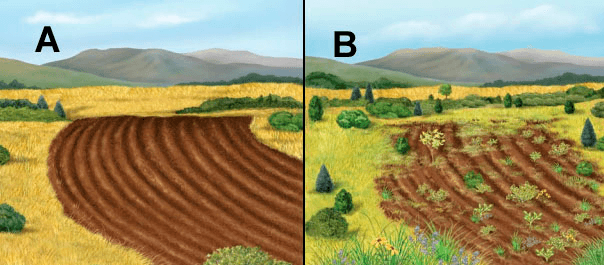
114.
What type of succession is shown going from figure A to figure B?
a)
primary succession
b)
ecological succession
c)
secondary succession
d)
intermediate
115.
What is the goal of the pioneer species in Primary Succession?
a)
To kill the dead materials after a disaster
b)
To rebuild soil
c)
To feed Johnny
d)
To put fresh oxygen into the air
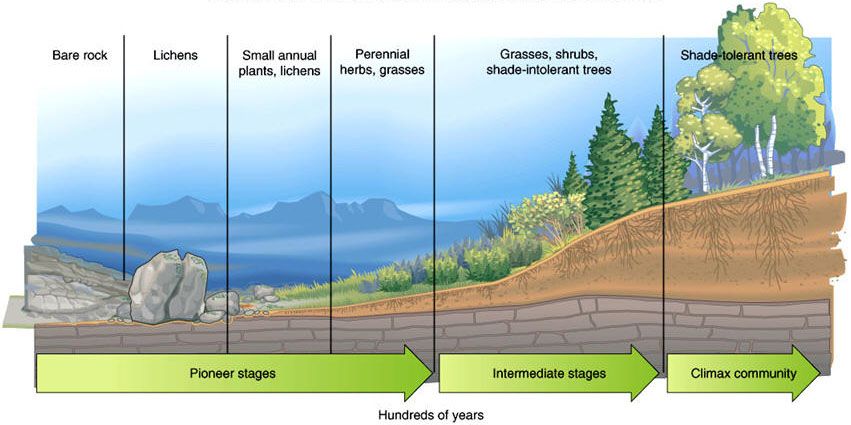
116.
The picture shows what type of succession?
a)
primary
b)
secondary
c)
tertiary
d)
quadanary
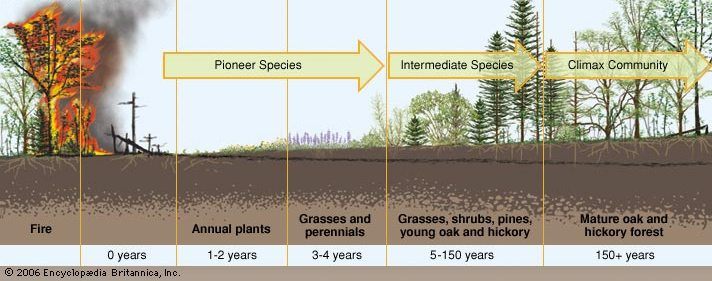
117.
The picture shows what type of succession?
a)
primary
b)
secondary
c)
tertiary
d)
quadanary
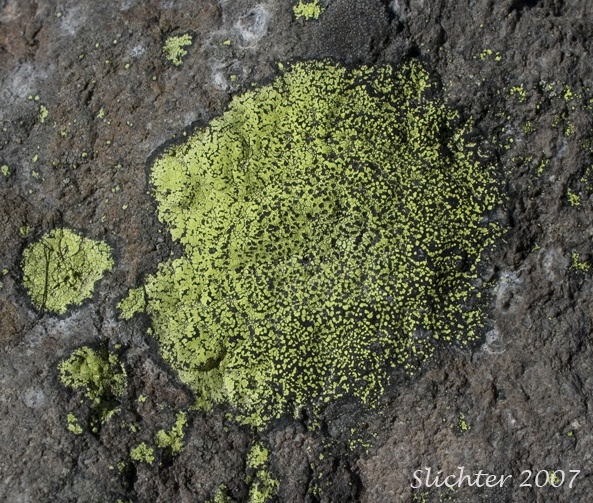
118.
What is the name given to lichen or algae after a primary succession?
a)
pioneer species
b)
volunteer species
c)
founder species
d)
conqueror species
119.
What are examples of pioneer species in a primary succession?
a)
Bushes and Shrubs
b)
Oak trees
c)
Mossess and Lichens 
d)
A rose Bush
120.
After a volcanic eruption, lava covers the land. What is the order that plants grow to repopulate the area?
a)
Lichens → Shrubs → Grasses → Trees
b)
Lichens → tree → shrubs→Grasses
c)
Grasses → Lichens → Shrubs → Trees
d)
Lichens → Grasses → Shrubs → Trees
121.
the process by which a new community forms where no community lived before 
a)
resource
b)
invasive (non- native) species
c)
primary succession
d)
competition
122.
Reaches a climax community quicker because soil is already present
a)
primary succession 
b)
secondary succession
c)
both types of succession
123.
Final illustration (#8) shows
a)
pioneer species
b)
climax community
c)
only biotic factors
d)
only abiotic factors
124.
Succession type?
a)
primary succession
b)
secondary succession
c)
tertiary succession
d)
variable succession
125.
Barnacles sometimes live on the outside surface of other larger shelled organisms without causing any harm. What is the ecological relationship?
a)
Mutualism
b)
Parasitism
c)
Commensalism
d)
Predator-Prey
126.
What term best describes the vole, the small rodent, in this image?
a)
Prey
b)
Predator
c)
Producer
d)
Competition
127.
The amount of energy that usually transfers from one trophic level to the next...
a)
10%
b)
20%
c)
80%
d)
50%
128.
A species that is not native to an area is called: 
a)
Native Species
b)
Natural Species
c)
Invasive Species
d)
Symbiotic Species
129.
This species came from China/Japan in 1998.  It damages crops and is annoying as it enters your home in cracks or small openings. 
a)
Asian Carp
b)
Zebra Mussels
c)
Stink Bug
d)
Gypsy Moth
130.
The Asian Carp is causing what type of damage/risks to native animals?
a)
A.  It is eating the food of the native fish.
b)
B.  It is jumping out of the water, injuring boaters.
c)
C.  It destroys crops and clogs pipes.
d)
D.  Both answers A and B are correct.
131.
Why do the populations of invasive species grow so quickly? 
a)
Invasive Species are native to an area. 
b)
Invasive species are prey to many animals.
c)
Invasive species have no predators.
d)
Invasive species keep the ecosystems in equilibrium.
132.
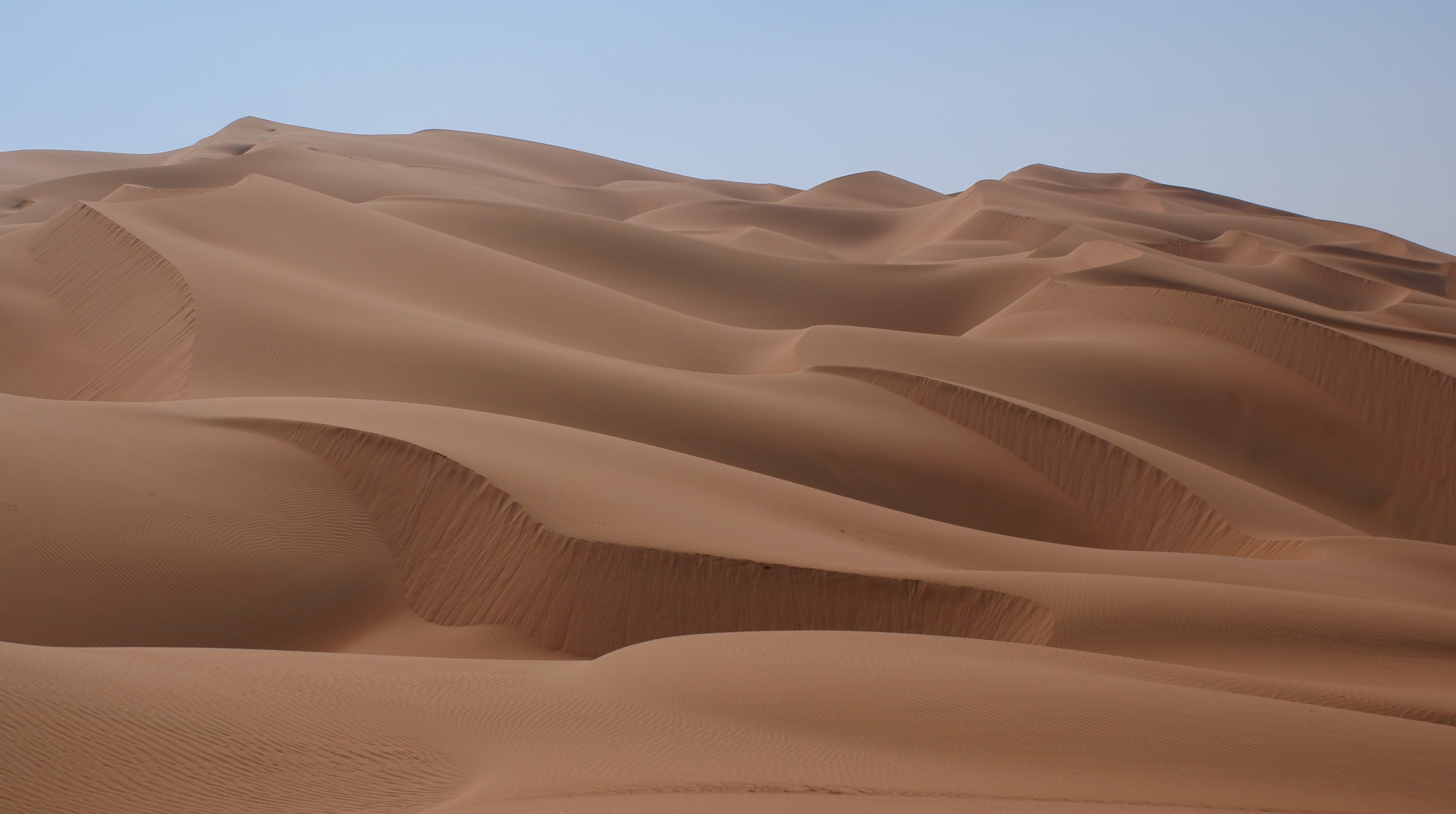
Which biome is characterized by low temperatures and low amounts of rainfall?
a)
tundra
b)
desert
c)
temperate deciduous forest
d)
tropical rain forest
133.
Which biome covers most of the land mass near the Earth's equator?
a)
tundra
b)
desert
c)
grassland
d)
tropical rainforest
134.
Which biome is found on the mountain above the tree line?
a)
grassland
b)
deciduous forest
c)
tundra
d)
tropical forest
135.
Which biome, because of its climate, has the largest number of species of plants and animals?
a)
tundra
b)
desert
c)
tropical rainforest
d)
pine forest
136.
One characteristic feature of tundra is that only the surface thaws in the summer and refreezes in the winter, leaving a layer of permanently frozen subsoil.  This characteristic is known as
a)
glaciation
b)
permafrost
c)
crystallization
d)
soilfrost
137.
Which type of trees is found in a temperate forest?
a)
deciduous
b)
evergreen
c)
ginko
d)
palm
138.
Which major biome is home to cacti, mesquite, white thorn, pack rats, small reptiles, and coyotes?
a)
desert
b)
taiga
c)
tundra
d)
grassland
139.
In which biome is Georgia located?
a)
tropical rainforest
b)
temperate rainforest
c)
temperate deciduous forest
d)
alpine forest
140.
Which biome receives between 0 and 25 centimeters of precipitation each year, has a temperature range from -27 to 5 degrees Celsius, has frozen soil, and is home to hares, caribou, and wolves?
a)
desert
b)
mountain
c)
savannah
d)
tundra
141.
Which of the following habitats probably has the greatest number of plant and animal species?
a)
the African savannah
b)
a rainforest in Brazil
c)
a temperate forest in China
d)
a temperate grassland in Kansas
142.
Which biome contains large populations of grazing herbivores, few species of birds, and deep, rich soil?
a)
taiga
b)
tundra
c)
deciduous forest
d)
grassland
143.
This biome contains mostly spruce trees and Douglas firs, which are both evergreen.  The winters are long and cold and the summers are short and rainy.  The soil is very rich.  Moose and elk live here.  This biome is classified as a
a)
taiga
b)
tundra
c)
deciduous forest
d)
temperate forest
144.
The biome known for trees with broad leaves that fall off the trees in the winter.
a)
Coniferous Forests
b)
Deciduous Forests
c)
Deserts
d)
Tropical Rain Forests
145.
The most important abiotic factors when studying biomes are...
a)
Food and Water
b)
Water and Sunlight
c)
Temperature and Oxygen
d)
Water and Temperature 
146.
The greatest biodiversity on earth is found in the __________ biome.
a)
taiga
b)
grassland
c)
temperate deciduous forest
d)
tropical rainforest
147.
This biome is found around the equator and is home to a large amount of biodiversity.
a)
Deserts
b)
Tropical Rain Forests
c)
Savannas
d)
Chaparral 
148.
Which biome is MOST LIKE the "desert" in terms of precipitation?
a)
tropical rainforest
b)
temperate deciduous forest
c)
tundra
d)
coniferous forest
149.
Which biome is represented by the rainfall amounts in letter C?
a)
desert
b)
prairie
c)
deciduous forest
d)
tropical rain forest
150.
A ________ is a forest biome consisting mostly of cone-bearing evergreen trees
a)
desert
b)
temperate deciduous forest
c)
taiga
d)
tundra
151.
Areas defined by their geographical location and ecological similarity are called?
a)
ecozones
b)
biotopes
c)
biomes
d)
biodomes