
 Worksheets
Plant and Soil Science Final
Total questions: 60
Worksheet time: 54mins
Name
Class
Date
1.
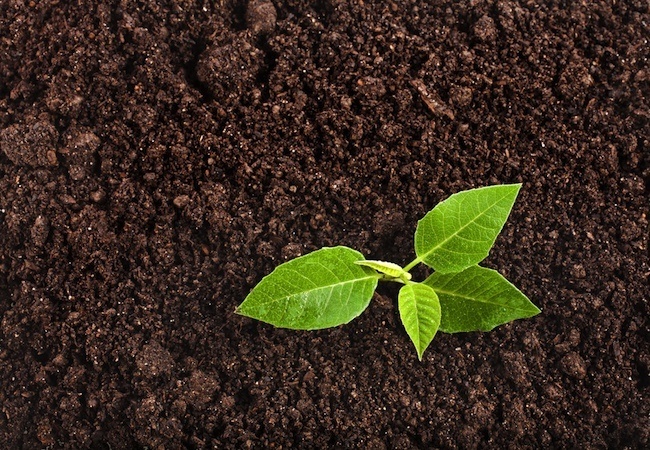
Which of the following is NOT one of the three types of soil?
a)
clay
b)
sand
c)
silt
d)
mud
2.

_______ is the type of soil used most often with plants and on farms. It is a mixture of clay, sand, and silt.
a)
loam
b)
humus
c)
soil
d)
dirt
3.
You dig a small hole in the soil and the next day it rains. The hole fills with water, but does not empty even after several days of dry weather. What is the soil mostly made of?
a)
clay
b)
sand
c)
humus
d)
silt
4.
Which of the following best describes soil erosion?
a)
A. the breakdown of soil
b)
A. the improvement of soil
c)
A. the addition of soil
d)
A. the movement of soil by wind or water
5.
What are the 2 MAIN groups of plants?
a)
seed plants and seedless plants
b)
gymnosperms and angiosperms
c)
horsetails and ferns
d)
vascular and nonvascular
6.
Which group of plants absorb water like a sponge?
a)
vascular
b)
nonvascular
7.
Gymnosperms produce seeds usually in
a)
cones
b)
flowers
c)
fruit
d)
spores
8.
Angiosperms produce seeds in
a)
cones
b)
fruit
c)
leaves
d)
roots
9.
An example of an angiosperm is
a)
pine tree
b)
sunflower
c)
moss
d)
fern
10.
Gymnosperms have beautiful flowers to help them reproduce
a)
True
b)
False
11.
Why do nonvascular plants grow close to the ground?
a)
to get less sunlight
b)
for protection
c)
for space
d)
to absorb water
12.
Which of these plants is nonvascular?
a)
Apple tree
b)
fern
c)
dandelion
d)
moss
13.

Identify the following plant
a)
Coleus
b)
Cockscomb
c)
Hollyhock
d)
Forget me not
14.

Identify the following plant
a)
Daisy
b)
Hollyhock
c)
Poppy
d)
Forget me not
15.

Identify the following plant
a)
Forget me not
b)
Delphinium
c)
Flowering Dogwood
d)
Black Eyed Susan
16.
The name for plants that have "identifiable flowers" and produce enclosed seed is:
a)
Gymnosperms
b)
Angiosperms
c)
Bryophyta
d)
Thallophyta
17.
The science of classifying and identifying organisms is:
a)
Science
b)
Anatomy
c)
Taxonomy
18.
A seed with only one cotyledon is called a...
a)
Dicot
b)
Monocot
c)
Flower
d)
Fruit
19.
A seed with two cotyledons is called a....
a)
Monocot
b)
Dicot
c)
Flower
d)
Fruit
20.
A plant whose leaves have parallel veins is a
a)
monocot
b)
dicot
21.
What makes up the scientific name of an organism?
a)
Kingdom and Phylum
b)
Family and Genus
c)
Genus and Species
22.
The spruce trees has needles and cones. It stays green year round and reproduces with cones. This tree would be a __________.
a)
angiosperm
b)
gymnosperm
23.
Carlos Linnaeus is known as:
a)
"Godfather" of taxonomy
b)
Creating all the common names for plants
c)
Neither of these
d)
Both of these
24.
The division bryophyta includes which of the following types of plans?
a)
Mosses
b)
Ferns
c)
Fungi
d)
Flowering plants
25.
What language is used for scientific classification?
a)
English
b)
Latin
c)
Spanish
d)
French
26.
Scientific names of plants are expressed in Latin because...
a)
it is a dead language.
b)
it is easy for all nationalities to pronounce.
c)
it is an international language and was used by the early scholars to express plant names.
d)
it is an easy language to learn.
27.
Which name starts with a lower case letter?
a)
Common Name
b)
Genus
c)
Species
28.
Which of the following plants completes its life cycle in one year?
a)
annual
b)
perennial
c)
biennial
d)
fellial
29.
Which of the following plants live and reproduce for multiple years?
a)
annual
b)
perennial
c)
biennial
d)
fillial
30.

Examine this seed. Would you expect it to produce a dicot or monocot plant?
a)
monocot
b)
dicot
c)
Corn
d)
WI Fast Plant
31.

Examine this seed. Would you expect it to produce a dicot or monocot plant?
a)
monocot
b)
dicot
c)
Neither
d)
Cotyledon
32.

Identify the type of vascular bundles(inside look of stem) as a dicot or monocot.
a)
monocot
b)
dicot
c)
Neither
d)
Both
33.

Identify the type of vascular bundles (inside look of stem) as a dicot or monocot.
a)
monocot
b)
dicot
c)
Neither
d)
Both
34.

Examine the leaf. Would you expect this plant to be classified as a dicot or monocot?
a)
monocot
b)
dicot
c)
Neither
d)
Both
35.
control the cell's activities; contains the cell's DNA
a)
mitochondria
b)
cell membrane
c)
nucleus
d)
golgi body
36.

Structure A in the diagram is the _____________
a)
vacuole
b)
nucleus
c)
mitochondria
d)
golgi
37.
Which structure provides protection to the plant cell and gives it its shape?
a)
plasma membrane
b)
vacuole
c)
cell wall
d)
endoplasmic reticulum
38.

Structure B in the diagram is the _________.
a)
cell wall
b)
plasma membrane
c)
vacuole
d)
nucleus
39.
What is the structure that produces protein for the cell?
a)
golgi
b)
mitochondria
c)
chloroplast
d)
ribosome
40.

Structure C in the diagram is the ____________.
a)
chloroplast
b)
mitochondria
c)
golgi
d)
ribosome
41.
Which structure produces energy for the cell?
a)
mitochondria
b)
nucleus
c)
golgi
d)
endoplasmic reticulum
42.

What is the 3rd phase of mitosis?
a)
Anaphase
b)
Prophase
c)
Telophase
d)
Metaphase
43.

What is the 4th phase of mitosis?
a)
Anaphase
b)
Prophase
c)
Telophase
d)
Metaphase
44.

What is the 5th phase of mitosis?
a)
Anaphase
b)
Prophase
c)
Telophase
d)
Metaphase
45.
Which of these phases of mitosis take place first?
a)
anaphase
b)
telophase
c)
prophase
d)
metaphase
46.
The cells produced via meiosis are called:
a)
sex cells
b)
somatic cells
c)
body cells
d)
skin cells
47.
This produces 2 identical cells.
a)
mitosis
b)
meiosis
48.

A flowering plant with leaves that have parallel veins.
a)
gymnosperms
b)
angiosperms
c)
dicot
d)
monocot
49.
Small grains that contain a plant's male reproductive cells.
a)
stamen
b)
pollen
c)
anther
d)
stigma
50.
The stalks in a flower that produce the male reproductive cells
a)
pistil
b)
stamen
c)
filament
d)
stigma
51.

Small leaf-like structures forming an outer circle at the base of a flower.
a)
petals
b)
sepal
c)
anthers
d)
dicots
52.
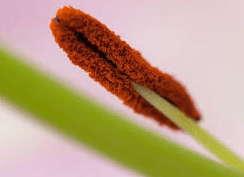
The part of a flower that produces the male reproductive cells.
a)
anther
b)
style
c)
stigma
d)
filament
53.
Splitting a root system into 2 or more pieces that will each become a new plant is called...
a)
Cuttings
b)
Division
c)
Tissue Culture
d)
Grafting
54.
The asexual reproduction method that is commonly used by orchards on trees is....
a)
Cuttings
b)
Division
c)
Tissue Culture
d)
Grafting
55.
Which Method involves taking parts (leaves, stem, etc) and placing them in growing media to develop into new plants?
a)
Cuttings
b)
Division
c)
Tissue Culture
d)
Grafting
56.
When grafting the part that becomes the stem and leaves is the ...
a)
Union
b)
Scion
c)
Style
d)
Ovary
57.
In which asexual reproduction method does the parent plant provide water and nutrients until the new plant develops roots?
a)
Cutting
b)
Division
c)
Tissue Culture
d)
Layering
58.
Plants with __________ can self-pollinate.
a)
Complete flowers
b)
Incomplete Flowers
59.
When a seed is used to grow a plant, it is ___________ propagation.
a)
Sexual
b)
Asexual
60.

Which part may develop into a fruit?
a)
E
b)
D
c)
C
d)
A
100 %

