wayground logo

Free Printable Worksheets

Font size

S
M
L
XL
Worksheets

Final Review

Total questions: 112

Worksheet time: 3hrs 51mins

Name
Class
Date
1.
648 g = ____ mg
a)
6,480
b)
64,800
c)
648,000
d)
64.8
2.
How would you write 564,000,000 in scientific notation?
a)
5.64 x 10⁻⁷
b)
5.64 x 10⁶
c)
5.64 x 10⁸
d)
56.4 x 10⁷
3.
How would you write -5.6 x 10⁻³ in standard form?
a)
0.0056
b)
-5,600
c)
0.00056
d)
-0.0056
4.
Combination of two or more pure substances that are not chemically combined
a)
compound          
b)
atom
c)
mixture 
d)
element
5.
A pure substance that cannot be broken down into other substances by chemical or physical means. 
a)
compound          
b)
atom
c)
mixture 
d)
element
6.
made up of one kind of matter and has a definite set of properties
a)
compound          
b)
atom
c)
mixture 
d)
pure substance
7.
This diagram represents a _____.
a)
pure substance that is a compound
b)
mixture of elements
c)
pure substance that is an element
d)
mixture of compounds
8.
An example of a compound would be:
a)
hydrogen gas (H2)
b)
heterogeneous
c)
sodium chloride (NaCl)
d)
oxygen gas (O2)
9.
Carbon dioxide
a)
Pure Substance & Element
b)
Pure Substance & Compound
c)
Mixture & Homogenous
d)
Mixture & Heterogenous
10.
Carbon
a)
Pure Substance & Element
b)
Pure Substance & Compound
c)
Mixture & Homogenous
d)
Mixture & Heterogenous
11.
What is an example of a mixture?
a)
iron
b)
ice
c)
soil
d)
gold
12.
What quantities vary between isotopes of an element?
a)
protons, electrons, and atomic mass
b)
protons, electrons, and atomic number
c)
neutrons and electrons
d)
neutrons and atomic mass
13.
Where are neutrons located in the atom?
a)
shells/orbitals
b)
rings
c)
center
d)
nucleus
14.
What particle decides the identity of an atom/element?
a)
proton
b)
neutron
c)
electron
d)
All of the above.
15.
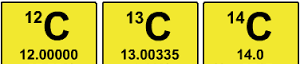
What do these isotopes of carbon all have in common?
a)
neutrons & mass number
b)
atomic number and neutrons
c)
atomic number and electrons
d)
protons, atomic number, and mass number
16.
Isotopes are atoms of the same element with different #’s of __________ & therefore different __________.
a)
n0 ;  atomic #’s
b)
p+ ; atomic #’s
c)
e- ; atomic masses
d)
n0 ; atomic masses
17.
How many neutrons does the isotope below have?     89 36Kr
a)
53
b)
36
c)
89
d)
125
18.
If the number of electrons in an atom changes you make a(n) __________________.
a)
ion
b)
isotope
c)
new element
d)
isomer
19.
How many electrons are in an atom that has an atomic number of 34, an atomic mass of 74 and a charge of -2?
a)
34
b)
36
c)
2
d)
40
20.
Which particles are in the nucleus?
a)
Protons
b)
Neutrons
c)
protons and electrons
d)
protons and neutrons
21.
What charge would a sulfur atom have if it became an anion?
a)
S2-
b)
Na2-
c)
S2+
d)
Na2+
22.
What is the location of the electron?
a)
the free floating negatively charged electron cloud
b)
the free floating positively charged electron cloud
c)
the very dense positively charged electron orbital
d)
the positively charged very dense nucleus
23.
What is the charge of the electron
a)
positive
b)
no charge
c)
negative
d)
neutral
24.
Where are the nonmetals located on the periodic table? 
a)
Blue
b)
Red
c)
Green
25.
Where are metals located on the periodic table?
a)
Blue
b)
Green
c)
Red
26.
What is the charge of an atom that has lost one electron?
a)
-1
b)
-2
c)
+1
d)
+2
27.
How many electrons does O-2 (oxide ion) have?
a)
8
b)
10
c)
6
d)
18
28.
How many electrons does N-3 (nitride ion) have?
a)
10
b)
7
c)
4
d)
17
29.
How many electrons does Mg+2 (magnesium ion) have?
a)
10
b)
12
c)
14
d)
22
30.
How many electrons does Ag+1 (silver ion) have?
a)
46
b)
47
c)
48
d)
107
31.
Valence electrons are: 
a)
Electrons farthest away from the nucleus
b)
Electrons closest to the nucleus
c)
Electrons that just come and go - they don't stay with the atom
d)
Electrons in the second shell
32.
Which has the greater EN: 
Cl or Al?
a)
Cl
b)
Al
33.
Which has the greater EN: 
N or C?
a)
C
b)
N
34.
Which of the following will have a higher electronegativity than arsenic (As)?
a)
Carbon (C)
b)
Neon (Ne)
c)
Antimony (Sb)
d)
Germanium (Ge)
35.
Which of the following will have a larger radius than Zinc?
a)
Gallium
b)
Aluminum
c)
Magnesium
d)
Strontium
36.
As atoms of elements in group 16 are considered in order from top to bottom, the electronegativity of each successive element....
a)
decreases
b)
increases
c)
remains the same
d)
none of the above
37.
As you move down the periodic table atoms get bigger.  This is because ____________.
a)
The atoms have more mass.
b)
The atoms have more protons.
c)
The atoms have more energy levels
d)
The atoms have more nuetrons
38.

As you move across the periodic table atoms tend to get smaller because, ______________.

a)

the atoms have more mass.

b)

the atoms have less mass

c)

the atoms have more protons, nuclear charge.

d)

the atoms have less electrons.

39.
Which statement correctly and completely identifies a trend?
a)
Atomic radius decreases across a period and increases down a group.
b)
Electronegativity decreases across a period and decreases down a group.
c)
Ionization energy increases across a period and increases down a group.
d)
Ionic radius increases across a period and increases down a group.
40.
What atom matches this electron configuration?
1s22s22p63s2
a)
Neon
b)
Magnesium
c)
Aluminum
d)
Potassium
41.
What electron configuration matches an oxygen atom?
a)
1s22s22p63s2, 3p64s23d104p5
b)
1s22s22p4
c)
1s22s22p6
d)
1s22s22p63s23p64s23d1
42.
How many electrons can the first energy level hold?
a)
1
b)
2
c)
8
d)
0
43.
What do you start electron configuration with?
a)
1s2
b)
1d10
c)
1f14
d)
1p6
44.
There are 4 different types of subshells s,p,d,f
a)
true
b)
false
45.
Which element is depicted from this atomic orbital diagram?
a)
Carbon
b)
Nitrogen
c)
Oxygen
d)
Phosphorus
46.
How many electrons should Lithium have around its Lewis dot model?
a)
1
b)
2
c)
3
d)
4
47.
This is the correct dot diagram for nitrogen (N)
a)
true
b)
false
48.
This is a correct dot diagram for magnesium (Mg)
a)
true
b)
false
49.

Element X belongs to group 2? What is the family name of this element

a)

Alkali metal

b)

Alkaline earth metal

c)

Halogens

d)

Noble gases

50.

Element Y belongs to group 1? What is its family name?

a)

Alkaline earth metal

b)

Alkali metal

c)

halogens

d)

Noble gases

51.
What is the percent by mass of magnesium in MgO?
a)
20%
b)
40%
c)
50%
d)
60%
52.
What is the percent by mass of sodium in NaCl?
a)
39%
b)
61%
c)
35%
d)
65%
53.
Ionic Bonding involves...
a)
The transfer of protons
b)
The transfer of nuetrons 
c)
The transfer of electrons
d)
None Of the above
54.
Covalent compounds
a)
Share electrons
b)
transfer electrons
c)
contain a sea of electrons
d)
conduct electricity
55.
What two types of atoms make a covalent bond?
a)
2 Nonmetals
b)
1 Nonmetal and 1 Metal
c)
2 Metals
d)
2 Noble Gases
56.
What elements generally make an ionic bond?
a)
metal and nonmetal
b)
2 or more nonmetals
c)
metal
d)
none of the above
57.
Which is an example a covalent compound?
a)
CO2
b)
NaCl
c)
AlF3
d)
MgO
58.
What is the formula for: Tetraphosphorous pentachloride 
a)
P4Cl5
b)
P5CL4
c)
Cl4P5
d)
Cl5P4
59.
What is the formula for: Antimony tribromide 
a)
SbBr3
b)
Sb3Br
c)
SbBr
d)
Sb3Br3
60.
What is the name for N2O5
a)
Nitrogen Oxide
b)
Nitrogen Pentaoxide 
c)
Dinitrogen Pentaoxide
d)
Dinitrogen Tetraoxide
61.
What is the OFFICIAL name for H2O
a)
Hydrogen Oxide
b)
Oxygen Dinitride
c)
Agua
d)
Dihydrogen Monoxide
62.
What is the name for CaCl2?
a)
Calcium Chloride
b)
Calcium Monochloride
c)
Calcium (II) Chloride
d)
Calcium Chlorite
63.
What is the formula for Titanium (II) Oxide
a)
TiO
b)
Ti2O
c)
TiO2
d)
Ti2O2
64.
What is the name for Cu3N
a)
Copper Nitride
b)
Copper (I) Nitride
c)
Copper (II) Nitride
d)
Copper (III) Nitride
65.
ammonium chloride
a)
NH3Cl2
b)
NH4Cl
c)
NH4ClO3
d)
NH4Cl2
66.
calcium phosphate
a)
CaPO4
b)
Ca2(PO4)3
c)
Ca3PO4
d)
Ca3(PO4)2
67.
Mg(OH)2
a)
magnesium dihydroxide
b)
magnesium hydroxide
c)
magnesium dioxygen dihydrogen
d)
magnesium oxyhydride
68.
AlBr3
a)
aluminum bromide
b)
aluminum tribromide
c)
aluminum bromine
d)
monoaluminum tribromide
69.
Ba3(PO4)2
a)
tribarium diphosphate
b)
barium diphosphate
c)
barium phosphate
d)
barium phosphide
70.
Fe(NO3)2
a)
iron nitrate
b)
iron dinitrate
c)
iron(II) nitrate
d)
iron(I) nitrate
71.
iron(III) chloride
a)
FeCl3
b)
FeCl
c)
Fe3Cl2
d)
Fe2Cl3
72.
What is the most common charge of oxygen?
a)
+2
b)
+1
c)
-1
d)
-2
73.
What is the most common charge of chlorine?
a)
+2
b)
+1
c)
-1
d)
-2
74.
What is the most common charge of magnesium?
a)
+2
b)
+1
c)
-1
d)
-2
75.
What kind of reaction is this:
2H2 + O2 --> 2H2O
a)
Synthesis
b)
Decomposition
c)
Single Replacement
d)
Double Replacement
76.
What type of reaction occurs between an element and a compound?
Zn + 2HCl --> ZnCl2 + H2
a)
Synthesis
b)
Decomposition
c)
Single Replacement
d)
Double Replacement
77.
What kind of reaction is this:
2H2O2 →2 H2+ O2
a)
Synthesis
b)
Decomposition
c)
Single Replacement 
d)
Combustion
78.
What kind of reaction is this:
2C3H7OH +9O2 -> 6CO2 + 8H2O
a)
Double Replacement
b)
Combustion
c)
Single Replacement
d)
Decomposition
79.
The reaction below is an example of?
AgNO3 + NaCl 
→ AgCl + NaNO3
a)
Single Replacement
b)
Double Replacement
c)
Decomposition
d)
Combustion
80.
Which problem is balanced?
a)
PbO2 + 2H2
b)
SO2 + H20 --> H2SO4
c)
2Na + 2H2O --> 2NaOH + H2
81.
Balance this equation:
MgCl2 --> Mg4+ Cl2
a)
It's already balanced.
b)
4MgCl2 --> Mg4+ 4Cl2
c)
4MgCl2 --> Mg4+ 5Cl2
82.
What type of reaction occurs in a hand warmer ?
a)
exothermic
b)
endothermic
83.
Which conversion factor should be used for the following question " How many molecules are there in 4.00 moles of glucose, C6H12O6
a)
1 mole = 78.12 g
b)
1 mole = 22.4 L 
c)
1 mol = 6.02x 10²³ particles 
d)
more than one
84.
How many moles are in 16.94g of water?
a)
16.94 mol H2O
b)
0.9401 mol H2O
c)
305.3 mol H2O
d)
1.063 mol H2O
85.
How many molecules are in 9.44 moles of AlCl3?
a)
5.68 molec AlCl3
b)
5.68x1024 molec AlCl3
c)
0.705 molec AlCl3
d)
1.25x10²³ molec AlCl3
86.
How many molecules of sugar (C6H12O6) are in a mole?
a)
24 molecules
b)
180 molecules
c)
180 g
d)
6.02 x 10²³ molecules
87.
Using the following equation:
Fe2O3(s) + 3H2(g) → 2Fe(s) + 3H2O(l)
How many moles of iron can be made from  6 moles H2
a)
4 moles Fe
b)
6 moles Fe
c)
9 moles Fe
d)
2 moles Fe
88.
Cl2 + 2KBr → Br2 + 2KCl
How many grams of potassium chloride (KCl) can be produced from 356 g of potassium bromide (KBr)?
a)
749 g
b)
223 g
c)
479 g
d)
814 g
89.
CH4 + 2 O2 → CO2 + 2 H2O
How many moles of carbon dioxide are produced from the combustion of 110 g of CH4?
a)
13.7 mol
b)
2.75 mol
c)
6.11 mol
d)
6.85 mol
90.

Given the equation:

H2SO4 + H2O ↔ H3O+ + HSO4- 1

What is the acid?

a)

H2SO4

b)

H2O

c)

H3O+

d)

HSO4- 1

91.

Given the equation:

H2SO4 + H2O ↔ H3O+ + HSO4- 1

What is the conjugate acid?

a)

H2SO4

b)

H2O

c)

H3O+

d)

HSO4- 1

92.

Given the equation:

H2SO4 + H2O ↔ H3O+ + HSO4- 1

What is the conjugate base?

a)

H2SO4

b)

H2O

c)

H3O+

d)

HSO4- 1

93.

By definition, a Bronsted-Lowry acid is a:

a)

proton donor

b)

proton acceptor

c)

Increases the concentration of H3O+

d)

Increases the concentration of OH-

94.
What is the molarity of 4 g of NaCl (MM=58.45) in 3,800 mL of solution?
a)
0.018 M
b)
0.0011 M
c)
1.052 M
d)
0.062 M
95.

How much KNO3 solute is saturated at 40 degrees?

a)

75

b)

55

c)

65

d)

85

96.

What type of a solution is 60g NaNO3 at 40ºC in 100g H2O?

a)

Saturated

b)

Unsaturated

c)

Supersaturated

97.

What type of a solution is 100g KNO3 at 40ºC in 100g H2O?

a)

Saturated

b)

Unsaturated

c)

Supersaturated

98.

What type of a solution is 260g sugar at 50ºC in 100g H2O?

a)

Saturated

b)

Unsaturated

c)

Supersaturated

99.
How do you convert Celsius to Kelvin?
a)
Add 273
b)
Subtract 273
c)
You can't convert those
d)
They are the same thing
100.
If you increase the pressure of a constant volume of gas, what will happen to the temperature?
a)
Increase
b)
Decrease
c)
Stay the same
d)
It will Blow Up
101.
What will happen to the volume of a gas under constant temperature if the pressure increases?
a)
Increase
b)
Decrease
c)
Nothing
d)
Explosion!
102.
A sample of a gas has a volume of 852 mL at 298 K. What temperature is necessary for the gas to have a volume of 945 mL?
a)
57.5⁰C
b)
57.5 K
c)
330.5 K
d)
330.5⁰C
103.
A gas occupies 4.31 liters at a pressure of 0.755 atm. Determine the volume if the pressure is increased to 1.25 atm.
a)
2.6L
b)
2.6mL
c)
2.6kL
d)
260L
104.
Which is a quality that only gasses display
a)
Spread out to fill all available space
b)
Take the shape of their container
c)
Can't be compressed
d)
All of these
105.
Calculate the volume that a 0.323-mol sample of a gas will occupy at 265 K and a pressure of 0.900 atm.
a)
7.18 L 
b)
7.81 L
c)
4.63 L
d)
4.36 L
106.
What is the variable for this number 22.4 L
a)
P
b)
T
c)
n
d)
V
107.
What is the variable for this number 32oC
a)
P
b)
T
c)
n
d)
V
108.
What is the variable for this number 9.10 atm
a)
P
b)
T
c)
n
d)
V
109.
What is the variable for this number 122 K
a)
P
b)
T
c)
n
d)
V
110.
The ideal gas constant is abbreviated  with the variable R, and has a value of
a)
0.8021
b)
0.0820
c)
0.8210
d)
0.0821
111.

How many liters are need to make a 0.1 M solution with 2.17 moles of MgBr2?

a)

104.2 L

b)

217.4 L

c)

21.7 L

d)

0.05 L

112.
Calculate the number of atoms in 0.0340 g Zn.
a)
5.200 x 10⁻⁴ atoms Zn
b)
3.130 x 10²³ atoms Zn
c)
3.130 x 10²⁰ atoms Zn
d)
1 atom Zn