
 Worksheets
2018 Spring Final Review
Total questions: 67
Worksheet time: 52mins
Name
Class
Date
1.
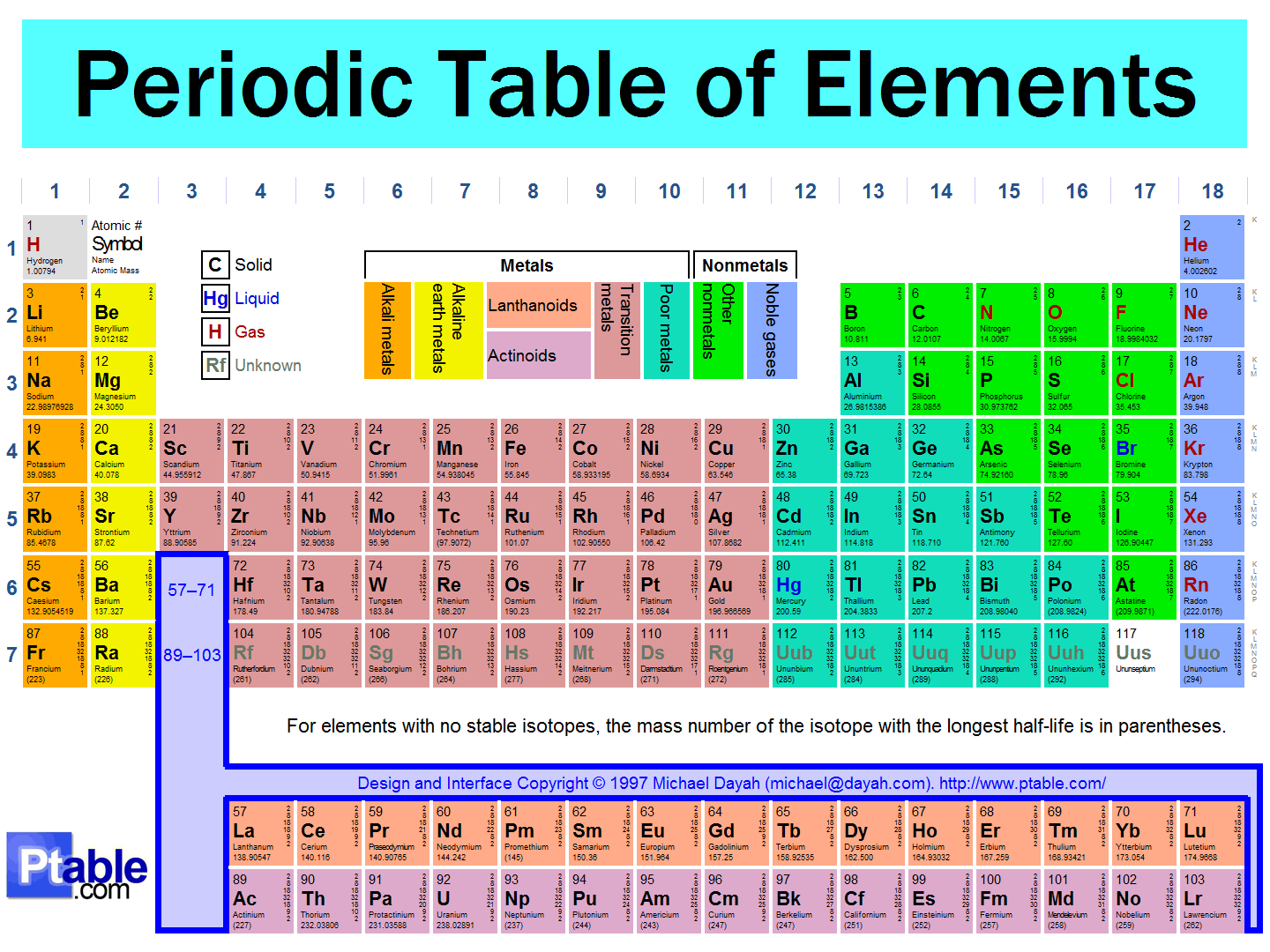
The horizontal row on the periodic table is called a
a)
group
b)
family
c)
period
d)
atomic number
2.
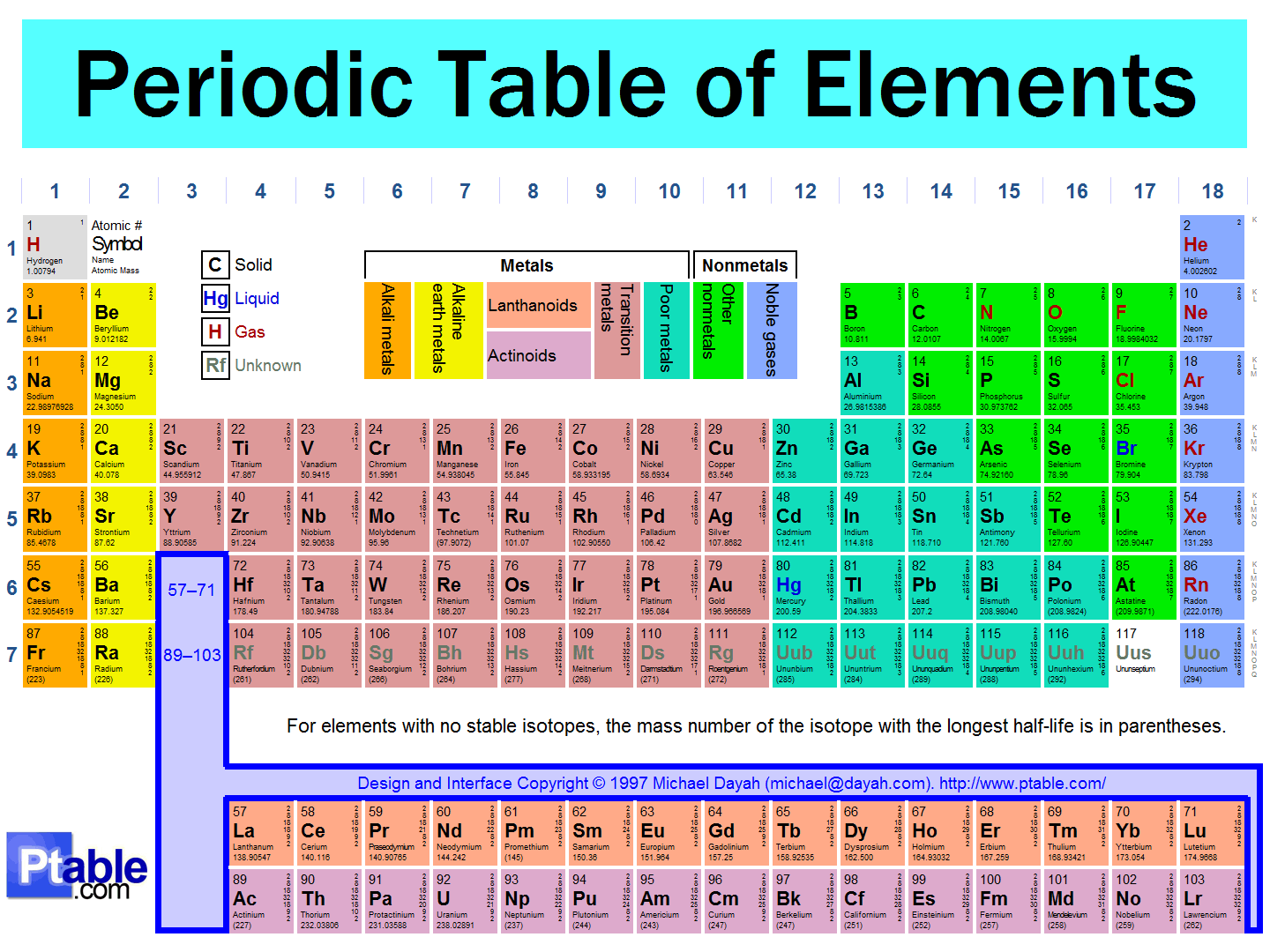
A vertical column is called...
a)
group
b)
tower
c)
period
d)
crew
3.
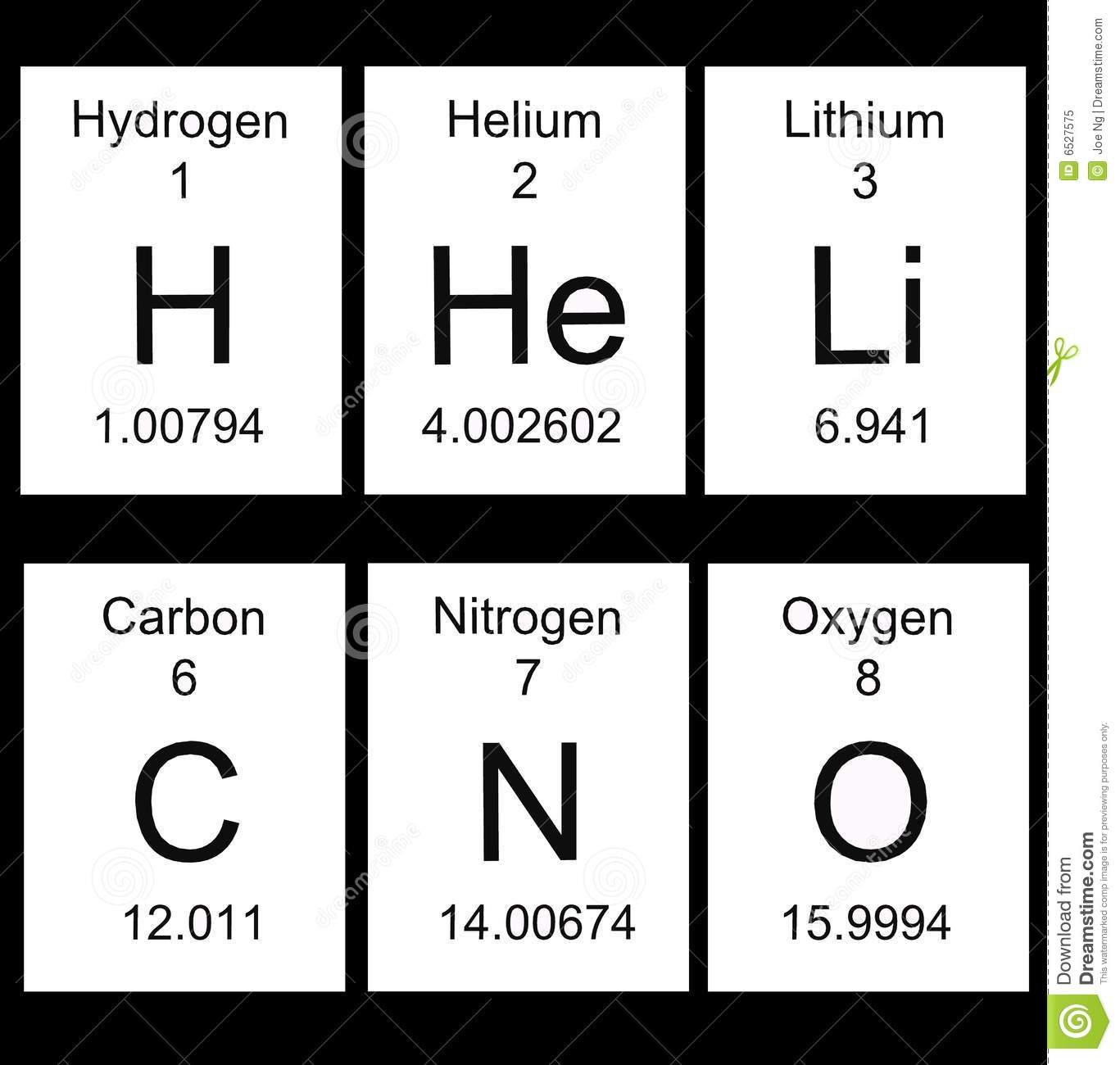
The number at the top of each square on the periodic table is the ...
a)
atomic number
b)
atomic mass
c)
Chemical Symbol
d)
Element Name
4.
The atomic number tells you what?
a)
number of electrons
b)
number of protons
c)
number of neutrons
d)
both electrons and protons in an atom.
5.
Elements in a ..................have similar chemical properties.
a)
period
b)
group
c)
row
6.
The simplest substance is..?
a)
Carbon
b)
An element
c)
Water
d)
A simple compound
7.
A proton is....
a)
A negatively charged subatomic particle
b)
A positively charged subatomic particle
c)
A neutrally charged subatomic particle
d)
The only subatomic particle located in the nucleus
8.
A neutron has a charge of
a)
+2
b)
No charge
c)
-1
d)
+1
9.
The noble gases have how many valence electrons?
a)
1
b)
2
c)
7
d)
8
10.
The atomic number tells you what?
a)
number of electrons
b)
number of protons
c)
number of neutrons
d)
both electrons and protons in an atom.
11.
The force that opposes the motion of two surfaces sliding past each other is called ___________.
a)
acceleration
b)
inertia
c)
friction
d)
unbalanced
12.
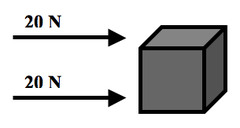
What is the net force?
a)
40 N left
b)
0 N Balalnced
c)
400 N right
d)
40 N right
13.

What is the net force?
a)
10 N
b)
0 N
c)
25 N
d)
1 N
14.
What is the unit of force?
a)
Kilogram
b)
Meter
c)
Pascal
d)
Newton
15.
What is velocity?
a)
the quickness of an object
b)
the location of an object
c)
acceleration
d)
speed with the specific direction
16.

How will this object move?
a)
It won't move.
b)
It will move to the right.
c)
It will move to the left.
d)
It will move up.
17.

Is this item Balanced or Unbalanced?
a)
Balanced
b)
Unbalanced
c)
neither balanced or unbalanced
18.
What is the formula to calculate speed?
a)
Speed = time/distance
b)
Speed = distance/time
c)
Speed = distance x time
d)
Speed = time x distance
19.
Which of the following is a unit for acceleration?
a)
km/s
b)
m/s2
c)
mi/hr
d)
ft
20.
When a car goes around a corner at 20 mph, why do we say it accelerates?
a)
The car is accelerating because of the velocity is constant
b)
The car accelerates because it's going 20 mph
c)
Cars always accelerate when they are in motion
d)
The car is accelerating because it's changing direction
21.
The Law of Inertia
a)
Newton's
1st
Law of Motion
1st
Law of Motion
b)
Newton's
2nd
Law of Motion
2nd
Law of Motion
c)
Newton's
3rd
Law of Motion
3rd
Law of Motion
22.
F=ma
a)
Newton's
1st
Law of Motion
1st
Law of Motion
b)
Newton's
2nd
Law of Motion
2nd
Law of Motion
c)
Newton's
3rd
Law of Motion
3rd
Law of Motion
23.
For every action, there is an equal and opposite reaction.
a)
Newton's
1st
Law of Motion
1st
Law of Motion
b)
Newton's
2nd
Law of Motion
2nd
Law of Motion
c)
Newton's
3rd
Law of Motion
3rd
Law of Motion
24.
An automobile you are riding in suddenly stops, but you continue to go forward.
a)
Newton's
1st
Law of Motion
1st
Law of Motion
b)
Newton's
2nd
Law of Motion
2nd
Law of Motion
c)
Newton's
3rd
Law of Motion
3rd
Law of Motion
25.
A skater pushes another skater forward, but the one pushing moves backwards.
a)
Newton's
1st
Law of Motion
1st
Law of Motion
b)
Newton's
2nd
Law of Motion
2nd
Law of Motion
c)
Newton's
3rd
Law of Motion
3rd
Law of Motion
26.
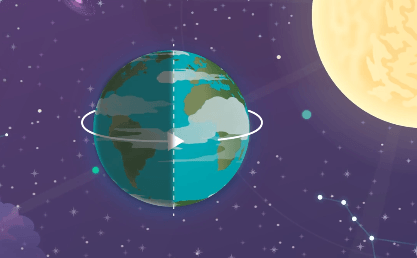
The Earth is rotating on its axis, creating _____
a)
the 12 months
b)
the years
c)
the seasons
d)
day and night
27.
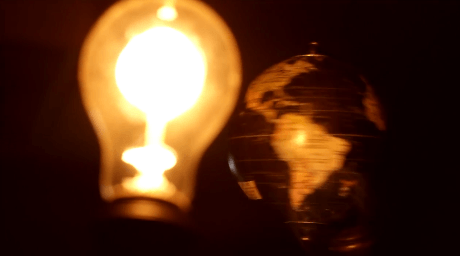
When the Earth completes a full orbit around the Sun, it has completed _____ rotations or days
a)
7
b)
30
c)
91
d)
365
28.
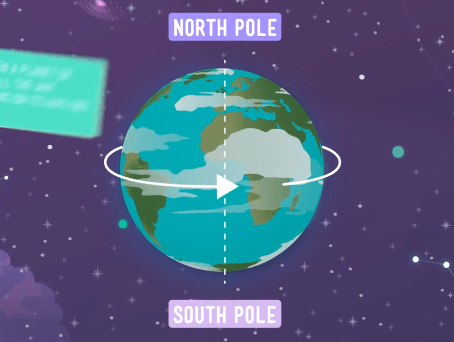
The spinning movement of the Earth about its axis is called the Earth's _____
a)
revolution
b)
rotation
c)
precession
d)
orbit
29.

When the part of the world that you're living in is leaning towards the Sun, its _____
a)
winter
b)
spring
c)
summer
d)
fall
30.

When the part of the world that you're living in is leaning away from the Sun, its _____
a)
winter
b)
spring
c)
summer
d)
autumn
31.

The invisible line that passes through the North Pole and the South Pole is called Earth's ____
a)
axis
b)
equator
c)
ecliptic
d)
prime meridian
32.
The moon is growing/getting bigger and light is on the right.
a)
Waxing
b)
Waning
33.
The moon's apparent size is shrinking/getting smaller and it is dark on the right.
a)
Waxing
b)
Waning
34.
When the entire moon is visible happen half way through the lunar cycle only lasting 1 day
a)
Full Moon
b)
New Moon
35.
First phase of the lunar cycle; not visible and it's often represented by a black circle. (only lasts 1 day)
a)
Full Moon
b)
New Moon
36.
Appears after a new moon; you can see less than half of the light on the right side of the moon.
a)
Waxing Crescent
b)
Waning Crescent
37.
Appears before a new moon; you can see less than half of the light on the left side of the moon.
a)
Waxing Crescent
b)
Waning Crescent
38.
Light on the right; you can see 1/2 of the light. (Lasts 1 day)
a)
First Quarter
b)
Last Quarter
39.
Strongest tides occurring during new and full moon
a)
Neap tides
b)
Spring tides
40.
Weakest tides occurring during 1st and last quarter
a)
Spring tide
b)
Neap tide
41.
The distance that light travels in one year...
a)
Light year
b)
Quantumyear
c)
Stellar-year
d)
1 million kilometers
42.
A large cloud of gas and dust in interstellar space; the predecessor to stars...
a)
Constellation
b)
Black hole
c)
Nebula
d)
Galaxy
43.

In the diagram given, what happens as we move to the left?
a)
Stars Get Larger
b)
Stars get Colder
c)
Stars get hotter
44.
Compared to the rest of the stars, our sun is considered...
a)
Extremely Large and Cold
b)
Small with a medium temperature
c)
Medium size with medium temperature
45.
Which category is our Sun located in?
a)
White Dwarfs
b)
Supergiants
c)
Main Sequence
d)
Giants
46.
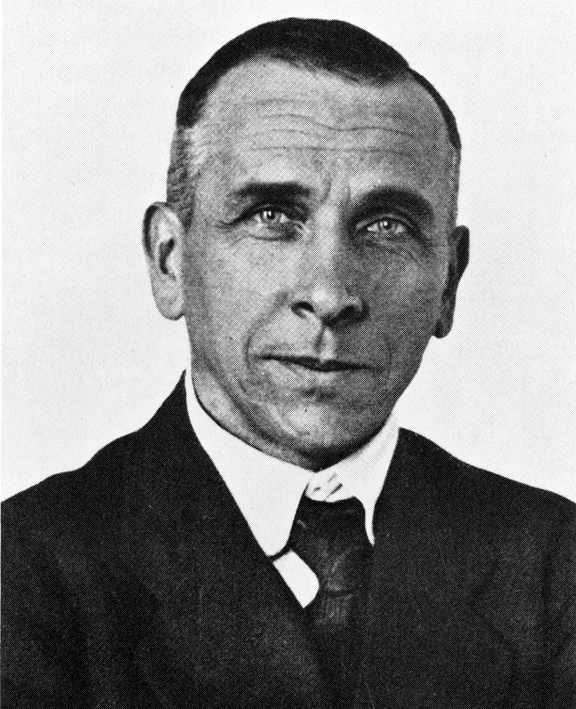
Who is the person credited with developing the theory of continental drift?
a)
Harry Hess
b)
Galileo
c)
Alfred Wegener
d)
Newton
47.
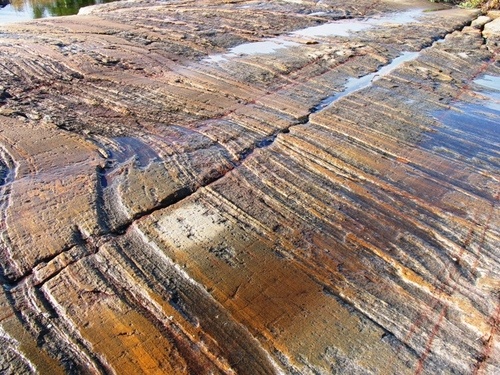
This is a picture of glacier scars found in Africa. What are these evidence for?
a)
Africa has always been near the equator
b)
Africa was once in an area of the Earth that had a very cold climate
c)
The continents have not moved
d)
sea floor spreading
48.
What does the theory of continental drift state?
a)
The continents were once joined in a super-continent and have moved over time
b)
Continents are stationary and do not move
c)
The Earth is broken into lithospheric plates that move due to convection currents
d)
none of the above
49.
Why did no one believe Wegener's thoery?
a)
He could not explain HOW the continents moved
b)
He didn't have evidence
c)
His data was wrong
d)
He didn't use the right technology to gather data
50.
The type of plate boundary where two plates come together is a .....
a)
Convergent Boundary
b)
Divergent Boundary
c)
Transform Boundary
d)
Plate Boundary
51.
Which of the following causes Earth's tectonic plates to move?
a)
Energy from the Sun
b)
Magnetic Pole Reversal
c)
Convection currents in the mantle
d)
Faults in Mountain Ranges
52.
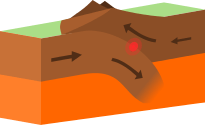
What type of plate boundary is this?
a)
Plate
b)
Divergent
c)
Convergent
d)
Transform
53.

What type of event will occur at this boundary?
a)
Earthquake
b)
Volcano Eruption
c)
Tornado
d)
Mountain Building
54.
A divergent boundary occurs when plates ....
a)
Pull apart
b)
Come together
c)
Slide past each other
d)
subducting
55.
Which of the following is NOT evidence to support the theory of plate tectonics?
a)
Fossils
b)
Mountains
c)
Glaciers
d)
Sand Erosion
56.
The shape of the land is shown by connecting points of the same elevation to form a ____________.
a)
relief line
b)
slope
c)
valley
d)
contour line
57.
Contour lines that are very close together indicate the land is _______________
a)
gentle/gradual
b)
a forest
c)
steep
d)
a swamp
58.
Contour lines that are very far apart indicate the landscape is _____________
a)
gentle/gradual
b)
steep
c)
a forest
d)
a swamp
59.

Which direction is the river flowing?
a)
north
b)
south
c)
east
d)
west
60.
What might happen if you remove a primary consumer from the ecosystem?
a)
There would be more food for secondary consumers.
b)
The number of primary consumers would increase.
c)
The number of plants would increase.
d)
The number of secondary consumers would increase.
61.
A frog eats a fly. The frog and fly are demonstrating ________.
a)
mutualism
b)
competition
c)
predator/prey
d)
parasitism
62.
A tapeworm inside a dog is
a)
competition
b)
predation
c)
commensalism
d)
parasitism
63.
the maximum population size that can be sustained by a given environment
a)
carrying capacity
b)
adaptation
c)
migration
d)
impact
64.
an inherited characteristic that provides a specific advantage to individuals that have it and becomes more common or pronounced in a population because of the advantage it providese
a)
migration
b)
adaptation
c)
impact
d)
interact
65.
If all of the water dries up in a pond, the fish will-
a)
move into a new pond.
b)
swim faster.
c)
thrive.
d)
perish.
66.
An ______ includes all living and nonliving things together in an area.
a)
population
b)
ecosystem
c)
consumers
d)
producers
67.
A fire destroys all of the trees and plants in the forest. How might this affect the birds in the area?
a)
The birds will plant seeds and grow new trees.
b)
The birds will have more food to eat.
c)
The birds will plant seeds and grow new trees.
d)
The birds will have no place to build their homes.
100 %

