wayground logo

Free Printable Worksheets

Font size

S
M
L
XL
Worksheets

EOG REVIEW

Total questions: 92

Worksheet time: 1hrs 19mins

Name
Class
Date
1.
Which best describes the role of the water cycle?
a)
circulates existing water on Earth
b)
reduces pollution in most of the water
c)
 increases usable supply of Earth’s water
2.
The tendency of an element to react with other elements to produce compounds. 
a)
Chemical change
b)
Neutrality
c)
Reactivity
d)
Valence 
3.
A subatomic particle that has almost no mass and a negative charge.
a)
Electricity
b)
Proton
c)
Electron
d)
Neutron
4.
A positively charged subatomic particle located in the nucleus and has an atomic mass of 1.
a)
Neutron
b)
Valence
c)
Proton
d)
Electron
5.
The number of protons in the atoms of a particular element that is unique only to that element.
a)
Atomic Mas
b)
Atomic Number
c)
Proton Number
d)
Mole 
6.
The number of negatively charged particles in the most outer shell.
a)
Valence Electrons 
b)
Valence Neutron
c)
Valence Proton
d)
Valance Particles
7.
A chemical substance made up of two or more kinds of atoms bonded together. 
a)
Mixture 
b)
Solution
c)
Compound
d)
None of the above
8.
A pure substance containing only one type of atom.
a)
Element
b)
Simple Substance
c)
Single Substance
d)
Mixture
9.
Which is the most common contamination source for freshwater resources? 
a)
runoff 
b)
digging wells
c)
melting of glaciers
d)
lightning
10.
Which elements have the most similar chemical properties?
a)
K and Na
b)
K and Ca
c)
K and Cl
d)
K and S
11.
Which group of the periodic table is composed of inert (not reactive)  gases?
a)
alkali metals
b)
alkaline earth metals
c)
halogens
d)
noble gases
12.
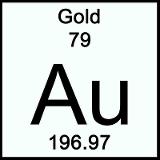
Which number is the atomic mass?
a)
79
b)
196.97
13.
Why is water classified as a compound?
a)
Because it is an element, which consists of only one type of atom.
b)
Because it is a substance, which can easily be separated.
c)
Because it is a substance composed of two or more kinds of atoms bonded together.
d)
Because it is an unevenly mixed solution, or a heterogeneous mixture.
14.
The mass of the products in a chemical reaction is the same as the mass of the reactants in the reaction.  Which law best describes this statement?
a)
The Law of Conservation of Angular Momentum
b)
The Law of Superposition
c)
The Law of Conservation of Matter
d)
The Law of Entropy
15.
Which of the following is an example of a connection between an ocean food web and a land food web?
a)
A polar bear eats a seal.
b)
A whale eats a cod.
c)
A small fish eats plankton.
d)
A cod eats a small fish.
16.
Sea-floor spreading occurs in places where two plates are
a)
converging
b)
diverging
c)
motionless
d)
breaking the surface.
17.
As ocean water in a tide pool warms and evaporates, the remaining water becomes
a)
cooler
b)
saltier
c)
calmer
d)
darker
18.
Which of the following is a living resource from the ocean?
a)
oil
b)
algae
c)
natural gas
d)
manganese nodules
19.
Most ocean pollution comes from
a)
below the surface.
b)
the air.
c)
the land.
d)
ocean organisms.
20.
Which statement supports the theory of evolution?
a)
All living cells come from previous cells.
b)
All plants and animals have DNA.
c)
Matter cannot be created or destroyed during chemical reactions.
d)
Fossils provide evidence that vertebrates share a common ancestor.
21.
Which example BEST represents an interconnection between an aquatic food web and a terrestrial food web?
a)
Fish eat insects that land on the surface of a pond.
b)
Snakes eat bird eggs.
c)
Bats eat mosquitos.
d)
Mountain lions catch and eat deer.
22.
Which is an example of a physical change?
a)
boiling
b)
burning
c)
rotting
d)
rusting
23.
Which project is MOST LIKELY to interest a scientist working at a biotechnology company?
a)
study and reconstruction of fossilized bones
b)
conservation of key species within ecosystems
c)
development of genetically modified corn plants
d)
prevention of sewage leaking into water supplies
24.
Which source of water pollution includes oil and gasoline discharge from automobiles and storm sewer discharge?
a)
agriculture
b)
bacteria
c)
sedimentation
d)
urban runoff
25.
What characteristic of aluminum allows it to be made into aluminum foil?
a)
It is dense.
b)
It is soluble.
c)
It is magnetic.
d)
It is malleable.
26.
After a chemical reaction occurs in an open test tube, measurements indicate that the mass of the reactants is greater than the mass of the products remaining in the test tube.  What MOST LIKELY explains the measurements?
a)
A gas was produced.
b)
A solid was produced.
c)
The salinity of the reactants was high.
d)
The temperature of the reactants was low.
27.
A layer of marine fossils is discovered in a desert environment. Which hypothesis BEST explains the discovery?
a)
The area was once covered by water.
b)
Volcanic activity once occurred in the area.
c)
A catastrophic event once occurred in the area.
d)
Erosion turned most of the limestone in the area into sand.
28.
How are parasites and viruses similar?
a)
Both are contagious diseases.
b)
Both infect host organisms.
c)
Both reproduce using host cells.
d)
Both break down food using oxygen.
29.
Which of these BEST illustrates natural selection?
a)
An organism with favorable genetic variation will tend to survive and breed successfully.
b)
A population monopolizes all of the resources in its habitat, forcing other species to migrate.
c)
A community whose members work together utilizes all existing resources and migratory routes. 
d)
The largest organisms in a species receive the only breeding opportunities.
30.
positively charged particle present in the nucleus of atoms
a)
Proton    
b)
Atomic number
c)
 Periodic table
d)
Electron
31.
when deep, cold water rises from the ocean bottom to the ocean surface
a)
Producers
b)
 Evolution    
c)
Plankton
d)
Upwelling
32.
introduction of harmful waste products, chemicals, not native to environment
a)
Consumers
b)
Food web
c)
Decomposers
d)
Pollution
33.
organisms that make their own food (plants, plankton)
a)
Producers
b)
 Evolution    
c)
Plankton
d)
Upwelling
34.
change in organisms over time due to environmental influence or competition
a)
Producers
b)
 Evolution    
c)
Plankton
d)
Upwelling
35.
close interaction between two or more different species
a)
 Abiotic
b)
Community
c)
Symbiosis
d)
Matter
36.
negatively charged particles that move about the nucleus in an electron cloud
a)
Proton    
b)
Atomic number
c)
 Periodic table
d)
Electron
37.
characteristic of a material that can be observed or measured without changing the identity of the material
a)
Physical property 
b)
Density 
c)
Solubility
d)
Law of conservation
38.
organisms that eat producers
a)
Consumers
b)
Food web
c)
Decomposers
d)
Pollution
39.
nonliving parts of the environment (light, temperature, water, wind)
a)
 Abiotic
b)
Community
c)
Symbiosis
d)
Matter
40.
organisms such as bacteria that break down tissue and release nutrients and carbon dioxide back into the ecosystem
a)
Consumers
b)
Food web
c)
Decomposers
d)
Pollution
41.
matter can not be destroyed nor can it be created, but it can be changed
a)
Physical property 
b)
Density 
c)
Solubility
d)
Law of conservation
42.
how much solute dissolves in a given amount of solvent
a)
Physical property 
b)
Density 
c)
Solubility
d)
Law of conservation
43.
tells you the number of protons in the nucleus of each atom of that element
a)
Proton    
b)
Atomic number
c)
 Periodic table
d)
Electron
44.
groups of populations that interact with each other in a given area
a)
 Abiotic
b)
Community
c)
Symbiosis
d)
Matter
45.
anything that has mass and takes up space   
a)
 Abiotic
b)
Community
c)
Symbiosis
d)
Matter
46.
amount of mass a material has in a given volume
a)
Physical property 
b)
Density 
c)
Solubility
d)
Law of conservation
47.
arranges and displays all known elements in an orderly way
a)
Proton    
b)
Atomic number
c)
 Periodic table
d)
Electron
48.
process by which some producers change light energy into chemical energy (use light, carbon dioxide, and water to produce oxygen and glucose)
a)
Osmosis 
b)
Photosynthesis
c)
Respiration
d)
Anaerobic
49.
chemicals produced by some bacteria used medicinally to control other bacteria
a)
Antibiotics
b)
Binary fission   
c)
Prokaryote
d)
Protist
50.
process that uses oxygen to release the energy in food molecules and produces carbon dioxide and water as waste products
a)
Osmosis 
b)
Photosynthesis
c)
Respiration
d)
Anaerobic
51.
network of interconnected food chains – shows how energy moves through an ecosystem; arrows indicate the direction in which energy is transferred from one organism to another
a)
Consumers
b)
Food web
c)
Decomposers
d)
Pollution
52.
nitrogen, oxygen, and carbon are essential to life and are what type of elements?
a)
alkali metals
b)
nonmetals
c)
metals
d)
gases
53.
a process that produces a chemical change
a)
Law of Conservation
b)
Physical Reactions 
c)
Chemical Reactions
d)
Conservation
54.
substances that exist before a reaction; substances that exist after the reaction
a)
Reactants/products
b)
Products/Reactions
55.
Which statement best explains how periods on the periodic table are arranged? 
a)
increasing atomic number from left to right 
b)
increasing number of neutrons from left to right
c)
decreasing number of electrons from left to right
d)
decreasing atomic mass number from left to right 
56.
An ice cube is put into a heated pan. What will most likely happen to the molecules in the ice as the ice is heated?
a)
the molecules will begin to move slower
b)
the molecules begin to move faster 
c)
the molecules will begin to increase in density 
d)
the molecules will begin to condense in the air 
57.
Which best explains why the total mass of the products would be less than the total weight of the reactants after a chemical reaction? 
a)
a physical change occurred 
b)
atoms involved in the reaction lost mass
c)
precipitates were created in the new solution
d)
gases were released to the atmosphere 
58.
Which is an example of a renewable energy resource? 
a)
biomass
b)
coal
c)
gas
d)
oil
59.
Which best determines the health of a lake used as a source of freshwater? 
a)
its depth and width
b)
its temp and ph
c)
its location and depth
d)
its temp and depth 
60.
A scientists finds bones of a dinosaur. What could help the scientist determine the approximate age of the dinosaur bones? 
a)
the birds living in the area of the bones 
b)
the weather conditions in the area of the bones 
c)
the kinds of trees living in the area of the bones 
d)
the index fossils in the area of the bones 
61.
Which best describes how ice cores are important to the study of geologic history? 
a)
they show unconformities, which signal changes in deposition 
b)
they hold index fossils, which are used to date the different ice cores 
c)
they contain evidence showing changes in the atmospheric composition 
d)
they follow the Law of Superposition, which gives reasons for extinctions of species  
62.
Which best determines the number of wolves that can live in an area? 
a)
the amount of snow in the area each year 
b)
the number of birds that live in the area 
c)
the number of trees in the area 
d)
the amount of food available in the area 
63.
Where is the largest amount of energy found? 
a)
hawk
b)
grass
c)
mouse
d)
grasshopper
64.
Tigers and household cats are members of the same family; however, they are vastly different. What is the cause of this difference? 
a)
biochemical makeup 
b)
behavioral makeup 
c)
genetics 
d)
habitat size 
65.
Which is a possible disadvantage of using flowing water to produce electricity? 
a)
ecosystem damage and loss of land 
b)
reduced carbon dioxide emission
c)
only suitable for industrial use 
d)
creates reservoirs 
66.
Why is water form an aquifer more likely to be cleaner than water from other sources? 
a)
because it forms where fresh and salt water meet 
b)
because it receives water directly from precipitation 
c)
because it rises to the surface near the ocean 
d)
because pollutants are filtered by rock and soil deep within Earth 
67.
Where do plants get most of the energy they need to live and grow? 
a)
water 
b)
soil
c)
air 
d)
sunlight 
68.
Which shows one example of a physical change and one example of a chemical change?
a)
boiling water and melting wax 
b)
rusting iron and baking a cake 
c)
dissolving powder and shredding paper 
d)
freezing water and burning coal 
69.
Which statement best describes the Law of Superposition? 
a)
Each sedimentary layer of rock represents 1,000 years of Earth’s age, much like the rings of a tree. 
b)
In undisturbed layers of sedimentary rock, the upper rock layers are older than the lower rock layers. 
c)
In undisturbed layers of sedimentary rock, the lowest layers contain the older rocks.
d)
Rocks that form near volcanoes are older than surrounding rock.
70.
Which of Newton's laws of motion explains why you must lift a cup if you want to drink from it?
a)
1st law--An object at rest will stay at rest and an object in motion will remain in motion unless a force acts upon it.
b)
2nd law--The amount of force needed to move an object depends on its mass and acceleration.
c)
3rd law--For every action there is an equal and opposite reaction
d)
4th law--Gravity depends on mass and distance
71.
What kind of fossil preserves evidence of an organism but does not fossilize the body. Shells and footprints that are filled with minerals are two examples of these kinds of fossils.
a)
cast
b)
mold
c)
trace
d)
There is no fossil like this.
72.
Suppose you have a block of wood that has a mass of 5 kg.  What will happen to the speed of the wood if you apply 10, 20, & 40 N of force to the block for 10 seconds.
a)
It will stay the same.
b)
The final speed will be four times the speed produced by the 10 kg force.
c)
The final speed will be 80 times the speed produced by the 10 kg force.
d)
None of the above are correct.
73.
Some resources are renewable and will not run out.  Some are finite and can't be renewed.  Which of these resources is non-renewable?
a)
solar
b)
hydroelectric
c)
wind
d)
oil
74.
____________ is anything that has mass and takes up space.
a)
matter
b)
compound
c)
particle
d)
subatomic
75.
All mater is composed of __________.
a)
compounds
b)
atoms
c)
water
d)
H2O
76.
_____________ are the smallest unit of matter that retains the identity of the substance.
a)
compounds
b)
atoms
c)
water
d)
H2O
77.
All atoms have a ___________ in the center.
a)
electron
b)
cloud
c)
nucleus
d)
particle
78.
The nucleus of the atom has  the 
___________ and ___________ in it.
a)
protons and neutrons
b)
electrons and neutrons
c)
protons and electrons
79.
A proton has a ___________ charge.
a)
positive
b)
negative
c)
neutral
80.
The electrons are in the electron _________.
a)
region
b)
area
c)
cloud
81.
An electron has a ___________ charge.
a)
positive
b)
negative
c)
neutral
82.

A mixture of two or more substances that is not uniform in composition.

a)

Homogeneous

b)

Heterogeneous

c)

Pure Substance

d)

Mixture

83.

Substance that forms when two or more types of atom join?

a)

element

b)

compound

c)

composite

d)

mixture

84.

In a chemical reaction ion oxide contains 8 atoms of iron (Fe) in the product, how many atoms of iron would be in the reactant?

a)

8 atoms of iron (Fe)

b)

12 atoms of iron (Fe)

c)

4 atoms of iron (Fe)

d)

2 atoms of iron (Fe)

85.

In a chemical reaction ion oxide contains 4 atoms of iron (Fe) in the product, how many atoms of iron would be in the reactant?

a)

8 atoms of iron (Fe)

b)

12 atoms of iron (Fe)

c)

4 atoms of iron (Fe)

d)

2 atoms of iron (Fe)

86.

Which is the best example of a mixture?

a)

a brick of pure gold

b)

the distilled water in a bottle

c)

the salt in the ocean

d)

the helium in a balloon

87.

Which action causes a chemical change?

a)

boiling water

b)

crushing ice

c)

sifting flour

d)

cooking eggs

88.

Which best describes a chemical change?

a)

a chemical change requires no change in energy

b)

a chemical change is easily reversed

c)

a chemical change, there is only change in state

d)

a chemical change, a new substance with different properties is form

89.

The atomic number for Oxygen (O) is 8. How many protons does one Oxygen atom contain?

a)

16 protons

b)

8 protons

c)

4 protons

d)

12 protons

90.

The atomic number for Sodium (Na) is 11. How many protons does one Sodium atom contain?

a)

8 proton

b)

11 protons

c)

16 protons

d)

4 protons

91.

How does animals obtain the carbon and nitrogen they need for building materials?

a)

by eating food

b)

by breathing

c)

by performing photosynthesis

d)

by performing cellular respiation

92.

Which process releases energy from food molecules?

a)

meiosis

b)

photosynthesis

c)

cellular respiration

d)

symbiosis