
 Worksheets
Chem Exam Prep
Total questions: 116
Worksheet time: 2hrs 43mins
Name
Class
Date
1.
What is the molar mass of Fe3(PO4)2
a)
824 g/mol
b)
358 g/mol
c)
456 g/mol
d)
86 g/mol
2.

Which graph correctly represents the relationship between mass and volume?
a)
A
b)
B
c)
C
d)
D
3.
If the density of a bar of gold is 19.3 g/cm3and you cut it into 4 pieces, what is the density of each piece of gold?
a)
4.825 g/cm3
b)
9.65 g/cm3
c)
19.3 g/cm3
d)
38.6 g/cm3
4.
If an object has a density of .6 g/mL and you put it into water, will it sink or float?
a)
sink
b)
float
5.

The density of this material is 2 g/cm3.
There are 24 cm3 Find the total mass.
There are 24 cm3 Find the total mass.
a)
12 grams
b)
48 grams
c)
12 g/cm3
d)
48 g/cm3
6.

Which box has a higher density?
a)
Box A
b)
Box B
c)
cannot be determined
d)
they are the same
7.

What is the volume of Object X?
a)
10.0 cm3
b)
15.0 cm3
c)
20.0 cm3
d)
25.0 cm3
8.

How many neutrons does the isotope of lithium have?
a)
8
b)
3
c)
4
d)
5
9.

In a correctly written symbol what would be located in the "A" position?
a)
number of neutrons
b)
atomic number
c)
number of electrons
d)
mass number
10.
If X is the symbol for an element, which of the following two symbols represent isotopes of the same element? I. 7735X II. 7733X III. 8137X IV. 8135 X
a)
I and II
b)
III and IV
c)
I and IV
d)
I and III
11.
What do Roman Numerals represent in the name of a transition metal compound?
a)
how many atoms of the metal there are
b)
the oxidation number of the nonmetal
c)
the oxidation number of the metal
d)
the mass number
12.
The name for Cr2S:
a)
Chromium (I) sulfide
b)
Chromium sulfide (I)
c)
Chromium (II) sulfide
d)
Chromium sulfide (II)
13.
The name for TiBr3:
a)
Titanium bromide
b)
Titanium (III) bromide
c)
Titanium (I) bromide
d)
Titanium bromide (III)
14.
The oxidation number for Fe in Fe2O3:
a)
+2
b)
+3
c)
+1
d)
-2
15.
The chemical formula for an ionic compound of aluminum and chlorine is
a)
AlCl.
b)
ClAl.
c)
AlCl3.
d)
Al3Cl.
16.
Al+3, S-2
a)
AlS3
b)
Al2S3
c)
S3Al2
17.
Write the formula for barium + nitrogen
a)
Ba2N3
b)
Ba3N2
c)
BaN
d)
BaN3
18.
The name of P₄S₁₀ is
a)
phosphorous sulfide
b)
phosphorus sulfide
c)
tetraphosphorus decasulfide
d)
phosphorus (X) sulfide
19.
What is the formula for dichlorine heptaoxide?
a)
Cl2O5
b)
Cl7O2
c)
Cl2O6
d)
Cl2O7
20.
Which of the following is a physical characteristic of a metalloid?
a)
texture
b)
malleable
c)
brittle
d)
semi-conductor
21.
Which of the following is a physical characteristic of a nonmetal?
a)
texture
b)
malleable
c)
brittle
d)
semi-conductor
22.

An element has properties of BOTH metals and nonmetals. WHERE would it be found in the periodic table?
a)
To the right
b)
To the left
c)
on the zig zag line
23.
If a student observes a silvery solid that is malleable, good conductor, and ductile it is a...
a)
nonmetal
b)
metal
c)
metalloid
24.

Elements in the DARK gray area can best be described as -
a)
Malleable
b)
Brittle
c)
Dull
d)
Poor conductors
25.
What element in Group 1 is not a metal but a nonmetal?
a)
Helium
b)
Lithium
c)
Hydrogen
d)
Oxygen
26.
Metals like to
a)
give away electrons
b)
gain electrons
27.
Group 2 metals form what type of cations
a)
+2
b)
-2
c)
+1
d)
-1
28.

The group NOBLE GASES is located where on the periodic table?
a)
Right Side
b)
Left Side
c)
Middle
d)
Only the last column on the right
29.
Is AgCl soluble or insoluble? (Use reference sheets.)
a)
Soluble
b)
Insoluble
c)
Neither
d)
Both
30.
What is the state of matter symbol for an insoluble compound?
a)
(s)
b)
(aq)
c)
(g)
d)
(l)
31.
What is the generic equation for a double replacement reaction? (Use reference sheets.)
a)
AB + CD ---> AD + CB
b)
AB + CD ---> DA + CB
c)
AB + CD ---> A + BC
d)
AB + CD ---> D + CBA
32.
What type of reaction is this? (Use reference sheets.)
3Ca + 2AlCl3 ----> 3CaCl2 + 2Al
3Ca + 2AlCl3 ----> 3CaCl2 + 2Al
a)
Synthesis
b)
Decomposition
c)
Single Displacement
d)
Double Displacement
33.
What type of reaction is this? (Use reference sheets.)
C4H12 + O2 → CO2 + H2O
C4H12 + O2 → CO2 + H2O
a)
Synthesis
b)
Combustion
c)
Single Replacement
d)
Double Replacement
34.
What kind of reaction is this? (Use reference sheets.)
4Si + S8 ----> 2Si2S4
4Si + S8 ----> 2Si2S4
a)
Synthesis
b)
Decomposition
c)
Single Displacement
d)
Double Displacement
35.
How many atoms of aluminum are on each side of the following equation:
4Al + 3O2 --> 2Al2 O3
4Al + 3O2 --> 2Al2 O3
a)
2
b)
6
c)
1
d)
4
36.
Balance this reaction: ____ NaF + ____ Br2 ---> ____ NaBr + ____ F2
a)
3,1,2,1
b)
1,2,3,4
c)
2,1,2,1
d)
1,2,1,2
37.
Which is a physical change?
a)
burning match
b)
vinegar in baking soda
c)
melting butter
d)
cooking an egg
38.
Which of the following is a chemical property of water?
a)
Reacts with pure sodium.
b)
Boils at 100 oC.
c)
Dissolves sugar easily.
d)
Has a density of 1 gm/mL
39.
Which of the following properties is a physical property?
a)
magnetism
b)
reactivity with oxygen
c)
flammability
d)
non-reactive
40.
Which of the following is a sign that a chemical reaction has occurred?
a)
change in shape
b)
melting
c)
formation of a gas
d)
dissolving
41.
What type of bond shares electrons?
a)
Ionic Bond
b)
Covalent Bond
c)
Numerical Bond
d)
Metallic Bond
42.
What type of bond requires an element gain or lose electrons?
a)
Ionic Bond
b)
Covalent Bond
c)
Numerical Bond
d)
Metallic Bond
43.
In which of the following elements is the valence electron farthest from the nucleus?
a)
#3 lithium
b)
#11 sodium
c)
#19 potassium
d)
#37 rubidium
44.
What happens when the sodium atom loses an electron?
a)
It become negatively charged
b)
It become positively charged
c)
none
45.
Which of the following elements would form a negative ion?
a)
#13 aluminum
b)
#32 germanium
c)
#53 iodine
d)
#26 iron
46.
How many electrons does #15 phosphorus need to gain to be stable?
a)
one
b)
two
c)
three
d)
four
47.
How many electrons are shared in a single bond?
a)
2 pairs
b)
4
c)
2
d)
1
48.
How many electrons are shared in a triple bond?
a)
6
b)
3
c)
6 pairs
d)
5
49.
How many electrons do atoms (other than H or He) need to be stable?
a)
1
b)
2
c)
6
d)
8
50.
Examine the electron configuration for a neutral atom of Arsenic:
1s22s22p63s23p64s23d104p3
Which oxidation number is most likely for Arsenic?
1s22s22p63s23p64s23d104p3
Which oxidation number is most likely for Arsenic?
a)
+3
b)
+5
c)
-3
d)
-5
51.

Which of the following is the most correct Lewis Dot Structure for a neutral atom of oxygen?
a)
A
b)
B
c)
C
d)
D
52.

In general, this type of bond will form hard, brittle crystals that do not conduct electricity when in solid state but do conduct when liquid or dissolved in water.
a)
Ionic
b)
Covalent
53.

In general, this type of bond will form a compound that cannot conduct electric current when dissolved in water.
a)
Ionic
b)
Covalent
54.

Glucose (C6H12O6) is produced by plants during photosynthesis. Bond type?
a)
Ionic
b)
Covalent
55.

Magnesium oxide (MgO), like magnesium chloride (MgCl2), chloride, is used to maintain adequate magnesium in the body. Bond type?
a)
Ionic
b)
Covalent
56.

Bond formed when 2 atoms share electrons
a)
Ionic
b)
Covalent
57.

This could be the dot diagram of
a)
Ne
b)
H
c)
C
d)
F
58.
What two types of atoms make a covalent bond?
a)
2 Nonmetals
b)
1 Nonmetal and 1 Metal
c)
2 Metals
d)
2 Noble Gases
59.
A covalent bond in which electrons are shared unequally is:
a)
polar
b)
a double bond
c)
ionic
d)
polyatomic
60.
How many valence electrons do most atoms need to be stable?
a)
1
b)
2
c)
6
d)
8
61.
Which "A" family has members that have s2p6 in outer energy level?
a)
I A
b)
III A
c)
VI A
d)
VIII A
62.
The Roman Numerals with the "A" represent
a)
electrons in the outermost energy level
b)
number of valence electrons
c)
the number of s & p electrons in the outer level of the atom
d)
All of these answers are correct.
63.
The family whose members have s1 in their configurations is the
a)
Halogen family
b)
Alkali Metal family
c)
Alkaline Earth Metal
d)
Noble Gas Family
64.
The "A" family that has the configuration of s2p2 and has a nonmetal, metalloids, and metals in it is
a)
II A
b)
IV A
c)
VI A
d)
VIII A
65.
_______ are the ROWS on the periodic table.
a)
Families
b)
Groups
c)
Periods
d)
Elements
66.
Atoms with similar properties are most likely located...
a)
in the same period.
b)
in the same group.
c)
in different periods.
d)
to the right and left of each other.
67.

What's a valence electron?
a)
electrons in the second energy level
b)
electrons in the outermost energy level
c)
the atomic number
d)
electrons in the first level
68.
What period and group is Silver (Ag)?
a)
Period 2, Group 1
b)
Period 3, Group 16
c)
Period 5, Group 11
d)
Period 2, 14
69.
Which of these elements has the greatest atomic radius?
a)
H
b)
N
c)
Cl
d)
Cs
70.

The symbols W, X, Y, and Z represent four elements shown on the outline of a periodic table.
Which element has the highest electronegativity?
Which element has the highest electronegativity?
a)
W
b)
X
c)
Y
d)
Z
71.
Fluorine, chlorine, bromine, and iodine all have the same number of valence electrons and have a tendency to gain electrons. Which element has the greatest ionization energy and electronegativity?
a)
fluorine
b)
chlorine
c)
bromine
d)
iodine
72.

What is the family name of this group of elements?
a)
Alkali metals
b)
Halogens
c)
Noble Gases
d)
Alkali Earth Metals
73.
Electronegativity is...
a)
how good an atom is at attracting electrons
b)
the ability of an atom to lose electrons
c)
the energy required to remove an electron from a specific atom
d)
how easy it is to make friends.
74.
As you move down the periodic table atoms get bigger. This is because ____________.
a)
The atoms have more mass.
b)
The atoms have more protons.
c)
The atoms have more energy levels
d)
The atoms have more neutrons
75.
What is 50 C in Kelvin?
a)
223
b)
323
c)
100
d)
50
76.
What will happen to the volume of a gas under constant temperature if the pressure increases?
a)
Increase
b)
Decrease
c)
Nothing
d)
Explosion!
77.
You have a gas that has a pressure of 2 ATM and a volume of 10L. What would be the new volume if the pressure was changed to 1 ATM?
a)
5 L
b)
20 L
c)
It would stay at 10L
d)
1 L
78.
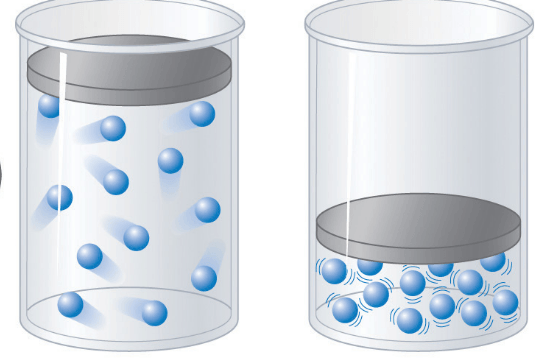
The weight of the piston in each container is the same and both containers have the same number of molecules. Which statement is true?
a)
The left container has faster moving molecules, which means it is hotter.
b)
The right container is hotter because the piston is lower.
c)
The left one is colder.
d)
They both have the same volume and same number of moles of molecules
79.
As the temperature increases so does the..
a)
Potential Energy
b)
Kinetic Energy
80.
Three gases, Ar, N2 and H2 are mixed in a 500 L container. Ar has a pressure of 255 torr, N2 has a pressure of 228 torr and H2 has pressure of 752 torr. What is the total pressure in the container?
a)
483 torr
b)
270 torr
c)
1235 torr
81.

The following graph shows ____ relationship.
a)
Direct
b)
Inverse
82.

How could you "re-inflate" the balloon?
a)
Heat the balloon.
b)
Cool the balloon down.
c)
Remove some helium.
d)
Increase the pressure on the balloon.
83.
The absolute (Kelvin) temperature is tripled. The volume will be _____ what it was originally.
a)
1/3 of
b)
1/6 of
c)
3 times
d)
6 times
84.

Water exists as a _____________ at 700 mmHg and 50 °C.
a)
solid
b)
liquid
c)
gas
d)
supercritical fluid
85.

What state of matter is Y?
a)
solid
b)
liquid
c)
gas
d)
supercritical fluid
86.
What change occurs from C to D?
a)
condensation
b)
vaporization
c)
melting
d)
sublimation
87.
What is the normal boiling point of this substance?
a)
150 °C
b)
100 °C
c)
-50 °C
d)
0 °C
88.
The change of state from a solid to a gas is called _________.
a)
sublimation
b)
depositoin
c)
condensation
d)
evaporation
89.

the change from a solid phase into a liquid phase
a)
absorbs energy
b)
releases energy
c)
has no change on the energy
d)
can not happen
90.
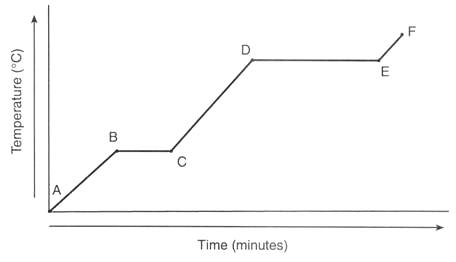
Between which points is the substance changing state?
a)
A-B only.
b)
A-B, C-D, E-F
c)
B-C only.
d)
B-C, D-E
91.

If this substance were water, then what constant must be used in the calculation involving segment B-C
a)
334 J/g
b)
2260 J/g
c)
4.18 J/g oC
d)
2.05 J/g oC
92.
If this substance were water, then what constant must be used in the calculation involving segment C-D?
a)
334 J/g
b)
2260 J/g
c)
4.18 J/g oC
d)
2.05 J/g oC
93.
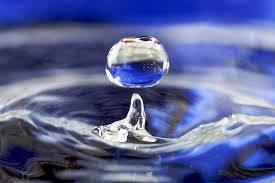
Which state of matter has molecules that slide past each other but stay close together? They do not form a regular pattern.
a)
solid
b)
liquid
c)
gas
94.

What can be determined by measuring the speed of molecules?
a)
volume
b)
density
c)
pressure
d)
temperature
95.
What is the mole ratio between Cu and Ag?
1Cu + 2AgNO3 →1Cu(NO3)2 +2 Ag
1Cu + 2AgNO3 →1Cu(NO3)2 +2 Ag
a)
1 mole Cu : 1 mole Ag
b)
1 mole Cu : 2 mole Ag
c)
2 mole Cu : 1 mole Ag
d)
1 mole AgNO3 : 1 mole Ag
96.
1 mole of any gas at STP has a volume of ______________________.
a)
22.4 liters
b)
44.2 liters
c)
6.02 x 10²³ liters
d)
2.4 liters
97.
How many particles are in a mole?
a)
602
b)
602 million
c)
602 moles
d)
6.02 x 10²³
98.
2CO + O2 → 2CO2
How many moles of CO2 (carbon dioxide) are produced from 10 moles of carbon monoxide (CO)?
How many moles of CO2 (carbon dioxide) are produced from 10 moles of carbon monoxide (CO)?
a)
10
b)
20
c)
1
d)
5
99.
N2 + 3H2 → 2NH3
How many moles of hydrogen (H2) are needed to react with 5 moles of nitrogen (N2)?
How many moles of hydrogen (H2) are needed to react with 5 moles of nitrogen (N2)?
a)
6
b)
2
c)
3
d)
15
100.
What is the formula to calculate heat energy required to raise the temperature of any substance?
a)
Q = m Cp ∆T
b)
Q = m Cp
c)
Q = ½ m v
d)
m = Q Cp
101.

What would be the effect on the particles if more heat is supplied to the system?
a)
They would slow down
b)
They would stop moving
c)
They would speed up
d)
There would be no effect
102.
Using the heat equation, what would the formula look like if we were solving for change in temperature?
a)
Q m = ∆T Cp
b)
Q / (m Cp) = ∆T
c)
Q m / Cp = ∆T
d)
m c Q = ∆T
103.

What element is this?
a)
Helium
b)
Hydrogen
c)
Argon
d)
Silver
104.

What element is represented in this Bohr Model?
a)
Carbon
b)
Hydrogen
c)
Aluminum
d)
Lithium
105.

How many electrons does potassium K contain? (click to see image)
a)
19
b)
39
c)
20
d)
40
106.

How many protons are in this element?
a)
79
b)
196
c)
117
d)
Cannot be determined
107.
an element will always have the same number of
a)
neutrons
b)
protons
c)
isotopes
d)
atoms
108.

The shortest wavelength in visible light is______.
a)
violet
b)
red
c)
blue
d)
yellow
109.

_____ have the longest wavelengths and lowest frequencies of all electromagnetic waves.
a)
microwaves
b)
radio waves
c)
gamma rays
d)
ultraviolet
110.

_______ carry the greatest amount of energy.
a)
x-rays
b)
gamma rays
c)
infrared rays
d)
visible light
111.
Emission of light from an atom occurs when an electron
a)
drops from a higher to a lower energy level.
b)
jumps from a lower to a higher energy level.
c)
moves within its atomic orbital.
d)
falls into the nucleus.
112.
A wave with a large wavelength will have a ______ frequency and _____ energy
a)
high, low
b)
high, high
c)
low, high
d)
low, low
113.
The half life of Thorium-234 is 24 days. What fraction of the element remains after 96 days
a)
1/2
b)
1/4
c)
1/8
d)
1/16
114.
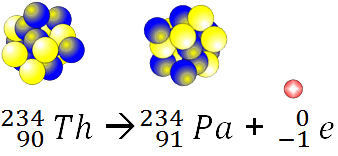
Which type of nuclear radiation is being emitted here?
a)
Alpha
b)
beta
c)
gamma
d)
none
115.
The splitting of a nucleus into smaller nuclei is
a)
fusion
b)
fission
c)
half-life
d)
gamma radiation
116.
If we start off with element 24X50 after an alpha decay we get another element Y that looks like
a)
22Y50
b)
22Y46
c)
20Y48
d)
26Y54
100 %

