wayground logo

Free Printable Worksheets

Font size

S
M
L
XL
Worksheets

Bio H Spring Final Review

Total questions: 155

Worksheet time: 3hrs 2mins

Name
Class
Date
1.
What is this?
a)
Cochlea
b)
Vestibule 
c)
Semicircular Canals
2.
What is this?
a)
Vestibule
b)
Semicircular Canals
c)
Cochlea
3.
What is #1?
a)
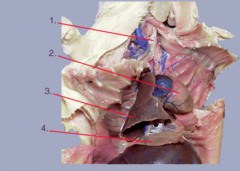
Pinna
b)
Cochlea
c)
Auditory Nerve
d)
Ear Canal
4.
Sound waves entering the external auditory canal hit the eardrum. The eardrum is also known as:
a)
a tympanic membrane
b)
the pinna
c)
an auricle
d)
ossicles
5.
Where are the three smallest bones in your body found? 
a)
outer ear
b)
middle ear
c)
inner ear
d)
eye
6.
What is the function of I?
a)
brings sound to the tympanic membrane
b)
sends electrical signals to the brain
c)
connects ear, nose, and throat; balances pressure in the middle ear
d)
collects sound
7.
What is the function of B, C, and D?
a)
vibrate to hit the bones
b)
act like a bridge from the eardrum to the cochlea, hits the oval window
c)
connects the ear, nose and throat
d)
brings sound to the eardrum
8.
What is K?
a)
semicircular canals
b)
eardrum (tympanic membrane)
c)
ossicles
d)
eustachian tube
9.

What is letter B

a)

Optic nerve

b)

Lens

c)

Cornea

d)

Retina

e)

Pupil

10.
What is letter E?
a)
Vitreous humor
b)
Retina
c)
Cornea
d)
Optic nerve
11.

What is letter G?

a)

Sclera

b)

Retina

c)

Lens

d)

Vitreous humor

e)

Pupil

12.

What is letter I?

a)

Cornea

b)

Lens

c)

Vitreous humor

d)

Optic nerve

e)

Pupil

13.
Photoreceptors that detect colour are called..
a)
Cones
b)
Rods
14.
Photoreceptors that detect grey tones in low light are called...
a)
Rods
b)
Cones
15.
What is the innermost layer and most delicate layer of the eyeball where photoreceptors are located?
a)
Sclera
b)
Choroid
c)
Retina
d)
Cornea
16.
Which layer is a blood vessel-rich layer with a dark brown membrane? 
a)
Choroid
b)
Sclera
c)
Retina
d)
Cornea
17.
The Pons and the Medulla are located on the _______.
a)
Parietal Lobe
b)
Corpus Callosum
c)
Brain Stem
d)
Temporal Lobe
18.
Lobe of cerebrum that processes hearing?
a)
Temporal
b)
Occipital
c)
Parietal
d)
Frontal
19.
What two things are found in the central nervous system?
a)
brain/spinal cord
b)
spinal cord/motor neurons
c)
motor/sensory neurons
d)
only brain
20.
Which of the TWO nervous systems contains motor and sensory neurons?
a)
central nervous system
b)
peripheral
c)
motor
d)
sensory
21.
Two major branches of the nervous system
a)
central and peripheral
b)
peripheral and motor
c)
motor and sensory
d)
central and motor
22.
The nerves in your fingertips are part of the ___ nervous system
a)
central
b)
peripheral
c)
internal
d)
cardiovascular
23.
Involuntary motor neurons have these two responses:
a)
Sympathetic and parasympathetic
b)
Fast and slow
c)
automatic and manual
d)
Sympathetic and sleeping
24.
This involuntary response is also known as "fight or flight"
a)
Sympathetic
b)
Parasympathetic
c)
Slow
d)
Sensory
25.
This involuntary response occurs AFTER a period high stress and causes body to calm down
a)
Sympathetic
b)
Parasympathetic
c)
Slow
d)
Sensory
26.
Concentration, language production, and decision making are features of the ___ lobe in the brain.
a)
Temporal
b)
Frontal
c)
Occipital
d)
Brain stem
27.
Sensory information is processed in the ____ lobe of the brain 
a)
frontal
b)
occipital
c)
parietal
d)
temporal
28.
This lobe of the brain is responsible for processing your sight
a)
Occipital
b)
Frontal
c)
Brain stem
d)
Temporal
29.
This portion of the brain helps you coordinate your body movements.
a)
Cerebellum
b)
Frontal lobe
c)
brain stem
d)
Amygdala
30.
These parts of the brain are MOST important for maintaining homeostasis.
a)
cerebellum and frontal lobe
b)
hypothalamus and brain stem
c)
brain stem only
d)
cerebellum and hypothalamus
31.
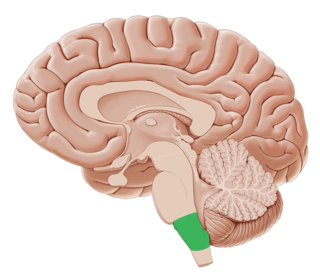
What is this?
a)
Pons
b)
Medulla Oblongata
c)
Cerebellum
d)
Hypothalamus
32.
Letter C
a)
Midbrain
b)
Pons
c)
Corpus collusum
d)
Medulla Oblongata
33.
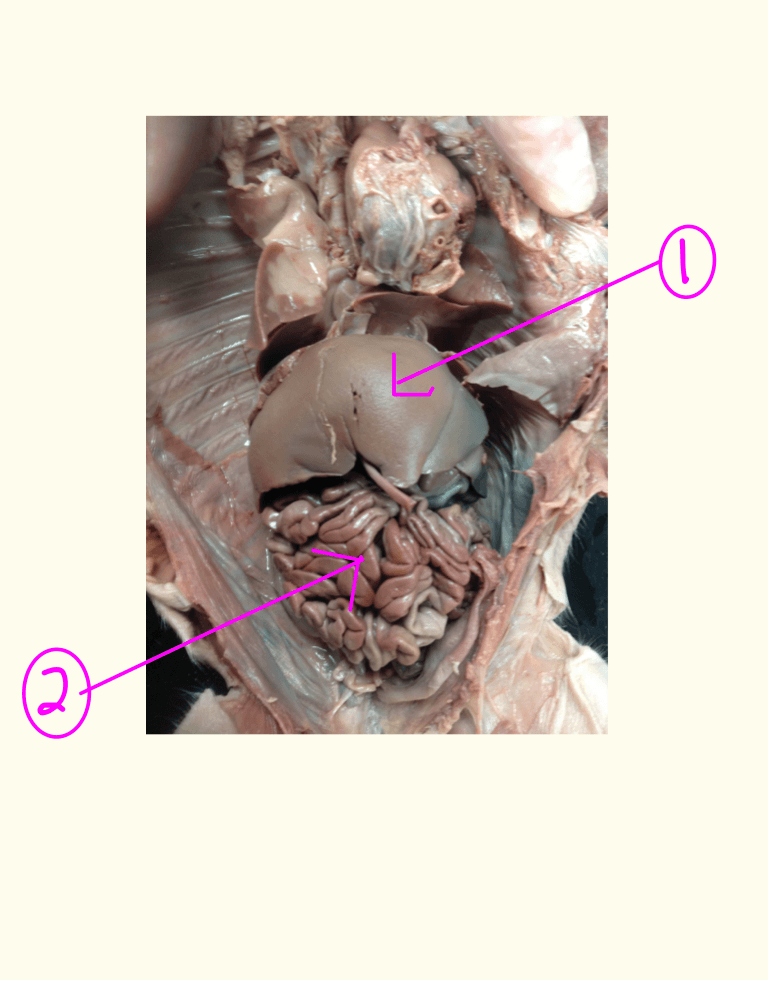
1 is the
a)
urinary bladder
b)
liver
c)
stomach
d)
lungs
34.
2 is pointing to the
a)
small intestine
b)
large intestine
c)
stomach
d)
ureter
35.
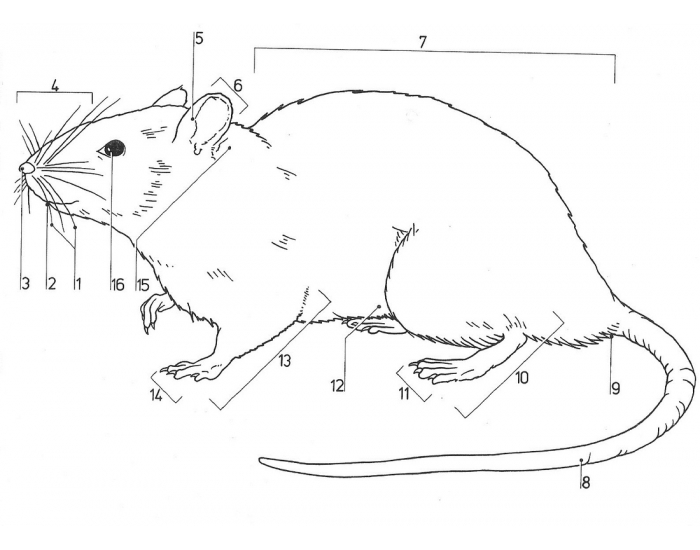
What are referred to as the "whiskers" of the rat. They have a sensory function that allows the animal to judge the size of an opening that it is about to pass through?
a)
Vibrissae
b)
Diaphragm
c)
Rectum 
d)
Uterus 
36.
Structure #6 is:
a)
Vibrasse
b)
Nictitating Membrane
c)
Incisors
d)
Pinna
37.
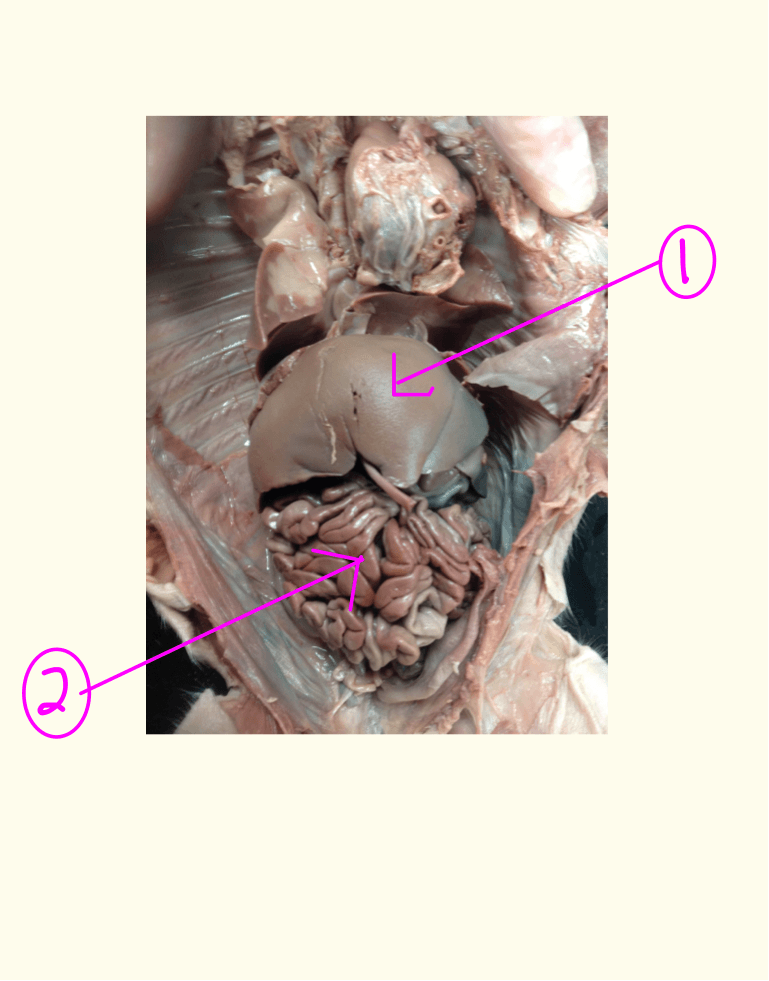
Identify #2
a)
Heart
b)
Lungs
c)
Diaphragm
d)
Trachea
38.

If 98 out of 200 individuals in a population are homozygous recessive, what percent of the population would you predict would be heterozygous?

a)

70%

b)

30%

c)

42%

d)

49%

39.

Which Hardy-Weinberg factor represents the frequency of heterozygous individuals in a population?

a)

p2

b)

2pq

c)

q2

d)

p2 + 2pq

40.
A population of frogs has 37 individuals who are brown in color and 194 individuals who express the dominant green color. What is the dominant allele frequency for this population?
a)
0.2
b)
0.4
c)
0.6
d)
0.8
41.
If a population has the following genotype frequencies: AA = 0.42, Aa = 0.46, and aa = 0.12, what are the allele frequencies?
a)
A = 0.42, a = 0.12
b)
A = 0.6, a = 0.4
c)
A = 0.65, a = 0.35
d)
A = 0.84, a = 0.24
42.
In a population of bears, the frequency of q is 0.44. What is the frequency of p?
a)
0.1936
b)
0.44
c)
0.56
d)
0.22
43.
In a population of humans, the frequency of no dimples is 0.36. If having no dimples is the recessive phenotype, what is the frequency of the recessive allele?
a)
0.6
b)
0.36
c)
0.64
d)
0.18
44.
A population of frogs has 37 individuals who are brown in color and 194 individuals who express the dominant green color. What is the dominant allele frequency for this population?
a)
0.19
b)
0.44
c)
0.56
d)
0.75
45.
Which biome covers most of the land mass near the Earth's equator?
a)
tundra
b)
desert
c)
grassland
d)
tropical rainforest
46.
One characteristic feature of tundra is that only the surface thaws in the summer and refreezes in the winter, leaving a layer of permanently frozen subsoil.  This characteristic is known as
a)
glaciation
b)
permafrost
c)
crystallization
d)
soilfrost
47.
Which type of trees is found in a temperate forest?
a)
deciduous
b)
evergreen
c)
ginko
d)
palm
48.
Which biome receives between 0 to 25 centimeters of rain per year, has a temperature range of 0 to 50 degrees Celsius, has poor soil, and is home to lizards, scorpions, and snakes?
a)
desert
b)
mountain
c)
taiga
d)
tundra
49.
Which biome contains large populations of grazing herbivores, few species of birds, and deep, rich soil?
a)
taiga
b)
tundra
c)
deciduous forest
d)
grassland
50.
What is the term for each step in the transfer of energy and matter within a biological community?
a)
energy path
b)
food web
c)
trophic level
d)
food pyramid
51.
What is the major difference between a community and an ecosystem
a)
A community involves only the biotic, not the abiotic
b)
An ecosystem only includes herbivores and carnivores-- no decomposers
c)
An ecosystem involves only the biotic, AND THE abiotic 
d)
An ecosystem is just a larger community
52.
What are the correct types of Trophic levels? 
a)
Producers 
Primary 
Secondary 
b)
Primary
Secondary
c)
Producers 
Consumers 
Decomposers
d)
Producers 
Primary 
Secondary 
Tertiary 
53.
What are the major differences between a species and a population
a)
Populations consist of ALL of the individual organisms within a species in a given area/ecosystem that are fertile
b)
Populations are a collection of many different types of species that are not related to each other
c)
Populations are just a larger amount of individuals
d)
Populations are the number of individuals within a species that are identical 
54.
The non-living part of an ecosystem
a)
Ocean
b)
Lava Flow
c)
Birds
d)
Abiotic
55.
which symbiosis is this 
a)
parasitism 
b)
mutualism
c)
commensalism
d)
nonalism 
56.
symbiotic relationship in which both organisms benefit
a)
competition
b)
Mutualism
c)
nitrogen fixation
d)
energy pyramid
57.
What does a food web represent?
a)
All connections of energy flow throughout all organisms in a habitat.
b)
The specific ways that mutualism is carried out.
c)
A single pathway or energy flow between organisms. 
d)
How carnivores get their food. 
58.
The amount of energy that usually transfers from one trophic level to the next...
a)
10%
b)
20%
c)
80%
d)
50%
59.
The general name for organisms like animals and fungi that get their energy from eating other organisms.
a)
Producers
b)
Consumers
c)
Detritivores
d)
Carnivores
60.
All of the living and nonliving things in an area that interact with each other are called a/an ______.
a)
community
b)
habitat
c)
population
d)
ecosystem
61.
What is commensalism?
a)
a symbiosis where one species is helped and the other is harmed
b)
a symbiosis where one species is helped and the other is neither helped nor harmed
c)
a symbiosis where both species are helped
d)
a symbiosis between 2 or more organisms
62.
In the energy pyramid here, which organisms have the most energy available?
a)
Producers
b)
Carnivores
c)
Herbivores
d)
Top Predator
63.
An organism's niche is 
a)
the entire role an organism has in the place it lives
b)
the range of temperatures that the organism needs to survive
c)
all the physical and biological factors in the organism's environment
d)
the nutrients that flow from the organism to the environment
64.
What does the graph represent?
a)
Emigration
b)
Exponential growth
c)
Immigration
d)
Logistic Growth
65.
What does the graph represent?
a)
Emigration
b)
Exponential growth
c)
Immigration
d)
Logistic Growth
66.
Logistic growth has 3 phases. In Phase 1, the population grows rapidly. In Phase 2, population grows slowly. In Phase 3, growth stops. What causes growth to stop in the 3rd phase of logistic growth?
a)
Emigration
b)
Immigration
c)
Exponential Growth
d)
Carrying Capacity
67.
No two species can occupy the same niche
a)
Competitive Exclusion Principle 
b)
Limiting Exclusion Theory
c)
Competitive Limiting Principle
d)
Limiting Competitive Theory 
68.
Succession which occurs when soil is no longer present after an ecological disturbance 
a)
Primary Succession
b)
Secondary Succession
c)
Tertiary Succession
d)
Quaternary Succession
69.

Which contributes to a positive population growth?

a)

immigration

b)

net positive birth rate

c)

emigration

d)

net positive death rate

70.

Which of the following describes the population of elephants in Kenya from 1973-1989?

a)

(immigration + births) – (emigration + deaths) = 0

b)

(immigration + births) – (emigration + deaths) = 1

c)

(immigration + births) – (emigration + deaths) < 0

d)

(immigration + births) – (emigration + deaths) > 0

71.
The ____________________ organisms have a high reproductive rate, short-life span and do not care for offsprings
a)
R-strategist
b)
K-strategist
c)
B strategist
d)
Z-Strategists
72.
An extreme phenotype is favored causing the alleles to shift toward that phenotype
a)
Disruptive Selection
b)
Directional  Selection
c)
Stabilizing Selection
d)
Artificial Selection
73.
Natural selection can best be defined as the _____.
a)
survival of the biggest and strongest in a population
b)
survival and reproduction of those in the largest area
c)
elimination of the smallest organism by the biggest
d)
survival and reproduction of those that are best adapted
74.
Characteristics that allow a population to become better suited to its environment
a)
accommodation
b)
adaptation
c)
variation
d)
selection
75.
What do you think is an adaptation?
a)
A trait that helps an organism adapt to its environment
b)
An organism that survives best in an environment
c)
A person who studies adapting animals
d)
a random chance event that shapes the population
76.
Which of the three graphs shows stabilizing selection? The original population is shown with a solid line.
a)
A
b)
B
c)
C
77.
What type of selection is depicted in the picture? 
a)
stabilizing 
b)
directional 
c)
disruptive 
d)
the answer is not here
78.
This scientist developed the theory of evolution as he studied the finches.
a)
Charles Darwin
b)
Isaac Newton
c)
Albert Einstein
d)
Marie Curie
79.
Why are advantageous traits more likely to be passed onto offspring?
a)
Because they are more likely to survive and reproduce.
b)
Because they come from dominant alleles.
c)
Because they come from recessive alleles.
d)
Because the trait is an acquired phenotype.
80.

Evolution occurring quickly due to catastrophic events

a)

Homeostasis

b)

Gradualism

c)

Statsis

d)

Punctuated Equilibrim

81.

Evolution occurring gradually and slowly over long periods of time

a)

Homeostasis

b)

Stasis

c)

Punctuated Equilibrium

d)

Gradualism

82.
In natural selection, the selective agent is the
a)
humans
b)
mutations
c)
breeders
d)
environment
83.
a bird that can easily outcompete other birds for food and that can produce many eggs has a high
a)
life expectancy
b)
mutation rate
c)
fitness
d)
adaptability
84.
which of the folllowing is an exammple of a vestigial structure?
a)
the wings of a red-tailed hawk
b)
the hind limbs of a house cat
c)
the fins of sharks
d)
the wings of an ostrich
85.

What is suggested by the anatomical similarity of different species of vertebrates?

a)

no evolutionary relationships between the groups

b)

recent common ancestry

c)

similar environments in the past

d)

evolution from a distant common ancestor

86.
Some organisms that share a common ancestor have features that have different functions, but similar structures.  These are known as
a)
vestigial structures
b)
analogous structures
c)
homologous structures
d)
fossil structures
87.
If an organism has a vestigial structure, that structure likely once had a function in a(n)
a)
close relative
b)
early ancestor
c)
unrelated organism
d)
embryological stage
88.
Two organisms that are closely related would have
a)
very similar DNA sequence
b)
exactly the same DNA sequences
c)
no proteins in common
d)
completely different DNA sequence
89.
protein sequences in one organism that resemble those of another suggest a 
a)
coincidence
b)
lack of evolutionary relationship
c)
great number of mutations
d)
shared ancestry
90.
Genetic variation can arise from a random change in the DNA of a gene.  The change is called a(n)
a)
mutation
b)
gene flow
c)
gene pool
d)
allele
91.
What increases genetic variation when animals move  from one population to another
a)
genetic drift
b)
sexual selection
c)
bottleneck effect
d)
gene flow
92.

The five-factors for evolution are gene flow, genetic drift, mutation, natural selection and ....

a)

non-random mating

b)

controlled mating

c)

emigration

d)

immigration

93.
What is speciation?
a)
combining of tow species to form one with different traits
b)
isolation that affects mating behaviors
c)
timing of mating that prevents normal sexual selection
d)
divergence of two or more species from an existing one
94.
An earthquake causes an ocean channel top open and separate an island into two.  the species on each section are now in
a)
geographic isoliation
b)
behavioral isolation
c)
disruptive selection
d)
temporal isolation
95.
two species are in different environments and look very similar.  However, that are not closely related (analogous).  Their resemblance is most likely an example of.
a)
sexual selection
b)
temporal isolation
c)
convergent evolution
d)
divergent evolution
96.

Other insects cannot, but, a bumble bee has just enough weight to open up the snapdragon flower and pollinate. This adaption is ....

a)

convergent evolution

b)

co-evolution

c)

divergent evolution

d)

speciation

97.
Natural selection results in change over time by acting on traits that are
a)
heritable
b)
new
c)
mutated 
d)
better than the best
98.

What characteristic did early hominins share with modern humans?

a)

Speech and language

b)

The inability to live in groups

c)

Small brains

d)

Bipedalism

99.

According to the theory of evolution, which of the following statements is true?

a)

Humans evolved from chimpanzees

b)

Chimpanzees evolved from humans

c)

There is no evolutionary relationship between humans and chimpanzees

d)

Humans and chimps evolved from common ancestors

100.

If the fossil record of human evolution is incomplete, why do scientists still believe humans evolved from ape-like ancestors?

a)

Because existing evidence in the fossil record strongly suggests it

b)

Because scientists make a lot of money by promoting the theory of evolution

c)

Because the theory of evolution is more than 100 years old, which means it must be correct

d)

Because humans and apes look similar to one another

101.
Humans and closely related species (most/all now extinct) that typically walk on two legs are called...
a)
hominids
b)
australopithicans
c)
chimps
d)
bonobos
102.

...... were the first homonids to create and use stone tools, an ability that reduced selection pressures for large jaws and teeth.

a)

Homo sapiens

b)

Homo erectus

c)

Homo habilis

d)

The australopithecus

103.
Which group contains prosimians, monkeys, gorillas, and humans?
a)
primates
b)
anthropoids
c)
hominoids
d)
hominins
104.
Which is the oldest of these four species?
a)
Australopithecines
b)
Tool-making hominins
c)
Neanderthals
d)
Homo sapiens
105.
An _______________ first digit, either a thumb or a toe,  can be brought across the palm or foot to touch   (or nearly touch) the other digits allowing primates to grasp objects.
a)
opposable
b)
flexible
c)
operable
d)
adjustable
106.
_______________________ (forward-looking eyes) provide depth perception and enable primates to judge distance and movement of an object.
a)
Binocular vision
b)
Monocular vision
c)
Optical vision
d)
Holoptic vision
107.

Scientists have found evidence that about 2.4 million years ago a gene regulating jaw muscles mutated and may have led to the more graceful human jaw we see today. The diagram below shows the skulls of 3 hominid species

Which statement below most closely explains the link between JAW size and hominid evolution?

a)

The jaws of hominids evolved to be smaller and less protruding over time.

b)

The jaws of hominids evolved to be larger and more protruding over time.

c)

There appears to be no change in the jaws of hominids over time.

d)

The jaws of hominids changed over time due to a change in brain size.

108.
What happened to the hominid jaw and brain size over time? 
a)
The jaw size decreased while the brain size decreased.
b)
The jaw size increased while the brain size decreased.
c)
The jaw size decreased while the brain size increased.
d)
The jaw size increased while the brain size increased.
109.
What three things are trends that scientists have seen in hominid evolution? 
a)
Smaller brain size, increasing jaw size, and broad forhead
b)
Increasing body size, thick skulls, and large brow bone.
c)
Decreasing brain size, large canines, and thick skulls.
d)
Bipedalism, increasing brain size, and use of tools.
110.

What is recombinant DNA

a)

DNA from 2 different organisms combined

b)

DNA from 2 different ribosomes

c)

DNA that is separated out from a vector

111.

"Sticky-ends" are DNA strands with:

a)

single-stranded ends

b)

ends cut flat by an enzyme

c)

no way to be recombined

112.

How do restriction enzymes "know" where to cut DNA

a)

A specific sequence of nucleotides

b)

They cut randomly

c)

Distance from the centromere

113.

There are species of lizards that burrow underground. Gophers and moles are mammals that also burrow underground.

a)

allopatric speciation

b)

adaptive radiation

c)

convergent evolution

d)

coevolution

e)

sympatric speciation

114.

How is genetic drift different from natural selection?

a)

Genetic drift prevents natural selection.

b)

Genetic drift occurs by chance alone.

c)

Genetic drift only occurs in marine species.

d)

Genetic drift is a method used for breeding.

115.
 Genetic Drift is more likely to happen in... 
a)
aquatic populations
b)
small populations
c)
terrestrial populations
d)
older populations
116.

This laboratory procedure is known as

a)

CLONING

b)

gel electrophoresis

c)

chromatography

d)

use of a dichotomous key

117.

In preparation for an electrophoresis procedure, enzymes are added to DNA in order to

a)

convert the DNA into gel

b)

cut the DNA into fragments

c)

change the color of the DNA

d)

produce longer sections of DNA

118.

The parents of a new baby believe they brought the wrong child home from the hospital. Gel electrophoresis was performed using DNA samples from the parents and the child. A section of the gel

electrophoresis results is shown below. Which conclusion is valid based on the gel electrophoresis results?

a)

They have the correct child, because her genetic information is identical to that of the father.


b)

They have the wrong child, because her genetic information does not match that of either parent.

c)

They have the correct child, because her genetic information came from both parents.


d)

They have the wrong child, because her genetic information matches only that of the mother.

119.

A student performed a gel electrophoresis experiment. The results are represented in the diagram

below. Compared to the fragments at the top of the gel, the fragments at the lower end are

a)

larger, and move slower

b)

larger, and move faster

c)

smaller, and move faster

d)

smaller, and move slower

120.

This technique used to analyze DNA involves the

a)

synthesis of new DNA strands from subunits

b)

separation of DNA fragments based on size

c)

production of genetically engineered DNA molecules

d)

removal of defective genes from DNA

121.
Why do the fragments of DNA in gel electrophoresis travel away from the negative electrode?
a)
DNA is negatively charged
b)
DNA is positively charged
c)
the agarose gel in negatively charged
d)
the agarose gel is positively charged
122.
Which is the primary purpose of using restriction enzymes in gel elctrophoresis?
a)
It allows the strands of DNA to be cut into various lengths for testing
b)
It restricts the number of base pairs that can be tested in a sample
c)
It makes the testing simpler by moving the strands into the gel faster
d)
It charges the DNA strands
123.
Which suspect is linked to the crime scene by this DNA analysis
a)
Suspect A
b)
Suspect C
c)
Suspect D
d)
Suspect B
124.
small, circular, double-stranded DNA found in bacterial cells and used as a vector
a)
cloning
b)
plasmid
c)
DNA ligase
d)
transformation
125.
a technique for making millions of copies of a specific region of DNA
a)
DNA ligase
b)
restriction enzymes
c)
gel electrophoresis
d)
polymerase chain reaction
126.
What is the purpose of PCR?
a)
To produce millions of copies of DNA.
b)
To produce millions of copies of a specific region of DNA
c)
To add nucleotides to a DNA sequence
d)
To watch polymerase work.
127.
What is the function of a primer?
a)
To identify the particular region of DNA to be copied by PCR.
b)
To copy DNA.
c)
To create DNA nucleotides.
d)
To maintain the temperature of the PCR reaction.
128.

How many cycles of PCR does it take to a single DNA piece to produce 8 DNA fragments?

a)

1

b)

2

c)

3

d)

4

129.
Which man is the father of this baby?
a)
Father 1
b)
Father 2
c)
Father 3
d)
None of them
130.
DNA is recovered from a suspected dead soldier.  Which Parents are the likely parents of the soldier?
a)
Parents C and D
b)
Parents E and F
c)
Parents A and B
d)
Parents G and H
131.
What process is shown in the picture?
a)
Gene therapy
b)
Cloning
c)
DNA Fingerprinting
d)
Gene Splicing
132.
Mitosis produces cells with haploid or diploid number of chromosomes?
a)
Haploid
b)
Diploid
133.
Meiosis produces cells with a haploid or diploid number of chromosomes?
a)
Haploid
b)
Diploid
134.
What type of speciation involves geographic isolation?
a)
Allopatric
b)
Sympatric
c)
Both
135.
Fruit flies are beginning to live & mate on different types of fruit on the floor of the Amazon. Bigger fruit flies prefer rotting mangos, while smaller fruit flies prefer rotting bananas. What type of reproductive barrier is this?
a)
habitat isolation
b)
temporal isolation 
c)
gametic isolation
d)
mechanical isolation 
136.
When a zebra & horse mate, they create a zorse. Zorses are most often sterile. What type of reproductive barrier is this?
a)
behavioral isolation
b)
hybrid sterility 
c)
gametic isolation
d)
mechanical isolation 
137.
The flowers of pink tulips open in the morning, while the flowers of lavender tulips open in the early afternoon. The bees that pollinate these tulips cannot carry pollen back & forth between the two types of tulips because of their flowers being closed at different times of day. What type of reproductive barrier is this?
a)
behavioral isolation
b)
hybrid sterility 
c)
temporal isolation
d)
mechanical isolation 
138.
If finches with large beaks and finches with small beaks increase in a population while finches with average sized beaks decreases, which pattern of natural selection has occurred?
a)
Directional selection
b)
Disruptive selection 
c)
Stabilizing selection
139.
What is speciation?
a)
The change from one species into two or more distinct species. 
b)
The movement of a group of organisms into a new area. 
c)
The ability to mate and reproduce.
d)
The death of an entire species. 
140.
The Biological Species Concept says...
a)
Organisms are part of the same species if they breed
b)
Organisms are part of the same species if they look the same
c)
Organisms are part of the same species if they can produce offspring that can also breed
d)
Organisms are part of the same species if they look the same and act the same
141.
This species concept says something is the same species based on their physical similarities
a)
Biological Species Concept
b)
Ecological Species Concept
c)
Morphological Species Concept
d)
Genotypic Species Concept
142.
Organisms that break down dead plants & animals and release nitrogen back into atmosphere...
a)
bacteria
b)
plants
c)
animals
d)
producers
143.
Respiration
a)
absorbs CO2
b)
releases CO2
144.
Photosynthesis
a)
absorbs CO2
b)
releases CO2
145.
During photosynthesis, carbon is moved from which reservoir to which reservoir?
a)
From the atmosphere to the terrestrial biosphere.
b)
From the troposphere to the terrestrial biosphere.
c)
From the lithosphere to the terrestrial biosphere.
d)
From the hydrosphere to the terrestrial biosphere
146.
The flow of carbon from the biosphere to the atmosphere would be slowed by reducing the
a)
amount of fertilizer applied to fields.
b)
number of size of forest fires
c)
buildup of carbonate rocks
d)
amount of rain water used for irrigation
147.
Which of the following describes the role of nitrogen-fixing bacteria in the nitrogen cycle? Nitrogen-fixing bacteria convert
a)
nitrates intro nitrogen gas
b)
ammonia into proteins
c)
nitrogen gas into ammonia
d)
proteins into nitrates
148.
What forms of nitrogen and carbon can be used by plants?
a)
ammonia and carbon monoxide
b)
ammonia, nitrates, and carbon dioxide
c)
nitrites and carbohydrates
d)
nitrate and carbon monoxide
149.
Which process moves carbon stored in fossil fuel into another carbon reservoir?
a)
When fossil fuels are burned, carbon enters the atmosphere as carbon dioxide.
b)
The denitrifying bacteria turns the fossil fuel into carbon dioxide gas.
c)
Decomposers convert the fossil fuels into greenhouse gases like carbon dioxide.
d)
The fossil fuels react with the soil to produce carbonates and carbon dioxide.
150.
The first step of Cloning is
a)
Fusing the egg and donor cell
b)
letting the fused cell divide normally
c)
removing the nucleus of one egg
d)
placing the embryo in the uterus of a surrogate mother
151.
Which of the following is NOT a step of copying DNA (PCR)
a)
Denature (Heat)
b)
Attach Primers (Cool)
c)
Extend/Synthesize (Copy)
d)
Separate DNA
152.
transforming bacteria requires a _________ to join and be taken in by the bacteria 
a)
plasmid
b)
recombinant DNA
c)
restriction enzyme
d)
transgenic material 
153.

Which part of HIPPCO is deforestation an example of?

a)

Habitat Destruction

b)

Invasive species

c)

Pollution

d)

Overexploitation

154.

What part of HIPPCO is kudzu a part of?

a)

Habitat Destruction

b)

Invasive species

c)

Population Growth

d)

Climate Change

155.

Which of the following is the donor gene?

a)

A

b)

B

c)

C

d)

D