wayground logo

Free Printable Worksheets

Font size

S
M
L
XL
Worksheets

Cardiovascular system

Total questions: 70

Worksheet time: 38mins

Name
Class
Date
1.
How many chambers in the heart?
a)
1
b)
2
c)
3
d)
4
2.
Blood enters the heart through which vessels
a)
Superior and Inferior Vena Cava
b)
Pulmonary Artery
c)
Pulmonary Vein
d)
Tricuspid Valve
3.
The right side of the heart carries oxygenated blood
a)
True
b)
False
4.
Pulmonary Artery
a)
carries oxygenated blood to atrium
b)
carries deoxygenated blood to lungs
c)
carries oxygenated blood to lungs
d)
none of the above
5.
Pulmonary vein
a)
carries oxygenated blood to left atrium
b)
carries deoxygenated blood to left ventricle
c)
carries oxygenated blood to left ventricle
d)
carries deoxygenated blood to left atrium
6.
What is the function of the cardiovascular system 
a)
carries oxygen and nutrients to body
b)
carries waste to excretory system
c)
defense against disease
d)
all of the above
7.
Liquid part of blood
a)
plasma
b)
erythrocytes
c)
hemoglobin
d)
white blood cells
8.
The largest artery in the body
a)
Aorta
b)
Superior Vena Cava
c)
Inferior Vena Cava
d)
Pulmonary Artery
9.
What are the pumping chambers
a)
Atria
b)
Ventricles
c)
Bicuspid
d)
Tricuspid
10.
_______starts in the heart and causes the heart muscle to contract and the heart to beat
a)
Enzymes
b)
Electrical impulses
c)
Hormones
d)
Neurons
11.
Types of blood vessels:
a)
arteries,veins,bronchioles
b)
arteries,veins,neurons
c)
arteries, veins, capillaries
d)
arteries,veins,aorta
12.
____________carry blood away from the heart
a)
bronchioles
b)
arteries
c)
veins
d)
capillaries
13.
________carry blood back to the heart
a)
arteries
b)
capillaries
c)
veins
d)
arterioles
14.
How many liters of blood circulate through out the body?
a)
1-2 liters
b)
3-4 liters
c)
4-5 liters
15.
Which of the following delivers oxygen to cells?
a)
Red Blood cells
b)
White blood cells
c)
Platelets
d)
Plasma
16.
Which of the following fights infection?
a)
Red Blood cells
b)
White blood cells
c)
Platelets
d)
Plasma
17.
Which of the following helps form scabs?
a)
Red Blood cells
b)
White blood cells
c)
Platelets
d)
Plasma
18.
Which of the following are the blood vessels that helps blood flow to the cells?
a)
Veins
b)
Arteries
c)
Cappillaries
19.
Which of the following are the blood vessels that have a wall that is 1 cell thick?
a)
Veins
b)
Arteries
c)
Cappillaries
20.
Which of the following are the blood vessels that have the thickest walls?
a)
Veins
b)
Arteries
c)
Cappillaries
21.
Which of the following are the blood vessels that have valves?
a)
Veins
b)
Arteries
c)
Cappillaries
22.
What type of muscle do you find in the heart?
a)
smooth muscle
b)
Skeletal muscle
c)
cardiac muscle
23.
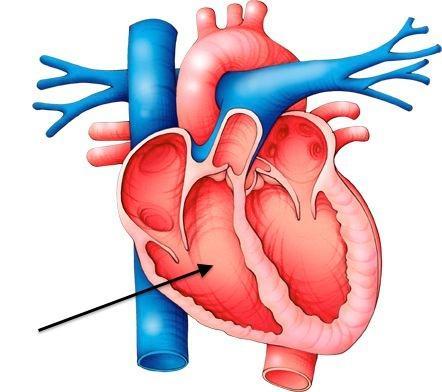
Identify
a)
Left atrium
b)
Right atrium
c)
Left ventricle
d)
Right ventricle
24.
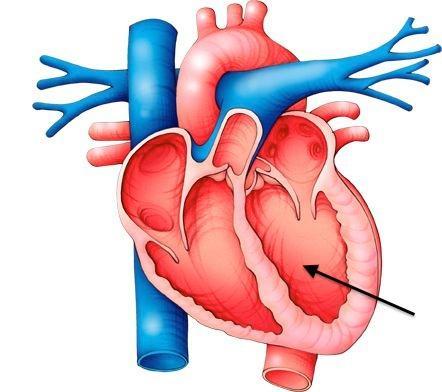
Identify
a)
Left atrium
b)
Right atrium
c)
Left ventricle
d)
Right ventricle
25.
Identify
a)
Left atrium
b)
Right atrium
c)
Left ventricle
d)
Right ventricle
26.
Identify
a)
Left atrium
b)
Right atrium
c)
Left ventricle
d)
Right ventricle
27.
What does Deoxygenated mean?
a)
Oxygen-rich
b)
Blood flow
c)
Oxygen-poor
d)
Water Flow
28.
The circulatory system carries _______ & ______ to cells.
a)
nutrients and oxygen
b)
waste and carbon dioxide
c)
stomach acid and blood
29.
Your left ventricle pushes blood to the lungs.
a)
False
b)
True
30.
Blood becomes oxygenated in the lungs
a)
True
b)
False
31.
What is the aorta?
a)
the large vein leading back to the heart
b)
the large artery leading away from the heart
c)
A chamber of the heart
d)
The artery leading from the heart to the lungs
32.
The smallest veins of the body are the ___________.
a)
vena cava
b)
arterioles
c)
venules
d)
capillaries
33.
The smallest blood vessels of the body are the _____________
a)
arterioles
b)
venules
c)
capillaries
d)
aorta
34.
The smallest arteries of the body are the __________.
a)
arterioles
b)
venules
c)
capillaries
d)
aorta
35.
blood vessels that allow exchange of nutrients with body tissues
a)
arteries
b)
veins
c)
capillaries
d)
coronary arteries
36.
How big is your heart?
a)
The size of your stomach
b)
The size of your foot
c)
The size of your fist
d)
The size of your brain
37.
The average heart beats about _____ times per minute
a)
35
b)
50
c)
75
d)
105
38.
What are the main parts of the cardiovascular system?
a)
heart and lungs 
b)
blood, blood vessels and heart
c)
blood, heart and brain
d)
veins, arteries, lungs and heart
39.
Having a low resting heart rate shows that you are...
a)
Healthy 
b)
Unhealthy
40.
How does regular exercise affect the blood?
a)
It is thinner so runs around the body more easily
b)
the blood is able to carry more oxygen
c)
it makes no difference to the blood
41.

What gas is a waste product carried by the blood?

a)

oxygen

b)

hydrogen

c)

nitrogen

d)

carbon dioxide

42.

The vessels with thick elastic walls made of smooth muscle tissue

a)

arteries

b)

veins

c)

capillaries

d)

heart

43.

The vessels with one-way valves to prevent blood from flowing backwards.

a)

veins

b)

arteries

c)

capillaries

d)

heart

44.

Which of the following is a component of blood?

a)

red blood cells

b)

platelets

c)

plasma

d)

white blood cells

e)

all of the above

45.

Cardio means

a)

lungs

b)

heart

c)

blood

d)

none of the above

46.

Vascular means

a)

vessels

b)

tubes

c)

blood

d)

heart

47.

One of the main functions of the cardiovascular system is to carry ____ to cells.

a)

oxygen

b)

water

c)

nutrients

d)

all of the above

48.
The average blood pressure is 
a)
120/80
b)
80/120
c)
115/180
d)
120/180
49.
What creates the "lub dub" heart sounds?
a)
Flow of blood
b)
Closing of valves
c)
Opening of valves
d)
Breathing
50.

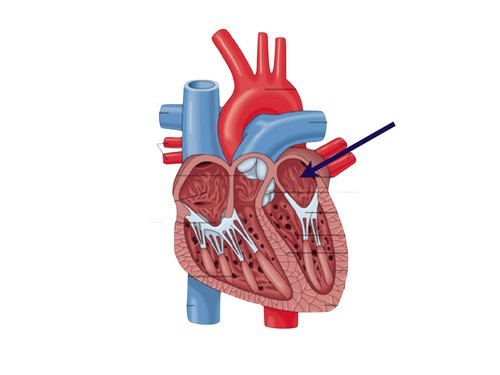
Name the part of the heart with the arrow pointing.

a)

right ventricle

b)

septum

c)

bicuspid valve

d)

left ventricle

51.

Which contains the highest pressure within the types of blood vessels?

a)

Arteries

b)

Veins

c)

Capillaries

52.
Which of the following delivers oxygen to cells?
a)
Red Blood cells
b)
White blood cells
c)
Platelets
d)
Plasma
53.
What is plasma?
a)
The part of the blood that fights infection
b)
The fluid part of the blood
c)
The part of the blood that carries oxygen
d)
Something to do with TV's
54.

Heart sounds are measured with a

a)

stethoscope

b)

EKG

c)

sphygmomanometer

d)

thermometer

55.

Sonia is studying where oxygen goes in the body. She investigates how oxygen moves from the bloodstream into the cells. Which structure is Sonia most likely to examine in this work?

a)

The veins

b)

The heart

c)

The capillaries

d)

The lymph nodes

56.

The four blood types are A, B, _______ and __________.

a)

C, O

b)

C, AB

c)

C, D

d)

AB, O

57.
Which of the following is not a function of the cardiovascular system?
a)
delivering materials
b)
removing wastes
c)
building muscle
d)
fight diseases
58.

What is the purpose of the valves in the cardiovascular system?

a)

To fill the next chamber more quickly

b)

To keep the blood moving in one direction

c)

To stop the blood from leaving the circulatory system

d)

To help blood reach organs

59.

What is heart rate?

a)

The amount of blood pumped with every beat

b)

The number of heart beats a minute

c)

The amount of blood pumped out in one minute

d)

The amount of blood left after a contraction

60.

What is a function of blood: select all that are correct

a)

Transport gases

b)

Transport nutrients

c)

Clot formation

d)

Protection from foreign invaders

61.

What is the function of hemoglobin?

a)

To carry oxygen by using iron

b)

To move nutrients

c)

To eat bacteria

d)

To form scabs

62.
Muscular organ of the cardiovascular system that pumps blood to the body through blood vessels.
a)
Lungs
b)
Aorta
c)
Heart
d)
Muscle
63.
Structure that prevents blood from flowing backwards.
a)
Vessel 
b)
Vein
c)
Valve
d)
Vector
64.
Chemical that binds to red blood cells to transport oxygen and pick up carbon dioxide. 
a)
Hemoglobin
b)
Hormone
c)
White Blood Cell 
d)
Glucose
65.
The dividing wall between the right and left sides of the heart. 
a)
Ventricle
b)
Atrium 
c)
Septum
d)
Aorta
66.
When blood flows into the right atrium from the body, it contains _________________ .
a)
Oxygen rich blood
b)
Oxygen poor blood
c)
Excess water
d)
Small amounts of carbon dioxide 
67.

What vessel supplies blood to the heart?

a)

aorta

b)

coronary artery

c)

pulmonary artery

d)

vena cava

e)

The heart does not need blood supply, as it is always filled with blood.

68.
Which is NOT a function of the circulatory system?
a)
deliver O2 and nutrients to cells
b)
remove CO2 and wastes from cells
c)
break down carbohydrates into glucose
d)
transport other materials through body
69.

What is the name of a doctor who studies the heart?

a)

Cardiologist

b)

Sonographer

c)

Perfusionist

d)

Cardiac technologist

70.

Which of these statements is NOT true?

a)

Veins carry deoxygenated blood

b)

Blood in veins is of blue colour

c)

Blood in veins are darker in colour than blood in arteries

d)

Veins have valves in them