wayground logo

Free Printable Worksheets

NEW

Font size

S
M
L
XL
Worksheets

Ecology Unit Review

Total questions: 74

Worksheet time: 54mins

Name
Class
Date
1.
The non-living part of an ecosystem
a)
Ocean
b)
Lava Flow
c)
Birds
d)
Abiotic
2.
The living part of an ecosystem
a)
Biotic
b)
Abiotic
c)
Mother Earth
d)
Flowers
3.
The study of how living things interact with one another and with their environment.
a)
Biology
b)
Lithology
c)
Ecology
d)
Farmacology
4.
Members of a species in a defined area
a)
Ecosystem
b)
community
c)
biodiversity
d)
population
5.
What is the original source of almost all energy in most ecosystems?
a)
carbohydrates
b)
sunlight
c)
water
d)
carbon
6.
A collection of organisms that belong to different populations but all live in the same area and interact with one another.
a)
Population
b)
Ecosystem
c)
Community
d)
Ecosphere
7.
Individuals that can breed with one another make up a
a)
species
b)
population
c)
community
d)
ecosystem
8.

A bee receives nectar from a flower and carries the pollen to other flowers:

a)

predation

b)

parasitism

c)

mutualism

d)

commensalism

9.

Mistletoe grows and spreads on trees, taking their nutrients:

a)

predation

b)

parasitism

c)

mutualism

d)

commensalism

10.

What would happen within a few months after the formation of a volcanic island?

a)

pioneer species would grow

b)

no pioneer species would grow

c)

trees and large plants would grow

d)

rich, organic soil would be present

11.

What would be a good example of a primary consumer?

a)

carnivore

b)

detrivore

c)

decomposer

d)

herbivore

12.

Which organisms would be at the top or last trophic level?

a)

plant

b)

herbivore

c)

omnivore

d)

carnivore

13.

The monkey would be a

a)

decomposer

b)

producer

c)

primary consumer

d)

secondary consumer

14.

Introduced species disrupt ecosystems because they are a/an

a)

Keystone Species

b)

Endemic Species

c)

Invasive Species

d)

Native Species

15.

Which is an example of where primary succession could occur?

a)

a glacier melts and exposes new rocks

b)

natural fire burns a prairie

c)

a corn field is abandoned and left to overgrow

d)

flood covers a piece of land

16.

Barnacles do not affect whales as they grow, but receive the benefit of a food source. This is

a)

parasitism

b)

mutualism

c)

commensalism

d)

neutralism

17.

Mice might grow in population and destroy the community by eating all of the berry bushes if

a)

wolves and snakes were removed from the food web

b)

another predator migrated in to the community

c)

the snake population grew

d)

none of these

18.

These organisms are often not shown in a food chain, but are important for recycling nutrients

a)

producers

b)

decomposers

c)

primary consumers

d)

carnivores

19.

Which event would not cause secondary succession?

a)

forest fire

b)

flooding of a valley

c)

volcanic lava flow

d)

tornado

20.

A lion that eats a zebra that eats grass is a

a)

primary consumer

b)

secondary consumer

c)

tertiary consumer

d)

quaternary consumer

21.

90% of the energy that gets lost as you move up a food pyramid or chain gets lost as

a)

pollution to the environment

b)

heat to the environment

c)

energy for decomposers

d)

gets recycled

22.

What percentage of energy is passed on to the next trophic level?

a)

5%

b)

10%

c)

50%

d)

90%

23.
A forest full of many kinds of trees and grasses is an example of a
a)
group
b)
organism
c)
population
d)
community
24.
which is the correct order of the levels of organization from simple to complex?
a)
organism, population, community, ecosystem
b)
ecosystem, community, population, organism
25.
Cattle egrets forage (feed) in fields among cattle. The egret gets easy access to flying insects stirred up by the cattle, and the cattle don't care if they are there or not.
a)
mutualism
b)
commensalism
c)
competition
d)
parasitism
26.
A relationship between two organisms in which one organism benefits and the other is unharmed...
a)
Mutualism 
b)
Competition
c)
Parasitsm 
d)
Commensalism 
27.
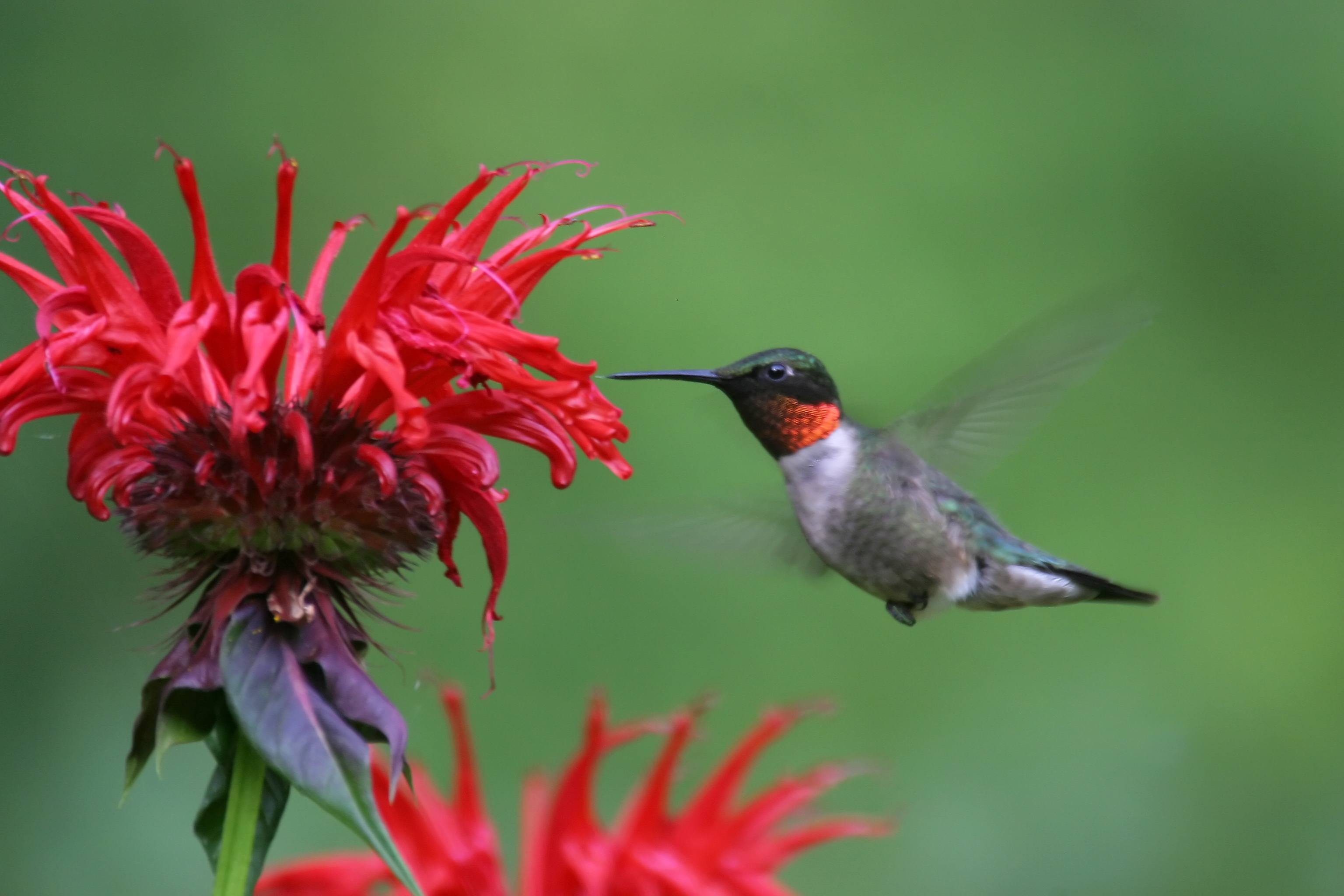
What type of symbiosis?  Hummingbirds feed on nectar from flowers.  The flowers are pollinated by hummingbirds as they move from flower to flower.
a)
commensalism
b)
mutualism
c)
parasitism
d)
predation
28.
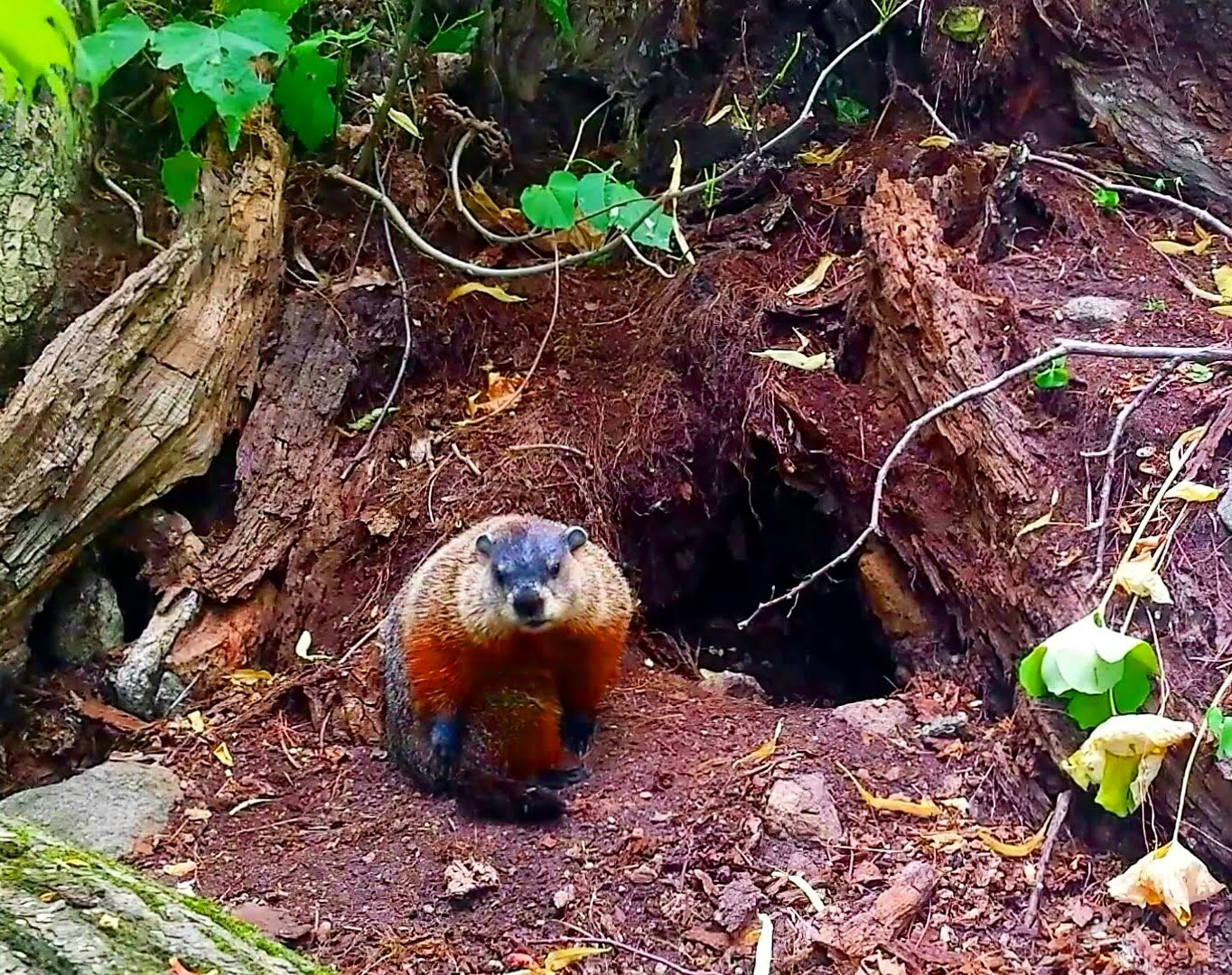
What type of symbiosis?  Skunks often live in burrows that have been dug and abandoned by woodchucks.  
a)
commensalism
b)
mutualism
c)
parasitism
d)
predation
29.
Which symbols best describe parasitism?
a)
+,+
b)
+,-
c)
+,0
d)
-,0
30.
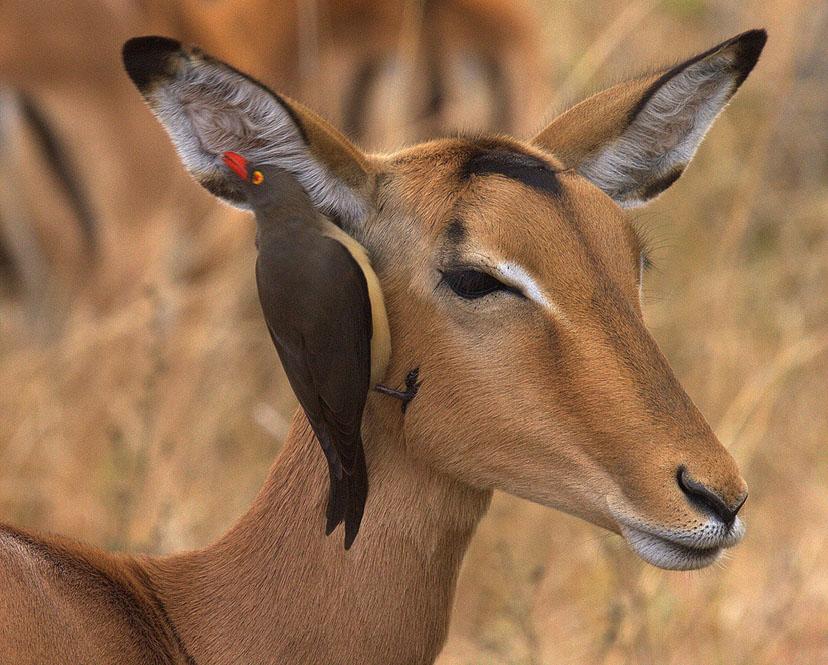
Red-billed oxpeckers are birds that often feed on parasites that infest impala.  This is an example of _______.
a)
commensalism
b)
mutualism
c)
neutralism
d)
competition
31.
A relationship between two organisms in which both organisms benefit. 
a)
Mutualism 
b)
Competition
c)
Parasitsm 
d)
Commensalism 
32.
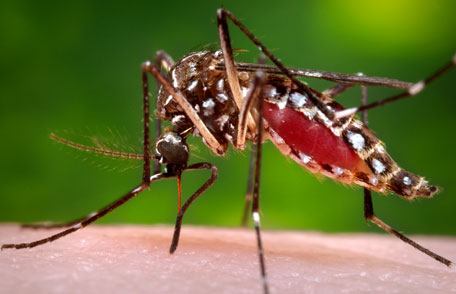
When a mosquito bites you, you are the __________ and the mosquito is the  ____________.
a)
host, hostess
b)
parasite, host
c)
host, parasite
d)
prey, predator
33.

Aphids are tiny insects that live on and eat the leaves of plants, removing vital nutrients from the plants.

a)

Predation

b)

Parasitism

c)

Commensalism

d)

Mutualism

34.
Which of he following interactions demonstrates a PARASITIC relationship?
a)
A mosquito sucking blood from a warm blooded animal.
b)
A group of baby otters floating together to help warm each other in the cold waters.
c)
Many fish swimming together to protect each other from predators.
d)
Two hyenas fighting over a female to mate with.
35.

Clown fish live among anemones, acting as a lure for the sea anemone's prey. The clown fish get protection and shelter from the anemone. This is an example of which type of symbiosis?

a)

Commensalism

b)

Mutualism

c)

Parasitism

36.

A bee and a flower work together to benefit each other. This is an example of a ______. The bee helps the flower by pollinating it and the flower helps the bee by providing it with nectar.

a)

commensalistic relationship

b)

parasitic relationship

c)

mutualistic relationship

37.

Hookworms enter the human body by burrowing into the skin of the feet. Once in the skin, they enter the bloodstream and travel to the small intestine where they attach to the walls and begin to drink the person's blood and weaken the victim.

a)

mutualism

b)

commensalism

c)

parasitism

38.

Lichens are close associations of fungi and algae. The fungi hold the water supply and the algae perform photosynthesis to manufacture carbohydrates for both organisms.

a)

mutualism

b)

commensalism

c)

parasitism

39.

In the jungles of South America lives a thorn tree call an acacia. A species of ant eats secretions of the acacia, drinks its sap, and raises its young in the hollow thorns. The ants also keep competing vines from growing near the acacia tree and they help repel any insects that would damage the acacia tree.

a)

mutualism

b)

commensalism

c)

parasitism

40.

Lactobacilli are a type of bacteria that live in our lungs and destroy many of the microorganisms that enter our respiratory system. They are highly adapted to living in our lungs and can't survive in many other habitats.

a)

mutualism

b)

commensalism

c)

parasitism

41.

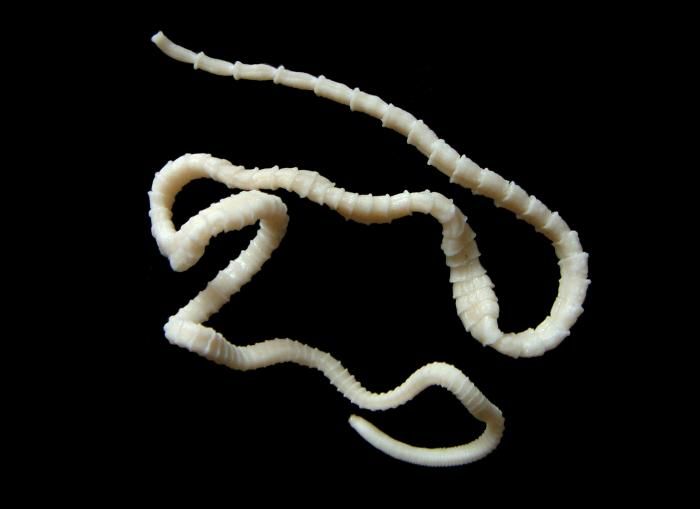
A tapeworm lives in the intestine of a cat absorbing nutrients through its skin. A tapeworm and a cat have this type of relationship.

a)

mutualism

b)

parasitism

c)

commensalism

d)

competition

42.

Mockingbirds will push the eggs out of a blue bird's nest and use the nest for it's own babies illustrating...

a)

commensalism

b)

parasitism

c)

mutualism

d)

predation

43.
The efficiency of energy transfer from a lower trophic level to the next highest level is roughly
a)
1%
b)
10%
c)
100%
d)
1000%
44.
Which animal is the apex predator?
a)
hawk
b)
lizard
c)
snake
d)
grass
45.
In the energy pyramid here, how much of the energy in each level gets lost as heat or used by the organism for survival?
a)
80%
b)
90%
c)
10%
d)
20%
46.
The arrows in a food chain or web represents what?
a)
They point to the organism that is being eaten.
b)
It shows how sunlight flows within an ecosystem.
c)
They show what direction the energy is flowing between organisms. 
d)
They represent how water is transferred within a habitat.
47.
The image provided is an example of a(n):
a)
Producer
b)
Autotroph
c)
Consumer
d)
Insect
48.
What does a food web represent?
a)
All connections of energy flow throughout all organisms in a habitat.
b)
The specific ways that mutualism is carried out.
c)
A single pathway or energy flow between organisms. 
d)
How carnivores get their food. 
49.
Organisms that create their own energy from sunlight or chemicals
a)
Herbivore
b)
Omnivore
c)
Autotroph
d)
Heterotroph 
50.
A wolf eats a rabbit, that just ate some berries.  What would you call the rabbit?
a)
Producer
b)
Omnivore
c)
Primary Consumer
d)
2nd order Heterotrph
51.

Which organism in the food web shown to the right would

contain the lowest concentration of chemical pollutants?

a)

producers

b)

primary consumers

c)

secondary consumers

d)

tertiary consumers

52.

What is the ultimate source of energy for most organisms?

a)

The Sun

b)

The Earth

c)

Plants

d)

Producers

53.

Which of the following correctly shows an energy pyramid?

a)

A

b)

B

c)

C

d)

D

54.

The collective mass of all living things in a particular area or at a specific trophic level of an ecosystem is known as...

a)

Population Size

b)

Biomagnification

c)

Biomass

d)

Apex Trophism

55.

The phenomenon by which toxins concentrate in the organisms at higher trophic levels within an ecosystem is known as...

a)

Biotoxicity

b)

Biomagnification

c)

Eutrophication

d)

Predation

56.

Consider the following food chain:

Algae > Mayfly > Minnow > Trout

In a polluted ecosystem, which organism would likely have the HIGHEST level of toxic chemicals in its body?

a)

Algae

b)

Mayfly

c)

Minnow

d)

Trout

57.
Which of the following removes carbon from the atmosphere?
a)
Combustion
b)
Respiration
c)
Photosynthesis
d)
Death
58.
What process occurs when coal (fossil fuel) is used for energy?
a)
Decomposition
b)
Combustion
c)
Pressurization 
d)
Respiration 
59.
Respiration is the process by which animals take in _____ and release _____. 
a)
photosynthesis, air
b)
carbon, oxygen
c)
oxygen
d)
oxygen, carbon dioxide
60.
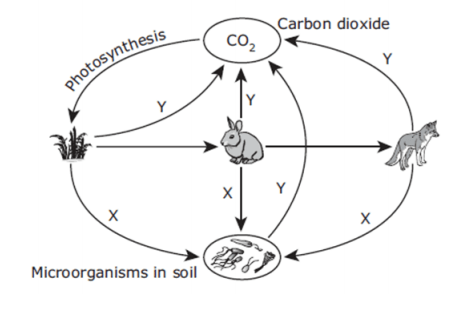
The diagram shows the flow of organic molecules through an ecosystem. What two processes are identified by the labels X and Y?
a)
X : Respiration
Y : Predation
b)
X : Adaptation
Y : Decomposition
c)
X : Fermentation
Y : Nitrogen Fixation
d)
X : Decomposition
Y : Respiration
61.
Organisms that do not decompose can be buried and become what?
a)
water
b)
nutrients
c)
air
d)
fossil fuels
62.
Carbon can be found in...
a)
The atmosphere
b)
Soil
c)
Fossil fuels
d)
All of the above
63.
What does NOT produce carbon dioxide?
a)
Photosynthesis
b)
Burning Fossil Fuels
c)
Animal respiration
d)
Plants decaying
64.
Combustion is another word for __________.
a)
Transportation
b)
Respiration
c)
Fossil Fuels
d)
Burning
65.
TRUE or FALSE?
All of the carbon in existence is continually recycled in the carbon cycle.
a)
True
b)
False
66.
The average temperature of the surface of Earth has increased approximately 1°C in the past century. Which reason best explains this increase in temperature?
a)
lower levels of ozone in the atmosphere
b)
lower levels of nitrogen in the atmosphere
c)
higher levels of carbon dioxide and other greenhouse gases in the atmosphere
d)
higher levels of oxygen in the atmosphere
67.

What converts nitrogen gas into a usable form for plants and animals?

a)

bacteria

b)

rain

c)

fungi

d)

car exhaust

68.

The process in which nitrogen circulates and is recycled is called

a)

The nitrogen cycle

b)

The carbon cycle

c)

The water cycle

d)

The phosphorus cycle

69.

Organisms that need nitrogen to survive.

a)

only plants

b)

only animals

c)

only bacteria

d)

all living things

70.

How is nitrogen "fixed" into a usable form for plants?

a)

Through action of bacteria only

b)

Through lightning only

c)

Through action of bacteria and lightning

d)

Through photosynthesis

71.

How do animals get the nitrogen they need?

a)

From the air they breathe

b)

From the water they drink

c)

From the food they eat

d)

From the sun

72.

Bacteria fix nitrogen from the atmosphere into a form plants can use.

a)

True

b)

False

73.

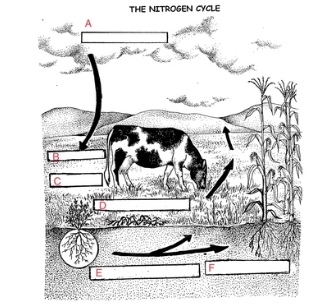
In the nitrogen cycle, what does label A in the diagram represent?

a)

Gas

b)

Clouds

c)

Carbon dioxide in the atmosphere

d)

Nitrogen in the atmosphere

74.
Plants and animals need nitrogen to make __________.
a)
Protein
b)
Carbohydrates
c)
Lipids
d)
Minerals