
 Worksheets
Earth Science Nature of Science Review
Total questions: 62
Worksheet time: 47mins
Name
Class
Date
1.
Why should an experiment be repeated?
a)
to form a hypothesis
b)
to reduce the chance of error
c)
to change controls
d)
to identify the problem
2.
What is the first thing you should do in order to conduct the experiment safely?
a)
obtain and open the materials described in the experiment
b)
mix your materials
c)
read over the lab and be sure you understand the directions.
d)
begin to work right away
3.
Which of the following might lead to the changing of a scientific idea?
a)
A scientist describes an experiment to a group of students
b)
A scientist gets the same results when repeating an experiment a second time
c)
a scientist gets results that do not fit a current idea and other scientists find his results are valid
d)
a scientist has to redo her experiment because she finds the correct procedure was not followed
4.
What skill are you using when you see a red spot on a desk.
a)
observation
b)
posing a question
c)
classifying
d)
hypothesis
5.
There is a mysterious liquid on your desk you should
a)
clean it up
b)
tell the teacher
c)
go to the office
d)
tell you neighbor
6.
A testable idea or explanation that leads to a scientific investigation is called (can be stated as an if/ then statement)
a)
conclusion
b)
experiment
c)
hypothesis
7.
The variable that stays the same
a)
independent
b)
dependent
c)
control
8.
The variable being tested. The one thing you change.
a)
independent
b)
dependent
c)
control
9.
The variable that is your result. Usually measured.
a)
independent
b)
dependent
c)
control
10.
Josh knows that baking soda reacts with vinegar He wants to show his fellow lab partners. He should
a)
Ask the other lab members if the experiment is safe
b)
Carefully pour the vinegar onto the baking soda
c)
Ask the teacher for permission!
11.
Mason drops and breaks a test tube. He should
a)
tell the teacher
b)
clean it up
c)
tell your neighbor
12.
used to organize data when it is collected
a)
data table
b)
graph
c)
experiment
d)
controlled variable
13.
the process of looking at data carefully and looking for relationships, patterns and solutions
a)
analyze
b)
interpret
c)
data table
d)
experiment
14.
Studies the solid portions of the earth, including volcanoes, earthquakes, and fossils.
a)
Geology
b)
Geography
c)
Cartography
d)
Oceanography
15.
Weather, climate, and the atmosphere are studied in this branch of Earth Science.
a)
Astronomy
b)
Meteorology
c)
Cartography
d)
Geology
16.
The study of the physical and biological parts of Earth's oceans.
a)
Geology
b)
Geography
c)
Cartography
d)
Oceanography
17.
The study of the stars and other celestial bodies.
a)
Meteorology
b)
Astronomy
c)
Oceanography
d)
Astrology
18.
This part of the Earth System includes the gases that surround the earth.
a)
Geosphere
b)
Atmosphere
c)
Hydrosphere
d)
Biosphere
19.
This part of the Earth System includes all living things, including plants and animals.
a)
Geosphere
b)
Atmosphere
c)
Hydrosphere
d)
Biosphere
20.
This part of the Earth System includes the planet's water, including the oceans, lakes, rivers, ground water, ice, and vapor.
a)
Geosphere
b)
Atmosphere
c)
Hydrosphere
d)
Biosphere
21.
This part of the Earth System includes the crust, mantle, and core.
a)
Geo-sphere (Lithosphere)
b)
Atmosphere
c)
Hydrosphere
d)
Biosphere
22.
Which of the following is a scientific observation?
a)
The potato is brown in color.
b)
The potato tastes the best.
c)
The potato may cause allergies.
d)
The potato smells funny.
23.
Using the 5 senses to understand what is happening around you is called
a)
experimenting
b)
observing
c)
hypothesizing
d)
sensing
24.
What is an inference?
a)
Just a guess.
b)
A statement based off of your observations.
c)
The same as an observation.
d)
Examples of something.
25.

The boy is in the water.
a)
inference
b)
observation
26.

If the boy crawled out of the water, the goat would push him in.
a)
inference
b)
observation
27.
You should never ______ chemicals in the lab.
a)
taste
b)
touch
c)
smell
d)
all of the above
28.
If you are not sure what to do during a lab activity:
a)
guess
b)
change lab partners
c)
ask a teacher
d)
just sit quietly and do nothing
29.
I can perform my own experiments with lab materials ___.
a)
I am sure it is safe to do so.
b)
Whenever I want to.
c)
When all of my group is ready.
d)
Never.
30.
Disrupting other students in the laboratory with horseplay in the lab is:
a)
helpful.
b)
allowed
c)
dangerous.
d)
the quickest way to do a job.
31.
What is the CORRECT procedure for students to follow if a chemical is spilled?
a)
Stand back and advise the teacher of the spill.
b)
Run madly out of the room.
c)
Splash large amounts of water onto the spill.
d)
Immediately ask to go to the restroom.
32.
At the end of the lab you see some leftover chemical that looks just like the stuff you were using. You should:
a)
put the chemical back in the jar it came from.
b)
sweep it into your hand and throw it out.
c)
tell the teacher so you can dispose of it properly.
d)
tell your classmates that your lab partner is really messy.
33.
When in the lab you should wear...
a)
open-toed shoes.
b)
sandals.
c)
closed-toes shoes.
d)
no shoes.
34.
Which of the following IS considered safety equipment in our classroom?
a)
Eyewash Station
b)
Emergency Shower
c)
Fire Extinguisher
d)
All of the Above.
35.
You should report accidents to the teacher __.
a)
after the class is over
b)
immediately
c)
the following day
d)
never
36.
Labs are individual activities and you should ignore your group members or be the only one working.
a)
True
b)
False
37.
When should you look over the experiment instructions?
a)
After starting the lab
b)
When your teacher tells you to
c)
Before starting the lab
d)
It doesn't really matter. Instructions are silly!
38.
Which of the following are examples of dressing appropriately in the lab?
a)
Pulling long hair back
b)
Leaving long hair down to get in the chemicals.
c)
Wearing sandals
39.
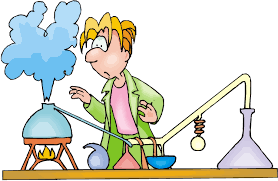
When is it OK to eat or drink in the lab?
a)
Always
b)
Never
40.
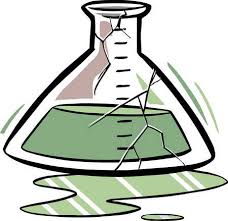
If you break glassware in the lab, you should...
a)
Tell the teacher
b)
Clean it up quickly before the teacher notices
c)
Scream at the top of your lungs
41.

When in the lab...
a)
long sleeves and loose clothing should be rolled up
b)
closed toe shoes should be worn
c)
long hair should be pulled back
d)
all of the above
42.
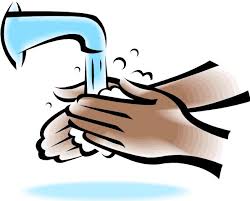
Before leaving the lab you should always wash your hands.
a)
True
b)
False
43.

It's fine to smell chemicals directly from their containers.
a)
True
b)
False
44.
If you get something in your eyes, how long do you need to use the eyewash station?
a)
15 - 20 seconds
b)
5 minutes
c)
15 - 20 minutes
d)
Don't use the eyewash.
45.
If you do not understand a direction or part of a lab procedure, you should
a)
skip it and go on to the next part.
b)
ask the instructor before proceeding
c)
try several methods until something works
d)
figure it out as you do the lab
46.
After completing an experiment, all chemical wastes should be
a)
taken home
b)
dumped in the sink
c)
disposed of according to your instructor’s directions
d)
left at your lab station for the next class
47.
You have been injured in the laboratory (cut, burn, etc.). First you should
a)
apply first aid yourself
b)
tell the science instructor at once
c)
see a doctor after school
d)
visit the school nurse after class
48.
Hot glass looks the same as cold glass.
a)
True
b)
False
49.
Never remove chemicals or other equipment from the laboratory.
a)
True
b)
False
50.
Chipped or cracked glassware is okay to use.
a)
True
b)
False
51.
Read all procedures thoroughly before entering the laboratory
a)
True
b)
False
52.
It’s okay to pick up broken glass with your bare hands as long as the glass is placed in the trash.
a)
True
b)
False
53.
You are allowed to enter the chemical preparation/storage area any time you need to get an item
a)
True
b)
False
54.
All chemicals in the lab are to be considered dangerous
a)
True
b)
False
55.
You are heating a substance in a test tube. Always point the open end of the tube
a)
away from all people
b)
toward another classmate
c)
toward your lab partner
d)
toward yourself
56.
Approved eye protection devices (such as goggles) are worn in the laboratory
a)
to avoid eye strain
b)
to improve your vision
c)
only if you don’t have corrective glasses
d)
any time chemicals, heat or glassware are used
57.
When gathering glassware and equipment for an experiment, you should
a)
All of the choices
b)
clean any glassware that appears dirty
c)
examine all glassware to check for chips or cracks
d)
read all directions carefully to know what equipment is necessary
58.
In a laboratory, the following should not be worn.
a)
all of the answers
b)
dangling jewelry
c)
sandals
d)
loose clothing
59.
Horseplay or practical jokes in the laboratory are
a)
okay if you are working alone
b)
not dangerous
c)
okay
d)
always against the rules
60.
If a piece of equipment is not working properly, stop, turn it off, and tell
a)
the science instructor
b)
your best friend in the class
c)
the custodian
d)
your lab partner
61.
When is it OK to eat or drink at the lab tables?
a)
Always
b)
During group work, but not during lab activities
c)
Never
d)
During lab activities
62.
What should you do if you break glass in the lab?
a)
Tell the teacher, sweep up the glass, and put it in the broken glass container
b)
Tell the teacher, sweep up the glass, and dump it into the garbage
c)
Pick up the glass with your hands
d)
Ignore it; the teacher will clean it up
100 %

