Wayground logo

Free Printable Worksheets

Font size

S
M
L
XL
Worksheets

Tissue and Membrane Review

Total questions: 63

Worksheet time: 42mins

Name
Class
Date
1.
Which tissue is this?
a)
Simple Squamous
b)
Stratified Squamous
c)
Simple cuboidal
d)
Pseudostratified columnar
2.
Which tissue is this?
a)
Simple squamous
b)
simple columnar
c)
transitional
d)
simple cuboidal
3.
which tissue is this?
a)
Pseudostratified columnar
b)
Stratified Squamous
c)
Simple Columnar
d)
Transitional
4.
Which type of muscle tissue would line the intestines?
a)
Smooth
b)
Cardiac
c)
Skeletal
d)
Transitional
5.
What type of Connective tissue is found at the ends of bones to reduce friction?
a)
Cartilage
b)
Dense connective tissue
c)
Adipose Tissue
d)
Loose connective tissue
6.
What type of tissue SIGNALS the intestines to move food along?
a)
Nervous Tissue
b)
Blood Tissue
c)
Smooth muscle tissue
d)
Skeletal Muscle Tissue
7.
What type of muscle tissue is VOLUNTARILY controlled
a)
Skeletal Only
b)
Skeletal and Cardiac
c)
Smooth and Cardiac
d)
Cardiac Only
8.
Define tissue with regards to anatomy
a)
A group of structurally and functionally related cells that come together to perform common functions
b)
Multiple sheets of thin paper used to clean your nose
c)
A series of different cells in the same area
d)
The smallest structural and functional unit of an organism
9.
What is the function of epithelial cells?
a)
Act as barriers between the external environment, or between organs and fluidfilled cavities
b)
Provide movement by pulling on bones
c)
Provide secretions which help to digest food
d)
Act as the messaging pathway between different areas of the body
10.
What tissue type is this?
a)
Adipose tissue
b)
Cardiac muscle
c)
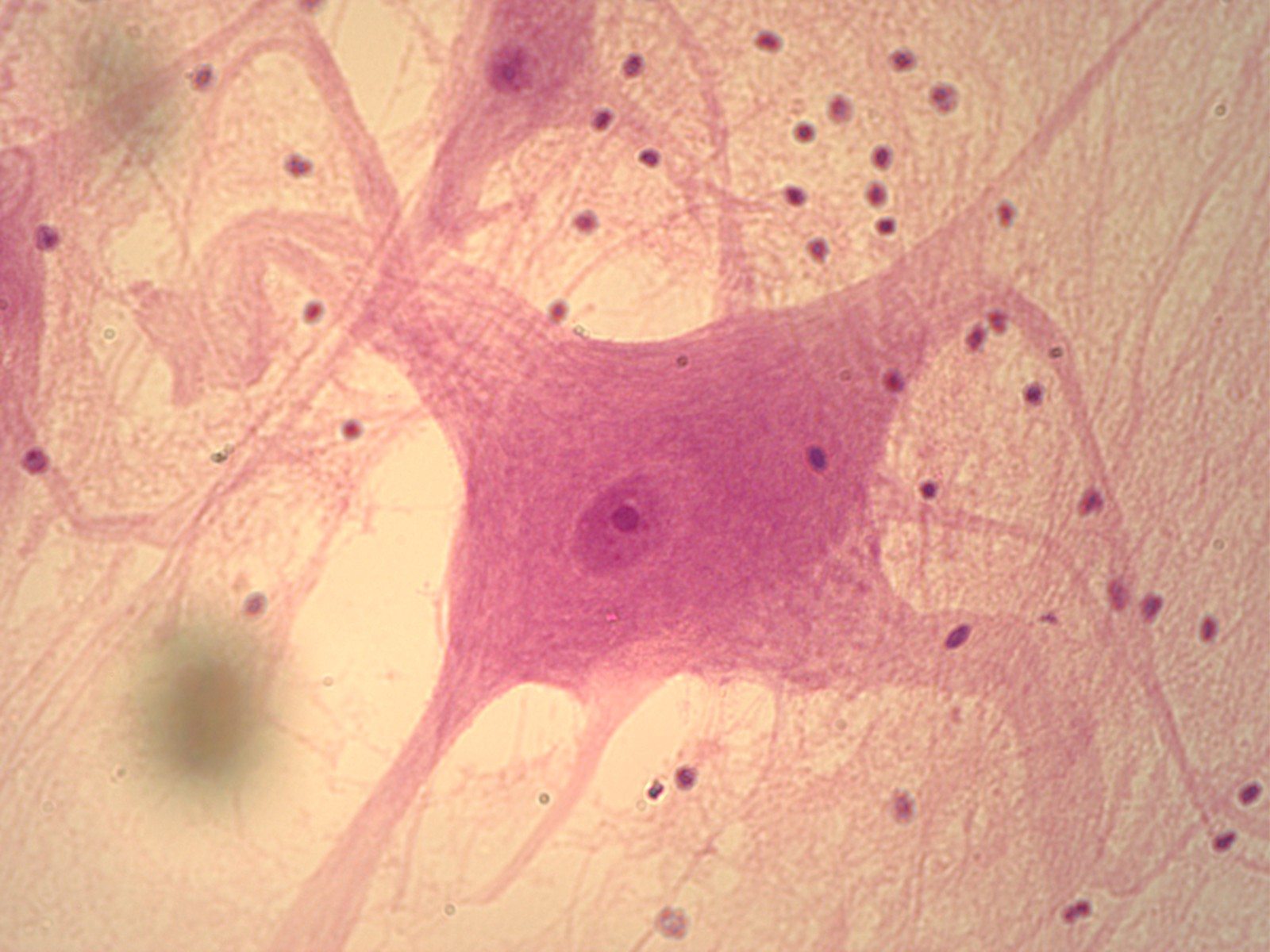
Nervous tissue
d)
Skeletal muscle
11.
What tissue type is this?
a)
Nervous tissue
b)
Cardiac muscle
c)
Smooth muscle
d)
Connective tissue proper
12.
What tissue type is this?
a)
Skeletal muscle
b)
Nervous tissue
c)
Adipose tissue
d)
'Specialised' connective tissue
13.
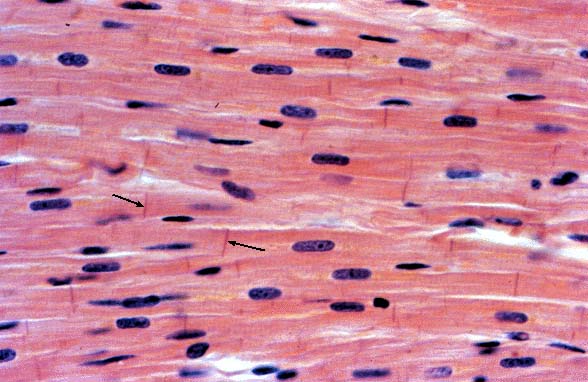
Intercalated discs are found in which muscle type?
a)
Cardiac
b)
Skeletal
c)
Lateral
d)
Smooth 
14.
Which type of tissue is this? 
a)
Cardiac
b)
Nervous
c)
Epithelial
d)
Muscle 
15.
The muscle tissue which shows no striations is 
a)
skeletal muscle
b)
smooth muscle
c)
cardiac muscle
16.
Which of the following is NOT one of the four primary tissue types?
a)
Gastric
b)
Connective
c)
Muscle
d)
Epithelial
17.

Which of the following cell types is correctly matched with it's cell shape?

a)

Squamous - flattened, tiles

b)

Cuboidal - rectangular

c)

Columnar - flattened, scales

d)

Columnar - cubed/square

18.
What is the general structure of cuboidal cells?
a)
Square with large central nucleus
b)
Flat, 'fried egg' appearance
c)
Rectangular with nucleus towards basal end
d)
Dead apical cells filled with keratin
19.
The common term for adipose tissue is
a)
Fat
b)
Blood
c)
Bone
d)
Cartilage
20.
Cardiac muscle is specific to which organ?
a)
Heart
b)
Brain
c)
Pancreas
d)
Lungs
21.
What is the cell type in nervous tissue responsible for sending and receiving messages?
a)
Neurons
b)
Neuroglial cells
c)
Dendrites
d)
Axons
22.
What tissue type is this? (The arrows are a clue)
a)
Cardiac muscle
b)
Skeletal muscle
c)
Smooth muscle
d)
Nervous tissue
23.
The top surface of an epithelial tissue
a)
Apical Suface
b)
Basement membrane
24.
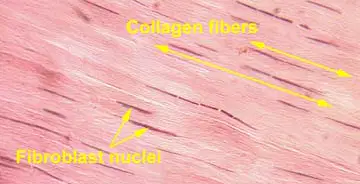
What type of Connective Tissue are TENDONS and LIGAMENTS
a)
Dense Connective Tissue
b)
Osseous Tissue
c)
Loose connective Tissue
d)
Cartilage
25.
Which type of epithelial tissue stretches and is found in the bladder and other urinary organs?
a)
Transitional
b)
Simple Cuboidal
c)
Stratified Squamous
d)
Stratified Columnar
26.
One would find Pseudostratified Columnar Epithelium lining the 
a)
upper respiratory tract
b)
heart
c)
intestines
d)
surface of the skin
27.
Types of epithelial tissue include all of the following EXCEPT 
a)
cartilage
b)
simple squamous
c)
glandular
d)
transitional
28.
Which of the following is not one of the epithelial membranes?
a)
cutaneous membrane
b)
mucous membrane
c)
serous membrane
d)
dermis membrane
29.
What is the only connective tissue membrane in the body?
a)
synovial membrane
b)
cartilaginous membrane
c)
dermal membrane
d)
serous membrane
30.
Which of the epithelial membranes is a dry membrane?
a)
cutaneous
b)
serous
c)
mucous
d)
synovial
31.
What body membrane lines all body cavities that open to the exterior body surface?
a)
synovial
b)
serous
c)
mucous
d)
cutaneous
32.

Which layer of the serous membrane lies closest to the organ?

a)

visceral

b)

parietal

c)

peritoneal

d)

endoral

33.
How do we classify body membranes?
a)
by the tissue types that make them up
b)
by the job they perform
c)
by the size of the membrane
d)
by the cavities they are located in
34.
Which of the following is not a type of body membrane?
a)
Connective
b)
Epithelial
c)
Nervous
35.
true or false
A blister is caused by a burn or friction between the epidermis and dermis resulting in a build up of interstitial fluid
a)
true
b)
false
36.
avascular means...
a)
no blood supply
b)
poor blood supply
c)
great blood supply
37.
Mucous membrane:
a)
forms the pleurae.
b)
forms the peritoneal membranes.
c)
lines the respiratory tract.
d)
is a type of connective tissue membrane.
38.
What does muscle tissue do?
a)
carries messages to and from the brain
b)
provides structure and support
c)
causes movement
d)
forms the protective outer layer of skin
39.
What does nervous tissue do?
a)
carries messages to and from the brain
b)
provides structure and support
c)
causes movement
d)
forms the protective outer layer of skin
40.
What does epithelial tissue do?
a)
carries messages to and from the brain
b)
provides structure and support
c)
causes movement
d)
forms the protective outer layer of skin
41.
What does connective tissue do?
a)
carries messages to and from the brain
b)
provides structure and support
c)
causes movement
d)
forms the protective outer layer of skin
42.
Which of these is NOT a function of membranes in the body
a)
exchange nutrients and waste with systems
b)
cover body surfaces
c)
line body cavities
d)
form protective sheets around organs
43.

What is the function of neuroglia?

a)

send and receive nerve impulses

b)

generate nerve impulses

c)

aid in keeping neurons alive

44.
What's the difference between parietal and the visceral layers of a serous membrane ?
a)
parietal covers organs and the visceral lines the walls of body cavities
b)
parietal is on the inside and the visceral is on the outside
c)
parietal releases mucus and the visceral absorbs
d)
parietal lines the walls of body cavities and the visceral covers organs found in body cavities 
45.
True or False- Connective tissue is found everywhere in the body
a)
True 
b)
False wrong
46.
Which of the following best describes scar tissue?
a)
sarcoma
b)
regeneration
c)
meninges
d)
fibrosis
47.
The two types of cells that make up nervous tissue are
a)
striated and voluntary
b)
neuroglial and neurons
c)
chondrocytes and osteocytes
d)
Axons and dendrites
48.
The connective tissue has an extra cellular matrix.
a)
True
b)
False
49.
The matrix of our blood would be described as a(n):
a)
Soild
b)
Gel 
c)
Liquid
d)
Vascular 
50.
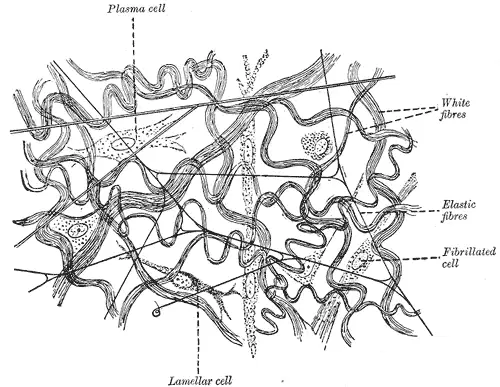
Connective tissue fibers include
a)
proteoglycans, adhesion proteins and interstitial
b)
collagen, elastic and reticular
c)
osteoblasts, fibroblasts and hemoblasts
51.
Name this tissue
a)
Bone
b)
Hyaline cartilage
c)
Fibrocartilage
d)
Adipose
52.
Name this tissue
a)
Bone
b)
Cartliage
c)
Blood
d)
Dense fibrous connective tissue
53.
Name this tissue
a)
Bone
b)
Hyaline cartilage
c)
Fibrocartilage
d)
Adipose
54.
Name this tissue
a)
Bone
b)
Cartilage
c)
Blood
d)
Adipose
55.
Most connective tissue is well vascularized. What does that mean?
a)
Poor blood supply
b)
Good blood supply
56.
Name this tissue
a)
Bone
b)
Cartilage
c)
Blood
d)
Adipose
57.

Match the following types of fibers with their level of movement
a)

1.

very little movement

b)

2.

most amount of movement

c)

3.

medium amount of movement

58.

tissue type that cannot regenerate

a)

epithelial

b)

connective

c)

nervous

d)

muscle

e)

bone

59.

What tissue is pictured?

a)

Elastic Tissue

b)

Areolar

c)

Adipose

d)

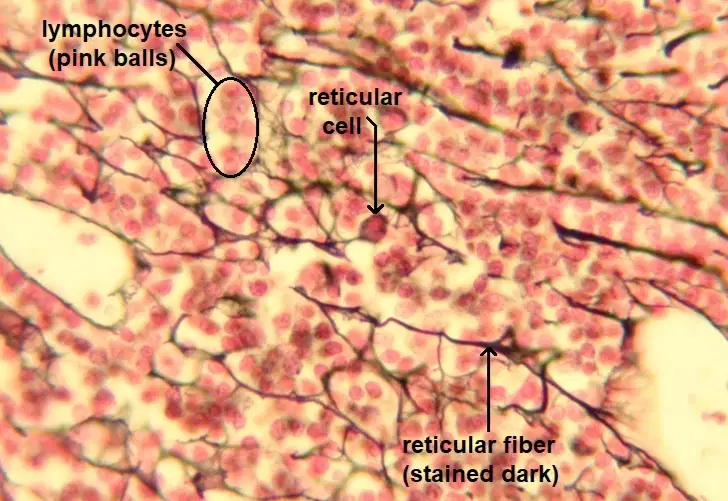
Reticular

60.

What tissue is pictured?

a)

Blood

b)

Regular

c)

Nervous

d)

Bone

61.

What tissue is pictured?

a)

Blood

b)

Regular

c)

Nervous

d)

Bone

62.

What tissue is pictured?

a)

Hyaline

b)

Irregular

c)

Fibrocartilage

d)

Bone

63.

Lable the muscle tissue types.