wayground logo

Free Printable Worksheets

NEW

Font size

S
M
L
XL
Worksheets

Weather

Total questions: 51

Worksheet time: 43mins

Name
Class
Date
1.
What is the water cycle?
a)
the 3 forms of water
b)
the movement of water on, above, or below the surface of the Earth
c)
when water melts
d)
when clouds form
2.
What is the energy source for the water cycle?
a)
the sun
b)
the earth
c)
water
d)
the moon
3.
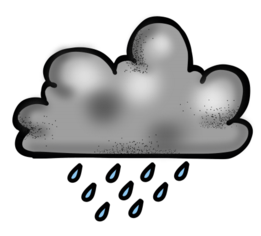
What part of the water cycle does this picture show?
a)
condensation
b)
precipitation
c)
evaporation
4.
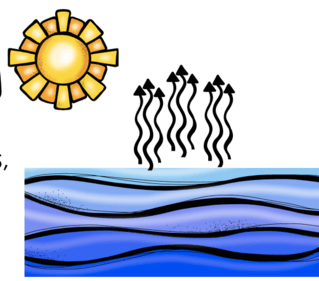
What part of the water cycle does this picture show?
a)
condensation
b)
precipitation
c)
evaporation
5.
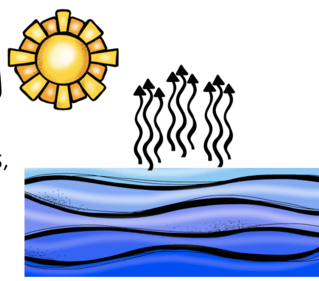
What part of the water cycle does this picture show?
a)
condensation
b)
precipitation
c)
evaporation
6.
What is evaporation?
a)
The part of the water cycle when the sun heats up water, turning it from a liquid into water vapor or steam. It rises from the ground into the air.
b)
The part of the water cycle when the water vapor in the air gets cold. The water turns back into a liquid and forms clouds.
c)
The part of the water cycle when clouds get heavy and can no longer hold the liquid water. This causes the water to fall from the sky to the earth as rain, snow, sleet, or hail.
7.
What is condensation?
a)
The part of the water cycle when the sun heats up water, turning it from a liquid into water vapor or steam. It rises from the ground into the air.
b)
The part of the water cycle when the water vapor in the air gets cold. The water turns back into a liquid and forms clouds.
c)
The part of the water cycle when clouds get heavy and can no longer hold the liquid water. This causes the water to fall from the sky to the earth as rain, snow, sleet, or hail.
8.
What is precipitation?
a)
The part of the water cycle when the sun heats up water, turning it from a liquid into water vapor or steam. It rises from the ground into the air.
b)
The part of the water cycle when the water vapor in the air gets cold. The water turns back into a liquid and forms clouds.
c)
The part of the water cycle when clouds get heavy and can no longer hold the liquid water. This causes the water to fall from the sky to the earth as rain, snow, sleet, or hail.
9.
When water condenses, the liquid water forms ______________.
a)
water vapor
b)
steam
c)
air
d)
clouds
10.
Precipitation happens when clouds of water droplets are too ______________.
a)
cold
b)
light
c)
heavy
d)
hot
11.
Evaporation happens when the sun ___________ water and turns it into vapor.
a)
cools
b)
heats up
c)
freezes
d)
lights up
12.
Which of these is an example of precipitation?
a)
snow
b)
air
c)
clouds
d)
vapor
13.
During which stage do clouds form?
a)
condensation
b)
evaporation
c)
precipitation
14.
What is the name of this tool?
a)
wind vane
b)
anemometer
c)
wind sock
15.

what does this tool measure?

a)

wind direction

b)

wind speed

c)

temperature

d)

humidity

16.
The water cycle has no start or end
a)
true
b)
false
17.

What is it called when water evaporates from plants?

a)

condensation

b)

evaporation

c)

precipitation

d)

transpiration

18.
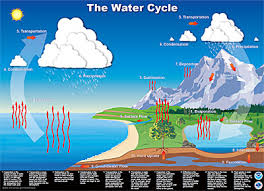
What does this illustration show?
a)
Sunrise
b)
The Water Cycle
c)
Sunset
d)
the recycling of snow
19.
What is water that flows in rivers and streams into the oceans and lakes?
a)
evaporating
b)
condensing
c)
precipitating
d)
runoff
20.
Where is most water found on Earth?
a)
glaciers
b)
lakes
c)
rivers
d)
oceans
21.

What is the name of this weather tool?

a)

wind vane

b)

anemometer

c)

thermometer

d)

rain gauge

22.

What is the name of this weather tool?

a)

wind vane

b)

rain gauge

c)

anemometer

d)

thermometer

23.

A wind vane ____________.

a)

Points in the direction the wind is blowing.

b)

Points in the direction the wind is coming from

c)

Measures the amount of fallen precipitation

d)

Shows the temperature

24.

A rain gauge measures the amount of ________________.

a)

Temperature

b)

Precipitation (snow, rain, sleet, hail)

c)

Wind speed

25.

An anemometer measures _____________.

a)

Precipitation

b)

Wind Speed (mph)

c)

Temperature

d)

Wind direction

26.

Which weather tool measures the temperature?

a)

Anemometer

b)

Wind Vane

c)

Thermometer

d)

Rain Gauge

27.
These clouds are wispy or curly, white, thin & feather-like
a)
cumulus
b)
cumulonimbus
c)
cirrus
d)
stratus
28.
These clouds are very high in the sky.
a)
cumulus
b)
cumulonimbus
c)
cirrus
d)
stratus
29.
These clouds are made of ice crystals.
a)
cumulus
b)
cumulonimbus
c)
cirrus
d)
stratus
30.
These clouds are puffy and white and sometimes appear to have a flat bottom.
a)
cumulus
b)
cumulonimbus
c)
cirrus
d)
stratus
31.
These clouds appear in blanket-like layers.
a)
cumulus
b)
cumulonimbus
c)
cirrus
d)
stratus
32.
These clouds bring rainy or overcast weather.
a)
cumulus
b)
cumulonimbus
c)
cirrus
d)
stratus
33.

Fog is this type of cloud when it is close to the ground

a)

cumulus

b)

cumulonimbus

c)

cirrus

d)

stratus

34.
Which cloud is this?
a)
cumulus
b)
cumulonimbus
c)
cirrus
d)
stratus
35.
Which cloud is this?
a)
cumulus
b)
cumulonimbus
c)
cirrus
d)
stratus
36.
Which cloud is this?
a)
cumulus
b)
cumulonimbus
c)
cirrus
d)
stratus
37.

A severe storm with lightning, thunder, heavy rain and strong winds.

a)

Tornado

b)

Thunderstorm

c)

Hurricane

38.

Some effects of thunderstorms could include

a)

Flooding

b)

Fire caused by lightning

c)

Strong winds blowing over trees and power lines

d)

All of the above

39.

What type of severe weather is pictured?

a)

Hurricane

b)

Tornado

c)

Thunderstorm

40.

Some thunderstorms produce hail.

a)

True

b)

False

41.

A funnel-shaped cloud that comes down from a storm cloud with winds spinning at very high speeds.

a)

Tornado

b)

Hurricane

c)

Thunderstorm

42.

Some effects of a tornado could include

a)

High winds

b)

Damaged buildings

c)

Destroyed crops

d)

All of the above

43.

The severe weather pictured is a ______________?

a)

Tornado

b)

Hurricane

c)

Thunderstorm

44.

A large storm that forms over warm ocean water with very strong winds that blow in a circular pattern around the center, or eye, of the storm.

a)

Thunderstorm

b)

Hurricane

c)

Tornado

45.

Effects of a hurricane include

a)

Flooding

b)

High winds blowing over trees and powerlines

c)

High winds causing damage to buildings

d)

All of the above

46.

During a tornado you should ___________.

a)

Stand near a window

b)

Find shelter away from windows or lie flat in a low place such as a ditch

c)

Stand outside

47.

During a thunderstorm you should ____________.

a)

Stay inside

b)

Stay out of water

c)

Don't stand under trees

d)

All of the above

48.

During a hurricane you should _________.

a)

Leave windows uncovered

b)

Board up windows and move further inland if you live near the coast.

c)

None of the above

49.

When a warm front passes over an area, the temperature __________.

a)

Increases

b)

Decreases

c)

Stays the same

50.

When a cold front passes over an area, the temperature ___________.

a)

Increases

b)

Decreases

51.

A weather map shows ____________.

a)

Large masses of warm or cold moving air.

b)

Wind speed

c)

Precipitation