
 Worksheets
CFA 1: 7.12 C, D, F
Total questions: 81
Worksheet time: 1hrs 3mins
Name
Class
Date
1.

Which of the following scientists contributed to the cell theory?
a)
Rudolf Virchow, Robert Hooke, Anton van Leuwenhoek
b)
Matthais Schleiden, Theodor Schwann, Rudolf Virchow
c)
Robert Hooke, Theodor Schwann, Anton von Leuwenhoek
d)
Theodor Schwann, Matthais Schleiden, Robert HookeOption 4 (optional)
2.
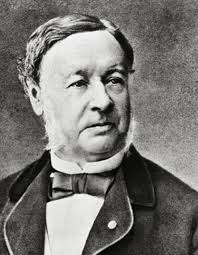
Which of the following scientists concluded that all animals are made of cells?
a)
Rudolf
Virchow
b)
Matthais
Schleiden
c)
Robert
Hooke
d)
Theodor
Schwann
3.

Which of the following scientists was the first to observe bacteria?
a)
Anton
van Leuwenhoek
b)
Matthais
Schleiden
c)
Robert
Hooke
d)
Theodor Schwann
4.
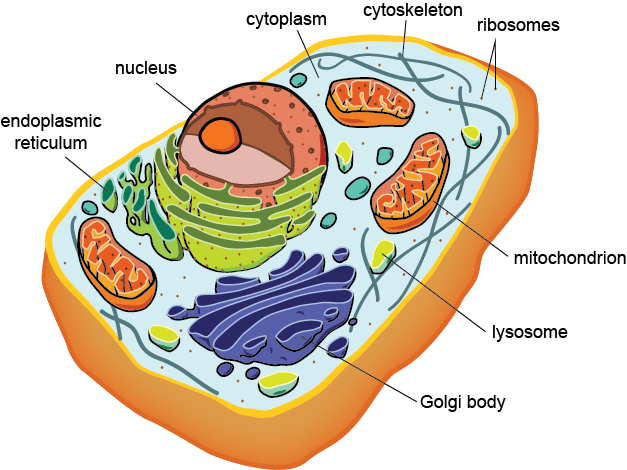
Which of the following statements is not part of the cell theory?
a)
Cells are the basic unit of structure and function in all living things.
b)
All cells are produced from other cells.
c)
Only animal cells are composed of cells.
d)
All living things are composed of cells.
5.

The invention of the microscope made it possible for people to discover and learn about
a)
Plants
b)
Skin
c)
Animals
d)
Cells
6.

What is one way in which all living things on Earth are alike?
a)
All living things have hair.
b)
All living things are made of cells and come from other cells.
c)
The cells of all living things have chloroplast.
d)
All living things can move.
7.

Which statement reflects one of the major components of the cell theory?
a)
All living things are multi-cellular.
b)
Organs are the basic unit of structure and function for all living things.
c)
All cells come from previously existing cells.
d)
Every organism has a reproductive system to ensure survival of the species.
8.
What structures distinguish a plant cell from an animal cell?
a)
Plant cells have cell walls and ribosomes.
b)
Plant cells have cell walls and chloroplasts.
c)
Plant cells have chloroplasts and ribosomes.
d)
Plant cells have chloroplasts and mitochondria.
9.
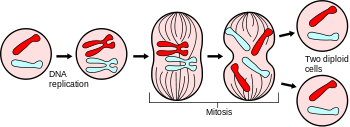
When cells are damaged, new cells are created by cell division. How does the cell theory support this fact?
a)
It states that all cells have a nucleus which divides.
b)
It states that all living things are made up of one or more cells.
c)
It states that cells come from previously existing cells.
d)
It states that the basic units of structure and function are cells.
10.

Which organism is made up of cells that have both a cell membrane and a cell wall?
a)
desert mouse
b)
human
c)
maple tree
d)
zebra
11.
The ___ is the basic unit of sturucture and function of organisms
a)
atom
b)
cell
c)
matter
d)
all other answers are correct
12.
Which statement is a part of the cell theory?
a)
all cells come from preexisting cells
b)
bacteria are prokaryotic cells
c)
eukaryotic cells are complex
d)
humans are multicellular
13.
The Cell Theory states...
a)
atoms create all matter
b)
living things evolve
c)
the cell is the backbone of all matter
d)
cells are the basic unit of structure and organization of organisms
14.

Robert Hooke, Anton van Leeuwenhoek, Theodor Schwann, Rudolf Virchow, and Matthias Schliden were all responsible for what theory?
a)
The Theory of Gravity
b)
The Theory of Relativity
c)
The Cell Theory
d)
The Theory of Continental Drift
15.
What tool do you use to view the cells?
a)
metric ruler
b)
centrifuge
c)
microscope
d)
pipette
16.
Which of the following is NOT a cell theory.
a)
All non-living things are made of cells
b)
All cells come from pre-existing cells
c)
Cells are the basic unit of structure and function of all living things
17.

Which scientist did NOT contribute to the cell theory?
a)
Anton Van Leeuwenhoek
b)
Robert Hooke
Robert Hooke
c)
Albert Einstein
d)
Matthias Schleiden
Matthias Schleiden
18.

Which of the following is NOT one of the basic points of Cell Theory?
a)
All living things are made of cells.
b)
The cell is the smallest living thing that can perform all the functions of life.
c)
Cells are too small to see without a microscope.
d)
All cells must come from pre-existing cells.
19.

Cells are often called "the ____ of life."
a)
bread
b)
road map
c)
building blocks
d)
meaning
20.
The ___ is the basic unit of sturucture and function of organisms
a)
atom
b)
cell
c)
matter
d)
all other answers are correct
21.
In what organelle is the genetic material found inside?
a)
Endoplasmic Reticulum
b)
Golgi Complex
c)
Nucleolus
d)
Nucleus
22.
What organelle is called the "powerhouse" of a cell?
a)
Endoplasmic Reticulum
b)
Nucleus
c)
Mitochondria
d)
Nucleolus
23.

Using this image, what organelle is C?
a)
Cell Wall
b)
Mitochondria
c)
Large Cell Vacuole
d)
Chloroplast
24.
What is the function of the mitochondria?
a)
Structure that manufactures ribosomes
b)
Structures that converts nutrients to energy
c)
Stack of membranes that packages chemicals
d)
Structure that contains DNA and directs the cell
25.
What is the function of the vacuole?
a)
Sac that stores water, nutrients, and waste products
b)
Sac filled with digestive chemicals
c)
Jelly-like substance within the plasma membrane
d)
stack of membranes that packages chemicals
26.
What is the function of nucleus?
a)
Structure that organizes motion of chromosomes.
b)
Structure that contains DNA and directs the cell
c)
Membrane that surrounds and protects the cell
d)
Stack of membranes that packages chemicals
27.
Where does photosynthesis occur?
a)
mitochondria
b)
stomata
c)
xylem
d)
chloroplast
28.

I store water in both plant and animal cells. What am I?
a)
cytoplasm
b)
ribosomes
c)
vacuole
d)
lysosomes
29.

I make proteins for the cell. What am I?
a)
ribosome
b)
mitochondria
c)
chloroplast
d)
lysosome
30.
What can only be found in plant cells?
a)
Cell membrane
b)
Vacuole
c)
Chloroplast
d)
Mitochondrion
31.

What cell part is NOT found in all cells?
a)
Cell Wall
b)
Cell Membrane
c)
Cytoplasm
d)
Genetic Material
32.
This organelle takes food and turns it into ENERGY for plant and animal cells.
a)
Chloroplast
b)
Mitochondria
c)
Lysosome
d)
Ribosome
33.
The site of photosynthesis
a)
ribosome
b)
mitochondria
c)
chloroplast
d)
nucleus
34.

Which part of the cell is often called "the brain of the cell"?
a)
nuclear membrane
b)
endoplasmic reticulum
c)
nucleus
d)
mitochondria
35.
Where are proteins made?
a)
Golgi body
b)
Mitoichondria
c)
Chromosomes
d)
Ribosomes
36.
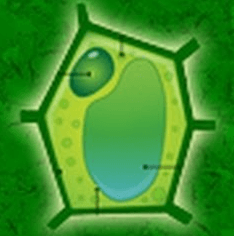
A rigid layer that lies outside the cell's membrane is...
a)
Cytoskeleton
b)
Cilia
c)
Cell Wall
d)
Flagella
37.
What is the function of the vacuole?
a)
Sac that stores water, nutrients, and waste products
b)
Sac filled with digestive chemicals
c)
Jelly-like substance within the plasma membrane
d)
stack of membranes that packages chemicals
38.

I store water in both plant and animal cells. What am I?
a)
cytoplasm
b)
ribosomes
c)
vacuole
d)
lysosomes
39.
What can only be found in plant cells?
a)
Cell membrane
b)
Vacuole
c)
Chloroplast
d)
Mitochondrion
40.
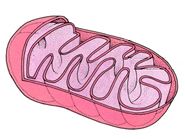
What is the name of the structure shown in the diagram where cellular respiration takes place?
a)
Chloroplast
b)
Mitochondrion
c)
Nucleus
d)
Vacuole
41.

Directs all cell activities through the DNA located there.
a)
Lysosomes
b)
Nucleus
c)
ribosomes
d)
Mitochondria
42.

What is the name of the genetic material that is inside the nucleus?
a)
ER
b)
ATP
c)
YOLO
d)
DNA
43.
What is the function of nucleus?
a)
Structure that organizes motion of chromosomes.
b)
Structure that contains DNA and directs the cell
c)
Membrane that surrounds and protects the cell
d)
Stack of membranes that packages chemicals
44.
What is found in both plant and animal cells but is much larger in plant cells?
a)
Nucleus
b)
Mitochondrion
c)
Chloroplast
d)
Vacuole
45.
This organelle takes food and turns it into ENERGY for plant and animal cells.
a)
Chloroplast
b)
Mitochondria
c)
Lysosome
d)
Ribosome
46.

I am found in all cells. I am the outer most layer of an animal cell. What am I?
a)
cell wall
b)
nucleus
c)
cell membrane
d)
cell skin
47.

Which of the following is NOT found in all cells?
a)
Cell Wall
b)
Cell Membrane
c)
Cytoplasm
d)
Genetic Material
48.
In what organelle does the food making process in plants take place?
a)
Endoplasmic Reticulum
b)
Vacuole
c)
Chloroplasts
d)
Mitochondria
49.
What organelle surrounds and supports plant cells?
a)
Cell Membrane
b)
Cell Wall
c)
Nucleus
d)
Golgi Complex
50.
What organelle is considered to be the “gatekeeper” for plant and animal cells?
a)
Cell Wall
b)
Cytoplasm
c)
Nucleous
d)
Cell Membrane
51.
What is the gel-like substance inside of cells called?
a)
photoplasm
b)
photosynthesis
c)
cytoskeleton
d)
cytoplasm
52.
What makes the endoplasmic reticulum rough?
a)
Vessicles
b)
Vacuoles
c)
Ribosomes
d)
Chromosomes
53.
Organs and tissues that perform the same function is called _____________?
a)
cells
b)
tissues
c)
organ system
d)
organs
54.
A group of tissues that perform a similar function is called_____. (Examples include the heart, lungs or stomach)
a)
cells
b)
tissues
c)
organs
d)
organ system
55.
When many organ systems work together it can form...
a)
organ
b)
cells
c)
organ system
d)
organism
56.
What is the correct order of organization
a)
tissues-cells-organs-organ systems-organism
b)
cell-tissue-organs-organ systems-organism
c)
organism-cells-tissues-organ systems-organism
d)
tissues-cells-organs-organ sytems-organism
57.
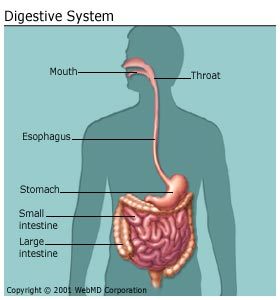
This is a example of........
a)
organ system
b)
cells
c)
organ
d)
tissue
58.
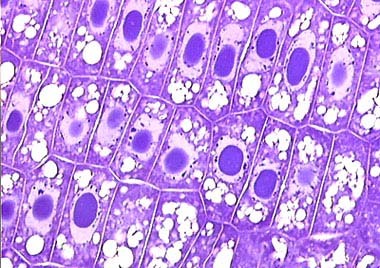
This is a example of ........
a)
cell
b)
tissue
c)
organ
d)
organ system
59.
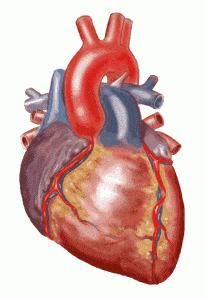
This is a example of ........
a)
cell
b)
organ system
c)
organ
d)
tissue
60.
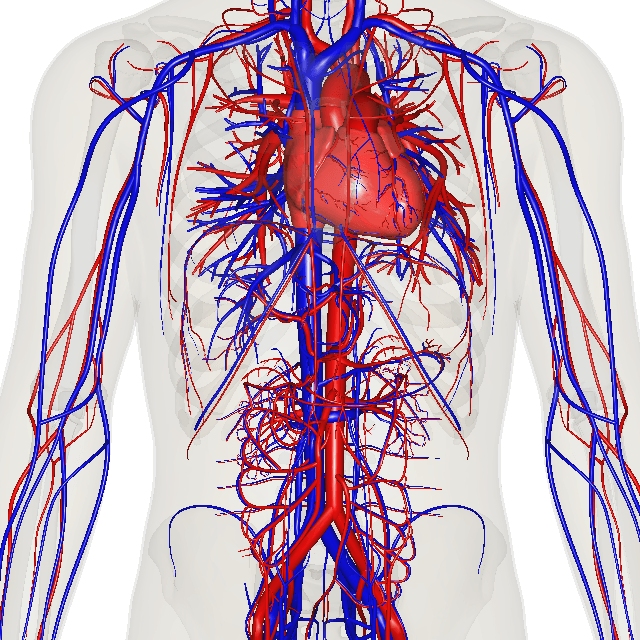
This is a example of ........
a)
organ
b)
organ system
c)
tissue
d)
cell
61.
Which of the following is the correct order of organization in living things from most basic (simple) to most complex?
a)
a. Organism, cell, tissue, organ, organ system
b)
a. Organ system, organ, tissue, cell, organism
c)
a. Cell, tissue, organ, organ system, organism
d)
a. Cell, organ, tissue, organ, organism, organ system
62.
Anything that can perform life processes by itself is a/an
a)
cell
b)
organ
c)
organism
d)
organ system
63.
A group of similar cells that come together to perform a specific function is a/an
a)
organ
b)
organism
c)
organ system
d)
tissue
64.
When a group of organs work together to perform a particular function they create a/an
a)
organ system
b)
organism
c)
tissue
d)
organ
65.
The smallest level of organization of life in an organism
a)
tissue
b)
cell
c)
organ
d)
organ system
66.
A group of organs that work together to perform big jobs for your body is an organ system.
a)
True
b)
False
67.
Which is an example of an organism?
a)
a beetle
b)
a lake
c)
a rock
d)
a shell
68.
What is the difference between a cell and a tissue?
a)
cell is basic unit of life; tissue is group of cells that work as one
b)
cell is group of tissues; tissue is basic unit of life
c)
cell is basic unit of life; tissue is groups of different cells
d)
cell is group of organs; tissue is group of different cells
69.
Tissue that works together to perform a function
a)
organ
b)
cell
c)
organ system
d)
organism
70.
The heart contains different types of tissue. What level is the heart?
a)
cell
b)
organ system
c)
organ
d)
tissue
71.
The digestive system includes the stomach. What level is the stomach?
a)
organ
b)
tissue
c)
cell
d)
organism
72.

like cells make like
a)
cells
b)
tissue
c)
organs
d)
organ systems
73.

like tissue forms ?
a)
organs
b)
cells
c)
organ system
d)
organism
74.

organs working together creates
a)
organism
b)
cells
c)
organ system
d)
tissue
75.
organize from least to most complex
1 organ 2 cell 3 organ system 4 tissue 5 organism
a)
25135
b)
24135
c)
24153
d)
23145
76.
Examples include respiratory, circulatory, excretory, reproductive, nervous, digestive, muscular, lymphatic, endocrine, skeletal
a)
cell
b)
tissue
c)
organ
d)
organ system
77.
Examples include epithelial, connective, muscular, and nerve
a)
cell
b)
tissue
c)
organ
d)
organ system
78.
examples include blood, epithelial, smooth muscle, bone, neurons, sperm, eggs, plant, animal, eukaryotic, bacteria
a)
cell
b)
tissue
c)
organ
d)
organ system
79.
Examples include dog, person, frog, bacteria, lion, lizard
a)
cell
b)
tissue
c)
organ system
d)
organism
80.
Examples include kidney, liver, heart, brain, stomach, bladder, intestines
a)
cell
b)
tissue
c)
organ
d)
organ system
81.
An instrument used to make small items appear larger
a)
graduated cylinder
b)
microscope
c)
beaker
d)
goggles
100 %

