

wayground logo

Free Printable Worksheets

Font size

S
M
L
XL
Worksheets

CafreEqEvol

Total questions: 82

Worksheet time: 55mins
Name
Class
Date
1.
Who is the father of evolution?
a)
Darwin
b)
Mendel
c)
Newton
d)
Einstein
2.
What is another name for natural selection?
a)
survival of the smartest
b)
survival of the fastest
c)
survival of the biggest
d)
survival of the fittest
3.
What is a change in an organism that allows for it to survive in its environment?
a)
homologous
b)
vestigial
c)
variation
d)
adaptation
4.
When all of the organisms of a species have died it is called
a)
evolution
b)
extinction
c)
adaptation
d)
natural selection
5.
What is an organism that has similar characteristics and can reproduce?
a)
species
b)
organism
c)
embryology
d)
vestigial 
6.

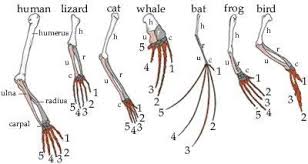
What is this an example of?

a)

vestigial structures

b)

embryology

c)

homologous structures

d)

fossil record

7.
When the DNA of an organism is altered it is referred to as…
a)
Mutation
b)
Gene Flow
c)
Genetic Drift
d)
Sexual Selection
8.
When individuals choose traits possessed by the opposite sex it is called…
a)
Mutation
b)
Gene Flow
c)
Genetic Drift
d)
Sexual Selection
9.

The cause of artificial selection can be due to..

a)

The environment

b)

Humans

c)

Mutation

d)

Gene Flow

10.

Which of the following is NOT an example of natural selection?

a)

People selectively breeding Thoroughbreds.

b)

Worm populations developing resistance to certain wormers.

c)

Bacteria becoming resistant to antibiotics.

d)

Male birds of certain species developing colorful feathers to attract female mates.
11.
Which term refers to the process by which individuals that are better suited to the environment survive and reproduce therefore passing down their genes to their offspring? 
a)
Evolution 
b)
Variation 
c)
Adaptation
d)
Natural Selection 
12.
Structures with the same parts have different functions; suggests that organisms share a common ancestry
a)
vestigial structures
b)
homologous structures
c)
adaptive radiation
d)
fossil
13.

Which of the following is a term for a group of similar organisms that can reproduce fertile offspring?

a)

individual

b)

population

c)

species

d)

fossil

14.
Which horse was the first horse to have a single toed hoof ?
a)
Pliohippus
b)
Merychippus
c)
Eohippus
d)
Modern Horse
15.
When an organism completely dies out, it is called.....
a)
Adaption
b)
Extinction
c)
Fossilization
d)
Mutation
16.

Mistakes or changes that occur in the DNA sequence are called....

a)

adatations

b)

Darwinism

c)

mutations

d)

natural selection

17.
What do we call similar physical structures that indicate a link to a common ancestor?
a)
absolute dating
b)
adaptations
c)
gradualism
d)
homologous structures
18.
The preserved remains or physical evidence of an organism that lived in the past are called...
a)
evolutionary features
b)
fossils
c)
mutations
d)
variations
19.
What does this picture model?
a)
DNA structure of the horse
b)
Evolution of the horse
c)
Extinction of the horse
d)
Singular traite of the horse
20.
The gradual change in a species or population over a period of time is called
a)
evolution
b)
classification
c)
genetics
d)
population disturbances
21.

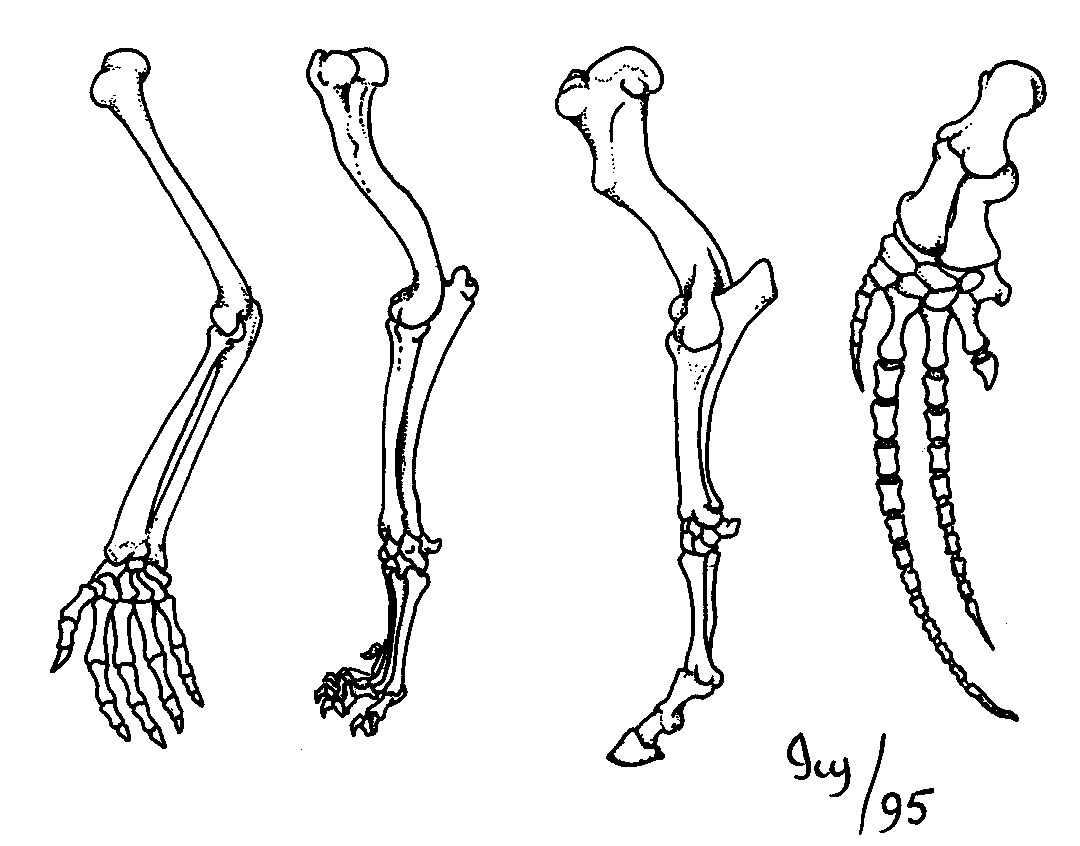
Scientists believe that the bone structure of a horse’s leg, a human’s arm, a whale’s flipper, and a bat’s wing are biologically similar. These similarities suggest that

a)

the animals have a common ancestor.

b)

the animals were all born at the same time.

c)

the animals can only survive if they live together

d)

the animals have the same bone which is used to fly

22.
Throughout time the horse foreleg went from having __________ toes to _________ toe(s)
a)
four, one
b)
one, four
c)
three, one
d)
one, three
23.
An inherited characteristic that increases an organism's ability to survive and reproduce in its specific environment is called (n)
a)
vestigial structure
b)
adaptation
c)
speciation
d)
analagous structure
24.

Structures that no longer serve a purpose (splint bones or a human appendix) are

a)

Homologous structures

b)

Analogous structures

c)

Adaptations

d)

Vestigial structures

25.

A breeder's use of the best livestock for breeding is an example of

a)

natural selection

b)

artificial selection

c)

extinction

d)

adaptation

26.

The forelimbs of vertebrates, like the ones pictured here, are similar in terms of number of bones and the orientation of bones. Which best describes how comparing homologous structures provides evidence of evolution?

a)

The genes for the body plan and forelimb layout were present in a common ancestral species vertebrates share, thus passed onto all vertebrates.

b)

Similar anatomical structures show how animals adapt to changing environments

c)

Homologous structures show that different species evolve at different rates

d)

Homologous structures don’t actually provide evidence for evolution

27.

What do phylogenic trees do?

a)

Help you visualize how species are related.

b)

Provide windbreaks in your yard.

c)

Provide DNA details.

d)

Show the distribution of organisms

28.
Which term refers to the process by which individuals that are better suited to the environment survive and reproduce therefore passing down their genes to their offspring? 
a)
Evolution 
b)
Variation 
c)
Adaptation
d)
Natural Selection 
29.
Which of the following is an example of a species?
a)
A group of similar organisms that all have exactly the same traits.
b)
A group of living organisms in the same area. 
c)
A group of similar organisms that can mate with one another and produce fertile offspring.
d)
A group of biotic and abiotic factors in an area. 
30.
Which of the following statements about the individuals in a population that survive to reproduce is true?
a)
They have the same predators 
b)
They are likely to pass traits to their offspring 
c)
They live in different environments 
d)
They are sterile
31.
What information does the image tell us about evolution?
a)
They do not have a common ancestor. 
b)
They have a common ancestor. 
c)
The porpoise evolved from a bat. 
d)
The organisms evolved through punctuated equilibrium.
32.
What is the evolutionary process by which isolated populations evolve to become distinct species (isolation, adaptations, and division)?
a)
Variation 
b)
Speciation 
c)
Evolution 
d)
Adaptations 
33.

Related organisms have similar _______.

a)

Genetic Material

b)

Diet

c)

Behavioural Patterns

34.
The image displays which type of anatomical structure?
a)
Analogous
b)
Homologous
c)
Vestigial
35.
Organisms with a common ancestor have features of different functions but similar structures:
a)
Homologous structures
b)
Analogous structures
c)
Vestigial structures
36.
Vestigial structures are homologous structures that are:
a)
Still used
b)
No longer used
c)
Occasionally used
37.
Which type of anatomical structures provides evidence of evolution?
a)
Homologous
b)
Analogous
38.
Does the following provide evidence of evolution?
a)
No, the image depicts analogous structures
b)
Yes, the image depicts homologous structures
39.
Evolution of an animal into a wide variety of types adapted to specialized modes of life?
a)
Phylogeny
b)
Biogeography
c)
Fossil Record
d)
Adaptive radiation
40.

What is suggested by the similarity of early embryos of different species of vertebrates?

a)

no evolutionary relationships between the groups

b)

recent common ancestry

c)

similar environments in the past

d)

evolution from a distant common ancestor

41.
Which best describes fossils?
a)
They are the preserved remains or evidence of ancient living things
b)
They are the preserved remains or evidence of ancient living and nonliving things
c)
They are the preserved bones of ancient animals
d)
They are impressions of plant leaves in ancient rocks
42.

A warm-blooded vertebrate that feeds its young milk.

a)

insect

b)

bird

c)

mammal

d)

reptile

43.

When many types of living things become extinct at the same time.

a)

extinct

b)

mass extinction

c)

Clayde

d)

radiation

44.
A scientist who studies fossils to learn about organisms that lived long ago.
a)
geologist
b)
biologist
c)
psychologist
d)
paleontologist
45.
An animal with a backbone.
a)
vertebrate
b)
invertebrate
c)
valley
d)
glacier
46.

Evolution is

a)

change in an organism over many years such that the change can be passed as variation in the genes to offsprings.

b)

New organisms are born

c)

sudden change in population

d)

creationism

47.
Another term for natural selection is
a)
overproduction
b)
competition
c)
survival of the fittest
d)
variation
48.
In order for variations to be inherited it must be present in an organism's
a)
somatic cells
b)
DNA
c)
chrosomes
d)
blood
49.

Vestigial organs like appendix in man is

a)

organ which has genuine function

b)

organ which has no function

c)

organ which was functional before but not now.

d)

organ only found in humans

50.
Present day horse is called
a)
Equus
b)
Mesohippus
c)
Merychippus
d)
Eohippus
51.
What is speciation?
a)
combining of tow species to form one with different traits
b)
isolation that affects mating behaviors
c)
timing of mating that prevents normal sexual selection
d)
divergence of two or more species from an existing one
52.
Group of organisms capable of interbreeding and producing fertile offspring.
a)
species
b)
gene pool
c)
population
d)
homologous structure
53.
Scientist who proposed the theory of Natural Selection.
a)
Hardy
b)
Weinburg
c)
Darwin
d)
Einstein
54.
A horse and a donkey can successfully mate to produce offspring known as a mule.  Mules are sterile .  Would mules be classified as a species?
a)
Yes, mules have enough of their own traits to be considered a species.
b)
Yes, the fact that have different number of chromosomes makes them a different species
c)
No, mules are too similar to the parent species
d)
No, due to their inability to reproduce successfully.
55.

The changes an organism make to its behaviour or body structure to be better suited for survival in an environment.

a)

Adaptation

b)

Behavior

c)

Fossil

d)

Nutrient

56.
Does the following provide evidence of evolution?
a)
No, the image depicts analogous structures
b)
Yes, the image depicts homologous structures
57.
Why do scientists classify fish, amphibians, reptiles, birds, and mammals together in one group?
a)
They all came from dinosaurs
b)
They all have an internal skeleton with a backbone
c)
They are all invertebrates 
d)
They all live on land
58.
When a group of individuals remains isolated from the rest of its species long enough to evolve different traits, a new species can form.
a)
True
b)
False
59.
Looking at these different limbs from organisms, we can see evidence of common ancestry. Why does this provide evidence?
a)
They have the same structure
b)
They do the same thing
c)
They are the same size
d)
They are all mammals
60.
The emergence of a new species is called
a)
genetic drift
b)
extinction
c)
speciation
d)
evolution
61.
Why would a population with a large amount of genetic variation be more likely to survive a severe climate change in its environment?
a)
Individuals will only create offspring well-suited to the climate change
b)
The individuals would produce more offspring
c)
Individuals better suited to the new climate will help less-suited individuals survive
d)
Some individuals will posses traits better suited to the new climate and be more likely to pass them on
62.

Geographic Isolation results in the separation of a single species. Because of this separation, over time, there will be

a)

A decrease in variation

b)

A decrease in diversification

c)

An increase in extinction

d)

An increase in species

63.

What answer choice BEST explains why a single species would morph into two different species?

a)

The individual changed itself to suit its environment

b)

Natural Selection caused a gradual change in the species

c)

Interbreeding resulted in 2 different species

d)

Extinction of the ancestor species resulted in 2 different species

64.

Which statement about fossils could be used as evidence that evolution by natural selection has been in effect for millions of years?

a)

Fossils found in higher layers of rock are older than those found in lower layers

b)

Fossils found in lower layers of rock are more complex than those found in higher layers

c)

Fossils of current species have been found throughout rock layers that are billions of years old

d)

Fossils of species that no longer exist but are ancestors of current species have been found in rock layers

65.

If an animal develops a new mutation within their environment, what will determine whether they keep that advantage over time?

a)

If the reproduction rate of the population remains constant.

b)

If the new mutation is dominant or recessive.

c)

If the new mutation increases their survival within their environment.

d)

If enough food and water is there for them to survive.

66.

Which of the following is a source of genetic variation?

a)

Selective Breeding

b)

Mutation

c)

Natural Selection

d)

Cloning

67.

The more closely related species are, the more similar their DNA sequences.

a)

True

b)

False

68.

Which of the following taxonomic categories is most broad?

a)

Order

b)

Genus

c)

Phylum

d)

Species

69.

Fossils indicate that whales evolved from land-dwelling ancestors. In addition to the fossil record, which piece of evidence supports the theory that whales were once land mammals?

a)

flippers analogous to penguin wings

b)

vestigial structures such as a pelvis

c)

competition among whales in similar ecosystems

d)

mass extinctions of whale species

70.

What is the term for a feature that allows an organism to survive better in its environment?

a)

variation

b)

homologous structure

c)

adaption

d)

vestigial structure

71.

In terms of biology, what does fitness mean?

a)

desirable to the opposite sex

b)

the ability to survive and reproduce

c)

being more in shape

d)

adaptation

72.

Even if the environment changes, a population will continue to survive in a particular area if....

a)

the population increases

b)

the population decreases

c)

the population contains unfavorable traits

d)

the population still contains favorable traits

73.

Genetic variation is beneficial in a population because it ..

a)

makes populations less susceptible to disruption or disease

b)

makes populations more susceptible to disruption or disease

74.

What is speciation?

a)

combining of two species to form one with different traits

b)

divergence of two or more species from an existing one

c)

timing of mating that prevents normal sexual selection

d)

isolation that affects mating behaviours

75.

Which of the following statements about the individuals in a population that survive to reproduce is true?

a)

They have the same predators

b)

They are sterile

c)

They live in different environments

d)

They are likely to pass traits to their offspring

76.

What is the evolutionary process by which isolated populations evolve to become distinct species (isolation, adaptations, and division)?

a)

Variation

b)

Speciation

c)

Adaptations

d)

Evolution

77.

Evolution of an animal into a wide variety of types adapted to specialized modes of life?

a)

Adaptive radiation

b)

Phylogeny

c)

Biogeography

d)

Fossil Record

78.

what is the name of the first clearly identified equine ancestor?

a)

Eohippus

b)

Hyracotherium

c)

equus caballus

d)

Orohippus

79.

What were the main trends suggested in horse evolution?

a)

Reduced body size, reduction of toes reduction in height of teeth

b)

Reduced body size, reduction of toes increase in height of teeth

c)

Increased body size, reduction of toes reduction in height of teeth

d)

Increased body size, reduction of toes, increase in height of teeth

80.

which primitive horse is the closest equine relative?

a)

Pliohippus

b)

Dinohippus

c)

Astrohippus

d)

Calippus

81.

what does anagenesis mean?

a)

New species 'split off' from ancestors and co-existed

b)

The gradual transformation of a species ancestor

c)

The adaptation for speed

d)

The adaptation for size

82.

What is cladogenesis

a)

The gradual transformation of an ancestor

b)

New species 'split off' from ancestors and co-existed

c)

The adaptability for speed

d)

The adaptability for size
