
 Worksheets
Unit 2 Earth-Moon-Sun Review
Total questions: 55
Worksheet time: 57mins
Name
Class
Date
1.

Why do globes lean sideways?
a)
To allow them to spin easier.
b)
To demonstrate the tilt of Earth's axis.
c)
To demonstrate the effects of gravity.
d)
To demonstrate day and night.
2.

What causes the seasons to change?
a)
The warming and cooling of Earth's core.
b)
The distance from the sun.
c)
Earth's tilt in relation to the sun.
d)
Earth's rotation on its axis.
3.

What happens when the area in which you live tilts away from the sun?
a)
It is summer.
b)
It is spring.
c)
It is winter.
d)
It is fall.
4.

What season is it in the Southern Hemisphere when it is fall in the Northern Hemisphere?
a)
winter
b)
spring
c)
summer
d)
fall
5.

Why does the area around the equator stay the same temperature all year?
a)
The equator rotates slower than the poles.
b)
The equator remains the same distance from the sun.
c)
The equator always receives direct sunlight.
d)
The equator has 18 hour days.
6.

Which season is taking place in the Southern Hemisphere in Position 1?
a)
Winter
b)
Spring
c)
Summer
d)
Fall
7.

Which season is taking place in the Northern Hemisphere in Position 2?
a)
Winter
b)
Spring
c)
Summer
d)
Fall
8.

Which season is taking place in the Northern Hemisphere in Position 3?
a)
Winter
b)
Spring
c)
Summer
d)
Fall
9.

Which season is taking place in the Southern Hemisphere in Position 4?
a)
Winter
b)
Spring
c)
Summer
d)
Fall
10.
One rotation of Earth is equal to
a)
a day.
b)
a year.
11.
What is Earth's annual motion around the sun called?
a)
Rotation
b)
Revolution
12.
How long does Earth take to make a complete rotation?
a)
365 days
b)
24 hours
13.
If Earth rotated slower, we would have...
a)
shorter days.
b)
longer days.
c)
shorter years.
d)
longer years.
14.
Which seasons have an equal amount of daylight and darkness?
a)
Spring and Fall
b)
Winter and Summer
c)
Winter and Spring
d)
Summer and Fall
15.
The Northern Hemisphere gets __________ sunlight in the winter, which leads to _________ temperatures.
a)
less direct, hotter
b)
less direct, colder
c)
more direct, hotter
d)
more direct, colder
16.
Which movement of Earth causes day and night?
a)
rotation
b)
revolution
17.
Which season has the least amount of daylight in the Northern Hemisphere?
a)
Winter
b)
Spring
c)
Summer
d)
Fall
18.
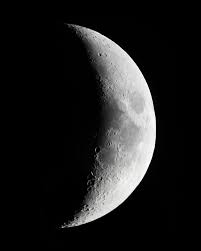
Name the moon phase
a)
full moon
b)
waxing crescent
c)
waning gibbous
d)
waxing gibbous
19.
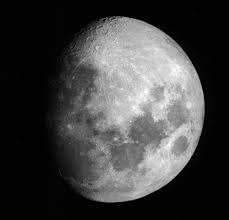
Name the moon phase
a)
waning crescent
b)
waxing crescent
c)
last quarter
d)
waxing gibbous
20.

Name the moon phase
a)
First Quarter
b)
Last Quarter
c)
New Moon
d)
Full Moon
21.
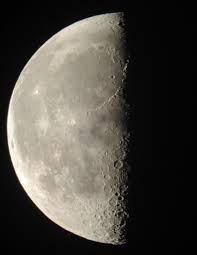
Name the moon phase
a)
Waning Crescent
b)
Last Quarter or (third quarter)
c)
New Moon
d)
Full Moon
22.
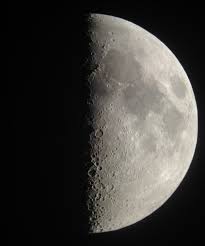
Name the moon phase
a)
First Quarter
b)
Waxing Crescent
c)
New Moon
d)
Full Moon
23.
What are the reasons for the seasons?
a)
Earth's tilt and rotation.
b)
Earth's rotation and revolution.
c)
Earth's tilt and revolution.
d)
Earth's tilt and resolution
24.
How long after a new moon will it take to see another new moon?
a)
12 days
b)
29.5 days
c)
27.3 days
d)
365 days
25.

Which moon phase is shown in this diagram?
a)
new moon
b)
first quarter
c)
full moon
d)
last quarter/3rd quarter
26.
Tides are caused by ___________
a)
wind
b)
gravitational pull of moon
c)
waves gravitation toward land
d)
rain
27.
Tides are caused by ___________
a)
wind
b)
gravitational pull of moon
c)
waves gravitation toward land
d)
rain
28.

What phase is this?
a)
Waning Gibbous Moon
b)
Waxing Gibbous Moon
c)
Waning Crescent Moon
d)
Waxing Crescent Moon
29.

What phase is this?
a)
First Quarter Moon
b)
Last Quarter Moon
c)
Waxing Gibbous Moon
d)
Waning Gibbous Moon
30.
Waxing means...
a)
Growing
b)
Dying
c)
Losing light
d)
Moving
31.
When the moon is in between the earth and the sun it is a
a)
New Moon
b)
Full Moon
c)
First Quarter
d)
Third Quarter
32.

Name the phase of the moon for letter a
a)
First Quarter
b)
Last Quarter
c)
Waxing Gibbous
d)
Waning Gibbous
33.

Name the phase of the moon for letter f
a)
Waning Gibbous
b)
Waxing Gibbous
c)
Waning Crescent
d)
Waxing Crescent
34.
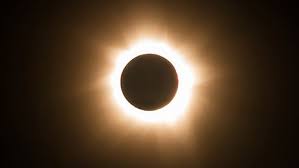
During a solar eclipse...
a)
The sun is blocked
b)
The Earth is blocked
35.

For a solar eclipse to occur, what has to happen?
a)
The sun must be directly between Earth and the moon.
b)
The moon must be directly between Earth and the Sun.
36.
During a lunar eclipse, what color does the moon appear?
a)
Black
b)
Red-orange
c)
Yellow-green
d)
White
37.
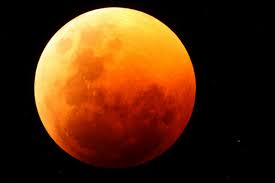
This image is an example of
a)
Lunar Eclipse
b)
New Moon
c)
Solar Eclipse
d)
Full Moon
38.
When does a lunar eclipse occur?
a)
At night
b)
When the moon's shadow is on the earth
c)
when the moon comes between the sun and earth
d)
During the day
39.
Why does the moon appear to shine?
a)
Because it reflects light from earth
b)
Because it reflects sunlight
c)
Because it reflects light from the stars
d)
Because it makes its own light
40.
A[n] ___________ tide occurs when the sun, Earth, and the moon are nearly in a line.
a)
spring
b)
high
c)
low
d)
neap
41.
Differences in the moon's and sun's pull on different sides of the Earth cause _________.
a)
gravity
b)
lunar phases
c)
tides
d)
dabbing
42.
The bulge of water on the side of the Earth closest to the moon produces ___________.
a)
high tide
b)
low tide
c)
neap tide
d)
spring tide
43.
Water flows toward the high tides, halfway between them causing ____________.
a)
neap tide
b)
high tide
c)
spring tide
d)
low tides
44.
Tides are the cycle of rising and falling ocean water that repeats automatically every
a)
24 hours
b)
12.5 hours
c)
25 hours
d)
6.25 hours
45.
Changes in the positions of Earth, the moon, and the sun affect the height of high tides during a month.
a)
True
b)
False
46.

What are ocean tides?
a)
Long waves due to the gravitational pull of the moon only.
b)
Long period waves caused by wind.
c)
Short period waves caused by wind.
d)
Long waves due to the gravitational pull between the Earth,sun and the moon
47.

What is a high tide?
a)
Sea pulled TOWARD the moon where Earth is CLOSEST to the moon
b)
Sea pulled AWAY from the moon where Earth is FARTHEST to the moon
c)
Sea pulled AWAY from the moon where Earth is CLOSEST to the moon
48.

Which body has the greater effect on Earth's tides?
a)
Sun
b)
Saturn
c)
Moon
d)
Venus
49.
At the same time the sea is drawn to the moon, another tidal bulge takes place on other side of Earth?
a)
Yes
b)
No
c)
Maybe
d)
I don't know!
50.
When the moon is at full moon or new moon, what type of tide will we experience?
a)
rip tide
b)
spring tide
c)
neap tide
d)
breaker tide
51.
Spring tides and neap tides occur in patterns governed by the
a)
phases of the moon
b)
seasons (fall, winter, etc.)
c)
surface currents
d)
deep sea currents
52.
What happens when there is a spring tide
a)
high tides
b)
really high tides
c)
low tides
53.
How many high tides are there in Myrtle Beach every day?
a)
One
b)
Two
c)
Three
d)
Four
54.
What do we call tides that have a smaller range that happen when the sun and moon are at right angles to each other?
a)
Neap Tide
b)
Spring Tide
c)
Larger Change
d)
Smaller Change
55.
If tides alternate from high to low and there are two of each type of tide a day, about how many hours will generally be between each different tide?
a)
2 hours
b)
6 hours
c)
12 hours
d)
24 hours
100 %

