Wayground logo

Free Printable Worksheets

Font size

S
M
L
XL
Worksheets

Earth Systems and Resources

Total questions: 63

Worksheet time: 1hrs 1mins

Name
Class
Date
1.

This image shows which of the following?

a)

Earthquake

b)

Mountain formation

c)

Subduction zone

d)

Riff Valley formation

2.

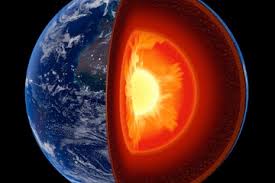
As you travel from the crust to the inner core, how would temperature and density of the material change?

a)

The would all increase

b)

The would all decrease.

c)

They would stay the same.

d)

Temperature would decrease, but pressure and density would increase.

3.

Which of Earth's layers is broken into several large tectonic plates?

a)

Asthenosphere

b)

Lithosphere

c)

Inner core

d)

Outer core

4.

Which of these layers is found directly above the Earth's core?

a)

crust

b)

mantle

c)

inner core

d)

outer core

5.

How are Sedimentary rocks formed?

a)

Through the process of heat and pressure.

b)

Through the process of compaction and cementation.

c)

Through the process of weathering, erosion and deposition.

d)

Through the process of melting

6.

Identify the three different types of rock:

a)

Metamorphic

b)

Igneous

c)

Sedimentary

d)

Lithosphere

7.

Which of these statements is correct?

a)

Continental crust is thicker than oceanic crust

b)

Continental crust is thinner than oceanic crust

c)

Continental crust is smaller than oceanic crust

d)

Continental crust is more dense than oceanic crust

8.

A subduction zone is

a)

a denser tectonic plate sinks below another

b)

at every type of convergent plate boundary

c)

at every type of divergent plate boundary

d)

at transform boundaries

9.
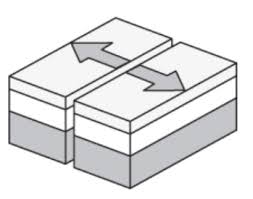
Name the boundary
a)
convergent boundary
b)
divergent boundary
c)
transform boundary
d)
sergent boundary
10.
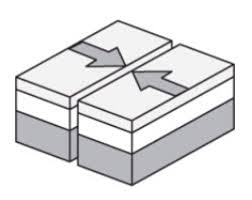
Name the boundary
a)
convergent boundary
b)
divergent boundary
c)
transform boundary
d)
sergent boundary
11.
Name the boundary
a)
convergent boundary
b)
divergent boundary
c)
transform boundary
d)
sergent boundary
12.
The area around the pacific plate where boundaries form is called...
a)
death ring
b)
fire zone
c)
ring of fire
d)
zone of fire
13.
Associated with transform boundaries.
a)
Volcanoes
b)
mountains
c)
trenches
d)
earthquakes
14.
Where you will find the ozone layer.
a)
stratosphere
b)
thermosphere
c)
exosphere
d)
mesosphere
15.
Where weather occurs.
a)
stratosphere
b)
thermosphere
c)
troposphere
d)
mesosphere
16.
Where satellites orbit.
a)
troposphere
b)
thermosphere
c)
exosphere
d)
mesosphere
17.
The most common gas in the atmosphere (78%).
a)
Nitrogen
b)
Oxygen
c)
Carbon Dioxide
d)
Trace gases
18.
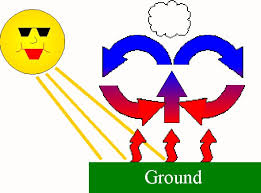
Warm air rises and the cool air sinks demonstrates this type of heat transfer. 
a)
conduction
b)
convection
c)
radiation
d)
Insolation 
19.
What is the Coriolis Effect and how does it effect global winds?
a)
Curving of winds due to rotation of earth curves wind counterclockwise in Northern Hemisphere and clockwise in the Southern Hemisphere
b)
Movement of ocean currents caused by earth rotation' counterclockwise in Northern Hemisphere and clockwise in Southern Hemisphere
c)
curve of global winds caused by global rotation clockwise in Northern Hemisphere and counterclockwise in Southern Hemisphere
20.
Which is NOT a freshwater ecosystem?
a)
stream
b)
lake
c)
ocean
d)
river
21.
Earth revolves around the sun
a)
Precession
b)
Rotation
c)
Revolution
22.
Spinning on an axis
a)
Rotation
b)
Nutation
c)
Solstice
23.
The time and date of the year when day and night are equal length. 
a)
Fusion
b)
Solstice
c)
Equinox
24.
2 times a year when the sun reaches the highest or lowest point; shortest and longest day. 
a)
Beltane
b)
Solstice
c)
Equinox
25.
The thin layer of the Earth upon which tectonic plates move around is called the
a)
mantle
b)
asthenosphere
c)
lithosphere
d)
outer layer
26.
What is a fault?
a)
the point inside Earth at which an earthquake occurs
b)
the point on Earth's surface directly above the earthquake focus
c)
a fracture in Earth along which movement has occurred
d)
a fracture in Earth along which NO movement has occurred
27.
Earth’s outermost sphere is called the
a)
atmosphere
b)
biosphere
c)
geosphere
d)
hydrosphere
28.
Which sphere contains volcanoes?
a)
biosphere
b)
geosphere
c)
hydrosphere
d)
atmosphere
29.
Which sphere contains rivers?
a)
biosphere
b)
geosphere
c)
hydrosphere
d)
atmosphere
30.
A __________ is a mountain built from melted rock which rises from the Earth's interior to the surface, and can occur on land or in the sea
a)
volcanoes
b)
earthquakes
c)
channel
d)
eruptions
31.
The majority of the world’s active volcanoes on land are located along tectonic plate boundaries that surround the ______________________________________.
a)
Atlantic Ocean
b)
Indian Ocean
c)
Pacific Ocean
d)
Southern Ocean
32.
The measure of the energy released by an earthquake is called ___________________________________.
a)
magnitude
b)
dominant
c)
fault
d)
energy capacity
33.
____________________________________________ are blocks of lithosphere that consist of the crust and the rigid, outermost part of the mantle and glide across the underlying asthenosphere
a)
crust
b)
mantle
c)
tectonic plates
d)
faults
34.
Which of the following is NOT one of the three types of soil?
a)
clay
b)
sand
c)
silt
d)
mud
35.
Layers of soil are also known as:
a)
Soil Profiles
b)
Soil Horizons
c)
Soil sheets
d)
Soil cores
36.
What is the layer of soil that contains humus, leaf litter, and other organic matter?
a)
O - Organic
b)
A - Topsoil
c)
B - Subsoil
d)
R - Bedrock
37.
Which layer is the bottom of the soil profile?
a)
C - Partially Weathered Parent Material
b)
D - Separated rock
c)
R - Bedrock
d)
A - Topsoil
38.
Which layer of soil contains bedrock that has been cracked slightly?
a)
A - Topsoil
b)
B - Subsoil
c)
C- Partially Weathered Parent Material
d)
R - Bedrock
39.
If the Earth did not rotate on its axis, there would be no
a)
Greenhouse effect
b)
Coriolis effect
c)
Global warming
d)
Convection
40.
Due to the Coriolis Effect, water in the Southern Hemisphere moves
a)
clockwise
b)
counter-clockwise
c)
both
d)
neither
41.
Two types of ocean currents are
a)
local and global
b)
sea and land
c)
surface and deep
d)
warm and cold
42.
A strong surface current that runs along the east coast of the United States and carries warm water to Europe.
a)
California Current
b)
Global Conveyor Belt
c)
Gulf Stream
d)
Surface Current
43.
What is the function of the ozone layer?
a)
to allow UV rays to get to Earth
b)
to block UV rays from getting to Earth
c)
To keep oxygen in
d)
to allow meteors to get to Earth
44.
Which layer has the highest pressure?
a)
thermosphere
b)
stratosphere
c)
troposphere
d)
ionosphere
45.
The atmospheric circulation cell nearest the equator, air rises near the equator and falls at about 30 degrees N & S are
a)
Polar Cells
b)
Ferrel Cells
c)
Hadley cells
46.
Atmospheric circulation cell between 30 and 60 degrees N and S, air rises at 60 degrees and falls at 30 degrees
a)
Polar Cells
b)
Ferrel Cells
c)
Hadley cells
47.
The surface winds within the Hadley Cells that blow from the east.
a)
Trade Winds
b)
Westerlies
c)
Polar Easterlies
d)
Jet Stream
48.
The surface winds within the Ferrel Cells that blow from the west.
a)
Trade Winds
b)
Westerlies
c)
Polar Easterlies
d)
Jet Stream
49.
What is not a characteristic of an El Nino?
a)
There is a flatter thermocline across the Pacific
b)
There is more rain on the West coasts of North and South america
c)
There are weaker Trade Winds
d)
Ther is better fishing off the coast of Peru because of increased upwelling
50.
How of Earth's water is fresh water?
a)
99%
b)
75%
c)
3%
d)
1%
51.
Where is most of the Earth's freshwater located?
a)
underground
b)
in lakes and rivers
c)
in the ocean
d)
frozen in glaciers
52.
New crust forms at
a)
divergent plate boundaries
b)
convergent plate boundaries
c)
transform fault boundaries
d)
all of the above
53.
Soil sample that is 60% clay, 30% silt, and 10% sand has which texture? 
a)
clay
b)
clay loam
c)
sandy loam
d)
silt 
54.
Which of the following is the correct order of soil particles in order of increasing particle size?
a)
clay-sand-silt
b)
sand-clay-silt
c)
silt-clay-sand
d)
clay-silt-sand
55.
The Hawaiian Islands were formed
a)
at a divergent plate boundary
b)
at a hot spot
c)
at a convergent plate boundary
d)
at a transform fault
56.
Rock that forms when minerals form from solutions or sediment from older rocks get pressed and cemented together.
a)
Sedimentary Rock
b)
Metamorphic Rock
c)
Igneous Rock
57.
This rock was formed by lots of fossils that settled on top of each other over time. What type of rock is this?
a)
Sedimentary
b)
Igneous
c)
Metamorphic
58.
This rock cooled on the outside of a volcano and contained air bubbles when it was forming. What type of rock is this?
a)
Sedimentary
b)
Igneous
c)
Metamorphic
59.
This rock started as molten magma. What type of rock is this?
a)
Sedimentary
b)
Igneous
c)
Metamorphic
60.
After lots of time, pressure, and heat, you get this kind of rock. What type of rock is this?
a)
Sedimentary
b)
Igneous
c)
Metamorphic
61.
During sea floor spreading, molten material rises up from the mantle...
a)
along the continents
b)
at the mid ocean ridges
c)
deep ocean trenches
d)
at north and south poles
62.
A subduction zone is formed...
a)
when one tectonic plate sinks below another
b)
at every type of convergent plate boundary
c)
at every type of divergent plate boundary
d)
at transform boundaries
63.
Plate movement is caused by ______________.
a)
the rotation of the Earth
b)
ocean tides
c)
convection currents in the mantle
d)
the moon's gravity