wayground logo

Free Printable Worksheets

NEW

Font size

S
M
L
XL
Worksheets

Exam 3 Earth Sun Etc

Total questions: 45

Worksheet time: 32mins

Name
Class
Date
1.
The earth tilting on its axis causes
a)
day and night
b)
365.25
c)
24 hours
d)
seasons
2.
Which movement causes day and night?
a)
revolution
b)
rotation
c)
radius
d)
momentum
3.
How much time does it take the Earth to complete one revolution?
a)
one day
b)
one week
c)
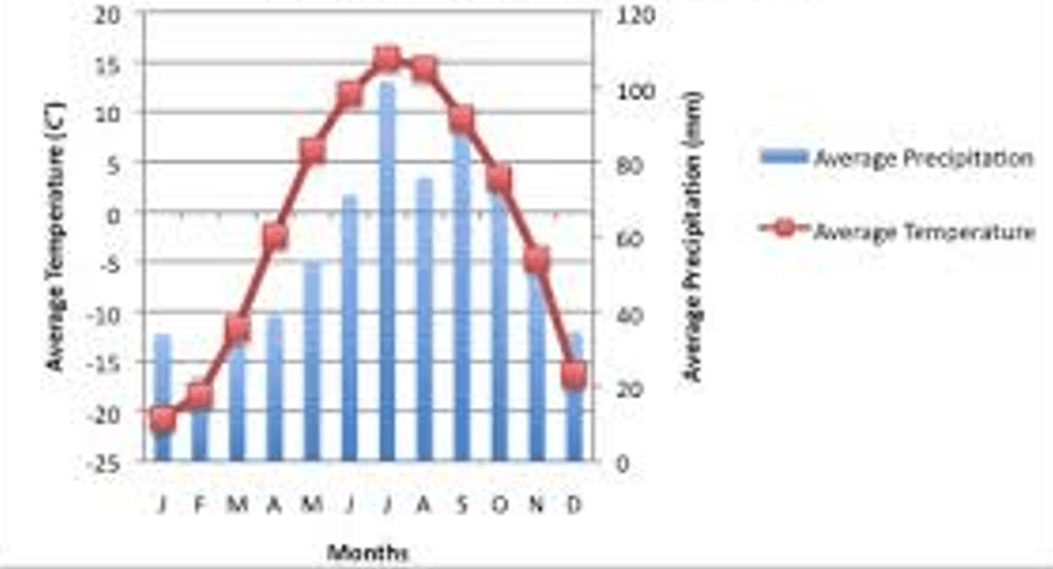
one month
d)
one year
4.
When one hemisphere of the Earth is tilted toward the Sun, that hemisphere is experiencing
a)
Spring
b)
Summer
c)
Fall
d)
Winter
5.
When it is winter in the northern hemisphere, the southern hemisphere is experiencing
a)
spring
b)
summer
c)
fall
d)
winter
6.
What happens when it's spring in the Southern Hemisphere?
a)
It's fall in the Northern Hemisphere
b)
It's summer in the Northern Hemisphere
c)
It's winter in the Northern Hemisphere
d)
It's spring in the Northern Hemisphere
7.
Imaginary line through the center of the earth (from the north pole to south pole)
a)
axis
b)
orbit
c)
pole
d)
tilt
8.
The path around the sun
a)
orbit
b)
rotation
c)
season
d)
equinox
9.
Why is summer warmer than winter?
a)
The hemisphere experiencing summer is tilted more directly toward the sun
b)
The entire planet is closer to the sun during summer
c)
The sun radiates more energy during the summer
d)
The earth spins slower on its axis during the summer
10.
The sun appears to move across the sky each day.  What causes this?
a)
the spinning of the Earth's axis
b)
The path of the sun around the Earth
c)
the production the nuclear energy around the sun
d)
the tilt of the Earth on its axis
11.

The length of one year is the time it takes

a)

the moon to complete its phases.

b)

Earth to complete 12 rotations around its axis

c)

Earth to complete one revolution around the sun.

d)

the moon to complete one revolution around the Earth.

12.

It is necessary to add a day to the calendar every four years because

a)

the axis of Earth is tilted.

b)

the gravitational pull of the Sun affects Earth's revolution.

c)

the revolution of Earth is not exactly 365 days.

d)

the axis of Earth’s orbit is parallel to its orbit

13.

The seasons are caused by Earth’s tilted axis as it travels around the sun. What causes winter in the Southern Hemisphere?

a)

The North Pole tilts away from the sun

b)

The equator receives more direct light

c)

The South Pole tilts away from the sun

d)

Earth moves further away from the sun

14.

32. Which of the following is a direct result of Earth’s rotation?

a)

Lunar eclipses

b)

Winter weather

c)

Daylight and night

d)

seasons

15.

What controls the length of a day?

a)

the amount of time it takes Earth to complete a

turn on its axis

b)

the amount of time it takes Earth to complete an

orbit around the sun

c)

the amount of time it takes the moon to complete

an orbit around Earth

d)

the amount of time it takes the sun to complete

a turn on its axis

16.

The average weather in an area over a long period of time

a)

climate

b)

weather

c)

summer

d)

spring

17.

The atmospheric condition in one place over a short period of time

a)

climate

b)

weather

c)

summer

d)

spring

18.

Because of the Earth's tilt, every part of the planet receive the exact same amount of direct sunlight

a)

true

b)

false

19.

During the equinox, days are longer than night

a)

true

b)

false

20.

The trapping of solar radiation by the atmosphere is called

a)

equinox

b)

solstice

c)

greenhouse effect

d)

midnight sun

21.
Why does Earth have seasons?
a)
because sometimes the Earth is closer to the sun and farther away from the sun
b)
because the temperature of the sun changes
c)
because Earth's axis is tilted
d)
because of Earth's rotation and revolution
22.

When the northern hemisphere (where we live) is tilted toward the sun, what season are we in?

a)

winter

b)

spring

c)

summer

d)

fall

23.
How is Earth's axis tilted during an equinox
a)
toward the sun
b)
away from the sun
c)
neither toward or away from the sun
d)
parallel to the sun
24.
What has the greatest influence on tides?
a)
gravitational pull of the sun
b)
gravitational pull of the moon
c)
gravitational pull of the Earth
d)
gravitational pull of other planets
25.
Which takes longest?
a)
The Earth orbiting the sun twice
b)
The Earth rotating 5 times
26.
The Earth's revolution around the sun takes 365.25 days.  What do we do about that .25 day?
a)
leap year
b)
equinox
c)
solstice
d)
new year
27.
Why does the same side of the moon always face the Earth?
a)
the moon doesn't rotate
b)
the moon doesn't revolve
c)
the Earth's gravity keeps the moon facing it
d)
the moon's rotation and revolution takes the same amount of time
28.
What determines which phase of the moon you see?
a)
where you are on Earth
b)
how much of the sunlit side faces Earth
c)
how much of the moon is lit by the sun
d)
how much of the moon is in the sky
29.
During what moon phase can a lunar eclipse occur?
a)
full
b)
first quarter
c)
third quarter
d)
new
30.
What if the Earth was not tilted on its axis?
a)
we would not have day and night
b)
we would have longer years
c)
we would not have seasons
d)
we would have two seasons
31.
What is the longest day of the year?
a)
summer solstice
b)
winter solstice
c)
vernal equinox
d)
autumnal equinox
32.
On what day are day and night equal length (12 hours each)?
a)
solstice
b)
equinox
c)
new years
d)
leap year
33.

Which of the following best explains why ‘City 3’ experiences the smallest change in day length between summer and winter out of the four cities shown in the diagram above?

a)

City 3 is closest to the sun during the Northern Hemisphere’s winter.

b)

Earth completes one revolution of the sun about every 365 days.

c)

Earth rotates on its axis about every 24 hours.

d)

City 3 is located closest to the equator.

34.

Which diagram represents the tilt of the Earth’s axis relative to the Sun’s rays on December 15th?

a)

1

b)

2

c)

3

d)

4

35.

Which combination of climate factors generally results in the coldest temperatures?

a)

low elevation and low latitude

b)

low elevation and high latitude

c)

high elevation and high latitude

d)

high elevation and low latitude

36.

Under which of the following circumstances would you be most likely to find snow in equatorial regions?

a)

In areas below sea level

b)

In areas at high latitudes

c)

In winter

d)

In areas at high elevations

37.

What is the correct order of these biomes from closest to the equator to closest to the North Pole?

a)

Tundra, taiga, temperate, tropical forest

b)

Tropical forest, temperate, taiga, tundra

c)

Temperate, Tropical forest, taiga, tundra

d)

A) Tropical forest, temperate, tundra, taiga

38.

The diagram shows air movement over a mountain. Compared to the climate on the windward side of the mountain, the climate on leeward side to the mountain is…

a)

Drier and warmer

b)

Drier and cooler

c)

More humid and warmer

d)

More humid and cooler

39.

Which of the following is NOT true about ocean currents?

a)

Ocean currents are driven by tides

b)

Ocean currents mainly occur due to the spinning of the earth.

c)

Ocean currents redistribute warm water to colder regions and vice versa.

d)

A ocean current warms the climate of Europe.

40.

Which of the following biomes receives the most precipitation?

a)

Tundra

b)

Savanna

c)

Rain Forest

d)

TaIga

41.

Which of the following most accurately describes the location of latitude zones?

a)

1= High Latitudes

2= Middle Latitudes

3= Low Latitudes

b)

1= North Latitudes

2= Tropical Latitudes

3= Middle Latitudes

c)

1= Southern Latitudes

2= Low Latitudes

3= High Latitudes

d)

1= Low Latitudes

2= Middle Latitudes

3= High Latitudes
42.
Which biome is represented by the climatograph?
a)
Rainforest
b)
Taiga
c)
Savanna
d)
Temperate Forest
43.
Which biome is represented by the climatograph?
a)
Rainforest
b)
Tundra
c)
Savanna
44.
a)
Tundra
b)
Cold Climate Desert
c)
Hot Climate Desert
d)
Rainforest
45.
a)
Cold Climate Desert
b)
Rainforest
c)
Melbourne Weather
d)
Hot Climate Desert