wayground logo

Free Printable Worksheets

Font size

S
M
L
XL
Worksheets

SKELETAL, MUSCULAR, CIRCULATORY, RESPIRATORY AND INTEGUMENTARY SYSTEM REVIEW

Total questions: 67

Worksheet time: 56mins

Name
Class
Date
1.
What are the bones that protect your heart and lungs?
a)
rib cage
b)
sternum
c)
clavicle
d)
femur
2.
a)
Femur
b)
Humerous
c)
Skull
d)
Shin
3.
a)
mandible
b)
skull
c)
scapula
d)
spine
4.
What are bones used for?
a)
support, protection, digestion
b)
support, movement, protectin
c)
support, protection, sanitation
5.
The Skeletal System does what?
a)
Support your body
b)
Help your body move with muscles
c)
all of the above
d)
protect your organs
6.
One function of the skeletal system is _______ especially in regards to the vital organs, such as the brain, heart, and lungs.
a)
Protection
b)
Storage
c)
Synthesis
d)
Movement
7.
What is the name for the connector that attaches muscle to bone?
a)
ligament
b)
tendon
c)
patella
d)
string
8.
What is the place where two bones meet?
a)
hinge
b)
bone
c)
spot
d)
joint
9.
What is the name for the connector that attaches bone to bone?
a)
ligament
b)
tendon
c)
patella
d)
string
10.

Which of the following is not a function of bones?

a)

Protection

b)

Blood cell formation

c)

Storage

d)

Absorption

11.
The adult skeletal system is composed of how many bones?
a)
216
b)
371
c)
206
d)
199
12.
If your body were a tall building, your skeleton would be:
a)
beams and joints that hold it up
b)
plumbing and electrical systems
c)
foundation that anchors it to ground
d)
apartments and offices inside it
13.
What do you call the tissue that cushions bones?
a)
cartilage
b)
joints
c)
ligaments
d)
tendons
14.
What are the 3 types of muscle tissue?
a)
Thigh, Calf, & Shoulder
b)
Traps, Forearm, & Abs
c)
Hamstring, Biceps, & Triceps
d)
Smooth Muscle, Cardiac Muscle, & Skeletal Muscle
15.
Which muscle type is found in your stomach, bladder, and intestines?
a)
Skeletal
b)
Smooth
c)
Cardiac
d)
Straight
16.
Which type of muscle is found in your heart?
a)
Skeletal
b)
Smooth
c)
Cardiac
d)
Straight
17.
Which muscles are involuntary?
a)
skeletal
b)
cardiac
c)
smooth
d)
smooth and cardiac
18.
When a muscle contracts, it _______
a)
gets longer
b)
gets shorter
c)
gets thinner
d)
grows hair
19.
Which types of muscle tissue are voluntary?
a)
Cardiac
b)
Skeletal
c)
Smooth
d)
Cardiac and Smooth
20.
Skeletal muscles are attached to the _________.
a)
Stomach
b)
Lungs
c)
Bones
d)
Involuntary Muscles
21.
Cardiac muscles are ONLY located in the heart
a)
TRUE
b)
FALSE
22.
Muscles always work in _____
a)
pairs
b)
groups of 3
c)
bones
d)
joints
23.
Voluntary muscle is
a)
muscle that has to be told when to move
b)
muscle that moves automatically
c)
muscle that needs to be stretched regularly
d)
muscle that makes up the heart and stomach
24.
What type of muscle is found in the bladder?
a)
cardiac
b)
skeletal
c)
smooth
d)
involuntary
25.
What is an example of an involuntary muscle? 
a)
Heart
b)
Arms 
c)
Legs
d)
Shoulders
26.
The smooth muscle is located 
a)
In the heart 
b)
Bones 
c)
Head 
d)
Within organs 
27.
Involuntary muscle is 
a)
muscle found in the heart
b)
muscle found in the organs
c)
muscle that works automatically
d)
all of these are true
28.
These muscles work automatically without us doing any work.  
a)
Skeletal/ Voluntary
b)
Smooth/Involuntary
c)
Cardiac 
d)
Rough 
29.
Skin color is due to a pigment called
a)
Keratin
b)
Melanin
c)
Chromatin
d)
Epithelium
30.
What is the purpose / function of the skin?
a)
protection
b)
temperature maintenance
c)
excretion and sensory reception
d)
all of the choices
31.
Which layer contains accessory structures such as sweat glands, sebaceous glands, and hair follicles?
a)
epidermis
b)
dermis
c)
hypodermis
d)
hyperdermis
32.
Skin and eye color is due to a pigment called ____.
a)
Keratin
b)
Melanin
c)
Chromatin
d)
Epithelium
33.
Which vitamin is synthesized by the skin?
a)
A
b)
E
c)
K
d)
D
34.
Which of these events occur as a result of a decrease in body temperature?
a)
sweat is produced
b)
your nails turn red
c)
contraction of arrector pili muscles
d)
all of the choices
35.
To what layer of skin is letter "B" pointing?
a)
Epidermis
b)
Dermis
c)
Hypodermis
d)
Stratum Corneum
36.
To what structure is #3 pointing?
a)
Sweat gland and duct
b)
Hair follicle
c)
Arrector pili muscle
d)
Sebaceous gland
37.
The _______________ system has been called both a membrane, because it covers the body, and an organ, because it contains several types of tissues. However, most refer to it as a system.
a)
respiratory 
b)
integumentary
c)
cardiovascular
d)
muscular
38.
The outermost layer of the skin that contains no blood vessels or nerve cells.
a)
epidermis
b)
dermis
c)
subcutaneous tissue or hypodermis
39.
Corium or "true skin" that has framework of elastic connective tissue and contains blood vessels, lymph vessels,nerves, involuntary muscle, sweat,  oil glands, and hair follicles.
a)
epidermis
b)
dermis
c)
subcutaneous fascia or hypodermis
40.
This function of the skin allows  the body to retain or lose heat.
a)
body temperature regulation
b)
storage
c)
excretion
d)
absorption
41.

What muscle is highlighted?

a)

Trapezius

b)

Lats

c)

Pectoralis

d)

Deltoids

42.

What muscle is highlighted?

a)

Hamstrings

b)

Quads

c)

Calves

d)

Gluteus

43.

Which best describes tendons?

a)

They shield joints.

b)

They attach muscles to bones.

c)

They lubricate joints.

d)

They attach bones to bones.

44.

Which best indicates the function of tendons?

a)

shape

b)

support

c)

protection

d)

movement

45.

___ is a group of organs and tissues that act as transfer stations carrying needed materials to cells and removing their waste products.

a)

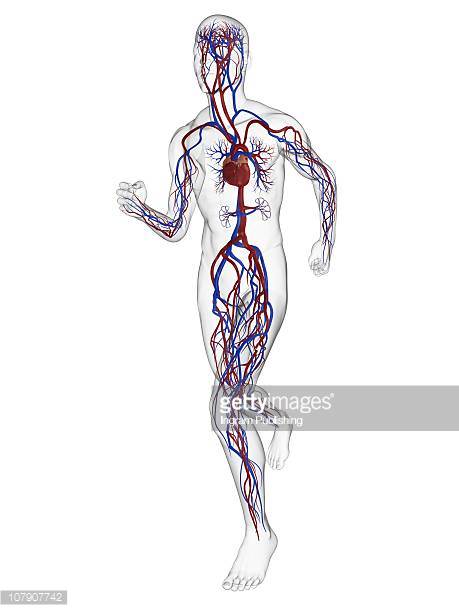
circulatory system

b)

respiratory system

c)

nervous system

46.

___ are tiny blood vessels that carry blood to an from almost all body cells and connect arteries and veins.

a)

arteries

b)

veins

c)

capillaries

47.

What is the main organ of the circulatory system?

a)

small intestine

b)

bone

c)

lungs

d)

heart

48.

Arteries carry oxygen rich blood away from the heart.

a)

True

b)

False

49.

Veins carry oxygen poor blood back to the heart.

a)

False

b)

True

50.

How does the heart work?

a)

It pumps blood first to the lungs, back to the heart and then around the rest of the body.

b)

It pumps blood first to the rest of the body, back to the lungs and then to the heart.

c)

It pumps blood around the rest of the body, back to the heart and then to the lungs,

51.
The circulatory system works with the ___________ system to provide our body with oxygen.
a)
respiratory
b)
digestive
c)
muscular
d)
skeletal
52.
Which system permits blood to circulate and transports nutrients around the body?
a)
Nervous
b)
Respiratory
c)
Circulatory
d)
Digestive
53.
Veins have special ________________ to stop blood from flowing backward.
a)
gravity
b)
valves
c)
arteries
d)
ventricles
54.
Which best describes the relationship between the muscular system and the circulatory system? 
a)
The circulatory system captures carbon dioxide from the air for muscle energy.
b)
The circulatory system produces red blood cells to bring oxygen to the muscles
c)
The circulatory system provides a framework for muscle movement
d)
The circulatory system delivers oxygen for muscle energy
55.

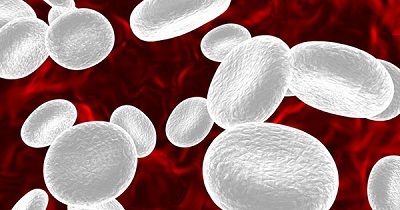
The cells in the blood that help fight germs and illnesses are the...

a)

red blood cells

b)

platelets

c)

white blood cells

d)

axons

56.
Inhale!!!!
Your lungs are ___________  air
a)
taking in
b)
letting out
57.
EXHALE!!!
My lungs are __________________ air. 
a)
taking in
b)
letting out
58.
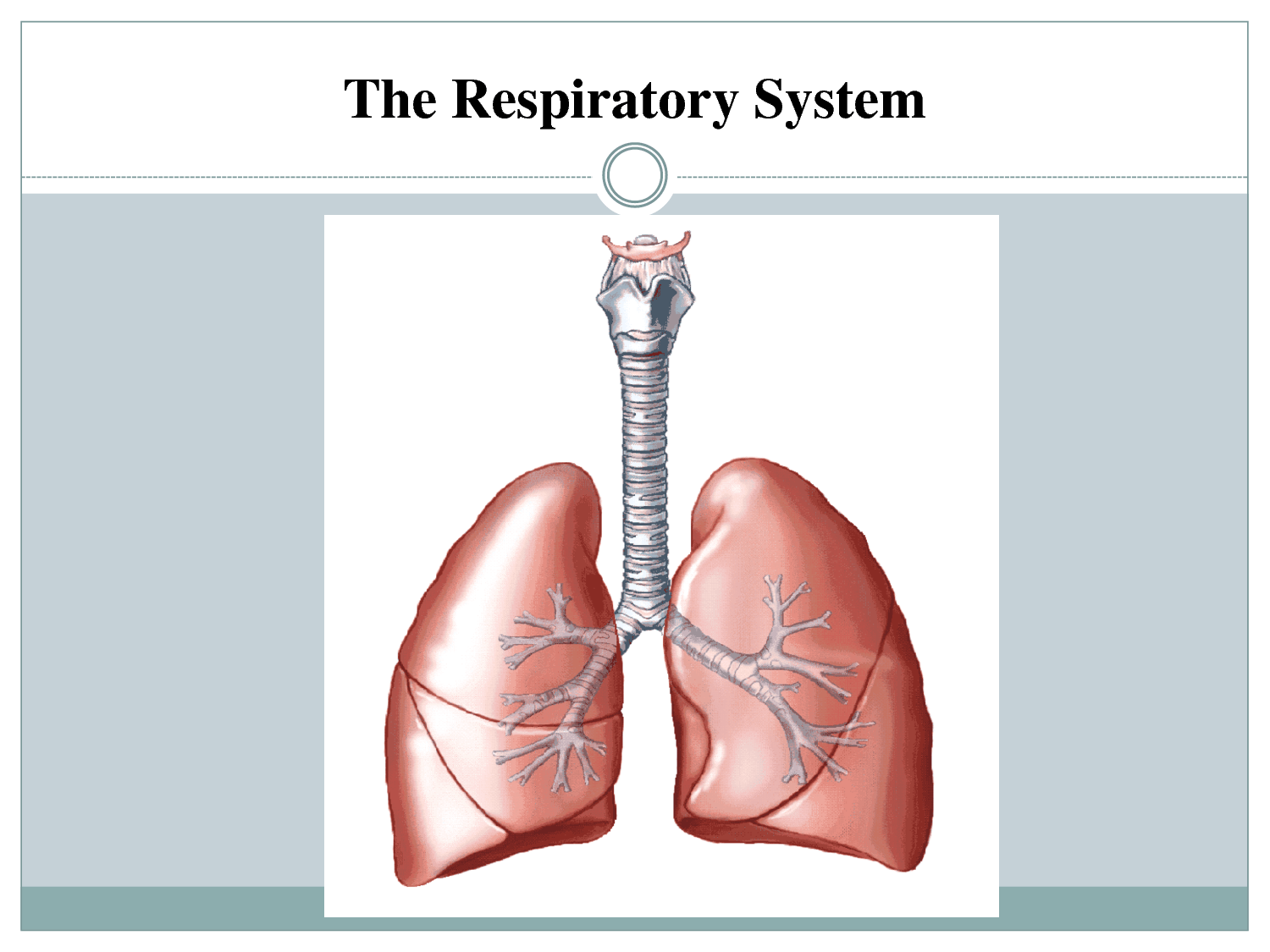
What is the main function of the respiratory system?
a)
to provide oxygen and remove carbon dioxide from the body
b)
to bring oxygen to the body
c)
to break down food and absorb nutrients
d)
to remove oxygen from the body and deliver carbon dioxide
59.
What are the main organs of gas exchange in the respiratory system?
a)
diapragm
b)
lungs
c)
trachea
d)
bronchi
60.
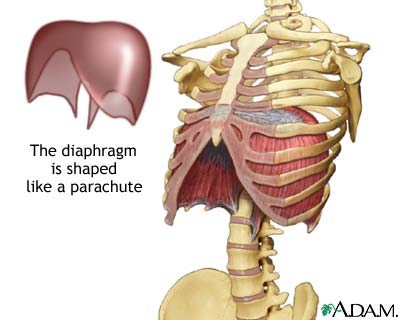
What is function of the dome-shaped diaphragm?
a)
This is where gas exchange happens.
b)
Air passes through the diaphragm on the way to the lungs.
c)
It attaches to the lungs to help in breathing.
d)
It is under the lungs and keeps them from falling down to your stomach.
61.
Which 2 substances are exchanged in the Respiratory System?
a)
oxygen and nitrogen
b)
carbon dioxide and oxygen
c)
oxygen and glucose
d)
glucose and carbon dioxide
62.
Number 7 is pointing to which organ of the Respiratory System?
a)
Lung
b)
Bronchi Tube
c)
Trachea
d)
Nose
63.
Letter B is pointing to which organ of the Respiratory System?
a)
Nose
b)
Trachea
c)
Lungs
d)
Diaphragm
64.
When the diaphragm contracts and moves down, the lungs are...
a)
expanding with air
b)
shrinking - pushing air out
65.
When the diapragm relaxes and moves back up, the lungs are...
a)
expanding with air
b)
shrinking - pushing air out
66.
What does a spasm of the diaphragm cause?
a)
cough
b)
sneeze
c)
hiccup
d)
yawn
67.
Given the following structures:
1. larynx
2. nasal cavity
3. pharynx
4. trachea
Which of the following is the correct order that air would flow during inhalation. 

a)
1,2,3,4
b)
2,3,1,4
c)
2,1,3,4
d)
4,2,3,1