
 Worksheets
Earth History Inv. 2 Weathering & Erosion
Total questions: 34
Worksheet time: 22mins
Name
Class
Date
1.
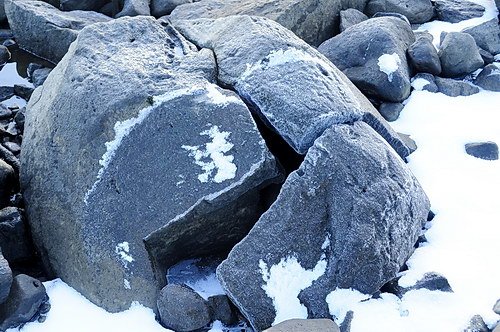
How does freezing water cause the weathering of rocks? The freezing water—
a)
keeps the rocks in place.
b)
makes the rocks last longer.
c)
expands cracks and breaks rocks.
d)
causes rocks to fall in landslides.
2.
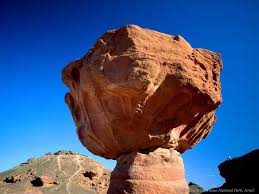
The process that breaks down rocks and other materials on Earth's surface is called
a)
Weathering
b)
Erosion
c)
Deposition
d)
Decomposition
3.

Over long periods of time, deposition may change the Earth’s surface by _____.
a)
forming new land features.
b)
breaking down large rocks into smaller ones.
c)
washing away beaches.
d)
moving topsoil.
4.

What is the process that picks up and moves weathered rocks?
a)
Deposition
b)
Landslide
c)
Weathering
d)
Erosion
5.
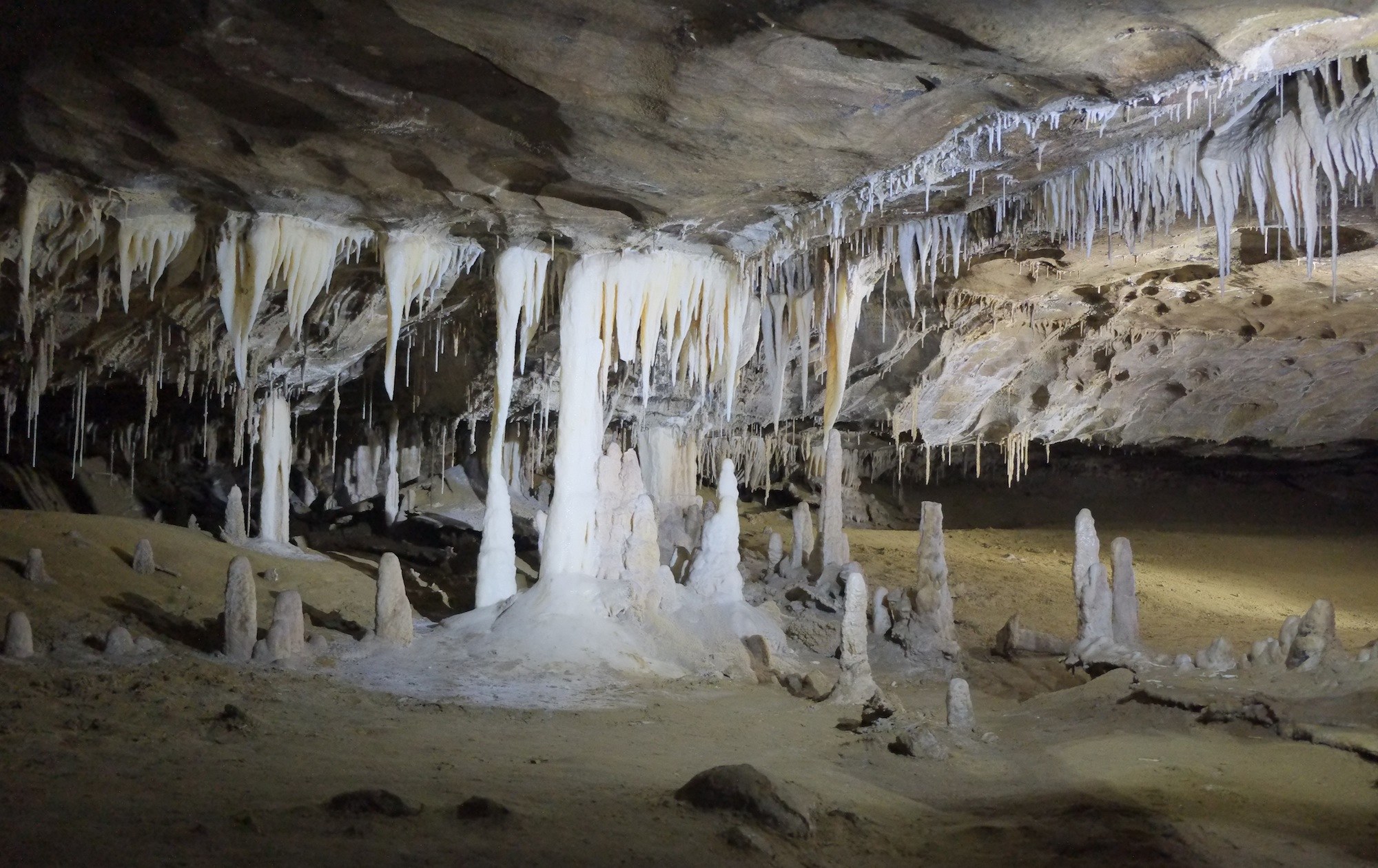
Deposition changes the Earth’s surface because bits of broken rock and soil _____.
a)
stop rivers from flowing.
b)
make rich farmlands.
c)
are dropped in new places.
d)
move very slowly.
6.
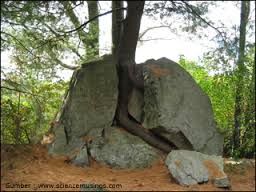
How do plants weather rocks?
a)
During photosynthesis
b)
When roots grow into cracks of rocks and expand the rock breaks.
c)
When the plant moves water from the roots to the leaves, the rock breaks.
d)
Plants don't weather rocks.
7.
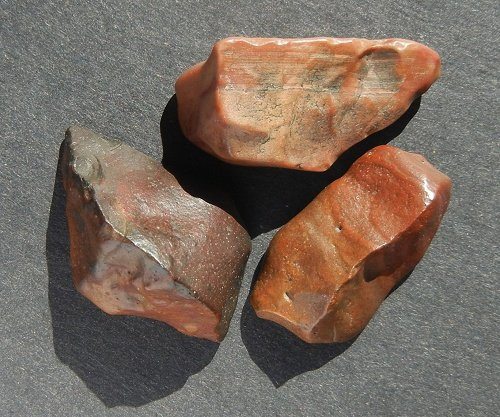
These rocks were made smooth by wind blowing smaller rock particles across their surface. This is an example of:
a)
ice wedging
b)
chemical weathering
c)
acid rain
d)
abrasion
8.
Weeds growing into the cracks in a sidewalk and the sidewalk begins to crumble is an example of:
a)
physical weathering
b)
chemical weathering
9.
Rocks along a riverbed that are smoothed from continuously moving water and sediment rubbing against them is an example of:
a)
physical weathering
b)
chemical weathering
10.
Low areas where eroded material is often deposited.
a)
basin
b)
bin
c)
deposition
d)
rock fall
11.
When plants, animals, and other organisms die, they break down and become part of the soil. What is this part of the soil called?
a)
sand
b)
silt
c)
clay
d)
humus
12.
What explanation best describes how a boulder can turn into silt as it moves down a river?
a)
Water washes over it until it is silt-sized.
b)
It hits other rocks or objects and breaks apart.
c)
It moves down the river until it lands in a basin and becomes silt.
d)
It deposits into silt in the basin.
13.
You find some soil that is mostly made of clay and silt, but no sand. How might this soil have formed?
a)
Slow-moving water carried the sand downstream and left behind the silt and clay.
b)
Wind blew all the sand away, leaving behind the silt and clay particles.
c)
Muddy water stood for a while, and the silt and clay settled out.
d)
A fast-moving stream dropped sand, silt, and clay in this place.
14.
The Wentworth scale classifies rock particles by:
a)
texture
b)
size
c)
color
d)
minerals
15.
True or False. Larger particles are carried farther and more easily than smaller particles.
a)
TRUE
b)
FALSE
16.
Which one of these rock particles is the SMALLEST?
a)
boulder
b)
pebble
c)
cobble
d)
sand
17.
Which of these is NOT an example of CHEMICAL WEATHERING?
a)
lichens producing carbonic acid that breaks down rocks
b)
acid rain wearing away at rocks
c)
frost wedging enlarging the cracks between rocks
d)
plant roots producing carbon dioxide, which combines with moisture to produce a weak acid
18.
Which one of these is NOT an example of PHYSICAL WEATHERING?
a)
lichens wearing away rock with the weak acid they produce
b)
rocks bumping into each other and breaking
c)
wind carrying sediments from one place to another
d)
waves crashing against and particles at the beach
19.
Which one of these rock particles is the LARGEST?
a)
gravel
b)
boulder
c)
clay
d)
silt
20.
Which rock particle would travel the FARTHEST along a stream?
a)
boulder
b)
sand
c)
clay
d)
gravel
21.
True or false. The Colorado Plateau came before the grand canyon.
a)
TRUE
b)
FALSE
22.
matching up rock layers from different locations is called:
a)
layering
b)
correlation
c)
calcite
d)
elevation
23.
The carrying away of weathered earth materials by water, wind, or ice is called:
a)
transportation
b)
erosion
c)
abrasion
d)
frost wedging
24.
The process of water freezing in the cracks of rocks and breaking them apart is:
a)
rock fall
b)
root wedging
c)
frost wedging
d)
abrasion
25.
A mass of rocks falling to the ground, similar to an avalanche, is called:
a)
rock fall
b)
frost wedging
c)
abrasion
d)
root wedging
26.
The process of plant roots growing, exerting pressure on the rocks and driving them apart, is called:
a)
root wedging
b)
frost wedging
c)
rock fall
d)
weathering
27.
_____ is a mix of humus, sand, silt, clay, gravel, and/or pebbles:
a)
boulder
b)
soil
c)
erosion
d)
abrasion
28.
______ is the breaking of rocks by rubbing and bumping into each other.
a)
transportation
b)
abrasion
c)
watering
d)
elevation
29.
A very angular rock, with many sharp edges is:
a)
very abraded
b)
not very abraded
30.
A well-rounded rock is:
a)
very abraded
b)
not very abraded
31.
What size particle will likely settle out in fast moving water?
a)
large
b)
medium
c)
small
d)
all
32.
What size particle will go the furthest?
a)
large
b)
medium
c)
small
d)
smallest
33.
Canyons are carved from
a)
the middle layers
b)
the top down
c)
anywhere in the layers
d)
just from the bottom
34.
Will water content (what the water is made up of) impact how water moves over or through land?
a)
yes
b)
no
c)
sometimes
d)
I don't know
100 %

