wayground logo

Free Printable Worksheets

Font size

S
M
L
XL
Worksheets

Modern World Final Review

Total questions: 138

Worksheet time: 1hrs 24mins

Name
Class
Date
1.
Imperialism is __________.
a)
when a powerful nation uses its resources to help a weaker nation
b)
when a weaker nation invites a powerful nation to help it industrialize
c)
when a powerful nation takes control of the economy and government of a weaker nation
d)
when weak nations join together to fight a strong nation
2.
Economic motives for imperialism include _________.
a)
a desire to spread Christianity
b)
a need for military bases around the world
c)
a need for raw materials to be used in factories
d)
a desire to gain glory
3.
The race for European countries to claim land in Africa was called the _________.
a)
Scramble for Africa
b)
African Marathon
c)
Great Competition
d)
Monopoly
4.

What does the phrase "the sun never sets over the British Empire" mean?

a)

it's always sunny in Britain

b)

it shows how large their empire was

c)

it shows how dangerous they were

d)

is a reference to the shiny money they had
5.
Which of the following best describes Social Darwinism?
a)
It was the belief that the people of Asia and Africa were strong and that it was natural for them to take over the “weak” nations of Europe.
b)
It was the belief that the people of Asia and Africa were “weak” and that it was natural for the “strong” nations of Europe to take them as colonies.
c)
It was the belief that it was the duty of the Europeans to civilize the people of Asia and Africa.
6.
What country did the Industrial Revolution begin in?
a)
France
b)
Britian
c)
United States
d)
Spain
7.
Any fabric that is woven (by machine or hand) is called -
a)
technology
b)
textile
c)
economy
d)
industrialization
8.
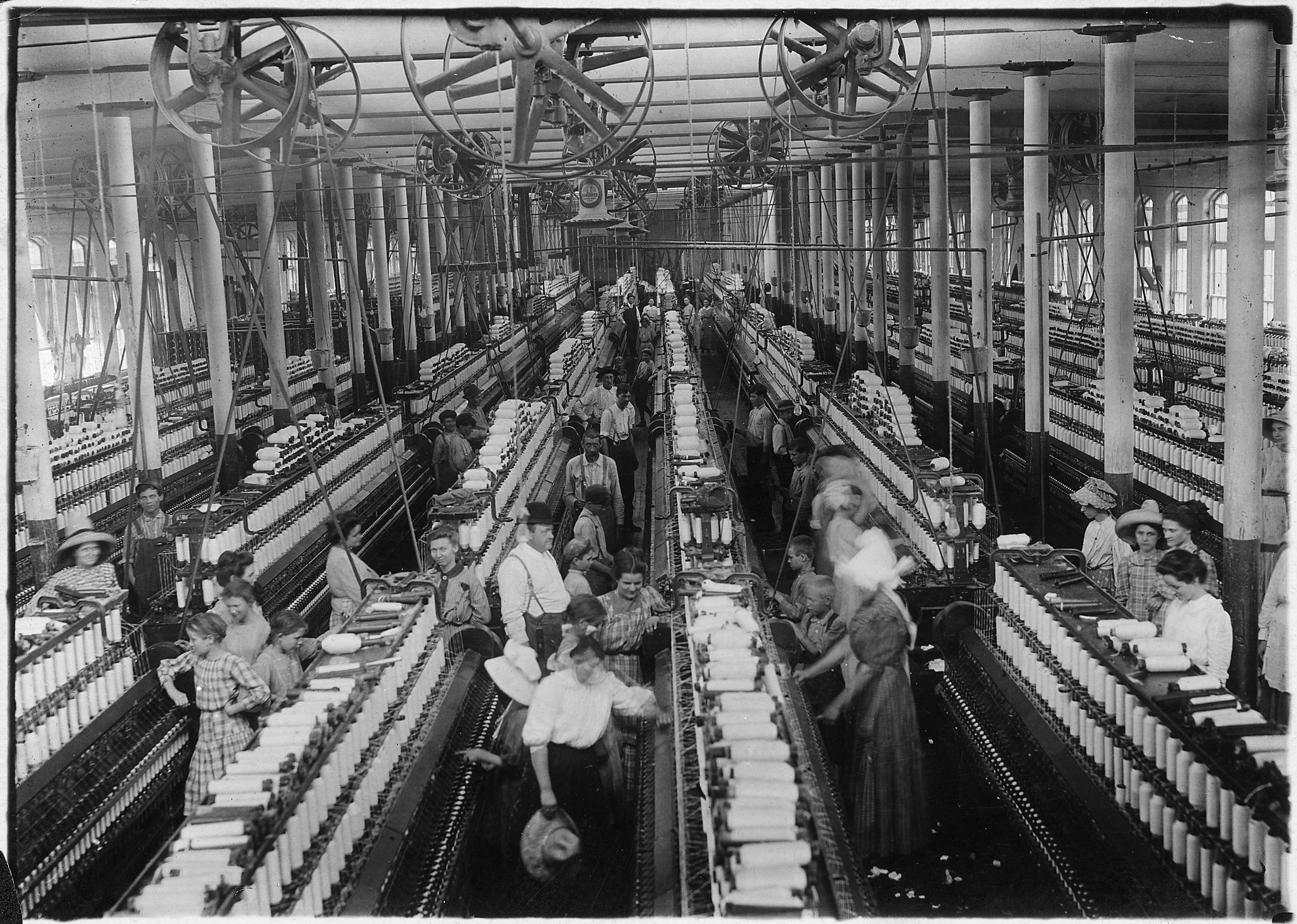
A place where people and machines join together to mass produce goods.
a)
School
b)
Corporation
c)
Factory
d)
Urbanization
9.
Mass production led to:
a)
Products being more superior in quality
b)
goods became less expensive
c)
laborers received higher wages
d)
industries moved to rural areas
10.
How did the Industrial Revolution affect the cities?
a)
Made the crime rate decrease
b)
Led to an increase in farm workers
c)
Make the cities cleaner and safer
d)
Led to an increase in population in the cities
11.
Where were most factories built before the steam engine was invented?
a)
in the mountains
b)
in the desert
c)
along rivers
d)
anywhere
12.
What are identical components that can be used in place of each other?
a)
Interchangeable parts
b)
Factories
c)
Dynamos
d)
Assembly Lines
13.

How did technology affect things?

a)

Decreased number of factory workers

b)

Decreased quality of products

c)

Increased production of goods

d)

Decreased amount of production

14.

Many early factory workers were women because

a)

employers could pay women less than men.

b)

women were less likely than men to have accidents.

c)

more women than men sought employment.

d)

women were more willing than men to work long hours.

15.

Why were children often employed in the British mining industry?

a)

They were less likely to be a part of a labor organization

b)

They were paid less money than adult male miners.

c)

They were able to crawl through small areas to access coal deposits.

d)

All of the above are true

16.

Simon Bolivar and Toussaint L’ouverture were important individuals in Latin American history because they were –

a)

Active in converting Native Americans to Christianity.

b)

Influential Enlightenment thinkers

c)

Conquerors of Pre-Columbian Empires

d)

Leaders in the struggle for independence.

17.
The Haitian Revolution is important because...
a)
it is the first successful slave revolt in history
b)
it ended absolute monarchy in the United States
c)
it brought Louis XVI back to power in France
d)
there was no bloodshed
18.
The wealth and patronage of what family supported great works of art produced in Florence during the Renaissance?
a)
Galilei
b)
Medici
c)
Kepler
d)
da Vinci
19.

Which group of people were at the top of urban society, dominating their communities with their skills, position, and wealth?

a)

Peasants

b)

Burghers

c)

Nobility

d)

Tradesmen

20.

What technique did Renaissance artists use to create realistic paintings?

a)

Perspective

b)

Shadows

c)

2D painting

d)

Impressionist painting

21.

What movement combined classical learning with the goal of reforming the Catholic Church

a)

Humanism

b)

Christian Humanism

c)

Liberal Arts

d)

Calvinism

22.

What was a piece of paper signed by a church official that released the bearer from all or part of the punishment for sin called?

a)

Salvation

b)

Penance

c)

Christian Rite

d)

Indulgence

23.

What was the belief that God determined in advance who would be saved?

a)

Justification

b)

Predestination

c)

Indulgence

d)

Reformation

24.

Who believed in the complete separation of church and state?

a)

Calvinists

b)

Anabaptists

c)

Lutherans

d)

Catholics

25.

Why was Venice an important state in Italy?

a)

They were the only state with a monarch

b)

The Medici Family was in control

c)

They had a strong military

d)

It was important for trade

26.

What does Machiavelli argue in The Prince?

a)

The ends justify the means

b)

Too much power is not good for a ruler

c)

People are born good

d)

A ruler should be good to the people no matter what

27.

Who would rule in a republic?

a)

A monarchy

b)

The wealthy

c)

The middle class

d)

Elected leaders

28.

Which group of people made up the majority of the European population?

a)

Nobility

b)

Upper class

c)

Burghers

d)

Peasants

29.

What is the purpose of a humanist education?

a)

Prepare people for religious lives

b)

Produce scholars

c)

Make people more artistic

d)

Create well-rounded citizens

30.

Why did Dante write the Divine Comedy in the vernacular?

a)

So only priests could read it

b)

The work was only meant for scholars

c)

So ordinary citizens could read it

d)

He could not read or write in Latin

31.

Why did Leonardo da Vinci dissect human bodies?

a)

To study the art of painting

b)

All Renaissance artists studied dissected bodies

c)

He was inventing new dissection tools

d)

He wanted to make his art more like nature

32.

What was a key characteristic of Lutheranism?

a)

Taught salvation through faith alone

b)

The German princes created Lutheranism

c)

It emphasized the importance of good works to reach salvation

d)

Lutherans got along well with Catholics

33.

What were the 95 Theses attacking?

a)

Papal authority

b)

The selling of indulgences

c)

Faith as a means for salvation

d)

Land holdings throughout Europe

34.

How did Martin Luther believe salvation could be achieved?

a)

good works

b)

purchasing indulgences

c)

faith alone

d)

faith and good works

35.

What did Lutherans and Calvinists not agree on?

a)

Clerical celibacy

b)

Predestination

c)

Women's rights

d)

Papal authority

36.

What was the main issue not affected by the Reformation?

a)

Anti-Semitism

b)

Education in Europe

c)

The role of the Catholic Church

d)

Women's rights

37.

Why were Anabaptists considered dangerous radicals?

a)

They thought people should not believe in early Christian practices

b)

They believed in the complete separation of church and state

c)

They needed priests to interpret the Bible

d)

Only some people could become ministers

38.

How was the English Reformation different from the Reformation in the rest of Europe?

a)

The state had no control over religion

b)

They still kept an alliance with the pope in England

c)

Was mainly rooted in politics rather than religion

d)

Was drastically different from traditional Catholic teachings

39.

What was the name given to members of the middle class?

a)

Nobility

b)

Burghers

c)

Peasants

d)

Kings

40.
Galileo was tried for heresy because he argued  
a)
That heaven did not exist
b)
That Earth revolved around the sun
c)
Against the law of gravity
d)
That the sun revolved around the Earth
41.
According to Copernicus, the sun  
a)
Revolved around the earth
b)
Was the center of the Universe
c)
Was the biggest star
d)
 Had many moons
42.
The idea that the earth is the center of the universe is the ___________ theory.
a)
geocentric
b)
heliocentric
c)
earthcentric
d)
world's worst
43.
The idea that the sun is the center of the universe is the ____________ theory.
a)
geocentric
b)
heliocentric
c)
solar
d)
sunny
44.
The period when European scholars began to question classical scientific ideas and Christian beliefs.
a)
Johannes Kepler
b)
Scientific Revolution
c)
rationalism 
d)
gravity
45.

What were the two technical advancements in Renaissance art?

a)

Perspective, movement & human anatomy

b)

2D and the use of light

c)

Watercolors and the laws of perspective

d)

Movement and 2D

46.

Why did upper-class families arrange marriages for their children during the Renaissance?

a)

To keep strong familial business connections

b)

They wanted to pay a dowry

c)

They didn't trust their children to pick their own spouse

d)

They would go bankrupt if they didn't

47.

What do we call Queen Mary today?

a)

Virgin Mary

b)

Bloody Mary

c)

Queen Mary of England

d)

Mary

48.
The building up of a nation's army is called
a)
Militarism
b)
Nationalism 
c)
Imperialism 
d)
Alliances
49.
Information designed to influence opinion is called
a)
Militarism
b)
Communism 
c)
Propaganda
d)
Facebook 
50.
What were the causes of WWI?
a)
Militarism, Alliances, Nationalism, Imperialism
b)
Militarism, Alliances, Nationalism, Isolationism
c)
Militarism, Against, Nice, Iguanas
d)
Militarism, Alliances, Nationalism, Impractical
51.
What sparked World War I?
a)
Assassination of Archduke Franz Ferdinand
b)
Assassination of Archduke Marmaduke
c)
Assassination of Archduke Franz Ferdahand
d)
Assassination of Archduke Kaiser Wilhelm
52.
Russia, Great Britain, and France were all part of the
a)
Allied Powers
b)
Central Powers
c)
Axis Powers
d)
Neutral Powers
53.
Germany, Austria-Hungary, and the Ottoman Empire were all a part of the
a)
Central Powers
b)
Allied Powers
c)
Axis Powers
d)
Neutral Powers
54.
What country was neutral at the beginning of the war?
a)
France
b)
United States
c)
Russia
d)
Germany
55.
What type of fighting was used in WWI?
a)
Guerrilla Warfare
b)
Total Warfare
c)
Subwarfare
d)
Trench Warfare
56.
What was the stretch of land between the trenches?
a)
No mans land
b)
La La land
c)
Attack Trenches
d)
Switzerland
57.
In what ways did women help with the war effort at home?
a)
Worked in factories and conservation
b)
Joined the Army
c)
Drive tanks and Airplanes 
d)
Join the American Red Cross
58.
What nation did not sign the Treaty of Versailles?
a)
France
b)
Great Britain
c)
United States 
d)
Germany
59.
Which country switched alliances in 1915 and joined the Allies?
a)
Italy 
b)
Germany
c)
Austria-Hungary
d)
Cuba
60.
The interception of ________________ by the British and its publication in the United States press led to the United States entering into the war. 
a)
Zimmerman Telegram
b)
Germany
c)
propaganda
d)
Doughboys
61.
What did Germany promise to Mexico if Mexico joined the Central Powers alliance? 
a)
a bridge from Australia to Antarctica
b)
to help them regain lands lost to the United States
c)
to help them capture Spain and Cuba
d)
to pay them 4 billion dollars is war reparations
62.
What was the United States' initial reaction to the start of World War I in Europe? 
a)
It enthusiastically supported the war. 
b)
It criticized the war as a mistake by the Allied Powers.
c)
It announced support of Central Powers. 
d)
It declared it would remain neutral. 
63.
How did the United States' involvement in World War I change the course of the war? 
a)
The introduction of fresh troops weakened the Allied Powers war efforts.
b)
The Central Powers were able to gain control of the war while the American soldiers were disorganized.
c)
The Allies were unable to  support the number of troops the United States brought to the front lines.
d)
The addition of American troops and supplies tipped the war in favor of the Allies.
64.
Which of the following acts was passed in order to draft Americans into the war?
a)
The Selective Service Act
b)
Treaty of Versailles
c)
Roosevelt Corollary
d)
Fourteen Points
65.
Who is to blame for the war according to the Treaty of Versailles?
a)
Great Britain
b)
France
c)
Germany
d)
Serbia
66.
Because militarism had been a major cause of the war, the framers of the Treaty of Versailles
a)
made Germany pay reparations.
b)
stripped Germany of its colonies.
c)
forced Germany to sign a war-guilt clause
d)
barred Germany from maintaining a military
67.
Which of the following is NOT one of the ways that the American public helped with the war at home?
a)
Women took over jobs in factories while the men went to war
b)
Americans grew victory gardens
c)
Many Americans observed meatless and wheatless days in order to conserve food
d)
Americans gave money to the Central Powers to build up their military
68.
What are the name of the acts that made it illegal to criticize the U.S. involvement in the war or encourage draft resisters
a)
Espionage and Sedition Acts
b)
Treaty of Versailles and the Fourteen Points
c)
the Yalta Agreement and the Treaty of Versailles
d)
The Espionage Act and the Fourteen Points
69.

Which word best describe WWI?

a)

Lop-Sided

b)

Rapid and Quick

c)

Back and Forth

d)

Stalemate

70.
Imperialism caused
a)
increased efforts to solve problems between countries
b)
decreased competition between countries
c)
increased competition between countries
d)
decreased tension between countries
71.
What event led to the US joining World War II? 
a)
Germany invaded Poland. 
b)
Germany sent Mexico a secret telegram. 
c)
Japan bombed Pearl Harbor.
d)
Germany bombed Pearl Harbor. 
72.
Shortly after entering World War II, the United States began the Manhattan Project to
a)
work on the development of an atomic bomb
b)
increase economic production to meet wartime demands
c)
defend New York City against a nuclear attack
d)
recruit men for the military services
73.
Which two Japanese cities were destroyed by atom bombs?
a)
Hiroshima and Nagasaki
b)
Kyoto and Tokyo
c)
Nagasaki and Kyoto
d)
Tokyo and Hiroshima
74.
Why did fascist dictators rise to power in some European countries in the 1930's?
a)
They promised to end hard times
b)
They had friendly, likable personalities
c)
They promised another war
d)
They offered to personally pay off the country's debts
75.
Why did France & Great Britain make little effort to stop Hitler's actions during the 1930's?
a)
They supported his actions
b)
They did not know what he was doing
c)
They felt the countries he invaded deserved to be annexed
d)
They feared another war
76.
During the Holocaust, many Jews were taken to death camps such as:
a)
Ethiopia
b)
Normandy
c)
Auschwitz
d)
Albania
77.

Which of these does NOT describe the Great Depression?

a)

Affected many countries around the world

b)

Currencies suffered from inflation

c)

Only affected the United States

d)

Was ended by the start of WWII

78.

Which of these describes the blitzkrieg tactics used by the Germans in World War II?

a)

Slowly surrounding the enemy to force a surrender

b)

Warfare involving both sides fighting from trenches

c)

Suicide bombing enemy targets with airplanes

d)

Rapid advancements used to overwhelm the enemy

79.

Hitler’s Final Solution included…

a)

Opening a second front in Western Europe

b)

Using less restrictive laws to help the Jewish population

c)

Deporting all Jews to other European countries

d)

Concentration camps to eliminate all the Jewish people

80.

What is appeasement?

a)

A set amount of food/goods civilians could have

b)

Policy of not involving oneself in foreign affairs

c)

Policy of giving into demands

d)

Fascist leader of Italy

81.

Who was Mussolini?

a)

A set amount of food/goods civilians could have

b)

Fascist leader of Italy

c)

Mass killing of a group of people

d)

Policy of giving into demands

82.

What is isolationism?

a)

A set amount of food/goods civilians could have

b)

Policy of not involving onself

c)

Fascist leader of Italy

d)

Mass killing of a group of people

83.
Why was Germany unhappy about The Treaty of Versailles?
a)
they had to pay reparations
b)
they believed it was unfair
c)
they were forced to pay 50 billion dollars.
d)
all of the above
84.
What nations made up the Axis Powers during WWII?
a)
Italy, Japan, Belgium
b)
Germany, Japan, Italy
c)
Germany, Netherlands, Switzerland
d)
U.S., Britain, and France
85.
What nations made up the Allied Powers during WWII?
a)
Russia, U.S., Britain, France
b)
Germany, Italy, Japan, Russia 
86.
What event sparked the start of WWII in Europe?
a)
Invasion of Poland
b)
Munich Pact
c)
Dropping of Atomic Bomb
d)
Assassination of Archduke Franz Ferdinand
87.
Most Americans did not want to get involved in the problems of Europe because they were
a)
nationalists
b)
isolationists
c)
communists
d)
socialists
88.
I was the emperor of Japan during World War II.  The military had a lot of power in my government.
a)
Benito Mussolini
b)
Hirohito
c)
Adolf Hitler
d)
Harry S. Truman
89.
Which of the following is true about Japanese aggression in Asia?
a)
Japan invaded and took over Albania and Ethiopia.
b)
Japan invaded and conquered Austria, Czechoslovakia, and Poland.
c)
Japanese forces took over most of eastern China.
d)
Japan invaded and conquered Germany.
90.
Hitler made a non-aggression pact with which country?
a)
Italy
b)
Japan
c)
England
d)
Russia
91.

Which of the following is not a main cause of World War II

a)

Hitler's aggressively taking over territory, violating the Treaty of Versailles

b)

Japanese imperial expansion, taking over territory in China and Korea to gain resources

c)

British and French foreign ministers not dealing with Hitler before he became too powerful

d)

The United States becoming the "arsenal of democracy"

92.

Which of the following is not how Hitler played off of anti-Semitism

a)

Taught Jews were an inferior race

b)

Forced Jews to join the military as suicide units

c)

Removed Jews from citizenship

d)

Banned marriage between Jews and non Jews

93.

A strong feeling of pride in and loyalty to one's nation:

a)

Nationalism

b)

Militarism

c)

Totalitarianism

d)

Nazism

94.

Which country practiced isolationism (staying away from the rest of the world) at the start of WWII?

a)

Germany

b)

Japan

c)

U.S.S.R

d)

United States

95.

US minority group who were forced into internment camps during WWII

a)

Japanese-Americans

b)

Italian-Americans

c)

Russian-Americans

d)

Jewish Americans

96.
What was the purpose of the Nuremberg Trials?
a)
To put Jews on trial for religious crimes.
b)
A series of laws targeting Jews.
c)
To put Nazi officials on trial for their crimes in WW2.
d)
To create the nation of Israel of the Jewish people.
97.
In 1945 American & Soviet troops liberated Nazi concentration camps, which were used to eliminate which of the following groups?
a)
Jews
b)
the disabled & POW's
c)
homosexuals & Gypsies
d)
All of them
98.

How were Adolf Hitler & Benito Mussolini alike?

a)

Both established dictatorships

b)

They lead peace movements to help rebuild Europe after WWI

c)

They supported voting rights for all citizens

d)

Both supported freedom of speech for their citizens

99.

Adolf Hitler's rise to power in Germany was made possible by which of these factors?

a)

Germany's economy was very strong & German citizens were enjoying a very fancy lifestyle.

b)

Germany had completely recovered from the destruction caused during WWI

c)

Germany was forced to pay reparations under the agreement of the Treaty of Versailles

d)

Hitler was a soldier & Germany had a very strong army

100.

Before the start of WWII, Japan was an island nation with very few

a)

natural resources

b)

bombs

c)

planes

d)

ships

101.
Restrictive laws passed by Hitler’s Nazi government that severely limited the rights of Jews in Germany.
a)
Nuremburg Laws
b)
Kristallnacht
c)
Ghettos
d)
Ultra-nationalism
102.

Which form of government is characterized by one-party state, extreme nationalism, a single-all powerful ruler, and belief in war to achieve goals?

a)

Democratic

b)

Totalitarian

c)

Theocratic

d)

Constitutional

103.

Which totalitarian leader was called, "Fuhrer?"

a)

Mussolini

b)

Hitler

c)

Tojo

d)

Stalin

104.

What did Hitler criticize that caused many Germans to support him?

a)

The League of Nations

b)

The US Constitution

c)

The Treaty of Versailles

d)

The Magna Carta

105.

In English, "Mein Kampf" means ______.

a)

My Life

b)

My Beliefs

c)

My World

d)

My Struggle

106.

Which WWII leader did Hitler betray?

a)

Winston Churchill

b)

Francisco Franco

c)

Benito Mussolini

d)

Josef Stalin

107.

Hitler was able to take over much land in Europe because of the failure of what organization?

a)

The United Nations

b)

The Congress of Vienna

c)

The League of Nations

d)

The European Union

108.
This "figurative" wall divided communist countries from democratic counties--
a)
Great Wall of China
b)
Berlin Wall
c)
Iron Curtain
d)
Wall of Democracy
109.
These were the opposing superpowers during the Cold War years
a)
China and Russia
b)
Cuba and Russia
c)
USA and Russia
d)
Iran and Russia
110.
The purpose of "containment" was to--
a)
stop the spread of democracy
b)
stop the spread of hate
c)
stop global warming
d)
stop the spread of communism
111.
Which of the following foreign policies gave financial aid to European nations to rebuild after WWII?
a)
Truman Doctrine
b)
Marshall Plan
c)
Warsaw Pact
d)
Domino Theory
112.
Which of the following organizations supports Democratic ideals and self governance?
a)
Warsaw Pact
b)
Satellite Nations
c)
NATO
d)
Domino Theory
113.
The physical barrier separating Communist East Berlin and Democratic West Berlin--
a)
Berlin Bloackade
b)
Berlin Base
c)
Berlin Wall
d)
Berlin Barrier
114.
Nations that were aligned with, but also under the influence and pressure of, the Soviet Union were called--
a)
European Nations
b)
NATO
c)
Warsaw Pact
d)
Satellite Nations
115.
The ideology that if one country in Southeast Asia fell to Communism, others would follow--
a)
Domino Theory
b)
Berlin Arilift
c)
Eisenhower Doctrine
d)
Warsaw Pact
116.
The fall of the Berlin Wall directly led to the--
a)
dissolving of the Soviet Union
b)
the reuniting of the United Kingdom
c)
the overthrow of Joseph Stalin
d)
McCarthyism
117.
Because of a Soviet blockade of West Germany to West Berlin--
a)
the US bombed the Soviets until they retreated
b)
the Soviets flew supplies into East Germany
c)
the US flew supplies into East Germany
d)
the US flew supplies into West Germany
118.
During the Cold War, the fear of Communism infiltrating the US and McCarthyism both contributed to the--
a)
Red Fever
b)
Domino Theory
c)
Red Scare
d)
Red Army
119.
What was the name of the first satellite in space launched by the Soviet Union?
a)
Gagarin
b)
Apollo 11
c)
Sputnik
d)
Apollo 13
120.
A competition between nations to build powerful weapons is called ___________.
a)
Arms Race
b)
Blockade
c)
Space Race
d)
Atomic Bomb
121.
Why is the Cold War called a "cold" war?
a)
The areas affected were in the polar regions of the world
b)
The war was fought during winter months only
c)
Leaders of the superpowers were sick with coughs and fevers
d)
There was never direct fighting between the two superpowers
122.

A way Nixon reduced the tension of the Cold War between the US and Russia use of _____________.

a)

isolationism

b)

expansionism

c)

détente

d)

containment

123.

Which event increased U. S. spending on education and technology?

a)

Cuban Missile Crisis

b)

Launch of Sputnik

c)

U-2 Spy Planes

d)

Warsaw Pact

124.

The treaty signed to NOT increase the amount of nuclear weapons was called the ____________.

a)

WW 3 Pact

b)

Intermediate-Range Nuclear Forces (INF) Treaty

c)

Warsaw Nuclear Pact

d)

Nuclear Non-Proliferation Treaty

125.
What did Joseph McCarthy claim to have on his list?
a)
over 100 suspected communists in the U.S. State Department
b)
10 Hollywood actors/directors suspected of communism
c)
50 baseball players suspected of communism
d)
quotas for immigration
126.
What is McCarthyism?
a)
preventing communism in America
b)
accusing people without evidence
c)
sending aid to those willing to resist communism
d)
the technology used for Sputnik
127.
What did opponents of McCarthy criticize him for?
a)
violated the constitutional rights of many
people
b)
undermined the powers of the president
c)
weakened the armed forces of the nation
128.
The GI Bill helped soldiers who served in World War II by
a)
funding for veterans to attend college
b)
requiring women to surrender their wartime jobs to the returning men
c)
mandating integration of U.S. military forces
129.
After the end of World War II, many working women left their factory jobs because they were
a)
unprepared for peacetime employment
b)
forced to give up their jobs to returning war veterans
c)
fired from their jobs due to poor performance
d)
dissatisfied with their low wages
130.
The baby boom after World War II led directly to
a)
a decrease in spending for public education
b)
a return to a rural lifestyle
c)
an increased demand for housing
d)
a decrease in consumer spending
131.
What was the main reason for the building of the Berlin Wall by the Soviet Union?
a)
To prevent a planned US invasion of East Germany
b)
To stop the USSR from taking control of Western Europe
c)
To keep West German from leaving the Democratic Zone
d)
To keep East Germans from leaving the Communist Zone
132.

What year was the Berlin Wall torn down?

a)

1999

b)

1945

c)

1975

d)

1989

133.
Which areas were hot spots during the Cold War?
a)
Berlin, Washington DC, Alaska, Moscow
b)
Hawaii, Cuba, Vietnam, Canada
c)
Vietnam, Korea, Berlin, Cuba
d)
China, Soviet Union, North Pole, California
134.
What event was the closest the world ever came to nuclear war?
a)
Vietnam War
b)
Korean War
c)
Bay of Pigs
d)
Cuban Missile Crisis
135.

What does this image from the 1950s show?

a)

preparation for a possible nuclear attack, called "duck and cover"

b)

fear of American communists in schools

c)

fear of an invasion by Cuban communists sneaking into Florida by boat

d)

preparation for a room-to-room search of contraband materials in U.S. schools.

136.

To what American policy does this excerpt refer?

"Wherever it is considered timely and promising, efforts will be made to advance official limits of Soviet power."

a)

containment

b)

suburbanization

c)

collectivization

d)

glasnost

137.

Which of the following is an example of the policy of containment?

a)

the Soviet Union imprisoning its critics

b)

the United States supporting Greeks fighting communism

c)

the United States insisting on free elections in West Germany

d)

the Soviets intervening in Czechoslovakia

138.

Why did Korea remain divided after the Korean War?

a)

North and South Korea negotiated a ceasefire but not a peace treaty.

b)

South Korea remained communist.

c)

China and the United States insisted on it.

d)

The Soviet Union's influence decreased.