Wayground logo

Free Printable Worksheets

Font size

S
M
L
XL
Worksheets

Unit 2 Review

Total questions: 121

Worksheet time: 2hrs 54mins

Name
Class
Date
1.

A substance that undergoes a physical change is ________ the original substance after the change.

a)

different from

b)

the same as

c)

slightly larger than

d)

a clone of

2.
What kind of properties can only be observed when a substance changes into a different substance?
a)
physical properties
b)
chemical properties
c)
liquid properties
d)
real properties
3.
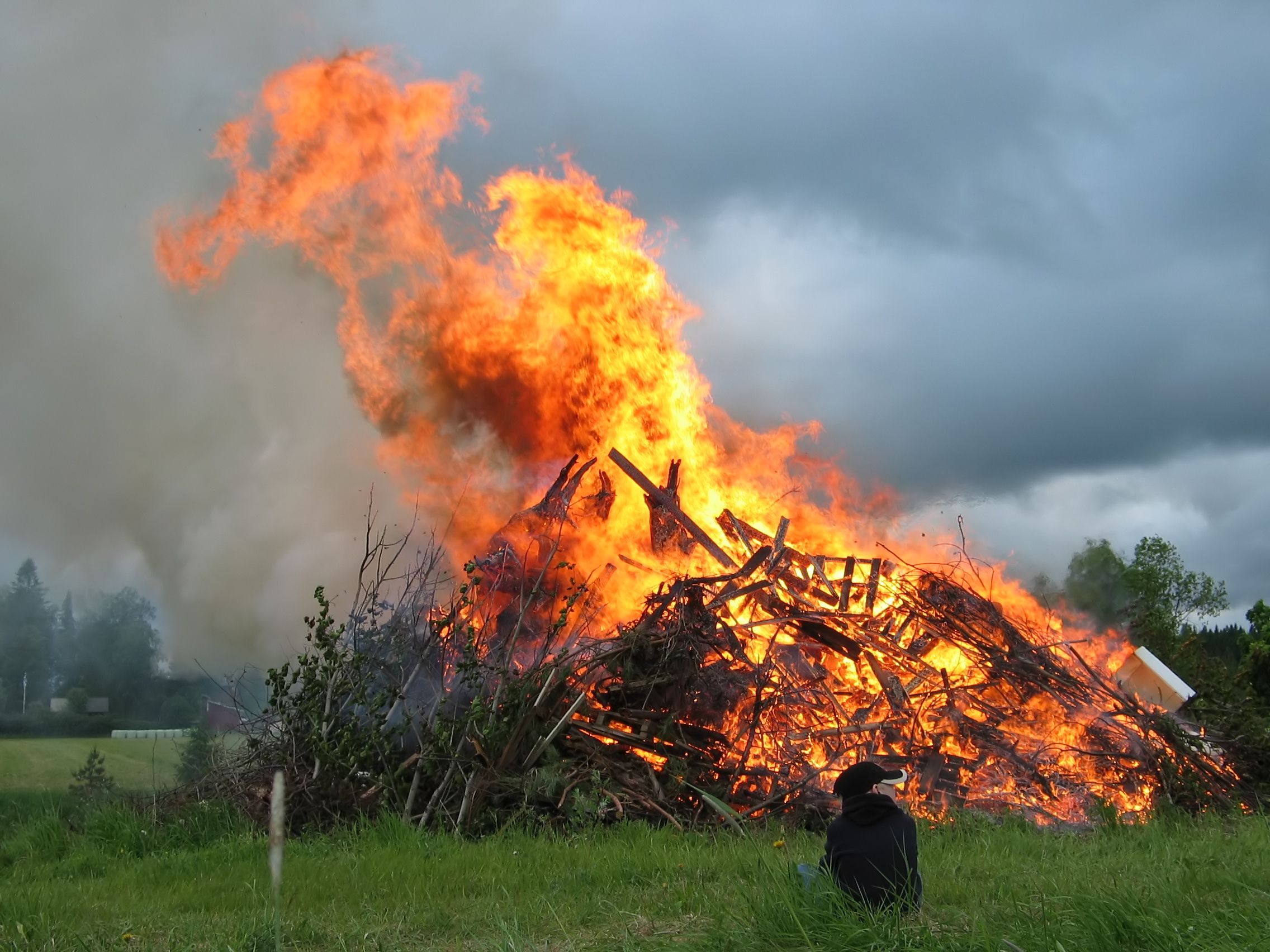
Is burning wood a chemical or physical change?
a)
chemical
b)
physical
4.

Kim puts an ice cube in a beaker and it melts. This is a good example of:

a)

a physical change.

b)

a chemical change.

c)

a nuclear change.

5.
Aluminum is an element. Which of the following best describes the smallest particle of aluminum that retains all the properties of aluminum?
a)
a molecule
b)
an atom
c)
a proton
d)
an electron
6.
Classify the sample
a)
Pure substance
b)
Mixture
7.
Classify the sample
a)
Element
b)
Compound
8.
Classify the sample
a)
Pure Substance
b)
Mixture of Elements
c)
Mixture of Compounds
9.
Salt water
a)
Homogenous Mixture
b)
Heterogeneous Mixture
10.
This type of substance is made up of one type of atom. 
a)
Element
b)
Compound
c)
Mixture
11.
Classify the Sample. 
a)
Pure Substance
b)
Mixture of Elements
c)
Mixture of Compounds
d)
Mixture of Elements and Compound
12.
Classify the sample. 
a)
Pure Substance
b)
Mixture of Elements
c)
Mixture of Compounds
d)
Mixture of Element and Compound
13.
Which chemical formula could be represented by this sample?
a)
NaCl
b)
H2
c)
C6H12O6
d)
Cu
14.
The substance that is dissolved in a solution
a)
Solute
b)
Solvent
c)
Solution
d)
Solubility
15.
The temperature at which a liquid changes into a gas
a)
boiling point
b)
melting point
c)
freezing point
d)
evaporation point
16.
Molecules in this state of matter move very fast and are far apart
a)
solid
b)
liquid
c)
gas
17.
Two samples of gold must have the same
a)
length
b)
volume
c)
mass
d)
density
18.
__________ are made up of solutes and solvents.
a)
Solutions
b)
Suspension
c)
Colloid
19.
In a solution of salt water, what is the solute?
a)
Salt
b)
Water
c)
Salt water
20.
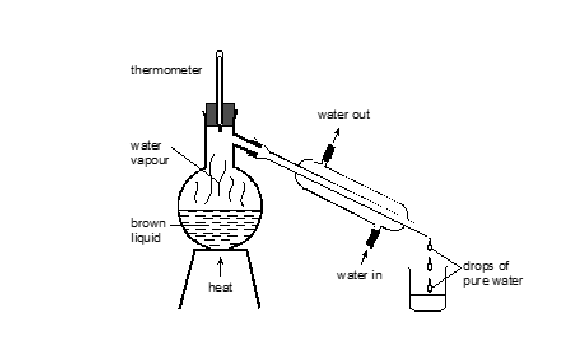
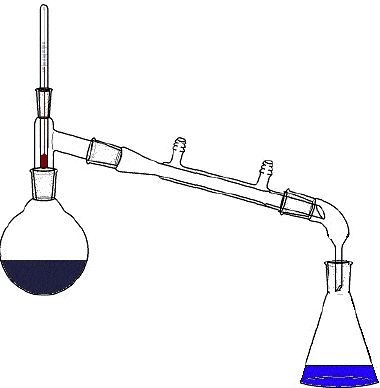
Which separation technique uses the apparatus shown in the diagram?
a)
filtration 
b)
 crystallisation
c)
distillation
d)
chromatography
21.
What two processes are involved in distillation?
a)
A - Condensation followed by Evaporation
b)
B - Evaporation followed by Condensation
c)
C - Boiling followed by Filtration
d)
D - Filtration followed by Boiling
22.

Distillation is a:

a)

very dangerous process

b)

physical process

c)

chemical process

d)

organic process

23.
What is the boiling point of water?
a)
0oC
b)
100oC
c)
80oC
d)
95oC
24.
Which one of the following techniques would best be used to separate soil and water?
a)
Decanting
b)
distillation
c)
Filtration
d)
Chromatography
25.
Water and alcohol are easily separated by distillation because of their
a)
 different melting points
b)
different colours
c)
different densities
d)
different boiling points
26.
Solid particles which are left on filter paper while filtration is called
a)
filtrate
b)
residue
c)
solvent
d)
solute
27.
Two elements chemically combined defines
a)
A homogeneous mixture
b)
A heterogeneous mixture
c)
An element
d)
A compound
28.

Distillation is used to separate mixtures on the basis of what physical property?

a)

Freezing point

b)

Boiling point

c)

Cooling point

d)

Heating point

29.

Ink can be separated by a method of -----------------------------------------------

a)

distillation

b)

filtration

c)

chromatography

d)

sedimentation

30.
chromatography separate the mixture of dyes on the basis of their ----------------------------
a)
density
b)
solubility
c)
gravity
d)
boiling point
31.
How many sig figs are there?
100.00
a)
1
b)
3
c)
4
d)
5
32.
How many sig figs are there?
100000000
a)
1
b)
9
c)
10
33.
How many sig figs are there?
0.000008
a)
1
b)
2
c)
6
d)
7
34.
How many sig figs are there?
4004
a)
1
b)
2
c)
3
d)
4
35.
How many sig figs are there?
4000.
a)
1
b)
3
c)
4
36.
Round 1047.78 to three sig figs
a)
104
b)
105
c)
1050
d)
1050.00
37.
How many significant figures will be in the answer to the following question:
7.62 x 6.98 x 3.2645
a)
1
b)
2
c)
3
d)
4
38.
Calculate 5.50 cm + 5.50 cm and give your answer with the appropriate number of significant figures.
a)
11 cm
b)
11.0 cm
c)
11.00 cm
d)
11.000 cm
39.
How many Significant Figures in the number below?
4.56 x 10³
a)
5
b)
4
c)
6
d)
3
40.
Calculate 12.34 + 1.234 + 0.1234 and give your answer with the correct number of significant figures.
a)
13.6974
b)
13.697
c)
13.70
d)
13.7
41.
Calculate 923 g ÷ 20312 cm3 and give your answer with the correct number of significant figures.
a)
0.04 g/cm3
b)
0.045 g/cm3
c)
0.0454 g/cm3
d)
0.05 g/cm3
42.

Which of the following cannot be decomposed into simpler substances?

a)

water

b)

carbon dioxide

c)

copper

d)

sodium chloride

43.

How would you separate a precipitate from the liquid in which it is suspended?

a)

filtration

b)

distillation

c)

chromatography

d)

condensation

44.

Mixtures are

a)

always homogeneous

b)

combination of elements only

c)

always heterogeneous

d)

combination of elements and/or compounds

45.

Which of the following is a compound?

a)

Na

b)

Br2

c)

CuCl2

d)

He

46.

Which of the following has the highest kinetic energy?

a)

water at 230C

b)

zinc at 450C

c)

carbon dioxide at 100C

d)

sodium chloride at 200C

47.

As ice at 00C changes to liquid water at 00C, the average kinetic energy of the ice molecules

a)

increases

b)

decreases

c)

remains the same

48.
What line segment represents only the solid state?
a)
A-B
b)
B-C
c)
C-D
d)
D-E
49.
Which segment represents the heat of fusion?
a)
A-B
b)
B-C
c)
C-D
d)
D-E
50.
In which segment is the kinetic energy remaining constant?
a)
A-B
b)
B-C
c)
C-D
d)
E-F
51.
Which process takes the longest to occur?
a)
melting
b)
boiling
c)
freezing
d)
heating the solid
52.
What state(s) of matter are present at D-E?
a)
Solid-liquid
b)
Liquid
c)
Liquid-gas
d)
Gas-Solid
53.
What is happening to the potential energy during C-D?
a)
increasing
b)
decreasing
c)
staying the same
54.
What phase change occurs at D-E?
a)
melting
b)
condensing
c)
boiling
d)
freezing
55.
Which particle diagram represents a sample of matter that can not be broken down by chemical means?
a)
1
b)
2
c)
3
d)
4
56.

Which group of elements contains a metalloid?

a)

Group 8

b)

Group 2

c)

Group 16

d)

Group 18

57.
The temperature of a sample of matter is a measure of the
a)
average potential energy of the particles of the sample
b)
average kinetic energy of the particles of the sample
c)
total nuclear energy of the sample
d)
total thermal energy of the sample
58.
A substance composed of two or more elements that are chemically combined in a fixed proportion is called... 
a)
a mixture
b)
a solution
c)
an isotope
d)
a compound
59.
Which group of the periodic table is composed of inert (not reactive)  gases?
a)
alkali metals
b)
alkaline earth metals
c)
halogens
d)
noble gases
60.
A vertical column is called...
a)
group
b)
tower
c)
period
d)
crew
61.
Which group has the most reactive nonmetals?
a)
halogen
b)
noble gases
c)
alkali metals
d)
alkaline earth metals
62.
Choose a physical property
a)
The element is flammable
b)
The element explodes when exposed to air
c)
The element is shiny
d)
The elements reacts with HCl
63.
At standard pressure, the total amount of heat required to completely vaporize a 100-gram sample of water at its boiling points is
a)
2.26 x 10 J
b)
2.26 x 10² J
c)
2.26 x 10³ J
d)
2.26 x 10⁵J
64.
Which line segment of the graph represents boiling?
a)
line AB
b)
line BC
c)
line CD
d)
Line DE
65.
Which diagram represents a mixture of two different molecular forms of the same element?
a)
1
b)
2
c)
3
d)
4
66.
Which list of elements consists of a metal, a metalloid, and a nonmetal?
a)
Li, Na, Rb
b)
Cr, Mo, W
c)
Sn, Si, C
d)
O, S, Te
67.
During which time interval is the average kinetic energy of the particles of the substance constant while the potential energy of the particle increases?
a)
AC
b)
BC
c)
CD
d)
DF
68.
A substance is classified as either an element or a
a)
compound
b)
solution
c)
heterogeneous mixture
d)
homogeneous mixture
69.
Which substance can not be broken down by a chemical change?
a)
ammonia
b)
arsenic
c)
ethane
d)
propanal
70.
You are heating a substance in a test tube. Always point the open end of the tube
a)
toward yourself.
b)
toward your lab partner.
c)
toward another lab station.
d)
away from all people.
71.

Which phase change is endothermic?

a)

solid to liquid

b)

gas to liquid

c)

liquid to solid

d)

gas to solid

72.

The measure of disorder is called

a)

enthalpy

b)

potential energy

c)

fusion

d)

entropy

73.

Which of the following is NOT diatomic?

a)

bromine

b)

iodine

c)

hydrogen

d)

neon

74.

Which of the following can sublime?

a)

NaCl(aq)

b)

I2(s)

c)

Br2(l)

d)

H2O(g)

75.
What happens in ALL chemical changes?
a)
Change in state of matter
b)
A new substance is formed
c)
Bubbles are produced
d)
An explosion
76.
Is wood burning a physical or chemical change?
a)
Physical 
b)
Chemical
77.
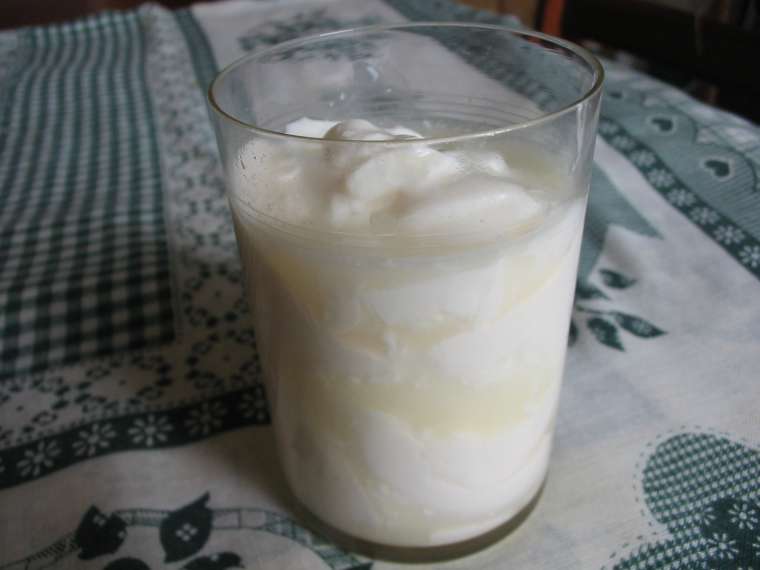
Is milk going sour a physical or chemical change?
a)
Physical 
b)
Chemical
78.
Is Gatorade powder dissolving in water physical or chemical change?
a)
Physical 
b)
Chemical
79.
Is mold growing on cheese a physical or chemical change?
a)
Physical 
b)
Chemical
80.
Is copper tarnishing a physical or chemical change?
a)
Physical 
b)
Chemical
81.

The alkali metals are in what group on the peridoic table?

a)

1

b)

4

c)

10

d)

18

82.

I am Sodium. What is my symbol?

a)

So

b)

Sd

c)

Na

d)

Nd

83.

I am Lithium. What is my symbol?

a)

Lt

b)

Li

c)

Lh

d)

Lm

84.

I am Potassium. What is my symbol?

a)

P

b)

Q

c)

L

d)

K

85.

I am Rb. I am the symbol for what element?

a)

Radon

b)

Rhenium

c)

Rubidium

d)

Ruthenium

86.
Which group are the Alkali Metals found? 
a)
Group 1
b)
Group 6
c)
Group 18
d)
Group 13
87.
Which is not a Alkali Metal?
a)
Lithium
b)
Sodium
c)
Gold
d)
Potassium
88.

Which of the following is not a member of the alkaline earth metals, Group 2?

a)

Beryillium

b)

Magnesium

c)

Hydrogen

d)

Calcium

89.

Which are the Alkaline earth metals?

a)

calcium, magnesium, Beryrillium, Strontium, Barium, Radium

b)

Lithium, Sodium Potassium, Ribidium, Cesium, Francium

c)

Nitrogen, Phosphorous, Arsenic, Bismuth

d)

Helium, Neon, Argon, Krypton, Rado, Xenon

90.

Mg is the symbol for what element?

a)

Manganese

b)

Magnesium

c)

Molybdenum

d)

Mercury

91.

Be is the symbol for what element?

a)

Beryllium

b)

Magnesium

c)

Boron

d)

Calcium

92.

Ca is the symbol for what element?

a)

Carbon

b)

Cobalt

c)

Calcium

d)

Chromium

93.

Ra is the symbol for what element?

a)

Radon

b)

Rhenium

c)

Rutherfordium

d)

Radium

94.

What is the symbol for Strontium?

a)

St

b)

Sr

c)

Sn

d)

S

95.

What is the symbol for Barium?

a)

B

b)

Ba

c)

Br

d)

Be

96.

What group are the Alkaline Earth Metals in?

a)

3

b)

12

c)

2

d)

5

97.
Which of these grouping of elements could have the characteristic of luster (shiny)?
a)
Metal
b)
Nonmetal
c)
metalloids
d)
Both metals and metalloids
98.
Which of these grouping of elements could have the characteristic of brittle?
a)
Metal
b)
Nonmetal
99.
Which of the following is a good conductor of heat?
a)
Metal
b)
Nonmetal
c)
Metalloid
100.
Which of these is a property of metals?
a)
It's malleable
b)
It can't conduct electricity
c)
They are used in food
d)
It's very brittle
101.
Some characteristics of a metal are that it is malleable and ductile.
a)
TRUE
b)
FALSE
102.
Silicon is a semiconductor and has properties of both metals and nonmetals. What type of element is Silicon? 
a)
Metal
b)
Nonmetal
c)
Metalloid
d)
Pretty
103.
Which type of elements touch the zigzag line?
a)
Metals
b)
Nonmetals
c)
Metalloids
d)
Metals and Metalloids
104.
Metals appear to the _______ of the dark ziz-zag line on the periodic table. 
a)
A. right
b)
B. middle
c)
C. left
105.
Nonmetals occur to the ________of the dark zig-zag on the periodic table. 
a)
A. right
b)
B. middle
c)
C. left
106.
If a substance breaks easily, it is said to be ________________.
a)
A. Magnetic
b)
B. Brittle
c)
C. Conductive
d)
D. Ductile
107.
What does ductile mean?
a)
electricity flows easily
b)
quacks like a duck
c)
can be drawn into a wire
d)
able to bend
108.
What does malleable mean?
a)
able to bend
b)
will break easily
c)
can be used for wire
d)
is shiny
109.
How would this element be classified?
a)
Metal
b)
Nonmetal
c)
Metalloid
d)
Metamorphic
110.
How would this element be classified?
a)
Metal
b)
Nonmetal
c)
Metalloid
d)
Metamorphic
111.
For the formula:
 Q= m c ∆T
The  units for specific heat are:
a)
g /J C
b)
°C/g J
c)
kJ/g
d)
J/g°C
112.
What would be the effect on the particles if more heat is supplied to the system?
a)
They would slow down
b)
They would stop moving
c)
They would speed up
d)
There would be no effect
113.
If two objects have different temperatures, heat will flow from the warmer object to the cooler one UNTIL ____________
a)
one reaches a temperature of zero
b)
they both have an equal temperature
c)
one runs out of energy
114.
The total energy of all the particles in a substance is called: 
a)
temperature
b)
thermal energy
c)
degrees
d)
mass
115.
The SI unit of heat and energy is the __________.
a)
calorie
b)
heat
c)
joule
d)
watt
116.
A reaction is performed in a beaker with a temperature probe recording the temperature changes of the reaction.  If the temperature began at 15.0 degrees Celsius and ended at 27.5 degrees Celsius. Is the reaction endothermic or exothermic?
a)
Exothermic
b)
Endothermic
117.
Thermal energy ALWAYS moves from _____ to _____.
a)
solid to liquid
b)
ice to water
c)
hot to cold
d)
solid to gas
118.
A sample of a substance is a liquid at 65°C. The sample is heated uniformly to 125°C. The heating curve for the sample at standard pressure is shown below.
Determine the boiling point of the sample at standard pressure
a)
95°C
b)
125°C
c)
100°C
d)
65°C
119.

Salt-water solution is considered a

a)

heterogeneous mixture

b)

homogeneous mixture

c)

substance

d)

compound

120.

What happens when water condenses?

a)

It absorbs energy

b)

It turns into a solid

c)

It gives off energy

d)

Its entropy increases

121.

Which of the following is a physical change?

a)

melting of ice

b)

decomposition of water

c)

burning of paper

d)

tarnishing of silver