
NEW
Font size
 Worksheets
Benchmark Review DC
Total questions: 50
Worksheet time: 49mins

When a person is suddenly cut by a sharp object, a nervous impulse is sent along a sensory neuron to the spinal cord. The impulse is immediately transmitted through motor neurons to produce a response. Which of the following correctly identifies and describes this response?
It is a conditioned response that occurs only to prevent injury.
It is a learned response that does not occur in infants and small children.
It is a reflex response that causes various muscles to contract in order to move away from the object.
It is a voluntary response that is initiated only after the impulse has been carried to the relevant area in the brain.

The energy pyramid shows the energy made available by producers. (View Image)
Base on the energy flow between trophic levels in an energy pyramid, how much energy would be expected to be found at the secondary consumer level in this pyramid?
100 joules
500 joules
1,000 joules
50 joules

Viruses can be transmitted through air, water, food, insect bites, and direct skin contact. Once a virus gains entry to the body, it invades a host cell in order to --
deactivate the host cell's defences
synthesize antibodies for defence
metabolize host proteins and grow
access cellular processes for replication
• Ex) green plants, phytoplankton, algae
• Ex) Cows, insects, humans
• Ex) Forest fires, floods, the Dust Bowl
• Ex) Retreating Glaciers, new lava, barrier beaches

What type of treatment is used against bacteria?
vaccine
antibiotic
vitamins
cells

What type of ecological succession begins with no soil, no life, only bare rock.
primary succession
secondary succesion
Which system sends hormones as feedback signals in the body?
endocrine
excretory
immune
nervous


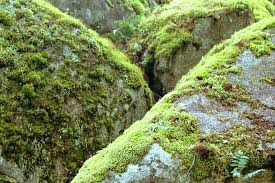
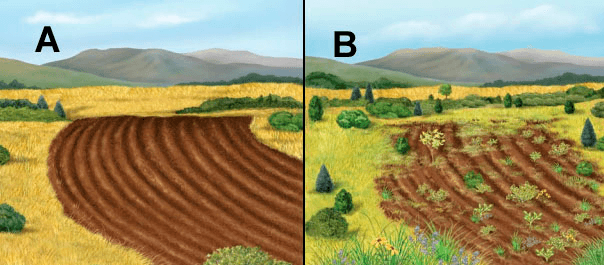


What viral process is this?
phagocytosis
lytic cycle
lysogenic cycle
formation of antibodies
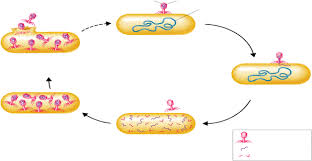
What viral life cycle is shown here?
Lysogenic Cycle
Lytic Cycle
Binary Fission
Conjugation

A marine ecosystem is represented above. What is lost to the environment at each of the trophic levels of this ecosystem?
nutrients from the soil
living space for the organisms
food sources
heat

Different species can share the same habitat, but competition among them is reduced if they –
reproduce at different times.
eat less.
move away.
occupy different niches.

The graph shows changes in the populations of two species that interact only with each other over a period of time. Which statement best describes these two species?
Species A is a producer and species B is its consumer.
Species A is a host and species B is its parasite.
Species A is a predator and species B is its prey.
Species A is a scavenger and species B is its decomposer.
A tapeworm is a worm with no digestive tract. They live in the intestines of other animals and absorb food that has already been digested by their host. What type of nutritional relationship do tapeworms exhibit?
Commensalistic
Mutualistic
Parasitic
Predation
Upon digging up a clover plant, the student observed an average of 8 nodules on the roots of each clover plant (Nodules contain bacteria which have the ability to convert atmospheric nitrogen into nitrates and release them into the soil. Plants utilize nitrates to manufacture proteins.) Which of the following best describes the ecological relationship that exists between the bacteria and the clover plant?
mutualism
parasitism
commensalism
predation
The symbiotic relationship between a flower and the insect that feeds on its nectar is an example of –
mutualism because the flower provides the insect with food, and the insect pollinates the flower.
parasitism because the insect lives off the nectar from the flower.
commensalism because the insect doesn’t harm the flower and the flower doesn’t benefit from the relationship.
predation because the insect feeds on the flower.

The organisms in the food web to the right live near large cattle ranches. Over many years, mountain lions occasionally killed a few cattle. One year, a few ranchers hunted and killed many mountain lions to prevent future loss of their cattle. Later, ranchers noticed that animals from this food web were eating large amounts of grain from their fields. Identify two specific populations that most likely increased in number after the mountain lion population decreased.
Rabbit and deer
Rabbit and snake
Mouse and deer
Mouse and hawk
An axolote is a reptile similar to an iguana. It is found only in the canals of a small area in Mexico and numbers are diminishing at an alarming rate. Unfortunately, the axolote is in danger of extinction. Which of the following factors could be affecting the long-term survival of the axolote species?
Cod and tilapia, invasive species, are eating the limited food source of the axolote.
The canals where the axolote live are being polluted.
Carp and other fish eat the plants the axolote lays its eggs on and eat the eggs at the same time.
All of the above.

The diagram shows several phases of the nitrogen cycle. Which of the following describes the most likely effect of removing some plants from the area by using chemical herbicides?
The rate of erosion of rocks on the ground would be slowed.
The flow of necessary nutrients like nitrogen would be disrupted.
The ability of plants to complete photosynthesis would be increased.
The infiltration of water into the ground would be halted.

How does the burning of fossil fuels affect the cycle shown?
It releases ozone into the atmosphere.
It removes carbon from the atmosphere.
It both releases and removes carbon from the atmosphere.
It releases carbon into the atmosphere.

