wayground logo

Free Printable Worksheets

Font size

S
M
L
XL
Worksheets

9th Grade Chapter 12 and 13 Practice

Total questions: 127

Worksheet time: 1hrs 22mins

Name
Class
Date
1.
How did the United States economy change after the Civil War?
a)
the economy changed from farming to herding
b)
the economy changed from trade to farming
c)
the economy changed from farming and trade to manufacturing goods
d)
the economy changed from manufacturing goods to trade and farming
2.
What was built to allow American commercial and war ships to travel from the Atlantic to the Pacific more quickly?
a)
the Rio Grande
b)
the Snake River
c)
the Gulf of Mexico
d)
the Panama Canal
3.
The exaggerated reporting of false reporting is known as ....
a)
Yellow Journalism
b)
Fraud
c)
Treaty
d)
Annexing
4.
Which one of the US Presidents battled in the Spanish American War?
a)
Theodore Roosevelt
b)
"Teddy" Wilson
c)
Woodrow Wilson
d)
Andrew Jackson
5.
Which of the following lands were not annexed as a result of the Spanish American War?
a)
Guam
b)
Puerto Rico
c)
Philippines
d)
Hawaii
6.
Why did American want to build the Panama Canal?
a)
Trading and Military Purposes
b)
To have an advantage at war.
c)
To control Panama
d)
To prevent future wars
7.
What term describes building an empire by conquering other nations?
a)
Isolationism
b)
Repubicanism
c)
Militarism
d)
Imperialism
8.
 Who were the Rough Riders? 
a)
a group of pilots who fought for America
b)
the crew from the USS Maine 
c)
a cavalry unit during the Spanish American War led by Theodore Roosevelt. 
d)
A group of African Americans that fought bravely during the Spanish American War.
9.
 What was the United States warship called that exploded killing over 200 American sailors?
a)
U S Maine
b)
USS Maine
c)
USS Maybe
d)
US Maritime 
10.
Yellow Journalism is....
a)
The Loudoun Sun Times
b)
Exaggerated News Reports
c)
Yellow Paper Reports
d)
Nonfiction News Reports
11.
What was a result of Yellow Journalism?
a)
Economic growth for the readers
b)
Public opinion for the war increased
c)
Public outcry against the war increased.
d)
US won the Spanish American War
12.
Forcing other nations to do as Roosevelt wanted was called... 
a)
Big Gun Diplomacy
b)
Big Roosevelt Diplomacy 
c)
Big Stick Policy
d)
Big Stick Score
13.
Whose favorite proverb was "Speak softly and carry a big stick?
a)
Theodore Roosevelt
b)
Woodrow Wilson 
c)
William McKinley
d)
James Manroe 
14.
a form of American foreign policy to further its aims in Latin America and East Asia through use of its economic power by guaranteeing loans made to foreign countries.
a)
Dollar Diplomacy
b)
Big Stick Diplomacy
c)
Moral Diplomacy
d)
Open Door Policy
15.
The diplomatic action help bring US economic interests into China.
a)
Open Door Policy
b)
Moral Diplomacy
c)
Big Stick Diplomacy
d)
Dollar Diplomacy
16.
What does this political cartoon represent?
a)
Big Stick Diplomacy
b)
White Man's Burden
c)
Dollar Diplomacy
d)
Imperialism
17.

The Open Door Policy of Teddy Roosevelt dealt with

a)

military

b)

religion

c)

alliances

d)

trade

18.

America wanted a 'sphere of influence' in which two countries?

a)

Japan and Cuba

b)

Cuba and China

c)

China and Spain

d)

China and Japan

19.

The Platt Amendment gave America more control over

a)

Cuba

b)

China

c)

Spain

d)

Japan

20.

Which US state was once a monarchy?

a)

Alaska

b)

New York

c)

Hawaii

d)

Puerto Rico

21.
What action did Queen Liluokalani take that upset American planters in Hawaii?
a)
She seized the American-owned sugar plantations.
b)
She put a tax on sugar exports to the United States.
c)
She moved to limit their power and influence in Hawaii.
d)
She called in the US Marines to put down a revolt.
22.
Which US president withdrew the treaty that would annex Hawaii?
a)
Benjamin Harrison
b)
Abraham Lincoln
c)
Andrew Johnson
d)
Grover Cleveland
23.
The policy by which stronger nations extend their economic, political, or military control over weaker nations is called...
a)
nationalism.
b)
internationalism.
c)
militarism.
d)
imperialism.
24.
Two New York newspapers became known for a sensational style of writing known as yellow journalism by printing stories that described Spanish cruelty.
a)
True
b)
False
25.
The Platt Amendment to Cuba's constitution authorized future US intervention in Cuba's affairs.
a)
True
b)
Flase
26.
The Open Door Policy stated that no single country should have a monopoly on trade with which country?
a)
Mexico
b)
China
c)
Cuba
d)
Japan
27.
What was the Boxer Rebellion?
a)
a revolution in Panama that President Roosevelt supported
b)
an uprising against US control in the Philippines
c)
a revolt by Nicaraguan citizens against their leader
d)
an uprising in China against the presence of foreigners
28.
Why did the US want to build the Panama Canal?
a)
to allow ships to travel more easily around the coast of South America.
b)
to have easier access to Colombia.
c)
to make the governments of Latin America more stable.
d)
to help protect its Pacific empire.
29.
What did the Roosevelt Corollary accomplish?
a)
Expanded the Monroe Doctrine.
b)
Granted independence to Guam.
c)
Extended US democracy in Asia.
d)
Opened Japan to US trade.
30.
Members of this organization believed that the US government should not deny other people the right to govern themselves.
a)
Colombia
b)
Roosevelt Corollary
c)
Anti-Imperialist League
d)
Imperialists
31.
Under the threat of force, this country signed a treaty giving the US access to its ports in 1854.
a)
China
b)
Japan
c)
Colombia
d)
Philippines
32.
This became a US colony after the Spanish-American War.
a)
Philippines
b)
China
c)
Colombia
d)
Spain
33.
This leader fought against colonial rule in the Philippines.
a)
Queen Liliuokalani
b)
William Seward
c)
Emilio Aguinaldo
d)
William McKinley
34.
How did Theodore Roosevelt sum up his foreign policy?
a)
"The policy of imperialism is hostile to liberty."
b)
"Attack anyone who stands in the way."
c)
"Treat all people as if they were Americans."
d)
"Speak softly and carry a big stick."
35.
Corporations are a business's owned by shareholders.
a)
True
b)
False
36.
Ida B. Wells was for segregation, and lynching.
a)
True
b)
False
37.
What did Theodore Roosevelt mean when he said he believed in a “square deal”? 
a)
That all American’s should have a fair chance of success
b)
That trust’s should be encouraged
c)
That business’s should strive to become monopoly’s.
d)
That people should let businesses do what they want. 
38.
Which of the following is not a goal all Progressive reformers share?
a)
To promote social welfare 
b)
To create economic reform 
c)
To expand democracy
d)
To get women the right to vote
39.
In the case of Plessy vs Ferguson, what did the supreme court decide?
a)
They sided with Ferguson, stating "separate is not equal".
b)
They sided with Plessy, stating "separate but equal".
c)
They sided with Ferguson, stating "separate but equal".
d)
They sided with Plessy, stating "separate is not equal".
40.
What name was given to writers who specifically exposed corruption in American society? 
a)
Muckraker
b)
Journalists
c)
Corruptionist
d)
Inspectors
41.
Which area was admitted as the 50th state of the United States of America
a)
Alaska
b)
Hawaii
c)
Guam
d)
Cuba
42.

_______________ used the Sherman Anti-trust Act against some ‘bad trusts’ he felt acted against the public interest.

a)

William H. Taft

b)

Woodrow Wilson

c)

Teddy Roosevelt

d)

Herbert Hoover

43.

Spain was once the world greatest empire, but by 1890 it only controlled _______________, the Philippines, and Guam.

a)

Mexico

b)

Columbia

c)

Jamaica

d)

Cuba

44.

Newspapers that deliberately sensationalized the news and exaggerated stories are guilt of __________ journalism

a)

fake

b)

yellow

c)

red

d)

biased

45.

While moored in a Havana Harbor, the U.S.S. ____________ was sunk by a mysterious explosion killing 258 U.S. sailors.

a)

McKinley

b)

Ironside

c)

Kentucky

d)

Maine

46.

Some American soldiers had to be removed from Cuba because of yellow fever spread by the _____________.

a)

cobras

b)

moths

c)

rats

d)

mosquitoes

47.

As a result of the war, the U.S. acquired Cuba & Puerto Rico in the Caribbean Sea, as well as the Philippines and _______ in the Pacific Ocean.

a)

Puerto Rico

b)

Japan

c)

Aruba

d)

Guam

48.

Many Americans believed Americans should annex (make them a part of the U.S.) countries, these people were called __________________.

a)

imperialists

b)

journalists

c)

Pacifists

d)

racists

49.

Secretary of State John Hay saw _________ as a great market for U.S. products and attempted to gain access to its markets.

a)

Mexico

b)

China

c)

Korea

d)

Japan

50.

The Chinese ___________ Rebellion was crushed by the USA and other western nations who wished to keep China open for trade.

a)

Boxer

b)

Open Door

c)

June

d)

Dumpling

51.

The Spanish-American War had shown the need for the _______________, which provided a more direct route between the Atlantic and Pacific oceans.

a)

Venice Canal

b)

Panama Canal

c)

Nile River

d)

Answar Dam

52.
What term describes building an empire by conquering other nations?
a)
Isolationism
b)
Republicanism
c)
Militarism
d)
Imperialism
53.

What does expansionism mean?

a)

extending friendships with other countries

b)

extending a nation's boundaries

c)

seeking control over other countries politics and economy

54.

What is foreign policy?

a)

How much one nation respects another

b)

How a nation relates to another nation

55.

What are the goals of foreign policy?

a)

protect U.S. citizens

b)

promote prosperity

c)

work for peace and democracy

d)

all of the above

56.

What are the tools of the foreign policy?

a)

defense and alliances

b)

diplomacy and foreign aid

c)

trade and intelligence

d)

all of the above

57.

What is the Big Stick politics about?

a)

U.S. soldiers have sticks

b)

U. S. uses threats

58.

What foreign policy could be described as " stay out of our neighborhood and make colonies elsewhere and they will stay out of your neighborhood"?

a)

Swanson doctrine

b)

Nomroe doctrine

c)

Monroe doctrine

59.

What policy is being described as " if Latin America is threatened by another country we will intervene on their behalf"?

a)

Monroe doctrine

b)

Roosevelt Corollary

c)

Moral Diplomacy

60.

How did USA gain Alaska?

a)

bought it from Canada

b)

bought it from Russia

c)

invaded it

61.

How did the United States gain Hawaii?

a)

bought it

b)

took it over by force

62.

How did the United States gain Puerto Rico?

a)

bought it

b)

took it over by force

c)

awarded it as a results of war

63.

What did the Treaty of Kanagawa gave to the United States?

a)

access to Hawaii

b)

access to Japanese ports of trade

c)

access to Puerto Rico

64.

Why did Americans refer to Alaska as Seward's Folly?

a)

They thought it was foolish, it was nothing but frozen fish and icy mountains

b)

They thought Seward should move in to Alaska because nobody else could handle the climate.

65.

What politician quit his job as assistant secretary of the Navy to join in the fighting during the Spanish-American war?

a)

Theodore Roosevelt

b)

John Adams

c)

William McKinley

66.

What president declared war against Spain starting the Spanish-American war?

a)

George Washington

b)

Theodore Roosevelt

c)

William McKinley

67.

What event was the spark that started the Spanish-American war?

a)

The sinking of the USS Maine

b)

The sinking of the Cuban vessel

68.

Why were the business people in America concerned about the Spanish American war?

a)

They didn't want Americans to die

b)

They didn't want the Cubans to suffer

c)

They had investments in sugarcane industry, so they were concerned about the crops

69.

What does the Platt Agreement do?

a)

gives US control of Cuba

b)

gives US control over Philippines

c)

gives US control over Guantanamo Bay

70.

Who owned Panama BEFORE the canal was built?

a)

Mexico

b)

Columbia

c)

Mexico

71.

How did the US help Panama to gain their independence?

a)

Roosevelt ordered American warships to float along the Panama's border

b)

Roosevelt ordered American soldiers to enter the Panama's border

72.

What was the biggest problem in the building of the canal?

a)

Tropical diseases

b)

no water

c)

no food

73.

Americans looked to the following area for overseas markets

a)

imperialist Europe

b)

the Mediterranean

c)

South America

d)

the Pacific

74.

What was the purpose of the Open Door Policy?

a)

to win leaseholds in China

b)

to end the Boxer Rebellion

c)

to ensure trading rights with China

d)

to establish a sphere of influence

75.

Under the Open Door Policy

a)

America's sphere of influence in China would grow

b)

China would be broken up into European colonies

c)

more countries would be given leaseholds in China

d)

all countries would be allowed to trade with China

76.

The Roosevelt Corollary was an extension of the

a)

Washington Doctrine

b)

Wilson Doctrine

c)

Monroe Doctrine

d)

McKinley Doctrine

77.

What did the U.S. do when Panama revolted against Colombia?

a)

sent ten warships to put down the rebellion

b)

recognized Panama's independence

c)

withdrew American workers from the canal zone

d)

decided to build a canal in Nicaragua

78.

When an imperial power allows a territory to remain independent with local rulers in control it is a

a)

protectorate

b)

colony

c)

state

d)

unincorporated territory

79.

In 1852 a naval expedition was sent to Japan to

a)

convince Japan to become a U.S. protectorate

b)

bring Western civilization to Japan

c)

force Japan into a trade agreement

d)

conquer the islands around Japan

80.

A result of Roosevelt negotiating peace with Russia

a)

He was awarded the Congressional Medal of Honor

b)

America became the dominant force in Russian affairs

c)

America's relationship with both nations was weakened

d)

He was awarded the Nobel Peace Prize

81.

What did Roosevelt mean by "speak softly and carry a big stick"?

a)

If an agreement can't be reached swift force is necessary

b)

the U.S. must come to peaceful agreements on all policies through meaningful dialogue

c)

Peaceful solutions are ideal, but there are times when force is necessary

d)

anyone who disagrees with the U.S. should prepare for war

82.

Helped build public support for a strong navy

a)

Pan-Americanism

b)

Alfred T. Mahan

c)

imperialism

d)

Matthew C. Perry

e)

Anglo-Saxonism

83.

the economic and political domination of a strong nation over weaker nations.

a)

Pan-Americanism

b)

Alfred T. Mahan

c)

imperialism

d)

Matthew C. Perry

e)

Anglo-Saxonism

84.

the idea that Latin America and the United States should work together.

a)

Pan-Americanism

b)

Alfred T. Mahan

c)

imperialism

d)

Matthew C. Perry

e)

Anglo-Saxonism

85.

the idea that English-speaking nations were superior to other nations

a)

Pan-Americanism

b)

Alfred T. Mahan

c)

imperialism

d)

Matthew C. Perry

e)

Anglo-Saxonism

86.

took a naval expedition to japan in order to negotiate a trade treaty.

a)

Pan-Americanism

b)

Alfred T. Mahan

c)

imperialism

d)

Matthew C. Perry

e)

Anglo-Saxonism

87.

Economic and military competition from ________________ helped to convince many Americans that the united states should become a world power.

a)

Canada

b)

Europe

c)

China

d)

Latin America

88.

John Fiske, a historian in the late 1800s, argued that English speaking nations had superior character, ideas, and systems of government. His ideas convinced many Americans

a)

that the United States needed to build a large, modern navy.

b)

to support the annexation of Hawaii.

c)

that the United States should be dominant in the Western Hemisphere.

d)

to support the expansion of American civilization.

89.
Extreme, chauvinistic patriotism, often favoring an aggressive, warlike foreign policy
a)
Chaos
b)
Jingoism
c)
Augment
d)
Bigot
90.
This man arranged the purchase of Alaska from Russia for the price of $7.2 million. He was the Secretary of State for the United States. Who is he?
a)
Alfred T Mahan
b)
Leonard Wood
c)
William H. Seward
d)
Joseph Pulitzer
91.
When we avoid the affairs of other countries, it is known as what?
a)
yellow journalism
b)
imperialism
c)
communism
d)
isolationism
92.
Hawaii's government was ruled by a monarchy. The King of Hawaii died in the late 1800's. His sister took over as the new ruler. Her name is 
a)
Queen Sheba
b)
Queen Katherine
c)
Queen Liliuokalani
d)
Queen Elizabeth
93.
This man made a suggestion to the U.S. government that they must reorganize and "build up" their Navy. 
a)
Alfred T Mahan
b)
Leonard Wood
c)
William H Seward
d)
Dr Walter Reed
94.
What does Trust-busting mean?
a)
end discrimination
b)
stop monopolies (restore competition)
c)
label ingredients on food and drugs
d)
election for political offices 
95.
Teddy Roosevelt reduced the power of these types of businesses which controlled the American economy?
a)
horizontal monopolies
b)
small businesses
c)
corporations
d)
trusts
96.
Journalists who exposed graft and corruption is society were known as: 
a)
socialists
b)
trouble makers
c)
muckrakers
d)
bull moosers
97.
The President who stated that both labor and management shall have a "square deal" and therefore did not take management's side during the 1902 coal strike was...
a)
Teddy Roosevelt
b)
Woodrow Wilson
c)
William Taft
98.
Which agency was created as a direct result of a novel about the meatpacking industry?
a)
Food and Drug Administration
b)
Federal Trade Commission
c)
Meat Packing Administration
d)
World Health Organization
99.
How did he become president?
a)
He won the election to become president.
b)
It was his turn.
c)
He was 42 year old.
d)
When he was vice president, the president was killed.
100.
What book by Upton Sinclair exposed the filth of the meat packing plants?
a)
The Jungle Book
b)
The Jungle
c)
Tarzan King of the Jungle
d)
Catcher in the Rye
101.
What was the name given to Roosevelt's plan to keep the wealthy from taking advantage of the poor?
a)
Circle Deal
b)
Square Deal
c)
New Deal
d)
Roosevelt Deal
102.
Roosevelt responded to this book by appointing a commission to investigate the meatpacking industry.
a)
The Shame of the Cities
b)
Uncle Tom's Cabin
c)
The Jungle
d)
Welcome to the Jungle
103.
This was the principle that guided Roosevelt’s efforts to organize water projects to transform dry wilderness areas into agricultural areas.
a)
Conversation
b)
Conservation
c)
Transduction
d)
Convection
104.
President McKinley and the American people were finally convinced to wage war against the Spanish after the mysterious explosion of the
a)
HMS Beagle
b)
USS Olympia
c)
Spanish Armada
d)
USS Maine
105.
As a result of the Spanish- American War, the US became a political power in -- 
a)
the Hawaiian islands 
b)
the Panama Canal Zone 
c)
the Central Powers Alliance 
d)
the Philippines, Guam, and Puerto Rico 
106.
He was part of the Rough Riders during the Spanish American war. He was also the assistant Secretary of the Navy and a president during the progressive era. 
a)
Alfred T Mahan 
b)
Rough Riders 
c)
Theodore Roosevelt 
d)
Henry Cabot Lodge 
107.
1898- It lasted only 4 months. This was the end of Spain's colonial empire and the emergence of the US as a world power,
a)
Sinking of the USS Maine 
b)
Boxer Rebellion 
c)
Dollar Diplomacy 
d)
Spanish American War 
108.
Alfred Thayer Mahan supported moving the US into a position of power by 
a)
bolstering US industrial output 
b)
strengthening US naval capacity 
c)
improving relations with US allies 
d)
increasing funding for the US Air Force 
109.
Describe how the United States acquired Hawaii. 
a)
The U.S government won Hawaii in a battle with Japan
b)
After Queen Liliuokalani died the U.S. purchased Hawaii for 20 million dollars
c)
U.S. won a war with Spain and Spain sold Hawaii for $7million to the U.S.
d)
U.S. Overthrew Queen Liliuokalani and became a U.S. territory in 1898
110.
Both the Interstate Commerce Act and the Sherman Antitrust Act were
a)
inspired by the effectiveness of earlier state laws 
b)
designed to protect business from foreign competition 
c)
declared unconstitutional by the Supreme Court in the late 1800s 
d)
passed by the federal government to regulate big business 
111.
The Sherman Antitrust Act is an example of
a)
Federal laws designed to protect consumers from unsafe products 
b)
the Federal Government’s response to changes in the economy 
c)
Federal laws designed to control spending 
d)
the Federal Government’s attempts to regulate big business 
112.
Laws requiring individuals to pass civil service examinations to obtain government jobs were enacted to
a)
eliminate patronage and corruption in government hiring 
b)
allow the government to compete with private industry for employees 
c)
support the development of public employee labor unions 
d)
encourage the growth of local political parties 
113.
The voyage of part of the US navy around the world for goodwill visits in 1907 was called the
a)
Gentleman's Agreement
b)
Great White Fleet
c)
Roosevelt Corollary
d)
Big Stick Policy
114.

Progressives wanted to do all of the following EXCEPT:

a)

encourage environmental conservation and preservation

b)

decrease the power of the federal government

c)

improve working conditions

d)

limit the power of big business

e)

protect the health and safety of the public

115.

How the Other Half Lives exposed the plight of the urban working class. Who is responsible for this work?

a)

Upton Sinclair

b)

Ida Tarbell

c)

Jacob Riis

d)

Frank Norris

116.

The Jungle resulted in:

a)

The Meat Inspections Act

b)

The Pure Food and Drug Act

c)

a public outcry against the Beef Trust

d)

All of the above.

117.
Who was known for being a "trust-buster"?
a)
Woodrow Wilson
b)
Theodore Roosevelt
c)
Ida B Wells
d)
"Big Bill" Haywood
118.
Who exposed the Standard Oil monopoly's unscrupulous business practices?
a)
Ida Tarbell
b)
Ida B. Wells
c)
Nellie Bly
d)
Lincoln Steffens
119.
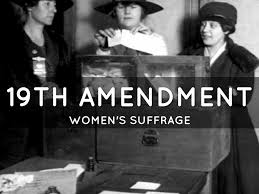
Women's suffrage has to do with what?
a)
Women being able to vote
b)
Women being able to own property
c)
Women being able to drink alcohol
d)
Women being able to work in factories
120.
Which amendment guarantees women the right to vote?
a)
1st Amendment
b)
4th Amendment
c)
19th Amendment
d)
12th Amendment
121.
What were the main arguments against alcohol consumption in the 1800s?
a)
Alcohol abuse led to family strife, moral decline, and a weaker nation.
b)
Drunk driving was killing an average of twelve motorists per month.
c)
Alcohol was leading to opioid (mainly heroin) addiction.
d)
Some alcohol consumption was considered healthy, but most people preferred water.
122.
The movement to ban the making, sale and transport of alcoholic beverages was called--
a)
The Progressive Era
b)
Woman's Suffrage Movement
c)
The Temperance Movement
d)
Abolition Movement
123.

Taft angered progressives by signing the ____________.

a)

Clayton Antitrust Act

b)

Payne-Aldrich Tariff

c)

Sherman Antitrust Act

d)

Hepburn Act

124.
This gave women the right to vote.
a)
16th Amendment
b)
17th Amendment
c)
18th Amendment
d)
19th Amendment
125.
What third party did Teddy Roosevelt found and run under during the 1912 Presidential Election?
a)
Tea Party
b)
Whig Party
c)
Green Party
d)
Bull Moose Party
126.
He was elected President in 1908?
a)
Theodore Roosevlet
b)
William Howard Taft
c)
Woodrow Wilson
d)
Grover Cleveland
127.
What is the best word to sum up the Progressive Era?
a)
opportunity
b)
change
c)
equality
d)
revolution